A new duty for employers, alongside an existing ban
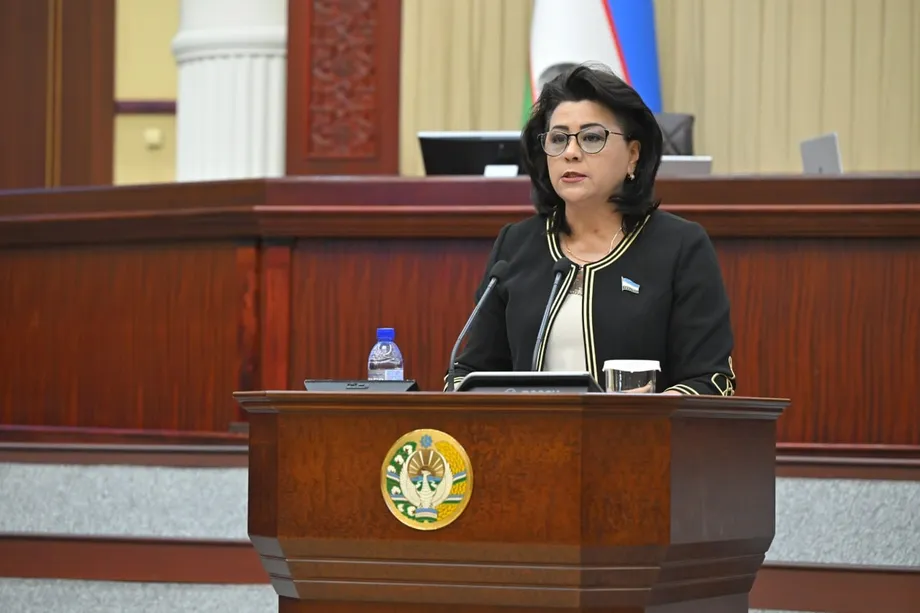
Uzbekistan has explicitly banned sexual harassment in its Labour Code and made employers responsible for taking all necessary measures to keep their workplaces free from it. President Shavkat Mirziyoyev signed Law No. ZRU-1189 on November 13, 2026, adding Article 8¹ to the code and expanding protection against discrimination.
Contents
- A new duty for employers, alongside an existing ban
- What conduct does the law cover?
- Why punishment alone left a gap
- A survey exposed the silence around complaints
- How the legislation reached this point
- How the reporting portal is meant to work
- Where complaints go and who checks compliance
- What employers must decide and what sanctions apply
- Protection also expands to colour and political views
- Key Points
The Ministry of Justice announced the changes, which took effect on November 13, the date of official publication. The Legislative Chamber adopted the law in its second and third readings on July 7, and the Senate approved it on October 2.
The central change is the employer's obligation to prevent harassment within employment relationships. Uzbekistan has punished sexual harassment through fines and short periods of administrative detention since April 2023. The new provision puts a direct prohibition into labour law, alongside a duty for employers to create a working environment free from such conduct.
A separate presidential resolution signed on September 21 sets out a reporting programme, including an online portal due to launch by December 1, 2026. Together, the measures connect three parts of workplace protection: defining prohibited behaviour, requiring employers to act and creating a system for receiving and tracking complaints.
What conduct does the law cover?
Article 8¹ defines sexual harassment as unwanted conduct of a sexual nature directed at a person that degrades their honour and dignity. Examples include sexual comments about appearance or body shape, gestures, touching and verbal approaches or propositions.
Physical contact is therefore one of several forms the conduct can take. Words and gestures also fall within the definition when they are sexual, unwelcome and degrading. The provision applies to people in employment generally, rather than being written solely as protection for women.
A manager, colleague or another participant in the working relationship may be involved. For someone facing unwanted sexual comments during the working day, the change creates an explicit basis in the Labour Code for seeking action from the employer.
Why punishment alone left a gap
Since April 2023, sexual harassment has carried a fine of two to five basic calculation units or administrative detention of up to five days. A repeat offence within a year carries a fine of five to seven units or detention of up to 15 days. A basic calculation unit is a government reference amount used to calculate fines and other payments.
The 2019 Law on the Protection of Women from Harassment and Violence also provided protection orders, legal assistance and the right to seek compensation through the courts. Its protection extended to workplaces.
Those measures gave victims ways to pursue an offender. The new Labour Code provision adds a responsibility within the workplace itself: an employer must take steps to prevent harassment rather than leave the response entirely to law enforcement or the courts.
The World Bank had identified this gap during discussions in 2024, when Uzbek authorities argued that the laws adopted in 2019 and 2023 already protected workers. The bank's assessment was that general administrative liability did not separately regulate harassment within employment relationships.
International Labour Organization experts also identified gaps in the 2023 provisions, including conduct that creates a hostile working environment and harassment involving colleagues, clients or suppliers. A hostile working environment means conditions in which degrading or intimidating conduct makes work threatening or humiliating.
A survey exposed the silence around complaints
A 2022 study by the United Nations Population Fund and Westminster International University in Tashkent surveyed employees at 23 private companies, including 740 women. Nine percent of the female respondents said they had experienced sexual harassment.
Human resources managers at those same companies reported no cases to the researchers. The contrast shows why an employer's complaint records can give a very different picture from employees' experiences: workers may experience harassment without bringing it into a formal process.
The study's authors identified shame, fear of publicity and concern about social judgment as reasons women might hesitate to disclose harassment, including in a survey. Women who did speak about incidents at work also did not always see changes after raising them.
For employers, the practical task now includes making it possible for workers to report a problem and receive a response. A written prohibition and a functioning complaint process address different needs: the first sets the rule, while the second gives an employee a way to seek help.
How the legislation reached this point
The adopted law followed an earlier attempt to expand workplace protection that failed in parliament. The government submitted that proposal in December 2024, and deputies passed it at its first reading in January 2025.
Alisher Kadyrov, leader of the Milliy Tiklanish party, opposed several proposed provisions. Disagreements included transfers to another job without an employee's consent, expanded grounds of discrimination and the use of protection orders. The Legislative Chamber rejected the bill on March 12, 2025, through Resolution No. 631-V.
Public attention returned to the issue in December 2025, when entrepreneur Nargiza Majitova publicly accused a senior official at the Uztextilprom association of harassment. Senate Chairperson Tanzila Narbaeva called for particular attention to harassment involving employers and senior officials.
On December 19, Deputy Minister of Employment Marat Dzhurayev said authorities planned to develop procedures for detecting workplace violations in 2026 with World Bank support. Narbaeva also raised the possibility of Uzbekistan joining ILO Convention No. 190, which addresses violence and harassment in the world of work.
The main steps were:
- March 12, 2025: The Legislative Chamber rejected the earlier protection bill.
- June 2026: Deputies from the relevant parliamentary committee introduced a new bill.
- July 7, 2026: The Legislative Chamber adopted the amendments in their second and third readings.
- September 21, 2026: Mirziyoyev signed the separate workplace safety resolution.
- October 2, 2026: The Senate approved the Labour Code amendments.
- November 13, 2026: The president signed the law, which entered into force upon publication.
- December 1, 2026: The deadline set for launching the reporting portal.
How the reporting portal is meant to work
The September resolution, titled "On measures to ensure a safe and respectful working environment in the labor sphere," provides for a phased programme in government bodies, state organisations and companies with substantial state ownership.
Its coverage includes companies in which the state owns at least 50%, as well as entities in which those companies hold at least a 50% stake. The "Safe and Respectful Working Environment" portal is to operate within the information systems of the agency responsible for management efficiency and development.
Employees will be able to submit reports of harassment and violence online. Complaints involving the person responsible for operating the portal, that person's direct supervisor or an official of the organisation are to be automatically forwarded to a higher authority.
The platform will also support evidence collection, complaint reviews, conclusions and exchanges of information about cases. Investigation results, measures taken and subsequent changes must remain in the system, with safeguards against destruction of stored data.
Where complaints go and who checks compliance
Reports containing signs of an administrative offence or crime must be forwarded through the unified 112 dispatch service to the appropriate authority. This creates a route from a workplace complaint to the public body responsible for investigating a possible legal offence.
The management agency will monitor compliance through the portal. When it identifies violations, it may issue formal submissions requiring them to be remedied, and the organisations concerned must consider those submissions.
The programme also recommends treating retaliation for making a complaint as a breach of labour discipline. Retaliation means punishing or pressuring someone because they reported a problem. Harassment, psychological pressure and discrimination by or against an employee are also among the recommended disciplinary violations.
Private employers are to be offered similar reporting tools on a voluntary basis through the labour ministry. The resolution describes a programme intended to reach organisations regardless of ownership, while setting out the clearest launch arrangements for government bodies and state organisations.
What employers must decide and what sanctions apply
The new law requires employers to take all necessary measures against sexual harassment, but leaves several practical details open. It provides no uniform list of preventive measures or single internal complaint and investigation procedure. It also does not separately list work correspondence, remote work, business trips or corporate events; application in those settings will depend on their connection to employment and subsequent legal practice. Details of wider implementation across private organisations remain unspecified.
Employers can translate the obligation into internal rules, confidential complaint channels, assigned investigators, review deadlines and protection against retaliation. Training and impartial consideration of complaints are other possible measures. Organisations will need to determine how their own procedures meet the legal duty.
The September resolution recommends that government workplaces classify sexual harassment and sexual or physical violence as a single gross breach of employment duties. Under the Labour Code, a breach in that category can lead to termination of an employment contract, subject to the required procedure.
Other disciplinary sanctions cited in the programme include a reprimand or a fine of up to 30% of the employee's average monthly salary. Dismissal depends on the relevant rules, findings and procedure; the amendment introduces neither automatic dismissal nor a separate employer fine for every harassment case.
Protection also expands to colour and political views
Article 4 of the Labour Code now expressly includes skin colour and political views among the grounds on which employment discrimination is prohibited. Existing listed grounds include sex, age, race, nationality, language, social origin and the criminal convictions of close relatives.
The additions concern decisions throughout employment, including recruitment, pay, promotion, access to professional training and dismissal. In practical terms, a person's skin colour or political views should not be used to restrict employment rights or grant someone else an unjustified advantage where those characteristics are unrelated to professional qualities and job requirements.
The amendments form part of Uzbekistan's work to incorporate international labour standards, including ILO Convention No. 111 on discrimination in employment and occupation. Uzbekistan ratified that convention in 1992. Senators said the changes were intended to support equal employment opportunities and strengthen guarantees of labour rights.
Convention No. 190, raised by Narbaeva during the December 2025 discussion, concerns violence and harassment at work. Her proposal to consider joining it sits alongside the domestic changes, which now place an explicit prevention obligation on employers.
Key Points
- Law No. ZRU-1189 took effect on November 13, 2026, explicitly banning workplace sexual harassment in Labour Code Article 8¹.
- Employers must take all necessary measures to create a working environment free from sexual harassment.
- Existing administrative penalties include fines and detention, with higher penalties for repeat offences within a year.
- A reporting portal for government bodies and state organisations is due by December 1, 2026, with certain complaints automatically sent to higher authorities.
- Government workplaces are advised to treat sexual harassment as a gross disciplinary breach that can lead to dismissal through the required procedure.
- Skin colour and political views have been added to the Labour Code's prohibited grounds of discrimination.