Infections rise as Johor Baru and Kulai bear the heaviest burden
Johor has recorded 13,641 dengue cases and 18 deaths in its latest update, with infections up 159.4% and fatalities up 80% compared with the corresponding period a year earlier. The number of recorded outbreak localities has also climbed to 1,489, nearly three times the previous year's 532.
Contents
- Infections rise as Johor Baru and Kulai bear the heaviest burden
- How the increase developed
- Two districts account for nearly nine in 10 weekly cases
- Where the local concentrations are
- More neighbourhoods are recording outbreaks
- Deaths and concern about severe illness
- Fogging funds and community cleaning
- Inspections still find breeding sites despite fines
- What households, schools and patients are being asked to do
- Key Points
State Health and Environment Committee chairman Ling Tian Soon said 275 cases were recorded in Epidemiological Week 45, compared with 266 the week before. The 3.4% weekly increase comes as inspections continue to find places where mosquitoes can breed inside and outside homes.
Johor Baru recorded 173 of the week's infections and Kulai recorded 70. Together, the two districts accounted for 243 of 275 cases, or 88.4% of the state total. They also accounted for 16 of the 17 newly recorded outbreak localities.
The latest figures bring together two concerns for residents and health services: infections remain heavily concentrated in the same districts, while the cumulative death toll continues to rise. Earlier updates had already prompted additional funding for fogging, more inspections and plans for community cleaning programmes.
Ling has urged residents to spend at least 10 minutes checking homes and workplaces for standing water. His advice includes covering stored water, emptying containers and scrubbing them to remove mosquito larvae. Schools and school bus operators have also been asked to take preventive action.
The latest update covers Week 45 but gives no calendar date for its cumulative total. Epidemiological weeks are numbered reporting periods that health authorities use to track disease patterns and compare them with earlier periods.
How the increase developed
Johor's earlier updates show how the cumulative burden grew from fewer than 8,000 cases in Week 31 to more than 13,600 by the latest announcement. The comparison with the previous year also became steeper, rising from 97.3% in Week 31 to 159.4% in the latest figures.
The main milestones were:
- May 10 to 16: Johor recorded 268 cases, described at the time as the highest weekly total that year. Cumulative deaths stood at two.
- Week 31: Cases reached 7,965, compared with 4,037 in the corresponding period a year earlier. Nine deaths had been recorded.
- Week 32: Cases reached 8,639, compared with 4,140 a year earlier, an increase of more than 108%.
- Week 40: Cases reached 12,280, compared with 4,793 a year earlier, an increase of 156.2%.
- November 1, 2026: A subsequent update put cases at at least 13,100 and deaths at 15. Ling issued the statement on November 3.
- Latest Week 45 update: Cases reached 13,641 and deaths reached 18, with 275 infections recorded during the week.
Between the Week 40 total and the latest tally, Johor added 1,361 recorded infections. Weekly numbers have fluctuated within that broader increase: Week 43 recorded a 12% decline to 264 cases from 300, followed by totals of 266 in Week 44 and 275 in Week 45.
Two districts account for nearly nine in 10 weekly cases
Johor Baru's 173 cases represented 62.9% of the Week 45 total, while Kulai's 70 represented 25.5%. Elsewhere, Kluang and Pontian recorded seven cases each, Segamat six, Kota Tinggi four, Muar three, Mersing and Batu Pahat two each, and Tangkak one.
Johor Baru and Kulai have repeatedly dominated the figures. During May 10 to 16, Johor Baru alone recorded 217 of the state's 268 infections, or 81%, while Kulai recorded 27. By Week 31, the two districts accounted for about 91% of cumulative cases.
Ling linked the concentration to dense populations and large numbers of housing estates and flats. For prevention teams, that means many households and shared spaces need attention within relatively small areas.
Where the local concentrations are
Johor Baru had accumulated 9,598 cases and Kulai 2,187 by the November 1 update. Together, their 11,785 cases represented about 90% of the stated total of 13,100 at that stage.
Within Johor Baru, Pulai recorded 3,519 cases, Tebrau 2,241 and Plentong 2,228. Those three areas accounted for 7,988 cases, about 83.2% of the district's cumulative total in that update. The figures identify a particularly heavy concentration within a district already carrying most of the state's burden.
Earlier hotspot lists also included Bandar, Jelutong, Sungai Tiram and Tanjung Kupang in Gelang Patah. In Kulai, the areas named were Bukit Batu, Kulai, Sedenak and Senai. Kluang's list included Kahang, Kluang, Layang-Layang, Macap, Nyior, Paloh, Renggam and Ulu Benut.
Residents outside these areas also face exposure. At Week 40, authorities recorded 5,625 cases in epidemic localities and 6,655 in localities outside that category. The latter accounted for 54.2% of all cases at the time, making household prevention relevant across the state.
More neighbourhoods are recording outbreaks
Johor recorded 17 new outbreak localities in Week 45: 10 in Johor Baru, six in Kulai and one in Kluang. The cumulative count reached 1,489, an increase of about 180% from 532 in the corresponding period a year earlier.
An outbreak locality is an area where health authorities have identified a cluster of dengue cases. Locality counts track affected areas, while case counts track people recorded with the disease. Both help authorities decide where inspections and mosquito control work are needed.
Week 43 had brought 24 new outbreak localities, including 13 in Kulai, 10 in Johor Baru and one in Mersing. The cumulative locality total at that point was 1,427, compared with 513 a year earlier.
Daily dengue updates and maps of outbreak localities by mukim, an administrative area within a district, were being published by the Johor Health Department. Prevention messages were also being distributed through social media graphics and daily radio announcements.
Deaths and concern about severe illness
Johor's latest death toll of 18 compares with 10 in the corresponding period a year earlier. Earlier updates recorded nine deaths by Week 31, 14 by Week 39 and 15 by the November 1 update.
No deaths were recorded during Week 40 or Week 43. The cumulative figures show why a week without a recorded death can still sit within a worsening annual picture: the running total includes fatalities recorded throughout the year.
Ling had also warned that the dominant circulating dengue strain was associated with more severe infections and symptoms. Earlier information identified DENV-3 as the dominant serotype. A serotype is a version of the dengue virus distinguished by how the body's immune system recognises it.
Ling said the growing number of infections was placing additional pressure on public healthcare services. More people needing assessment, testing and treatment means a greater workload for clinics and hospitals, particularly in the districts recording most infections.
Fogging funds and community cleaning
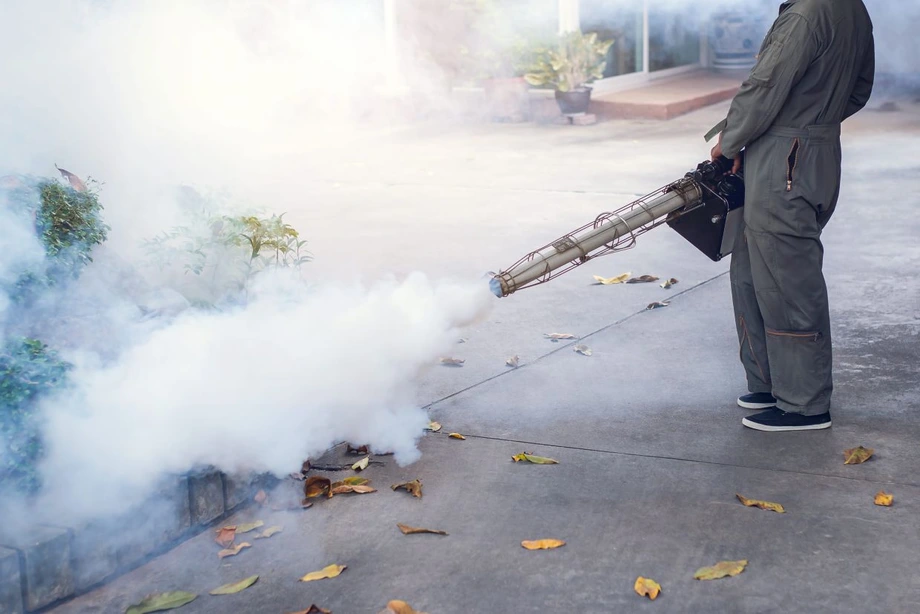
Johor approved RM116,000 for Health Department fogging operations after a special state dengue committee meeting. More than 90 community cleaning programmes were also planned, particularly in Johor Baru and Kulai.
Health teams were to intensify fogging in hotspots and inspect more premises, including homes, for potential Aedes breeding sites. Local councils were to help organise gotong-royong, community activities in which residents work together to clean shared surroundings.
Ling Tian Soon, the state official overseeing health and environment matters, described the need for stronger action:
"We need to take more aggressive measures to control the increase in dengue cases, especially in hotspot areas," he said.
Fogging targets adult mosquitoes, while removing standing water tackles places where the next generation can develop. Ling urged residents to support both parts of the response by cooperating with health teams and removing containers or other places that collect water.
Inspections still find breeding sites despite fines
Enforcement operations have resulted in 5,338 compounds, or financial penalties, worth RM2.669 million in the latest update. Authorities said 76.19% had been paid. An earlier update recorded 5,072 compounds worth about RM2.5 million, with 77.35% paid.
Inspectors nevertheless continued to find potential breeding sites inside and outside homes. Ling said those findings showed residents needed to do more to remove stagnant water, even as enforcement and public information campaigns continued.
Hot weather followed by sudden downpours was another concern raised in earlier updates. Rain can fill containers, drains, flower pots and other small spaces. Aedes mosquitoes need only a small amount of standing water to breed.
Residents were encouraged to organise community cleaning at least once a week. Shared action matters in housing estates and flats because water can accumulate in common areas as well as within individual homes.
What households, schools and patients are being asked to do
Ling's household advice centres on a short, practical inspection: check the home, workplace and surrounding area for anything holding stagnant water. Cover water storage containers, empty unwanted water and scrub containers to remove larvae.
Ling, who is also the Yong Peng assemblyman, explained the request in an earlier appeal:
"I urge everyone to spend at least 10 minutes cleaning their homes and surroundings. This can help prevent Aedes mosquitoes from breeding and protect our families and community from dengue," he added.
Schools were encouraged to hold regular cleaning activities to remove standing water and places where larvae could develop. School bus operators and drivers were advised to use aerosol sprays inside buses before morning and afternoon student journeys.
People with symptoms such as high fever, fatigue, weakness or joint pain were urged to seek medical attention. Ling also advised patients to undergo screening or ask a doctor about a dengue test, placing early assessment alongside mosquito control as part of the response.
Key Points
- Johor's latest total is 13,641 dengue cases and 18 deaths, increases of 159.4% and 80% respectively from the corresponding period a year earlier.
- Week 45 recorded 275 cases, up from 266 the previous week.
- Johor Baru and Kulai accounted for 243 weekly cases, or 88.4% of the state total.
- Cumulative outbreak localities reached 1,489, compared with 532 a year earlier.
- Authorities approved RM116,000 for fogging and planned more than 90 community cleaning programmes.
- Residents were urged to check for standing water for at least 10 minutes, while people with dengue symptoms were advised to seek medical assessment.