Four years in prison and the legal status of free polls at stake
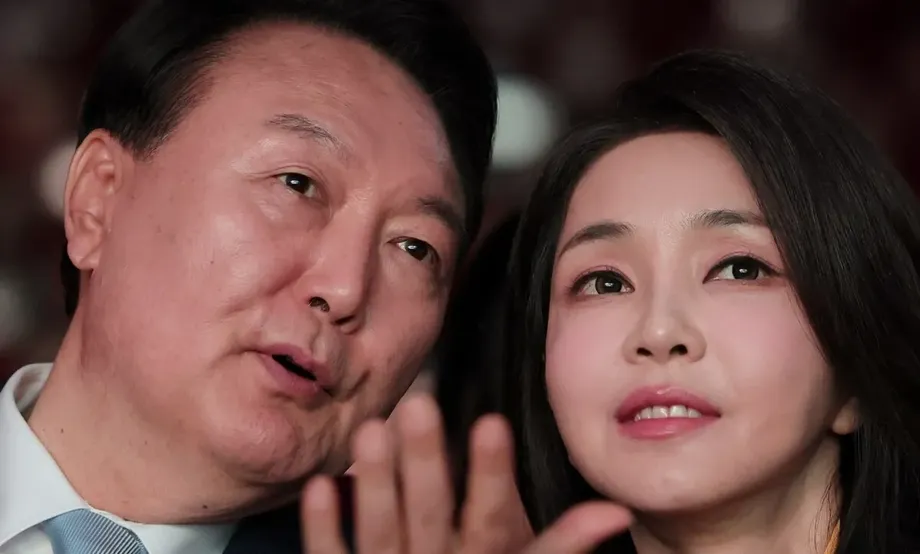
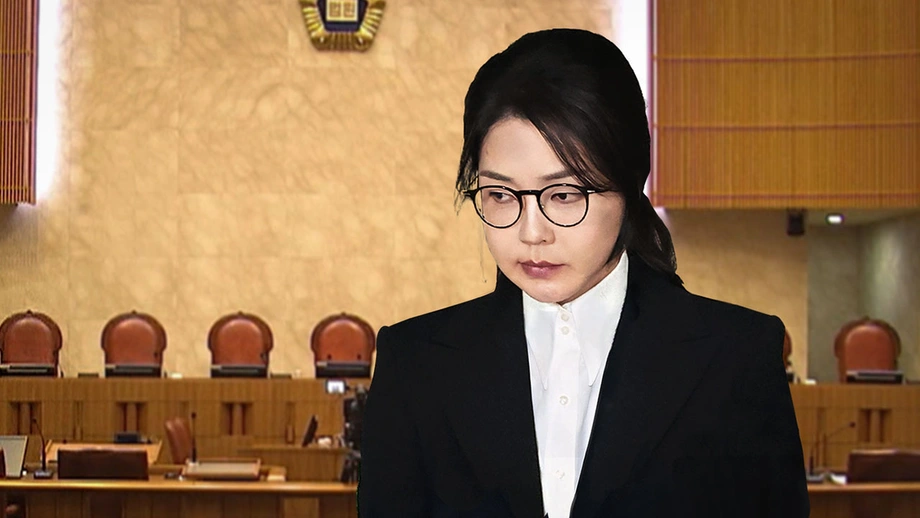
South Korea's Supreme Court will rule at 4 p.m. on November 19, 2026, on former first lady Kim Keon-hee's case involving Deutsch Motors stock manipulation, free opinion polls supplied by political broker Myung Tae-kyun and valuables received from the Unification Church. The full bench will review an appellate judgment sentencing her to four years in prison and a fine of 50 million won.
Contents
- Four years in prison and the legal status of free polls at stake
- How Kim's sentence rose from 20 months to four years
- What changed in the stock and gift findings?
- When does political advice become a donation?
- Why 58 polls became 14 in Yoon's first judgment
- Why the Supreme Court brought in its full bench
- Why Seoul's mayor is also watching
- A separate warrant keeps Kim in custody
- Two major rulings share November 19
- Key Points
The court announced the date on November 16. Justice Park Young-jae is responsible for presenting Kim's case to the justices. The ruling will be broadcast live on YouTube, Facebook and the Supreme Court's Court TV, with sign language interpretation.
The most closely watched legal question concerns 58 opinion polls that prosecutors allege Kim and her husband, former President Yoon Suk Yeol, received without payment between June 2021 and March 2022. Prosecutors valued those polls at 270 million won. The justices must decide whether conducting a poll or providing its results can count as a political contribution prohibited by the Political Funds Act.
Kim was acquitted of the polling charge at both earlier trials. Her prison sentence instead rests on findings concerning stock manipulation and gifts from the Unification Church. The Supreme Court's interpretation of the polling law could also shape Yoon's separate appeal and provide guidance for another case involving Seoul Mayor Oh Se-hoon.
Kim is not expected to attend the announcement. Defendants are not required to appear at this stage, when the Supreme Court reviews legal issues rather than conducting a new trial with witnesses.
How Kim's sentence rose from 20 months to four years
Kim's first trial ended in January with a prison sentence of one year and eight months. The court found her guilty of only part of the allegations concerning Unification Church gifts and acquitted her of the stock manipulation and polling charges.
The Seoul High Court reached a broader finding of guilt on April 28. It convicted her of participating in Deutsch Motors stock manipulation, expanded the guilty findings concerning the church gifts and imposed four years in prison plus the 50 million won fine, reported as approximately $37,500.
The increase was substantial: the first sentence amounted to 20 months, while the appeal sentence amounted to 48 months, or 2.4 times as long. The polling acquittal remained unchanged.
Special counsel Min Joong-ki's team had sought a much heavier punishment at the appeal: 15 years in prison and a fine of 2 billion won. Prosecutors divided their requested prison term into 11 years for the stock manipulation and influence allegations and four years for the political funding charge. The sentence imposed by the court was therefore far below the prosecution's request.
What changed in the stock and gift findings?
The Deutsch Motors allegations concern stock trading between 2010 and 2012. Prosecutors accused Kim of participating in price manipulation and obtaining about 810 million won in improper gains. Stock manipulation means artificially influencing a share price rather than allowing ordinary buying and selling to determine it.
The first court accepted that Kim might have known manipulation was taking place but found that participation in a common plan had not been proven. The appellate court concluded that she had taken part in the manipulation, changing the outcome on that part of the case.
The Unification Church allegations concerned three gifts in 2022: a bag worth about 8 million won on April 7, a Graff necklace worth 62 million won on July 5 and a Chanel bag worth 12 million won on July 29. Together, their stated values came to roughly 82 million won.
The first court acquitted Kim over the April bag because it found no specific request attached to it. The appellate court instead found that she understood an unspoken request for help and accepted the valuables in connection with acting as an intermediary. It found all the church gift allegations before it proven, ordered the Graff necklace confiscated and ordered recovery of more than 20 million won.
Those findings explain why the case involves more than accepting expensive presents. The legal issue concerns accepting valuables in return for using influence to help someone, including when the request is understood without being stated directly.
When does political advice become a donation?
The Political Funds Act question turns on the kind of benefit the recipient received. A poll costs money to conduct, but the appellate courts examined whether Kim and Yoon obtained something with a financial value or instead received political advice supported by polling information.
Yoon's appeal was decided by the Seoul High Court's Criminal Division 7 on October 7. The court acquitted him and Myung, finding that the assistance amounted to political advice and help, including information about public opinion and introductions to influential politicians. It treated polling results as material used to support that advice.
The court also found insufficient evidence of an advance, unspoken agreement to provide the polls for free. Myung had shared polling information with several politicians and discussed results from other polling organisations as well as his own.
Kim's appellate court used related reasoning. It found that receiving results from surveys Myung conducted independently for his political or business purposes did not by itself amount to receiving political funds. Her courts also questioned the reliability of Myung's testimony and whether she had requested or coordinated the surveys.
The Supreme Court must now define the legal boundary. Its answer will guide how courts assess a service that can be expensive to produce but may also be shared during ordinary political discussions.
Why 58 polls became 14 in Yoon's first judgment
Prosecutors charged Yoon with receiving 58 polls worth 270 million won in cooperation with Kim. The allegations covered the period leading up to the March 2022 presidential election and included 36 polls intended for publication and 22 that were not intended for publication.
Yoon's first court accepted a smaller part of that allegation. It treated 14 polls costing 27,927,200 won as illegal political contributions, finding that Yoon, Kim and Myung had reached an indirect and unspoken agreement before those surveys were conducted or supplied.
That amounted to about one quarter of the 58 alleged polls and roughly one tenth of the 270 million won alleged value. The court sentenced Yoon to two years in prison and ordered recovery of about 13.96 million won. Myung received a prison sentence of one year and six months before both men were acquitted on appeal.
The appellate reversal addressed both the legal nature of the benefit and the evidence of an agreement. The Supreme Court's decision in Kim's case could therefore affect how Yoon's appeal is considered, even though the two cases will receive separate judgments. No date has been announced for Yoon's Supreme Court ruling on the polling charge.
Why the Supreme Court brought in its full bench
The Supreme Court had planned to rule on Kim's case in July, but postponed the decision after Yoon was convicted at his first trial on the same polling allegation. Oh's initial conviction in another case involving Myung's surveys added to the conflicting judgments.
The court referred Kim's case to its full bench in July. An en banc proceeding brings together at least two thirds of the Supreme Court justices, with the chief justice presiding, instead of leaving the decision to a smaller panel.
The major steps in the case are:
- June 2021 to March 2022: The period covered by the allegation that Kim and Yoon received 58 free polls.
- January 2026: Kim received one year and eight months in prison at her first trial.
- April 28: The appellate court increased her sentence to four years and imposed a 50 million won fine.
- July: The Supreme Court postponed its planned ruling and referred the case to the full bench.
- October 7: Yoon was acquitted on appeal in his polling case.
- November 19, at 4 p.m.: The Supreme Court is scheduled to announce its ruling in Kim's case.
The later acquittals of Yoon and Oh mean the cases now reach the Supreme Court after convictions were reversed. The justices still face the underlying disagreement over how to interpret the law and assess the evidence.
Why Seoul's mayor is also watching
Oh Se-hoon's case concerns an allegation that he arranged for Kim Han-jung to pay the cost of surveys conducted by Myung. His first court imposed a fine of 10 million won, but the appellate court acquitted him after rejecting Myung's testimony as unreliable. Prosecutors appealed, leaving his case pending at the Supreme Court.
Oh's allegation centres on payment by another person, while Kim and Yoon were accused of receiving polling services without paying. The legal questions therefore overlap only in part.
A ruling focused on whether free polling counts as a political contribution would bear most directly on Kim and Yoon. A judgment that also addresses how courts should assess Myung's testimony could have a wider effect on Oh's case.
The Supreme Court has previously required strict scrutiny when judges accept selected parts of a witness's testimony while rejecting other parts. Whether the full bench discusses that principle will matter to the reach of its decision beyond Kim's appeal.
A separate warrant keeps Kim in custody
Kim's detention had been due to expire at the end of October while her Supreme Court appeal continued. The special counsel sought another warrant on October 15 in a separate case involving alleged influence trading over appointments.
A hearing took place on October 27, after which a new warrant was issued. The additional detention period was described as two months, keeping her in custody through the end of the year.
Her custody therefore also rests on proceedings outside the three allegations due for judgment on November 19. The Supreme Court's decision will determine the legal outcome of the appeal before it, while the separate influence case continues on its own track.
Two major rulings share November 19
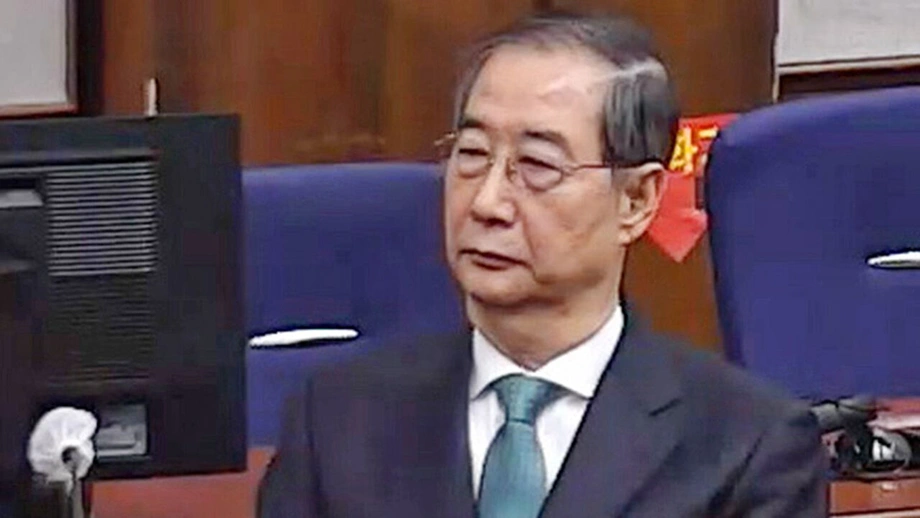
Former Prime Minister Han Duck-soo will also receive a full bench ruling at 4 p.m. on November 19. His appeal concerns a conviction for performing important duties in an insurrection connected to Yoon's declaration of martial law on December 3, 2024. Han received 23 years in prison at his first trial and 15 years on appeal.
Han's detention period is due to expire on November 20. The Supreme Court said it considered that deadline, developments in related cases and the need to avoid contradictory judgments when setting the ruling date. It also explained that justices discuss cases outside formally scheduled deliberation meetings.
Noh Kyung-pil, head of the Court Administration, described the court's process when answering questions about the schedule:
Once the written judgment is sufficiently complete and all justices sufficiently accept it, a ruling date is set.
Yoon faces another Supreme Court judgment on November 26 at 10:15 a.m., this time over alleged perjury during Han's trial. The charge concerns whether he falsely claimed that he had independently intended to convene a Cabinet meeting before declaring martial law. Both lower courts acquitted him.
Members of the public seeking to attend the November 19 rulings can apply by email to [email protected] by 10 a.m. on November 18. Successful applicants will be notified by text message by 6 p.m. that day. The court plans 60 general seats, five seats for people with disabilities and three wheelchair spaces, with an additional video courtroom available.
Key Points
- Kim Keon-hee's Supreme Court ruling is scheduled for November 19, 2026, at 4 p.m.
- Her appellate sentence is four years in prison and a fine of 50 million won for stock manipulation and Unification Church gift offences.
- Both earlier courts acquitted her of receiving illegal political contributions through free polls.
- The full bench will decide whether conducting polls or supplying their results can count as a prohibited political donation.
- Yoon Suk Yeol and Oh Se-hoon have related polling appeals pending at the Supreme Court.
- A separate warrant extended Kim's custody beyond the end of October.
- The ruling will be livestreamed with sign language interpretation.