574 withdrawals put prison money rules under scrutiny
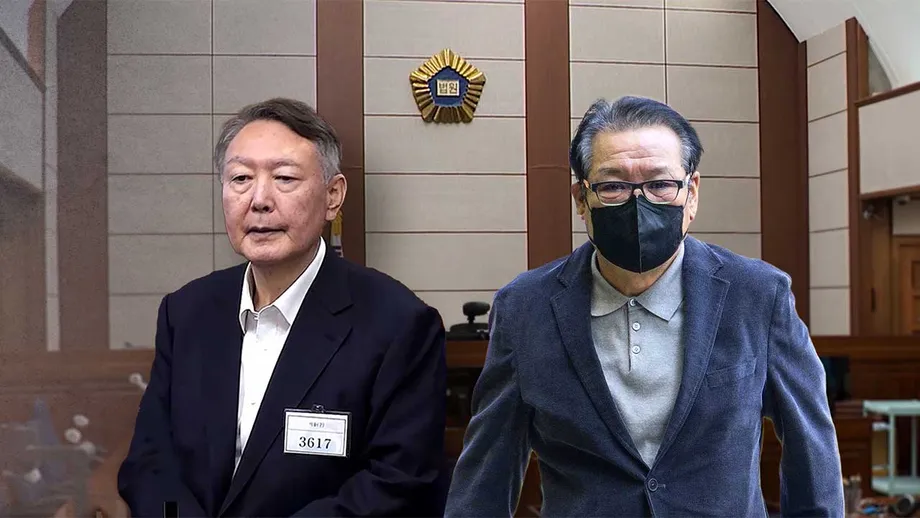
Former South Korean President Yoon Suk Yeol received 1.94852 billion won in his prison money account over 14 months and withdrew about 1.9 billion won through 574 transactions, according to Justice Ministry data obtained by lawmaker Seo Young-kyo. His wife, Kim Keon Hee, received about 240 million won over roughly 13 months.
Contents
- 574 withdrawals put prison money rules under scrutiny
- What the financial records show
- How a balance limit allows repeated deposits
- What the proposed law would change
- Medical bills and family support would have exceptions
- Why the acting minister wants a limit over time
- How the dispute reached parliament
- Key Points
The combined deposits, approximately 2.19 billion won, have prompted Seo, a Democratic Party lawmaker who chairs the National Assembly's Legislation and Judiciary Committee, to introduce legislation tightening controls on money held for prisoners. The total is about eight times the annual presidential salary of roughly 270 million won cited during parliamentary scrutiny.
The proposal would put a limit of 4 million won per prisoner into law, require money exceeding the limit to be returned to senders, and give the justice minister authority to regulate the frequency, size and use of deposits and withdrawals.
A 4 million won limit already exists under Justice Ministry guidelines. The central problem is how that limit operates: money can move from a prison account into an outside personal account, leaving room for further deposits. A ceiling on the amount held at one moment has therefore allowed much larger sums to pass through over time.
Acting Justice Minister Lee Jin-soo has acknowledged that the system needs changing. He has also proposed limiting the amount prisoners can receive over a specified period, while preserving their ability to pay for medical treatment and other necessary expenses.
What the financial records show
Justice Ministry figures obtained by Seo's office put Yoon's deposits at 1,948,520,000 won between July 2025 and August 2026. His 574 withdrawals over those 14 months amounted to about 41 transactions a month, with roughly 1.9 billion won withdrawn in total.
Kim received approximately 240 million won over about 13 months. Democratic Party lawmaker Lee Seong-yun separately disclosed a combined total of about 2.19 billion won during a parliamentary audit on the eighth. The audit figures described Yoon's receipts as roughly 1.95 billion won and Kim's as roughly 240 million won, counted through the ninth of the preceding month.
The scale becomes easier to understand alongside the existing account limit. Yoon's cumulative deposits alone were about 487 times the 4 million won balance ceiling. That comparison captures why lawmakers are examining repeated transfers: the amount passing through the account was far greater than the amount the prison was supposed to hold at any one time.
The figures concern money received and withdrawn through accounts administered for people in custody. Seo's proposed changes focus on how correctional institutions accept, hold and transfer those funds.
How a balance limit allows repeated deposits
South Korean correctional facilities hold money that prisoners bring with them when entering custody, along with money sent by people outside. Prisoners can use those funds for permitted purchases and expenses.
The Justice Ministry's guidelines on managing money and property set a limit of 4 million won for each prisoner. Under the current arrangements described during the audit, funds can be transferred to an outside personal account when a prisoner requests a transfer. Moving money out lowers the balance and creates space for another deposit.
Consider an account holding 4 million won. If that money is transferred out, another 4 million won can arrive while the account remains within its balance limit. Repeating the process allows the total received over several months to grow far beyond 4 million won.
Seo told the parliamentary audit that correctional staff were handling withdrawals and transfers to personal deposit accounts when the prison account reached its limit. Her legislation addresses both the account ceiling and the rules governing money moving through it.
What the proposed law would change
Seo's amendment to the Act on the Execution of Sentences and Treatment of Inmates would create Article 25-2, placing the 4 million won ceiling directly in the legislation. It would also authorize the justice minister to determine rules on the number and amount of deposits and withdrawals, as well as how the money may be used.
That would give the restrictions an explicit basis in an act passed by the National Assembly. At present, the balance ceiling operates through ministry guidelines, while the legislation lacks clear provisions setting limits on the amount held and its use.
A proposed revision to Article 27 would prevent the head of a correctional facility from authorizing further delivery of money exceeding the ceiling. Money or property delivered beyond the permitted limit would have to be returned to the sender.
These provisions target different stages of the same process. The statutory ceiling would govern how much a prison may hold. The return requirement would address excess deliveries. Ministerial rules on transactions would govern the repeated movement of money into and out of accounts.
The proposal applies to prisoners generally, although the deposits received by Yoon and Kim drove the parliamentary scrutiny. Its practical reach would therefore extend to families and other people sending money to anyone in custody.
Medical bills and family support would have exceptions
Seo's bill would allow exceptions through Justice Ministry regulations for legitimate spending. The listed purposes include purchases paid for by prisoners, treatment at outside medical facilities, medical care at their own expense, and assistance with family living costs.
Spending needed for rehabilitation and a return to society could also qualify. Those provisions would allow the ministry to account for needs that do not fit neatly within a single balance ceiling.
A prisoner paying an outside hospital bill, for example, may need access to a larger amount than someone making ordinary purchases inside a facility. The proposal leaves room for such expenses while seeking tighter control over repeated deposits and withdrawals.
Families would also be affected by the return rule. Someone sending money could have a transfer sent back because the recipient's account had reached its limit. The exceptions and transaction rules would therefore shape how the restrictions work for everyday support as well as unusually large flows of money.
Why the acting minister wants a limit over time
Acting Justice Minister Lee addressed the issue during a comprehensive audit by the Legislation and Judiciary Committee after Park Eun-jung, a lawmaker from the Rebuilding Korea Party, challenged the handling of the couple's deposits. Lee acknowledged that the existing arrangements had moved away from the purpose of holding prisoners' money.
Lee described the problem in these terms:
Improvements are needed because the system is being operated in a way that does not fit the original purpose of the funds held in custody.
Lee also argued for a ceiling covering receipts during a defined period. In his explanation to the committee, he said:
We need to set a limit on the funds that can be received over a certain period.
A balance ceiling and a limit over time control different things. The first restricts how much money is in an account at once. The second restricts how much may arrive during a particular period, even when earlier deposits have already been withdrawn.
Lee said a balance ceiling alone could inconvenience senders and pointed to necessary spending, including hospital treatment. He pledged support for legislation that would prevent adverse effects while allowing prisoners to meet their living needs.
How the dispute reached parliament
Yoon's return to detention in July 2025 and Kim's detention the following month began the periods examined in the financial disclosures. The key dates and subsequent steps are:
- July 10, 2025: Yoon was detained again.
- August 12, 2025: Kim was detained.
- July 2025 to August 2026: Yoon received 1.94852 billion won and made 574 withdrawals, according to Justice Ministry data obtained by Seo's office.
- During parliamentary audits: Lawmakers questioned the couple's combined receipts and the transfer of prison funds into personal accounts.
- On the 27th, in the announcement of her proposal: Seo said she had introduced the amendment establishing statutory limits and controls.
Seo also pointed to YouTubers publishing account numbers and encouraging people to send prison money. Her stated objective is to stop the repeated collection and withdrawal of large sums through the custody account system.
The bill remains a proposal. No date has been given for a committee vote or final passage, and the detailed transaction rules and exceptions would be set through the ministerial powers envisaged in the amendment.
For lawmakers, the central decision is how to connect three controls: the amount a prison can hold, the amount a prisoner can receive over time, and the expenses that deserve an exception. For prisoners and their families, those choices would determine when money can arrive, when it must be returned and how essential bills can be paid.
Key Points
- Yoon and Kim received a combined total of about 2.19 billion won in prison money, according to figures disclosed during parliamentary scrutiny.
- Yoon received 1.94852 billion won over 14 months and withdrew about 1.9 billion won through 574 transactions.
- Seo Young-kyo's bill would establish a statutory ceiling of 4 million won and require excess deliveries to be returned.
- The proposal would allow rules controlling transaction frequency, amounts and use, with exceptions for medical care, family support and other permitted needs.
- Acting Justice Minister Lee Jin-soo supports reform and has proposed limiting receipts over a defined period.
- No date has been announced for a vote on the bill.