A nuclear decision begins with 19 areas of scrutiny
Singapore has appointed 12 consulting firms to prepare for an international nuclear readiness review in 2027, bringing in expertise ranging from reactor safety and uranium supplies to financing, nuclear law and public engagement. Separately, the National Environment Agency (NEA) has commissioned three studies on safety standards, regulation and the potential environmental effects of a nuclear power plant.
Contents
- A nuclear decision begins with 19 areas of scrutiny
- What will the IAEA assess?
- Who are the 12 consultants?
- Safety, money and public involvement share the agenda
- Three studies examine safety and environmental protection
- Training Singaporeans to make independent judgments
- Why financing matters alongside reactor design
- Regional plans make cooperation more urgent
- The timetable stretches beyond the 2027 mission
- Key Points
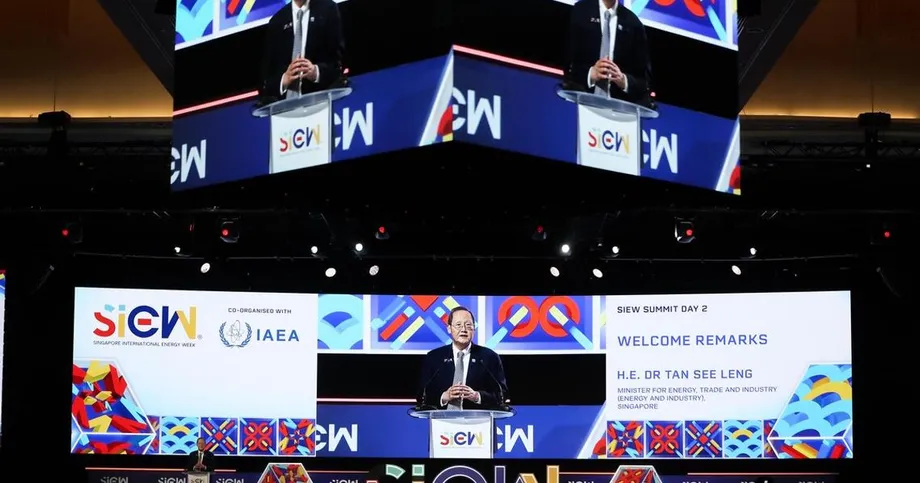
Minister for Energy, Trade and Industry (Energy and Industry) Tan See Leng announced the consultant panel on October 27, 2026, at the inaugural IAEA@SIEW Forum during Singapore International Energy Week. The appointments support an assessment of Singapore's capabilities across 19 areas under the International Atomic Energy Agency's Milestones Approach.
The government's nuclear review announcement names the assessment as the Integrated Nuclear Infrastructure Review (INIR) Phase 1 Mission. International experts will examine Singapore's ability to make an informed decision on the potential deployment of advanced nuclear energy technologies.
NEA reiterated on October 27 that Singapore has not decided whether to deploy nuclear energy. The immediate work is to develop the people, institutions and knowledge needed to judge whether the technology is suitable for a small, densely populated country.
Tan said the preparations would require expertise well beyond engineering. Workforce development, legislation, regulation, industry participation and financing all form part of the task.
Speaking at the forum, Tan explained why Singapore is commissioning further work before making a decision:
Many studies need to be done before we can make an informed decision on deploying nuclear energy.
For residents, that means the review will examine questions with direct public consequences: how radiation would be controlled, how waste would be managed, who would regulate a facility and how authorities would respond to an emergency.
What will the IAEA assess?
The IAEA's review examines national infrastructure in a broad sense. Alongside physical systems such as the electricity grid, it considers laws, government responsibilities, technical skills, financial arrangements and the organisations needed to manage nuclear energy.
Phase 1 focuses on the studies and preparations needed for a knowledgeable decision about starting a nuclear power programme. If Singapore chooses to proceed, Phase 2 assesses readiness to invite bids for a plant. Phase 3 examines readiness to commission and operate it safely.
Singapore's self evaluation was already underway when Prime Minister Lawrence Wong announced the mission in May. The main mission, tentatively scheduled for 2027, involves a plenary interview lasting about a week with international specialists and IAEA staff. Finalisation of the mission report is expected in 2027 or 2028.
The report will set out observations, recommendations and suggestions that Singapore can use to prepare a national action plan. Wong has said the government will share the independent findings, including risks and challenges, and will accept a conclusion that nuclear energy is unsuitable if that emerges from the review or domestic studies.
Who are the 12 consultants?
The Energy Market Authority (EMA) has assembled firms covering engineering, infrastructure, management, finance and law. They include infrastructure consultancy Aecom Singapore, US nuclear consultant Excel Services Corporation and GNE Advisory, a legal practice specialising in nuclear energy.
The full panel comprises:
- Aecom Singapore
- Afry Singapore
- AtkinsRealis Singapore
- Excel Services Corporation
- EY Corporate Advisors
- GNE Advisory
- Helixos
- Kellogg Brown & Root Asia Pacific
- Mott MacDonald Singapore
- Pinsent Masons MPillay LLP
- The Boston Consulting Group
- WSP Consultancy
EMA will also appoint a second panel of technical advisers by the end of 2026. Together with the training programmes being developed, the external advice will support Singapore's effort to build its own capacity to assess nuclear technology.
Safety, money and public involvement share the agenda
The consultants' work falls into three broad categories aligned with the IAEA's 19 infrastructure areas: technical and economic matters, legal and regulatory frameworks, and organisational capabilities.
The technical and economic work covers nuclear safety, security, radiation protection, environmental protection, financing, site selection, supporting facilities and the electricity grid. It also includes emergency planning, radioactive waste management, safeguards and the nuclear fuel cycle.
Safeguards are systems for checking that nuclear materials and technology are used for authorised purposes. Nuclear security concerns protecting facilities and materials, while nuclear safety concerns preventing accidents and limiting their consequences. The fuel cycle covers how fuel, including uranium, is sourced, processed and used, alongside the arrangements needed after use.
The legal work will examine the rules and institutions required to govern nuclear energy. Organisational work covers a national policy position, management systems, procurement, industrial participation, workforce development and engagement with communities and the public.
Singapore has already established teams with different responsibilities. EMA's new Nuclear Energy Office assesses the potential use of nuclear power, while NEA's dedicated nuclear safety team supports regulatory oversight. The consultant appointments extend preparations across both the possible development of a programme and its supervision.
Three studies examine safety and environmental protection
NEA's three commissioned studies concentrate on the standards and knowledge needed to protect people and the environment. Their subjects overlap with the wider readiness review but give the agency more detailed work on safety and regulation.
AtkinsRealis Singapore will study international nuclear safety standards and requirements. Its remit includes reactor design and operation, safety systems and accident prevention.
Vienna based Enconet Consulting will examine international environmental standards and regulatory frameworks for nuclear facilities. Environmental Resources Management (S) will assess the potential environmental effects of a plant, focusing on protecting public health and the environment during construction and operation.
NEA chief executive Geraldine Low described the purpose of the studies:
These studies will support NEA in strengthening our expertise in areas including nuclear safety, regulation and environmental protection, drawing on international experience and practices,
Singapore's research capabilities also include work at the Singapore Nuclear Research and Safety Institute in radiobiology, radiochemistry, reactor safety, radionuclide dispersion and nuclear policy. Radionuclide dispersion research examines how radioactive substances could move through the environment, knowledge relevant to assessing exposure and planning emergency responses.
Training Singaporeans to make independent judgments
Singapore launched three schemes on October 26 to build local nuclear expertise: the Singapore Nuclear Manpower Development Programme, the Nuclear Manpower Development Programme (Industry), and the Singapore Future Energy Fellowship.
From 2027, public officers will gain practical experience with organisations involved in areas such as technology assessment, project development, licensing, construction and regulatory frameworks. EMA identified AtkinsRealis, China National Nuclear Corporation Overseas and X-energy as the initial partners for the public sector programme.
The industry programme will provide funding for personnel from selected Singapore companies, invited to participate in training and attachments with international partners. It is intended to help companies develop nuclear capabilities and pursue commercial opportunities overseas.
The fellowship will bring international energy leaders to Singapore to provide independent strategic advice. The first fellows with nuclear expertise were expected to be appointed in 2026 to support preparations for the IAEA mission.
In his official Singapore Energy Lecture on October 26, Tan also said the National University of Singapore and Nanyang Technological University were working towards launching a joint master's programme in nuclear engineering in 2027.
The planned course would take one year for students studying full time, or two to three years for those studying part time. Its design considers Singapore's limited land, tropical climate and coastal setting. Together, the academic programme and practical attachments aim to give Singaporeans the ability to question designs, assess risks and understand regulatory choices themselves.
Why financing matters alongside reactor design
Tan said strong international partnerships and viable financing models would be critical, especially for countries new to nuclear energy. A programme requires spending on institutions, skills and oversight as well as a power station.
Small modular reactors, or SMRs, featured in discussions at the forum. These reactors have smaller individual generating units than conventional large plants, and their designs may allow more components to be manufactured in factories before assembly at a site.
Ganesh Padmanabhan, head of project finance at DBS, said smaller units could change how financiers assess nuclear projects. Commercial banks have historically faced difficulties financing plants because of their large scale, he said. Development risks, operating experience and government support would still affect whether a project could attract lending.
Singapore's wider electricity plans show why nuclear assessment is a lengthy exercise alongside more immediate construction. The electricity grid expansion announced on October 26 includes five new natural gas power plants between 2026 and 2031 and grid investment of up to S$5.3 billion.
Natural gas supplies about 95% of Singapore's electricity. Tan said in his energy lecture that even with greater deployment, solar could meet no more than 10% of projected electricity demand in 2050. Singapore is therefore examining nuclear energy alongside other options for supplying reliable power with lower carbon emissions.
Regional plans make cooperation more urgent
Singapore intends to deepen regional nuclear cooperation when it assumes the ASEAN chairmanship in 2027. Tan identified the ASEAN Network of Regulatory Bodies on Atomic Energy and the Nuclear Energy Cooperation Sub-Sector Network as channels for that work.
Singapore and the Philippines have agreed to explore nuclear energy collaboration. The Philippines is targeting 1.2 gigawatts of nuclear capacity by 2032, and Philippine Energy Secretary Sharon Garin told the forum that training and accreditation were priorities for its workforce.
Huang Wei, director of the planning, information and knowledge management division in the IAEA's Department of Nuclear Energy, said 42 countries were actively considering nuclear energy. He said another 10 to 12 countries could have operating plants by 2035, beyond the current 31.
Those figures would bring the number of countries operating nuclear plants to between 41 and 43, an increase of about 32% to 39% from 31. Huang also noted that the IAEA raised its nuclear expansion projections in September for the sixth consecutive year.
Regional interest gives Singapore practical reasons to develop nuclear knowledge regardless of its eventual domestic decision. Regulatory cooperation, environmental assessment and emergency preparedness all require officials who understand the technology and can work with neighbouring authorities.
The timetable stretches beyond the 2027 mission
Singapore's next steps combine consultant appointments, professional training and international review. The main dates announced so far are:
- May 19, 2026: Lawrence Wong announced the planned IAEA review at EMA's 25th anniversary dinner.
- October 26, 2026: Singapore launched three schemes to build local expertise and outlined the planned joint university programme.
- October 27, 2026: EMA announced its 12 consultants, while NEA named firms for three safety and environmental studies.
- By the end of 2026: EMA expects to appoint its second panel of technical advisers.
- 2027: The main INIR Phase 1 mission is tentatively scheduled, public officer attachments begin, and the joint master's programme is targeted for launch.
- 2027 to 2028: The mission report is expected to be finalised.
Wong has said that preparations and infrastructure development can take more than 15 years, based on other countries' experience. Ian Grant, an independent nuclear consultant and former deputy director general of operations at the United Arab Emirates' Federal Authority for Nuclear Regulation, has similarly described a period of at least 15 years from initial planning to plant operation.
Singapore's decision will therefore depend on a sequence of assessments rather than a single visit. The immediate output will be a clearer account of its capabilities, the gaps requiring attention and the commitments a nuclear programme would demand.
Key Points
- EMA appointed 12 consulting firms to support preparations for the IAEA's INIR Phase 1 Mission in 2027.
- The review covers 19 areas, including safety, waste management, financing, regulation and emergency planning.
- NEA commissioned three studies on nuclear safety, environmental standards and potential environmental effects.
- New training schemes and a planned joint NUS and NTU master's programme will build local expertise.
- A second technical adviser panel is expected by the end of 2026, with the mission report expected in 2027 or 2028.
- Singapore has not decided whether to deploy nuclear energy.