Fast growth puts productivity at the centre of reform
Uzbekistan's economy expanded by 8.5% in the first half of 2026, according to its central bank, while the IMF's October World Economic Outlook raised its forecast for the full year to 7.8%. The challenge now is to turn that expansion into more productive businesses and lasting jobs without allowing spending to push prices higher.
Contents
- Fast growth puts productivity at the centre of reform
- How the growth outlook has changed
- Why investment needs to produce more jobs
- Making room for private companies
- Inflation is lower, but households expect more
- Gold revenue creates a budget choice
- Trade has expanded faster than the exporter base
- Railways need reliable power and simpler borders
- More markets can spread economic risks
- Key Points
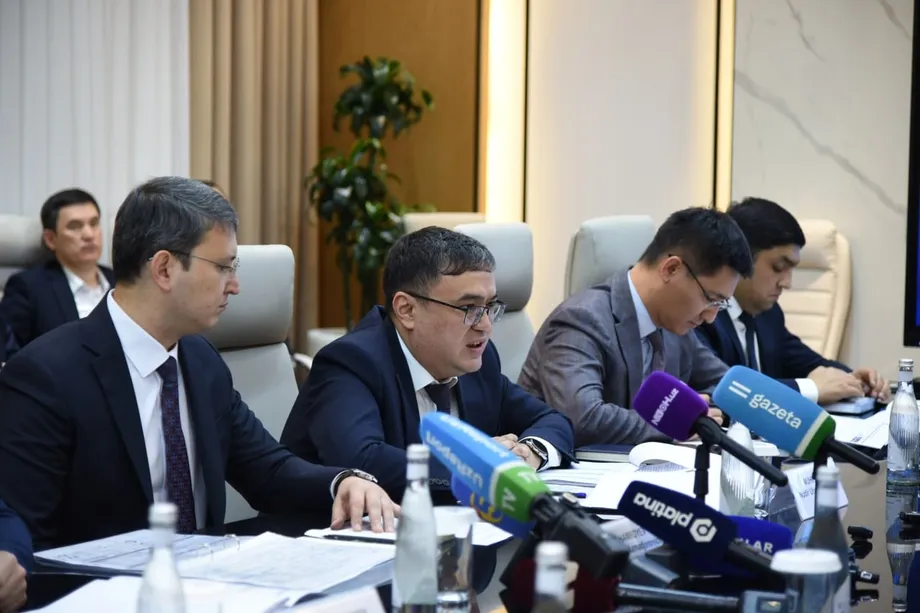
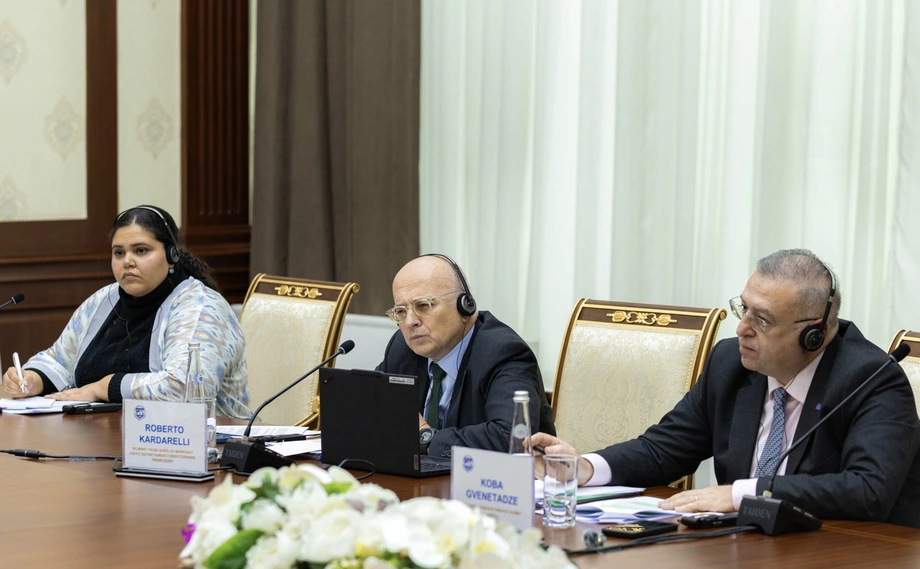
At a roundtable at the Central Bank of Uzbekistan in Tashkent, IMF officials connected three priorities: controlling inflation, giving private companies more room to compete and making better use of the country's position between Asian and European markets. Higher gold prices have increased government revenue, while the China-Kyrgyzstan-Uzbekistan railway, now under construction, offers another route for trade.
Koba Gvenetadze, the IMF's resident representative in Uzbekistan, said the immediate task was to convert strong economic performance into improvements in how much the economy can produce.
"It's a very important moment for Uzbekistan to make sure that all this performance and very impressive performance in terms of growth is translated into higher productivity," Gvenetadze said.
Productivity means producing more, or producing something better, with the workers, equipment and time available. For a manufacturer, that might mean fewer power interruptions, better machinery or faster deliveries. For a service business, it could mean workers with stronger skills and easier access to customers.
Uzbekistan is seeking annual growth of 9% to 10%. Gvenetadze's argument was that a particular percentage should not become the main objective. Growth needs to support a young, expanding population through employment and stronger private businesses, while remaining stable enough to last.
How the growth outlook has changed
The IMF's April mission statement, dated April 14, recorded real economic growth of 7.7% in 2025. It projected growth of 6.8% in 2026 and about 6% in 2027, supported by investment, remittances, reforms and higher gold prices.
The October outlook subsequently raised the 2026 projection to 7.8% and the 2027 forecast to 6.5%. The central bank's own forecast puts growth in 2026 at 7.5% to 8%, placing the IMF's revised estimate within that range.
The sequence shows how stronger activity changed expectations during the year:
- May 2025: The World Bank presented its economic memorandum in Tashkent, setting out priorities for jobs, competition and global integration.
- April 14, 2026: The IMF mission projected growth of 6.8% for 2026 and about 6% for 2027.
- September 22, 2026: The central bank updated its second quarter review, recording growth of 8.5% in the first half and forecasting 7.5% to 8% for the year.
- October 2026: The IMF raised its growth forecasts to 7.8% for 2026 and 6.5% for 2027.
- November 2026: IMF regional outlook discussions focused on productivity, private business and stronger connections across Central Asia.
The World Bank's longer perspective helps explain why the composition of growth matters. Its analysis of 2010 to 2022 found average annual growth per person of 4.2%, with expansion relying heavily on capital investment. Growth per person measures how quickly output rises after allowing for population growth, making it a different measure from growth in the whole economy.
Why investment needs to produce more jobs
The World Bank's Country Economic Memorandum found that investment and economic expansion did not generate the desired level of employment between 2017 and 2022, although employment growth accelerated in 2023 and 2024. That finding gives substance to the IMF's concern about the next stage of reform.
More buildings and machinery can increase output. Sustaining that expansion also requires companies to use their investment efficiently, find customers and hire people with suitable skills. The memorandum identifies regulatory barriers, market distortions, technological constraints and weak trade integration as obstacles to higher productivity.
Roberto Cardarelli, assistant director of the IMF's Middle East and Central Asia Department, said countries that have completed an initial wave of market liberalisation face more difficult changes involving institutions, state enterprises, finance and human capital. Human capital means the knowledge, skills and health that help people work productively.
For Uzbekistan, those changes have a direct employment purpose. The IMF called for greater participation by women and young people in the labour market. Cardarelli stressed that moving into services and activities that generate more income requires a workforce equipped to do those jobs.
Making room for private companies
The scale of state business helps explain why competition is central to the reform agenda. The World Bank counted more than 2,000 centrally held state enterprises in 2020, with revenue equivalent to 32% of GDP. Four out of five operated in sectors where private firms could compete more effectively.
Gvenetadze called for stronger corporate governance, tighter budget constraints for state enterprises, transparent privatisation and stronger competition. Tighter budget constraints mean that a company must manage its costs and income without routinely relying on public support to cover losses.
The World Bank recommends a transparent privatisation timetable for enterprises in competitive sectors, alongside better management of those remaining under state ownership. It also calls for simpler licensing and permits, independent regulators in telecommunications, railways and energy, and stronger enforcement by the Competition Promotion and Consumer Protection Committee.
Finance is another part of the same problem. The IMF wants directed and preferential lending phased out, banking supervision strengthened and the regulatory framework improved. Such lending channels money toward selected borrowers or activities, sometimes on terms that other businesses cannot obtain.
A more competitive banking sector and alternative sources of funding could give private businesses better access to investment money. The proposed capital markets law is part of that agenda. Gvenetadze also pointed to Uzbekistan's adopted conflict of interest law and called for legislation protecting whistleblowers and requiring asset declarations to strengthen accountability.
Inflation is lower, but households expect more
The Central Bank of Uzbekistan's second quarter review recorded annual inflation of 6.4% in June 2026. That was 0.9 percentage points below the start of the year, but above May's 5.5%, with changes in electricity, gas, coal and vehicle fuel prices contributing to the increase.
Core inflation, a measure used to track underlying price pressures, remained around 5.7%. Households expected inflation of 10.1%, while businesses expected 9.9%. Those expectations were respectively 3.7 and 3.5 percentage points above June's actual annual rate.
Expectations matter because people and companies make decisions about wages, purchases and prices based partly on what they think will happen next. The central bank therefore faces the task of lowering actual inflation while convincing the public that price increases will continue to slow.
The policy rate stood at 14%. Higher interest rates help restrain borrowing and spending while making saving more attractive. Local currency deposits rose by 46.1% from a year earlier, while credit growth slowed to 12.9%, according to the review.
The central bank forecasts inflation of about 6.5% at the end of 2026 and a return to its 5% target in 2027. Cardarelli said reducing inflation further after it falls below double digits can be more difficult, requiring monetary policy to remain sufficiently tight. For households, the practical goal is to preserve purchasing power as the economy expands.
Gold revenue creates a budget choice
High global gold prices have given Uzbekistan additional income. Gvenetadze warned against automatically turning higher revenue into higher government spending, because extra spending can intensify demand when consumers and investors are already active.
The IMF's April statement recorded a 2025 fiscal deficit of 2.1% of GDP, below the 3% target; Gvenetadze was later quoted at the regional roundtable giving a figure of 3.1% for the previous year. The reason for the difference was not explained.
For 2026, Gvenetadze said the budget deficit was set at 3% of GDP and that he expected the actual figure to be lower. The April statement recommended keeping expenditure within planned limits even if gold revenue exceeded expectations.
The IMF also proposed introducing a ceiling on the nominal non-mineral primary deficit from the 2027 budget. In plain terms, that measure compares spending excluding interest payments with revenue excluding minerals. It helps reveal how much the underlying budget depends on income from resources such as gold.
Gvenetadze said the IMF had not recommended a separate sovereign wealth or stabilisation fund for Uzbekistan. The immediate policy issue is managing volatile mineral revenue while keeping room in the budget for future shocks, health care, education and infrastructure. The April statement also favoured temporary, targeted help for vulnerable households over broad subsidies.
Trade has expanded faster than the exporter base
Uzbekistan's trade in goods and services reached 71.6% of GDP in 2022, more than double its ratio in 2017, according to the World Bank. Yet only 6% of firms exported their goods. The figures show a large increase in the value of trade alongside a relatively small share of businesses selling abroad.
Gvenetadze said Uzbekistan's borders with every other Central Asian country give it an opportunity to become a regional trade and logistics hub. Stronger links could expand the markets available to domestic businesses while bringing investment and commercial opportunities to neighbouring countries.
The China-Kyrgyzstan-Uzbekistan railway, currently under construction, was his main example of how better connections could open routes to major markets. No completion date was given in the discussion.
Gvenetadze, speaking about the economic purpose of improved connections, said the benefits should extend beyond moving freight through the country.
"It's not just about transit. Improved connectivity can lower trade costs, attract investment and expand markets for all countries that are integrating and seeking closer links," the IMF representative said.
For an Uzbek producer, lower trade costs could make selling to a neighbouring market more viable. For an investor, access to several markets could make a factory or distribution business more attractive. Those opportunities depend on practical arrangements at borders as well as the transport route itself.
Railways need reliable power and simpler borders
The World Bank's infrastructure recommendations connect international trade ambitions with specific domestic needs. It calls for electricity investment in areas with high manufacturing productivity, including Tashkent and Qarshi, and better roads between Tashkent and economically important regions such as Samarkand and Navoi.
The memorandum also recommends modernising rail infrastructure linking Karakalpakstan and Khorezm with central regions such as Navoi and Bukhara. These connections would help businesses reach transport networks from the places where they operate, rather than concentrating the benefits around a single international route.
Energy reforms form another part of the timetable. The memorandum describes tariff changes aimed at bringing gas and electricity prices to levels that cover costs by 2026 and 2027. Reliable infrastructure can reduce business costs, while tariff changes also affect household bills and the pace of inflation.
Cardarelli pointed to the Middle Corridor and stronger regional transport links as opportunities amid disruptions to established trade routes. The IMF's analysis also calls for better logistics, fewer trade and regulatory barriers, simpler customs procedures, digital trade processes and more consistent standards across countries.
A train connection can shorten a journey, but businesses also need predictable border clearance and rules they can understand. Digital customs systems and compatible standards can reduce repeated paperwork and make delivery schedules easier to plan.
More markets can spread economic risks
Cardarelli linked regional connections and private business development to resilience, meaning an economy's ability to cope when conditions deteriorate. He cited the damage to tourism during the COVID-19 pandemic and the exposure of oil producers to swings in global prices as examples of dependence on a narrow range of activities.
Uzbekistan faces several external channels of risk. The IMF's April assessment identified geopolitical tensions, trade disruptions, commodity price volatility and weaker conditions among major trading partners. The central bank also warned that higher global energy, fertiliser and food prices, together with fuel supply and logistics problems, could increase imported inflation.
Domestic policy can either soften or intensify those pressures. The IMF identified risks from extra spending during strong demand, expanded preferential credit, weaker bank balance sheets and potential public liabilities linked to state companies, banks and partnerships with private investors.
The combined reform agenda therefore reaches beyond attracting freight or achieving a growth target. It aims to help more firms obtain finance, operate with reliable infrastructure, hire skilled workers and sell into several markets. Those changes would give Uzbekistan more sources of income and employment when gold prices or international trade conditions shift.
Key Points
- The IMF's October outlook projects growth of 7.8% in 2026 and 6.5% in 2027.
- The central bank recorded growth of 8.5% in the first half of 2026 and annual inflation of 6.4% in June.
- The policy rate stands at 14%, with inflation forecast to return to the 5% target in 2027.
- IMF officials want stronger productivity, more private business activity and careful management of additional gold revenue.
- The World Bank found that only 6% of firms exported, despite trade reaching 71.6% of GDP in 2022.
- The railway connecting China, Kyrgyzstan and Uzbekistan and the Middle Corridor offer trade opportunities alongside reforms to customs, logistics and domestic infrastructure.