Two northern projects link mining to electricity generation
Afghanistan's Taliban administration has signed two agreements lasting 30 years with Azizi Group for natural gas extraction in Jawzjan province, coal mining in Baghlan province and electricity generation, with each project designed to produce about 1,000 megawatts of power. Mines and Petroleum Minister Hedayatullah Badri put planned investment in the gas project at $275 million.
Contents
- Two northern projects link mining to electricity generation
- What the $275 million gas agreement covers
- Baghlan coal is the second source of power
- What 2,000 megawatts would mean
- A larger investment proposal sits behind the deals
- Solar construction adds another strand
- Jobs, mineral waste and environmental damage
- How the announcements developed
- Key Points
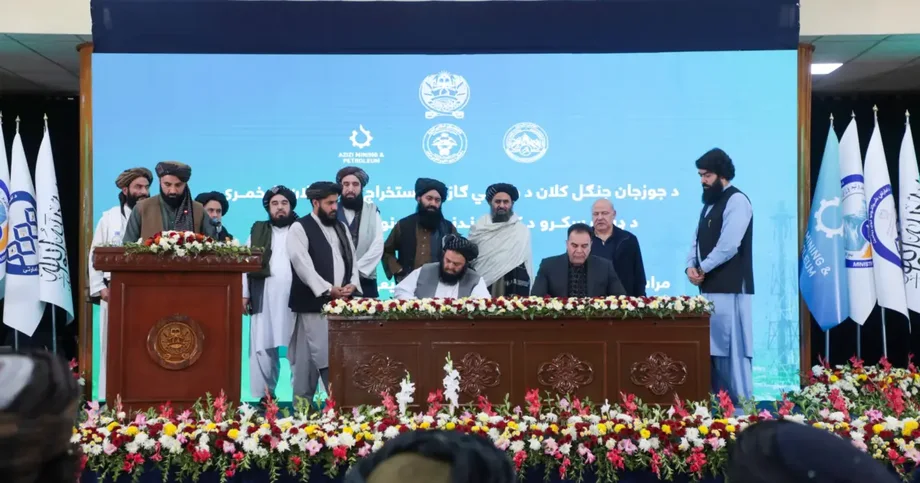
The agreements were signed on November 4, 2026, at the Government Media and Information Centre in Kabul, in the presence of Deputy Prime Minister for Economic Affairs Mullah Abdul Ghani Baradar Akhund. The signatories were the Ministry of Mines and Petroleum, the General Directorate of State-Owned Companies and Azizi Group.
The projects cover the Jangal-e-Kalan natural gas field in Jawzjan and a coal mining area in Pul-e-Khumri, Baghlan. Together, their planned generating capacity amounts to about 2,000 megawatts. The Office of the Deputy Prime Minister for Economic Affairs said the projects were intended to increase domestic electricity production, strengthen energy security and support economic growth.
Afghanistan relies heavily on imported electricity. Producing more power within the country could give businesses and households another source of supply, although electricity must also be carried through transmission lines and local distribution networks to reach customers.
The office estimated that the two projects would create around 5,000 direct and indirect jobs. Direct jobs would be within the projects themselves, while indirect employment would come through businesses supplying goods and services. Baradar urged ministries and other institutions to cooperate with Azizi Group in putting the agreements into practice.
What the $275 million gas agreement covers
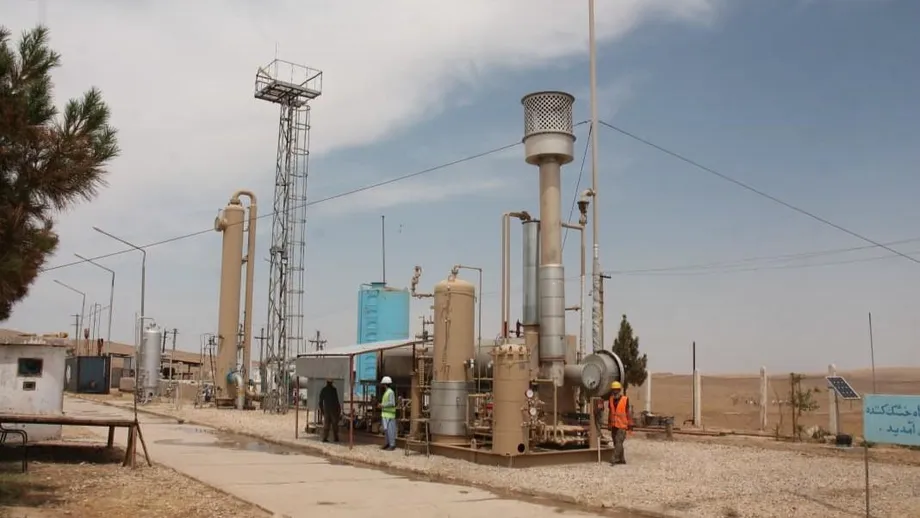
Badri said the Jangal-e-Kalan gas field covers more than 3,000 square kilometers and forms part of the Amu Darya oil and gas basin. A basin is a large geological area where layers of rock can hold oil or natural gas. The agreement covers exploration and extraction over 30 years.
Exploration involves locating and assessing gas underground, while extraction brings it to the surface. Linking those activities with electricity production means the project is intended to supply fuel as well as turn that fuel into power. Badri said the contracting company was expected to use the natural gas to generate 1,000 megawatts of electricity.
The minister said the administration would receive a 75% share of extracted gas, along with a 15% royalty. A royalty is a payment for the right to extract a natural resource. The two provisions concern how the public authorities are to benefit from the gas operation, alongside the planned investment by the company.
Badri estimated that the gas project would create about 2,000 jobs. That figure represents two fifths of the roughly 5,000 direct and indirect jobs projected for both agreements, although the announcements did not provide a comparable breakdown of employment categories for each project.
Baghlan coal is the second source of power
The Baghlan agreement covers a coal mining area of 111 square kilometers in Pul-e-Khumri and also runs for 30 years. The government's announcement assigns the coal project approximately the same generating capacity as the gas project: 1,000 megawatts.
Coal and gas provide different routes to the same intended result. Both are fuels that can be burned to generate electricity, but each requires equipment suited to that fuel. The agreements therefore bring together two sets of activities: extracting resources from the ground and developing the facilities needed to produce power.
The $275 million investment figure announced by Badri applies to the Jawzjan gas project. The coal contract's value and the combined cost of the agreements were not disclosed. Officials also gave no construction timetable or date for electricity generation to begin, and did not explain the calculation basis for the gas royalty. Those details will determine the scale of spending, the timing of supply and how the gas revenue arrangements operate.
What 2,000 megawatts would mean
The two projects have a combined planned capacity of about 2,000 megawatts, or 2 gigawatts. Capacity measures how much power a generating facility can produce at a given moment. The amount of electricity it supplies over a month or year also depends on how often it runs, fuel availability and maintenance.
Afghanistan's reliance on electricity imports gives the domestic generation plans a practical purpose. Electricity produced closer to Afghan consumers could broaden the country's supply options. For a household, the useful outcome is power reaching its connection when needed; for a business, it is electricity available to run equipment and keep operations going.
Transmission and distribution are therefore part of the wider energy challenge. Transmission carries electricity over long distances, while distribution takes it through local networks to customers. Limited infrastructure and constraints on investment remain obstacles to expanding domestic power generation, even where fuel resources are available.
A larger investment proposal sits behind the deals
Azizi Energy signed a memorandum of understanding with the Taliban administration in August 2025 proposing $10 billion in investment to generate, transmit and distribute 10,000 megawatts of electricity across Afghanistan. That proposal provides a wider setting for the latest gas and coal agreements.
A memorandum of understanding records the intentions of the parties. The November agreements set out particular projects, locations and contract terms. Their combined planned capacity of 2,000 megawatts is equivalent to one fifth of the 10,000 megawatts described in the August proposal, a useful measure of the size of the two northern projects against the company's stated nationwide ambition.
The investment figures describe different scopes: $10 billion for the broader proposed electricity initiative and $275 million for the Jawzjan gas project. The larger proposal includes the networks that move and deliver electricity as well as the facilities that generate it.
Solar construction adds another strand
Mirwais Azizi, chief executive of Azizi Group, said the company remained committed to projects in Afghanistan, including natural gas extraction, coal mining and electricity generation. He also said work was already under way on solar power projects in Ghazni province and in the Naghlu and Barikab areas of Kabul.
Those locations extend the company's stated electricity activities beyond the northern gas and coal areas. Solar panels produce electricity from sunlight, while the Jawzjan and Baghlan plans depend on extracted fuels. The technologies require different equipment and have different operating patterns, making the type and location of each project relevant to how it can supply consumers.
Before the signing, Baradar met Azizi and his delegation to discuss projects already started and those being prepared. Baradar described the investment and the launch of economic projects as important steps that could support economic development and reduce unemployment.
Jobs, mineral waste and environmental damage
The government's employment estimate gives the projects a second purpose beyond electricity supply. Around 5,000 direct and indirect jobs would provide income through the developments and the businesses serving them. The estimate remains a projection tied to carrying out the projects.
Officials urged Azizi Group to use modern equipment and technology in mining operations to reduce mineral waste and limit environmental damage. Mineral waste includes material removed or left behind during extraction. How resources are recovered affects both the amount available for use and the disturbance caused by mining.
The gas agreement also ties extraction to a public share of production and a royalty. Electricity, employment and resource revenue are therefore three separate benefits envisaged by the administration. Delivering them requires the mining and power activities to move from agreements into operating facilities.
How the announcements developed
The energy plans span more than a year, beginning with a broad investment proposal and moving to agreements for named gas and coal areas. The main milestones are:
- August 2025: Azizi Energy signed a memorandum proposing $10 billion in investment for electricity generation, transmission and distribution, with a target of 10,000 megawatts nationwide.
- Before the November 2026 signing: Baradar met Mirwais Azizi and his delegation to discuss projects under way and planned developments.
- November 4, 2026: The ministry, the state companies directorate and Azizi Group signed the agreements lasting 30 years in Kabul.
- At the November announcement: Azizi said solar construction was under way in Ghazni and the Naghlu and Barikab areas of Kabul.
The latest agreements give the administration and Azizi Group specific resource areas around which to develop the northern power projects. For consumers and prospective workers, the next practical developments are construction, recruitment and the eventual connection of generating facilities to the electricity network.
Key Points
- Azizi Group signed agreements lasting 30 years for gas extraction in Jawzjan, coal mining in Baghlan and electricity generation.
- Each project is designed for about 1,000 megawatts, giving a combined planned capacity of 2,000 megawatts.
- Minister Hedayatullah Badri announced planned investment of $275 million in the Jangal-e-Kalan gas project.
- The administration is to receive 75% of extracted gas plus a 15% royalty, according to Badri.
- Officials projected around 5,000 direct and indirect jobs across the two projects.
- The coal contract's value, construction timetable and electricity generation start dates were not announced.
- Azizi also reported solar projects under construction in Ghazni and two areas of Kabul.