Emergency authorization follows a record intraday plunge
Taiwan's National Financial Stabilization Fund authorized its tenth stock market intervention on November 6, 2026, after the benchmark TAIEX closed at 39,701.64, down 1,873.08 points, or 4.51%. The index had fallen about 10,267 points, or 20.55%, from its annual high of 49,968.
Contents
- Emergency authorization follows a record intraday plunge
- How severe was the November 6 selloff?
- Foreign selling built over several weeks
- Why the committee activated the fund
- How much money can actually be deployed?
- What changes on November 9?
- The risk of forced selling
- Public banks were already buying selected shares
- What the previous intervention shows
- Key Points
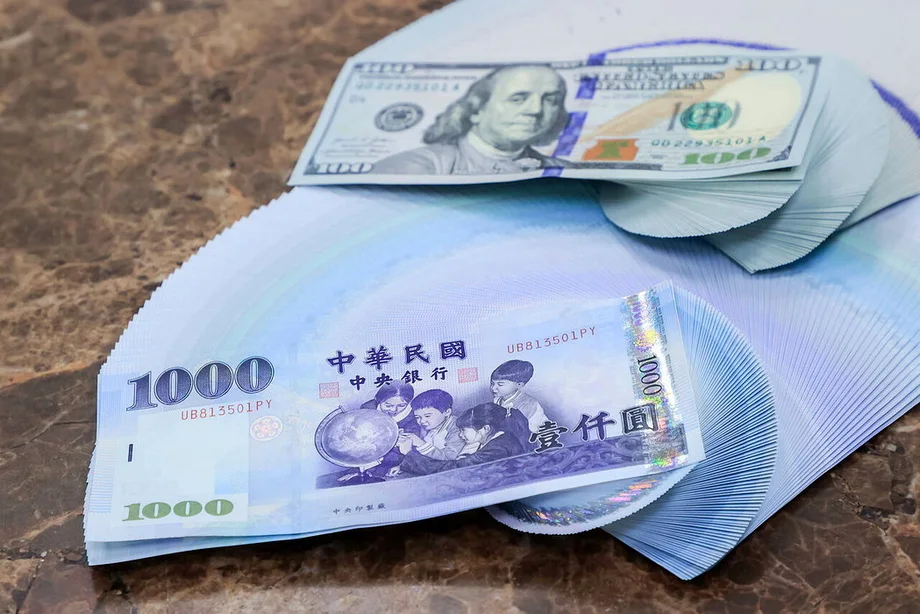
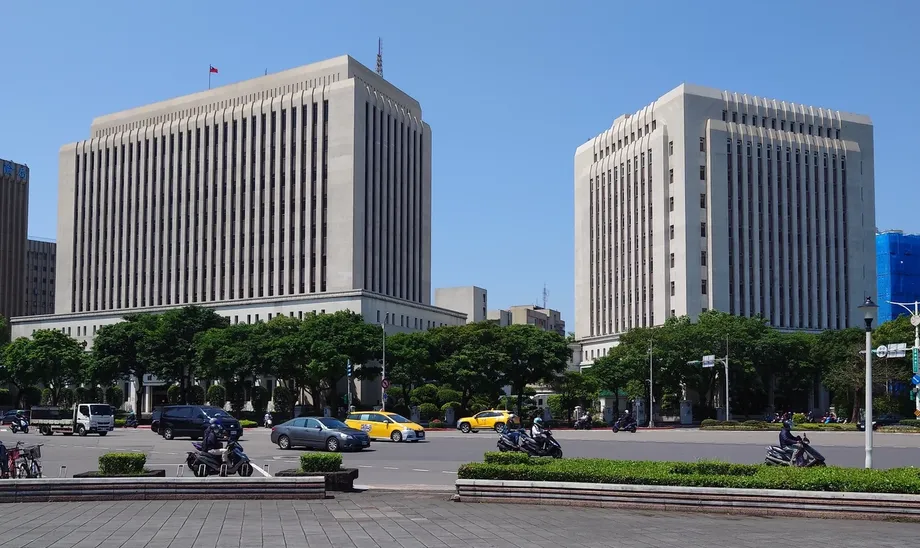
The fund's management committee convened its 131st extraordinary meeting at 2:30 p.m., after trading ended, and empowered its executive secretary to deploy money according to market conditions. The fund has statutory funding capacity of NT$500 billion. The committee did not announce an initial purchase amount or a timetable for buying.
Taiwan's Financial Supervisory Commission also announced five measures taking effect on November 9. They combine tighter restrictions on short selling, greater flexibility for investors providing collateral, and encouragement for companies to buy back shares and explain their financial position.
The response followed a week in which the TAIEX lost 5,510 points, or 12.19%, while foreign investors continued selling heavily. Officials described Taiwan's economic fundamentals as sound but said international uncertainty, movements of capital and weakening confidence were threatening orderly markets.
The immediate concern reaches beyond falling account balances. Investors who borrowed to buy shares can face demands for more collateral as prices drop. If many cannot meet those demands, brokers may sell their holdings together, adding another wave of selling to an already falling market.
How severe was the November 6 selloff?
The TAIEX fell as much as 3,737.67 points during trading, its largest intraday point loss on record, and touched 37,837.05. Its closing loss of 1,873.08 points was the fourth largest measured in points. Trading value reached approximately NT$1.246104 trillion.
The fund described the opening fall as nearly 3,800 points, while a detailed trading account put the opening decline at 2,658.96 points and the subsequent maximum loss at 3,737.67. The sharpest fall therefore occurred during the session in that trading account.
Buying and government assurances helped the index recover from its low, although it still finished below 40,000. The recovery from the intraday low to the close amounted to about 1,865 points.
Asian markets were also under pressure after heavy losses in the United States. Japan's benchmark lost 3,219 points, while South Korea activated an early trading circuit breaker, a temporary pause intended to interrupt unusually rapid market moves.
The Financial Supervisory Commission's comparison around 1:30 p.m. put Japan's decline at 6.12% and South Korea's at 4.85%, against Taiwan's 4.51%. Singapore was down 2.73%, Hong Kong 1.31% and the Shanghai Composite 1.27%. Taiwan's percentage loss lay between those of its regional peers, even as its own point decline set a domestic intraday record.
Foreign selling built over several weeks
Foreign investors sold a net NT$994.316 billion in Taiwanese shares during October, a monthly record according to the fund. They sold another NT$524.4 billion from the start of November through November 6. Together, those figures total approximately NT$1.519 trillion, just over three times the fund's NT$500 billion statutory capacity.
November 6 alone brought net foreign selling of NT$91.188 billion, extending the selling streak to seven trading sessions. Investment trusts bought a net NT$26.657 billion, but foreign and securities dealer selling outweighed those purchases. The three major institutional investor groups recorded combined net sales of NT$114.006 billion.
The pressure had been visible during the October 13 selloff, when foreign investors sold NT$165.342 billion and the TAIEX closed at 48,341.31. By November 6, the benchmark was approximately 17.87% below that closing level.
Continued selling also accompanied the October 20 currency decline, when the Taiwan dollar closed at NT$32.617 per U.S. dollar and foreign share sales reached NT$838 billion over ten sessions. Investors seeking dollars to move money abroad had added pressure to Taiwan's currency as well as its stocks.
Why the committee activated the fund
The management committee invoked Article 8 of the National Financial Stabilization Fund Establishment and Management Act. The provision allows intervention when major domestic or international events, or large movements of international capital, seriously affect public confidence and threaten disorder in capital markets or other financial markets, or threaten national stability.
The committee pointed to uncertainty following the U.S. midterm elections, steep declines in American and Asian shares, and persistent foreign selling. Its assessment also cited concerns about the outlook for artificial intelligence investment.
Taiwan's concentration in technology shares makes those developments especially relevant. The fund said local stocks closely track the Philadelphia Semiconductor Index, which fell 15.7% during the week, compared with Taiwan's 12.19% decline. A shift in expectations for global chip demand and technology spending can therefore affect many of Taiwan's largest listed companies at once.
Deputy Finance Minister Juan Ching-hwa, the fund's executive secretary, will oversee its response. This is the fourth intervention during his tenure in that role. Three committee members were absent from the emergency meeting; the decision was described as a consensus spanning officials, academics and political affiliations, with absent members contacted where possible.
The authorization followed three immediate concerns after the morning recovery: the index's loss widened again beyond 1,800 points, futures remained weak and foreign investors continued withdrawing from shares. The committee chose to meet immediately after the close rather than wait.
How much money can actually be deployed?
The NT$500 billion funding framework has two parts. Up to NT$200 billion can be borrowed from financial institutions using government holdings in public and private enterprises as collateral. Another NT$300 billion can be borrowed from unused funds associated with postal savings, labor insurance, labor pensions and civil service retirement arrangements.
Previous interventions have primarily relied on borrowing from financial institutions. The additional NT$300 billion channel has reportedly remained unused. Concern about drawing on those resources has focused attention on the NT$200 billion borrowing channel as the more readily usable source.
The scale comparison is striking: the full NT$500 billion capacity equals roughly 40% of November 6's NT$1.246104 trillion trading value. The NT$200 billion channel equals about 16%. Trading value measures the money exchanged as shares change hands, while the intervention fund supplies an additional buyer when its managers judge support necessary.
A proposal to double the statutory capacity to NT$1 trillion remained before the legislature and had not completed the legislative process. The proposal would increase reliance on borrowing secured by government shareholdings.
The funding debate had already surfaced in the 33,000 point debate in October. That discussion compared a hypothetical further market fall with the fund's fixed funding capacity. The committee has now acted with the index near 39,700, applying a legal test centered on confidence and market order rather than a preset index level.
What changes on November 9?
The Financial Supervisory Commission's five measures address both selling pressure and the risk that investors will be forced to liquidate holdings. Commission Chairman Peng Jin-lung said Premier Cho Jung-tai had instructed the regulator to respond to the market decline.
Short selling involves selling borrowed shares with the intention of buying them back later. A seller benefits if the price falls enough to cover the repurchase and costs. Collateral requirements help protect the broker or lender if prices move against the position.
- Daily intraday orders to sell borrowed securities will be capped at 3% of a security's average daily trading volume over the preceding 30 business days, down from 30%.
- The minimum margin requirement for short sales of listed and over the counter securities will rise from 90% to 130%.
- Investors may, with their broker's or securities finance company's consent, use a wider range of liquid assets with objectively assessable values to cover financing or short sale margin shortfalls.
- Listed companies will be encouraged to assess share buybacks according to their finances, cash needs and reasons for purchasing their shares.
- Companies will be encouraged to hold investor briefings or join presentations explaining operating conditions, financial results, industry prospects and business plans.
The borrowed share order limit is being reduced by 90%, from 30% of average volume to 3%. Certain hedging and market making transactions are exempt, including activities needed to provide quotations or manage risks associated with specified financial products.
The collateral change could help an investor meet a payment demand without immediately selling other holdings. Foreign securities held through a broker's overseas trading service are among the examples cited, subject to lender approval. The expanded framework follows a March 30 change that added odd lots of listed shares and emerging market shares to eligible collateral.
The risk of forced selling
Lin Tsang-hsiang, a finance professor at Tamkang University and former stabilization fund committee member, argued that liquidity risk was the central consideration. Liquidity means being able to find a buyer or seller and complete a trade when needed.
Lin noted that trading value was still around NT$1.2 trillion on November 6. Discussing a justification based simply on an index fall of 7,000 or 8,000 points, he said, in translation:
The reasoning would be somewhat weak.
Lin instead focused on borrowing used to buy shares, which he said remained near historical highs. His concern was that a sudden concentration of forced sales could leave investors unable to sell when they needed to limit losses. He viewed the authorization as preventive action against that risk.
The regulator's latest figure put the market's aggregate collateral maintenance ratio at 159.77% on November 5, above the 130% minimum threshold for margin calls. This ratio compares the value of collateral with the borrowing it supports. Individual accounts have different holdings and borrowing levels, so some investors can face demands for additional collateral earlier than others.
The regulator also put borrowed securities sales at 5.35% of market trading value on November 5. Its response combines restrictions on such selling with more ways to meet collateral demands, addressing two different sources of pressure during a rapid decline.
Public banks were already buying selected shares
Eight banks with government ownership bought a net 14,005 trading lots of China Steel and 3,306 lots of Taiwan Semiconductor Manufacturing Co. on November 6. Taiwan Business Bank, Compal Electronics, United Microelectronics and Hon Hai Precision Industry also appeared among their largest net purchases by volume.
Foreign investors were net sellers of China Steel and TSMC, placing them on the opposite side of those trades. Investment trusts also bought TSMC and several financial stocks, helping absorb some selling.
The banks' activity extended beyond purchases. Their largest net sale by volume was First Financial Holding, at 7,107 lots, followed by Innolux and Taishin Shin Kong Financial Holding. They also sold AU Optronics and Inventec.
Government associated banks were therefore shifting money between individual companies during the session. The stabilization fund's authorization came later, after the market closed, adding a further policy response to the buying already taking place.
What the previous intervention shows
The ninth intervention began on April 9, 2025, during turmoil following U.S. tariff announcements, and ended on January 12, 2026. The market support period lasted 279 days, followed by 114 days of selling holdings, bringing the full operation to 393 days.
The fund bought NT$12.25 billion in shares and recorded a final net profit of NT$9.932 billion, equivalent to a return of 81.07%. Financing interest and transaction expenses were deducted in arriving at that net result.
The NT$12.25 billion purchase total was just 2.45% of the NT$500 billion statutory capacity. The previous operation therefore offers a concrete example of a large authorization being followed by much smaller actual purchases. Its final result depended on buying prices, subsequent market movements, dividends and costs.
The sequence leading to the latest decision spans several months:
- January 12, 2026: The ninth market support period ended after 279 days.
- October 2026: Foreign investors sold a record net NT$994.316 billion in Taiwanese shares.
- November 2 to 6: The TAIEX lost 5,510 points, or 12.19%.
- November 6: The committee authorized the tenth intervention after the index closed at 39,701.64.
- November 9: The regulator's five stabilization measures are scheduled to take effect.
The Financial Supervisory Commission cited NT$49.89 trillion in combined revenue for listed and over the counter companies through September, up 38.21% from a year earlier. At the end of October, the main market's price to earnings ratio was about 24.92, and its cash dividend yield was 1.63%.
Those figures explain the authorities' argument that company operations remain strong despite the market decline. Investors are also adjusting what they are willing to pay for future earnings as technology expectations and international conditions change. The government's immediate task is to keep that adjustment from becoming a disorderly rush to sell.
Key Points
- Taiwan authorized its tenth stabilization fund intervention on November 6 after the TAIEX closed at 39,701.64, down 4.51% for the day.
- The index lost 12.19% during November 2 to 6 and stood 20.55% below its annual high.
- Foreign net share sales totaled approximately NT$1.519 trillion in October and November through November 6.
- The fund has NT$500 billion in statutory capacity; actual purchases will depend on market conditions.
- Five regulatory measures begin November 9, including tighter short selling limits and broader collateral options.
- The previous intervention used NT$12.25 billion and produced a final net profit of NT$9.932 billion.