A proposed gas network from the Afghan border to the Arabian Sea
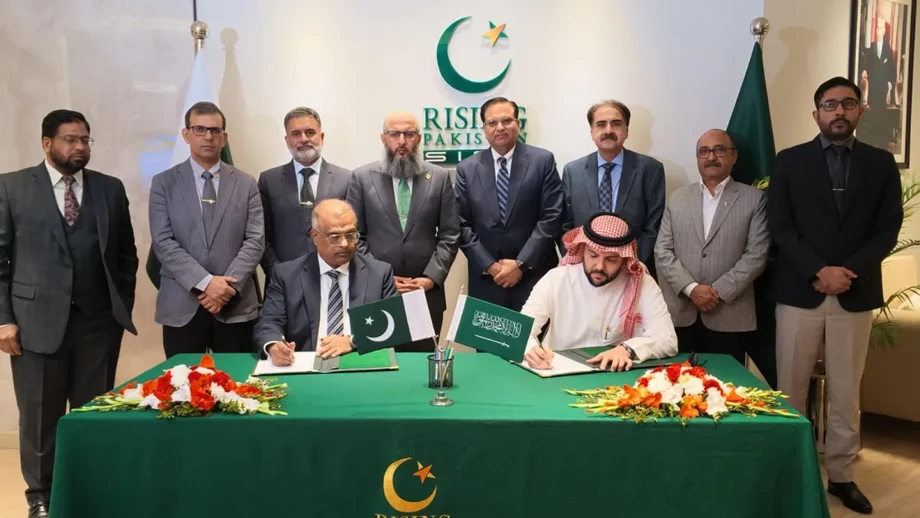
Saudi Arabia's Delta Energy Saudi and Pakistan's state owned Inter State Gas Systems have signed an agreement to assess an energy infrastructure programme worth about $30 billion, including pipelines, liquefied natural gas facilities, storage and export terminals. The companies announced the framework on November 17, 2026, identifying Afghan natural gas as a possible supply source.
Contents
- A proposed gas network from the Afghan border to the Arabian Sea
- What the agreement covers
- Why Gwadar and the eastern route matter
- Afghan exploration is part of the supply picture
- How the proposal differs from TAPI
- TAPI diplomacy continued on the same day
- A timeline of agreements and delays
- What Pakistan and Afghanistan could gain
- Key Points
The proposed network would enter Pakistan through its western border and extend towards Gwadar, the Arabian Sea port in southwestern Balochistan. Another proposed route would run from Chaman, on the Afghan border, across Pakistan towards the Indian border near Fazilka. An eastern connection would require engagement and agreements with both Pakistani and Indian authorities.
The immediate step is evaluation. Engineers and commercial teams would need to assess whether the routes, gas supplies, facilities and expected sales could support the investment. Financing and construction would require later decisions, and the companies have made no commitment to fund or build the programme.
A central issue is where the gas would come from. Delta Energy identified Afghanistan's Kashk gas concession and other Afghan resources as potential suppliers, while the Pakistani government described a feasibility proposal involving Turkmen gas passing through Afghanistan. Delta Energy explicitly said its programme was separate from the Turkmenistan-Afghanistan-Pakistan-India pipeline, known as TAPI, and would not depend on Turkmenistan.
What the agreement covers
Inter State Gas Systems, or ISGS, operates under Pakistan's Petroleum Division. Its agreement with Delta Energy Saudi, part of the Saudi based Delta International Group, was signed under the auspices of the Special Investment Facilitation Council, a government body established to attract investment and help projects move through administrative processes.
The companies described a proposed investment of approximately $30 billion. The government put the pipeline proposal at $25 billion to $30 billion. The broader company description includes several kinds of infrastructure, making the scope of the eventual programme a central part of the assessment.
The framework covers pipelines crossing national borders, facilities for liquefied natural gas, gas processing plants, storage and export terminals. Processing prepares gas for use or transport by removing unwanted substances. Storage holds gas so that it can be supplied when customers need it, rather than only when it arrives through a pipeline or terminal.
Those facilities would perform different jobs within a connected system. Pipelines move gas over land, while terminals connect the network to ships. Before committing money, developers would need to establish which facilities are needed, how much gas they would handle and who would buy or transport that gas.
Why Gwadar and the eastern route matter
Gwadar would give the proposed network a connection to the Arabian Sea. The programme includes LNG facilities and export infrastructure, potentially linking gas moving through Pakistan with maritime markets as well as customers inside the country.
LNG is natural gas cooled until it becomes liquid, greatly reducing the space it occupies so that ships can carry it. An import terminal converts the liquid back into gas for distribution. Exporting LNG requires equipment to turn gas into liquid before loading it onto ships. The assessment will determine which facilities the proposed network would need.
Chaman is the named entry point for the proposed route across Pakistan towards Fazilka. Delta Energy Saudi described that route as a central part of its plans.
The company called the Chaman to Fazilka pipeline a:
core strategic commitment
Pakistan and India would still need formal engagement and agreements for that route to proceed. Extending infrastructure towards the eastern border would add another set of government and commercial negotiations to a programme already involving potential supplies from Afghanistan and facilities on Pakistan's coast.
Afghan exploration is part of the supply picture
Afghanistan's potential role rests partly on a related agreement signed in Kabul on September 7 between its Ministry of Mines and Petroleum and Saudi Arabia's Delta International. That agreement concerns exploration and extraction in the Kushk-Tirpul oil and gas basin in Herat and Badghis provinces, in western Afghanistan. Afghan authorities put the basin's area at around 22,000 square kilometres, while Delta describes the wider contract area as approximately 23,317 square kilometres.
The ministry's announcement said Delta International would initially invest $200 million to explore seven gas blocks. The office of Afghanistan's Deputy Prime Minister for Economic Affairs also announced the deal, describing the initial investment as covering exploration and development of seven gas blocks in the Kushk area. Former United States special representative for Afghanistan Zalmay Khalilzad attended the signing ceremony. The exploration programme gives a specific starting point for assessing some of the Afghan resources that could eventually supply regional infrastructure.
Under the exploration and production-sharing agreement, Delta will carry out geological and geophysical studies, seismic surveys, exploration drilling and reservoir evaluation. The immediate aim is to establish the size, quality and commercial viability of the area's hydrocarbon resources before larger development investments are considered.
Exploration is the work needed to find out how much gas exists underground and how readily it can be produced. A gas block is an area designated for that work. Finding a resource, developing wells and delivering reliable supplies to a pipeline are successive tasks, each requiring technical work and investment.
The $200 million exploration plan and the proposed $30 billion infrastructure programme cover different activities. The first concerns investigating gas resources in Afghanistan; the second concerns assessing a much larger transport and processing network in Pakistan. A working system would require the supply and transport sides to develop together.
No construction timetable, confirmed gas supply volume or financing arrangement has been announced for the Pakistan programme. Those details will determine the network's possible size, cost and ability to serve customers.
How the proposal differs from TAPI
TAPI is a separate, longstanding proposal to carry gas from Turkmenistan's Galkynysh field through Afghanistan and Pakistan to India. Its planned route runs for 1,800 kilometres through Herat and Kandahar in Afghanistan, then Quetta and Multan in Pakistan, before reaching Fazilka in India.
The planned capacity is 33 billion cubic metres of gas a year. That figure gives TAPI a defined target for how much gas it would transport, whereas Delta Energy's new programme has yet to announce a confirmed supply volume.
TAPI's first phase, designed to move gas using available pressure, has an estimated cost of $5 billion to $6 billion. Installing compressor stations would cost at least another $1.9 billion. Compressors increase pressure to help push gas along the pipeline. Together, those published estimates amount to at least $6.9 billion.
The proposed Delta programme has a broader description, including LNG facilities, processing, storage and export terminals alongside pipelines. Its $30 billion figure therefore covers a different set of proposed assets from TAPI's stated pipeline phases.
Both plans involve Afghanistan, Pakistan and a possible connection to India, but Delta Energy's stated supply strategy centres on Afghan resources rather than Turkmen gas. Keeping the projects separate matters for understanding which gas fields, agreements and infrastructure each would require.
TAPI diplomacy continued on the same day
Pakistan's Deputy Prime Minister and Foreign Minister Ishaq Dar discussed TAPI with Turkmen Foreign Minister Rashid Meredov in Islamabad on November 17, at the sixth session of the Pakistan-Turkmenistan Joint Intergovernmental Commission.
Dar said the two sides recognised:
the importance of political engagement among the participating countries on the technical and commercial aspects of the project
Meredov said Pakistan and Turkmenistan had agreed to convene a TAPI steering committee meeting. Such a meeting would bring project representatives together to address the decisions needed to move the pipeline forward. No meeting date was announced.
The talks also covered a bilateral transit trade framework and commercially viable transport links. Meredov said the two sides considered connections involving Chabahar and Gwadar ports, as well as prospects for railway routes through Afghanistan. These discussions show the wider transport agenda surrounding the gas proposals, with border procedures, routes and commercial terms all requiring negotiation.
A timeline of agreements and delays
Pakistan's latest framework follows years of attempts to develop pipelines bringing gas into the country. TAPI's progress has repeatedly been delayed by security problems in Afghanistan, despite agreements and announcements intended to advance construction.
- June 2023: Pakistan and Turkmenistan signed a joint implementation plan for TAPI.
- September 2024: Afghanistan said it would begin work on the TAPI pipeline.
- September 7, ahead of the latest Pakistan announcement: Afghanistan's Ministry of Mines and Petroleum and Delta International signed the Kushk-Tirpul exploration and extraction agreement, with an initial $200 million exploration plan.
- November 17, 2026: Delta Energy Saudi and ISGS announced their framework to assess the proposed Pakistan energy infrastructure programme.
- November 17, 2026: Pakistan and Turkmenistan discussed TAPI in Islamabad and agreed to convene its steering committee.
The sequence shows two development tracks continuing alongside one another: efforts to advance TAPI and an assessment of a separate network that could use Afghan gas. Each requires its own supply arrangements, investment decisions and government agreements.
What Pakistan and Afghanistan could gain
Pakistan's government says the proposed infrastructure is intended to diversify gas supplies and strengthen energy security. In practical terms, additional supply routes and storage could give the country more ways to obtain gas and manage deliveries, provided the projects attract financing and secure reliable production.
Afghanistan could gain an export outlet if its identified resources can be developed and connected to the network. The Herat exploration programme is therefore closely connected to the commercial case for transporting Afghan gas, even though exploration and pipeline development involve different work.
Gwadar's proposed role would connect the land route with maritime infrastructure. The eastern route would pursue a different opportunity, moving gas across Pakistan towards India. Building either route would require decisions about customers, prices, transport charges and responsibility for construction and operation.
The immediate task for Delta Energy Saudi and ISGS is to turn a broad investment proposal into projects that can be assessed individually. The most useful next developments would be confirmed supply estimates, selected routes, facility specifications, financing arrangements and government agreements. Those decisions would give Pakistan and its prospective partners a firmer basis for judging what can be built.
Key Points
- Delta Energy Saudi and Pakistan's ISGS have agreed to assess an energy infrastructure programme worth about $30 billion.
- The plans include a route towards Gwadar and a proposed pipeline from Chaman towards the Indian border near Fazilka.
- Delta Energy identified Afghan gas as a potential supply source and said the programme is separate from TAPI.
- A related Afghan agreement provides for an initial $200 million investment to explore seven gas blocks in the Kushk-Tirpul basin in Herat and Badghis provinces, with studies, seismic surveys, exploration drilling and reservoir evaluation.
- Financing, construction timing and confirmed gas volumes have yet to be announced.
- Pakistan and Turkmenistan are separately pursuing a steering committee meeting for TAPI.