Opium Cultivation Climbs Sharply Across Afghan Provinces
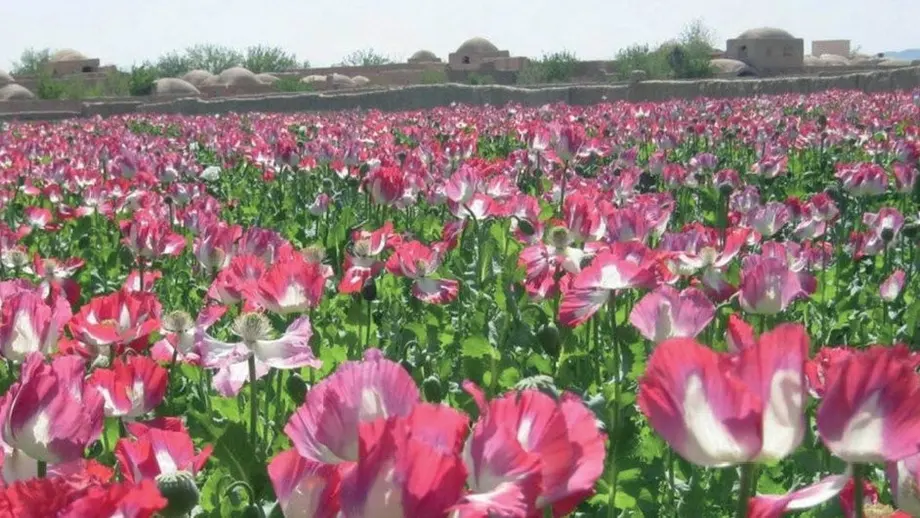
Opium poppy farming in Afghanistan expanded significantly in 2026, marking a major shift in the country's illegal drug economy four years after a strict prohibition was put in place. According to the Afghanistan Opium Survey 2026 published by the United Nations Office on Drugs and Crime, the total area dedicated to growing opium poppies rose from about 10,000 hectares in 2025 to more than 43,000 hectares. This estimated total covers a range between 32,000 and 61,000 hectares due to monitoring challenges. Cultivation was documented across 16 of the country's 34 provinces, five more than the previous year, pointing to a wider geographic spread of the illicit crop. As a result of this expanded planting and favorable weather conditions that improved crop yields, national opium production jumped from roughly 300 tons in 2025 to just under 1,500 tons in 2026. The estimated volume of opium produced per hectare rose from 29 kilograms to nearly 34 kilograms, driven by better rainfall and water availability.
Contents
- Opium Cultivation Climbs Sharply Across Afghan Provinces
- Disputed Figures and Official Eradication Claims
- Economic Pressures and Farmer Adaptation Strategies
- Regional Spillover and Concerns in Neighboring Countries
- The Timeline of Afghanistan's Opium Ban and Rebound
- Shifting Trafficking Routes and the Rise of Synthetic Drugs
- At a Glance
This upward trend follows an earlier period of sharp contraction that began when the Taliban authorities banned narcotics cultivation in April 2022. During that initial enforcement push, cultivation plunged from a pre-ban peak of more than 230,000 hectares down to approximately 10,800 hectares in 2023, before fluctuating slightly over the next two years. The renewed expansion in 2026 challenges the durability of those restrictions, though current cultivation remains about 81% smaller than the 2022 benchmark. The changes across recent growing seasons are detailed in earlier reporting on Afghanistan's Opium Crop Surges, which tracks how the agricultural landscape evolved following the initial decree. The agricultural geography has also shifted away from the traditional southern strongholds toward the mountainous northeast, bringing production closer to Central Asian transit routes and raising concerns among neighboring governments.
Disputed Figures and Official Eradication Claims
Afghan authorities have strongly disputed the United Nations findings, arguing that international reports do not accurately reflect ongoing law enforcement efforts. Officials from the Ministry of Interior stated that counter-narcotics operations successfully destroyed poppy crops across approximately 23,000 hectares of land during 2026, maintaining that domestic assessments show cultivation has been reduced to almost zero. Foreign Minister Amir Khan Muttaqi called for an objective assessment of the situation during an October briefing, emphasizing the scope of government eradication campaigns. Despite these competing claims, international monitors note that verifying local destruction figures remains difficult without independent on-the-ground access. The divergence between official government accounts and international survey data highlights the immense practical challenges of eliminating a deeply entrenched rural economy where many farming communities face severe financial hardship and limited legal alternatives.
Economic Pressures and Farmer Adaptation Strategies
The economic appeal of the opium trade remains a powerful driver behind the renewed planting, even in the face of active enforcement. Although prices for dried opium dropped from an average of about $570 per kilogram in 2025 to $500 per kilogram in 2026, they remained vastly higher than pre-ban prices of less than $100 per kilogram. These elevated prices ensured that total estimated income from harvested opium sales rebounded to pre-ban levels, generating an estimated $525 million for traders in 2026. This revenue equals roughly 2.7% of Afghanistan's gross domestic product and 8.5% of its agricultural sector, excluding downstream profits from processing and international trafficking. Farmers struggling with drought, poor returns from legal alternative crops, and a lack of sustainable livelihoods have found it difficult to abandon the crop entirely. To evade detection and eradication by authorities, growers have adapted their methods by hiding small poppy plots inside cereal fields, planting inside walled compounds, and staggering planting and harvesting dates. In Helmand province, more than 90% of poppy fields were concealed using these methods, with over half hidden among legitimate cereal crops.
Regional Spillover and Concerns in Neighboring Countries
The resurgence of opium production in Afghanistan has triggered alarm across Central Asia and the Middle East, particularly regarding the security of traditional trafficking corridors. Approximately 85% of Afghanistan's poppy cultivation is now concentrated in northern and northeastern provinces bordering Central Asian nations, creating immediate pressures for border security agencies in countries like Tajikistan and Uzbekistan. International researchers and border officials point out that trafficking networks are adapting to the shift, utilizing mountainous terrain and established smuggling routes to move opiates toward external markets in Russia and Europe. In Iran, senior counter-narcotics officials have voiced severe apprehension over the rising drug supply. Hussein Zolfaghari, Secretary-General of Iran's Anti-Narcotics Headquarters, met with regional diplomats in November 2026 to address the mounting threat. Iranian media reported remarks made by Zolfaghari during his meeting with Oman's ambassador to Tehran, Ya'arab bin Qahtan Al Busaidi.
Drug cultivation and trafficking represent a global challenge, and the threat they pose is even greater than that of wars.
Border enforcement agencies in neighboring states have reported fluctuating seizure volumes alongside increased armed confrontations with smugglers along remote stretches of the frontier. Tajikistan recorded multiple violent clashes and significant drug interceptions along its mountainous border with Afghanistan, while regional law enforcement bodies across Central Asia continue to dismantle cross-border trafficking rings and intercept shipments of both traditional opiates and synthetic substances.
The Timeline of Afghanistan's Opium Ban and Rebound
Understanding the current situation requires looking at the sequence of policy shifts and agricultural cycles that have unfolded since 2022. The evolution of the narcotics ban and its subsequent pressures are reflected in several key milestones:
- April 2022: The Taliban announced a nationwide ban on narcotics cultivation, leading to an initial 22-fold drop in production.
- 2025: Cultivation stood at approximately 10,200 hectares, producing an estimated 296 tons of opium amid severe drought and declining farm revenues.
- May and June 2026: Intensive eradication campaigns in Badakhshan province prompted localized protests, resistance, and clashes.
- October 29, 2026: The United Nations published survey estimates indicating that cultivation had rebounded to more than 43,000 hectares.
- November 2026: Regional security officials from Iran and Central Asian states warned of growing cross-border trafficking risks and shifting drug routes.
Shifting Trafficking Routes and the Rise of Synthetic Drugs
While traditional opiate trafficking remains resilient, regional law enforcement agencies are confronting a simultaneous surge in synthetic drugs and illicitly distributed pharmaceuticals. Methamphetamine production and trafficking have expanded rapidly across Central Asia, with clandestine laboratories dismantled in countries such as Kazakhstan and Uzbekistan during 2026. International cooperative operations, including counter-narcotics sweeps conducted by the Collective Security Treaty Organization alongside observer nations like China and Iran, have seized massive quantities of illicit substances ranging from cannabis derivatives to synthetic stimulants. These parallel developments demonstrate that the regional drug economy is diversifying rather than simply reverting to older patterns of heroin and opium supply. The intersection of rural poverty, underground manufacturing, and shifting transit corridors presents a complex challenge for regional security and international monitoring efforts alike.
At a Glance
- Opium poppy cultivation in Afghanistan expanded to more than 43,000 hectares in 2026, up from about 10,000 hectares in 2025.
- Estimated national opium production rose from 300 tons to nearly 1,500 tons due to larger planted areas and improved crop yields.
- Northeastern Afghanistan, led by Badakhshan province, accounted for roughly 76% of total cultivation and three quarters of production.
- Dried opium prices averaged $500 per kilogram in 2026, generating an estimated $525 million in trader revenues despite falling from the previous year.
- Afghan Ministry of Interior officials disputed international figures, claiming that eradication operations destroyed 23,000 hectares of crops.
- Neighboring countries including Iran and Tajikistan expressed grave concern over the potential expansion of cross-border trafficking along regional trade routes.