A lower exam burden and a wider route into high school
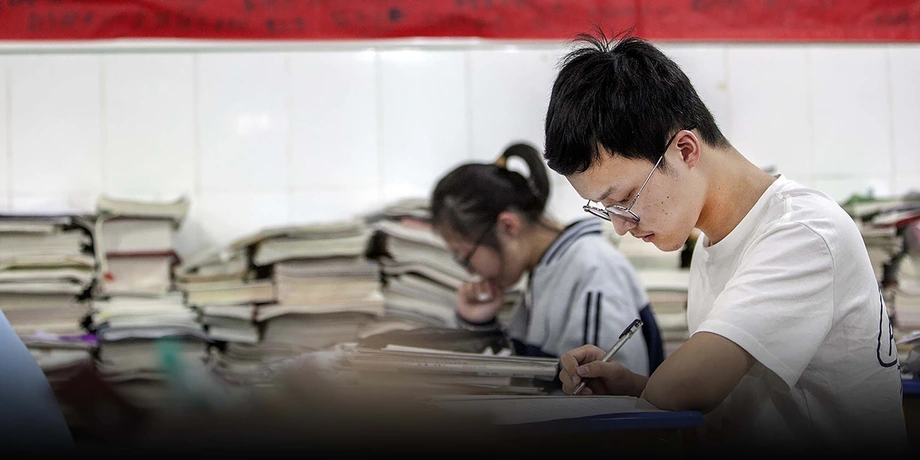
Shandong will reduce the number of subjects tested in its senior high school entrance examination, make the assessment less difficult and allow pupils to use books in examinations for suitable subjects. The province will also gradually allocate at least 70% of the enrollment quotas of general senior high schools designated as high quality directly to junior high schools. These measures form part of a plan containing 22 reforms issued by the provincial government on 28 October 2026.
Contents
- A lower exam burden and a wider route into high school
- Why a system serving 16 million students is changing course
- The numerical goals for 2030
- What pupils will experience in class
- Later starts, daily sport and days without homework
- School buildings will follow population peaks
- The everyday services parents will notice
- Schools will no longer be rewarded for producing top scorers
- Teachers will be trained and deployed differently
- Spending rules, digital classrooms and campus monitoring
- Delivery will be measured, but many details are still to come
- What to Know
The examination, commonly called the zhongkao, comes after nine years of compulsory education and helps determine which senior high school a student can attend. Allocating quotas to individual schools means that part of a leading school's admissions are reserved for candidates from particular junior high schools, rather than every place being decided through one ranking across a wider area. The arrangement is intended to give pupils in ordinary schools a better chance of reaching a strong senior high school and to reduce pressure on families to compete for entry into a small number of junior high schools.
The plan also supports balanced placement, admission by designated areas and admission through registration. It calls for the gradual removal of the minimum score cutoff for admission to general senior high schools. Students should also gain a formal mechanism for transferring between general and vocational education, while suitable schools may establish comprehensive senior high schools with courses concentrated mainly on engineering.
Access is meant to improve alongside the examination changes. By 2030, Shandong aims for a 92% completion rate in education at senior high school level, which includes general and vocational routes. The proportion of admissions to public senior high schools is to rise by more than 10 percentage points compared with 2025. A percentage point measures the direct difference between two percentages, rather than the relative size of an increase.
Why a system serving 16 million students is changing course
Provincial officials explained the programme at a routine policy briefing held by the Shandong Provincial Government News Office on the afternoon of 25 November 2026. The document, numbered Lu Zheng Zi [2026] No. 141, contains three parts and 22 measures. Its work is grouped around five priorities: how pupils are taught, how resources are distributed, how teachers are developed, how examinations and admissions operate, and how schools are governed.
Wang Zhigang, a member of the Shandong Provincial Education Work Committee and deputy director of the Provincial Education Department, described the scale of the system and the reason for focusing on everyday concerns.
Shandong's basic education sector is very large. It currently has nearly 30,000 regular primary and secondary schools and kindergartens, with more than 16 million students. The implementation opinion focuses on practical issues that people care about in daily life and experience directly, and introduces a series of measures.
Population change is central to the resource plans. Shandong is preparing for peaks and declines in the number of children at different ages, alongside continuing urbanisation. A school building that is necessary while a large age group passes through one area can become underused later, while another district may face a shortage. The province wants places, buildings and teachers to move between stages and locations as those patterns change, without creating capacity that will soon be wasted.
The numerical goals for 2030
The clearest deadlines apply to preschool access, public provision, completion of senior high school education and educational balance between counties. The main commitments are:
- Preschool gross enrollment should reach 99%.
- Children attending public kindergartens should account for 75% of all children enrolled in kindergartens.
- The completion rate for education at senior high school level should reach 92%.
- The proportion of admissions to public senior high schools should be more than 10 percentage points above its 2025 level.
- Enrollment among children with disabilities who are of school age should remain stable at 100%.
- Every part of the province should pass the county assessments for universal and affordable preschool education and for high quality, balanced compulsory education.
Gross preschool enrollment compares the number of children enrolled with the population in the relevant age group, so it is a broader measure than simply counting children at the exact official age. The public kindergarten target addresses a separate question: who provides the places. Shandong wants three quarters of enrolled children to attend public institutions, while also allowing kindergartens to open classes for younger children and implementing national policy on free preschool education.
What pupils will experience in class
All schools are to offer general courses in artificial intelligence. The province will also reduce lesson hours during compulsory education where this can be done without abandoning national curriculum requirements, improve arrangements for days when pupils choose their own courses, and encourage experiments involving several subjects, themes and projects. A monitoring system will cover courses, textbooks and supplementary teaching materials.
Science education will receive its own programme. Shandong will participate in national pilots for senior high schools specialising in science and technology, improve methods for finding and developing pupils with exceptional potential, and continue a provincial science experiment competition for young people. Universities, research institutes, technology companies and science museums are expected to work more closely with schools.
The first of the six programmes for changing education covers political and ethical teaching. It connects political education across primary schools, secondary schools and universities, increases practical teaching, and uses regional history, geography, ecology and industry as resources. Party and government leaders at different levels, together with school Party secretaries and principals, are asked to take the lead in teaching some of these classes. The other programmes concern curriculum, health, science, reducing excessive study burdens and cooperation among schools, families and communities.
Schools are also encouraged to use a list of social practice venues that open without charge and to provide half a day of practical activity outside school each week during compulsory education. Less visible measures include appointing sufficient teaching researchers, allowing experienced classroom teachers to take those roles, and developing online communities for lesson research and simultaneous classes. The document supports international understanding courses, teaching in several languages, overseas training for outstanding teachers and cooperation with Hong Kong, Macao and other education systems.
Later starts, daily sport and days without homework
Primary schools should generally not begin morning classes before 8:20, while secondary schools should generally not begin before 8:00. Every primary and secondary pupil is to have a physical education lesson each day, with total sporting activity of at least two hours. Class, grade and school competitions are intended to involve all pupils rather than only school teams. Schools will monitor and intervene in common health problems, including short sightedness, obesity and poor spinal posture.
Each pupil should receive help to master at least one artistic skill. Schools must also arrange suitable midday rest, provide sufficient mental health teachers and school doctors, and establish a psychological support system covering student development. Labour education will include activities intended to build regular working habits and provincial skills competitions for pupils.
The plan tightens the existing five item management system covering homework, sleep, mobile phones, reading materials and physical fitness. Schools will have days without homework, fewer routine tests, and monitoring that can produce early warnings and notices when homework becomes excessive. Additional after school resources and a support mechanism for pupils experiencing learning difficulties are meant to reduce the need for families to purchase extra teaching.
Academic tutoring outside school will remain strictly controlled, other forms of tutoring will be regulated, and providers will be subject to credit building and supervision throughout their operations. Communities and villages are asked to develop public welfare care services for students, giving families another option outside normal school hours.
School buildings will follow population peaks
Counties will remain the basic unit for organising education, but planning and resources will be coordinated across each city, with particular attention to senior high schools. Provincial digital systems will monitor the distribution of resources and warn city and county authorities when demand and capacity move out of alignment. The approach is summarised in the document as moving places through successive stages as population peaks arrive, while both meeting the peak and preventing waste.
Rural areas will, in principle, no longer build new primary schools, secondary schools or kindergartens. Institutions whose enrollment continues to shrink will be merged or closed cautiously. Necessary rural schools are to remain small but attractive, while those expected to operate for a long time will have their facilities brought up to provincial standards. Towns with few pupils are encouraged to establish good boarding schools covering nine years of education in one institution.
Empty rural school buildings may become boarding schools or bases for labour education and practical activities. Strong public senior high schools in urban areas may use vacant buildings in outer counties to open branch campuses, and neighbouring counties are encouraged to share schools and kindergartens. Shandong will also revise its facility standards for schools and kindergartens, support institutions covering nine or twelve years, and continue reducing oversized schools and classes. Smaller classes may be explored once the school layout and staffing needs have been secured.
Public senior high schools will receive a separate expansion programme. New campuses can be built, existing ones enlarged and suitable unused social buildings converted into school accommodation. Eligible projects may apply for central government investment. Urban senior high schools are expected to improve while a separate development programme strengthens county schools, with the stated aim that every county should have a good senior high school.
Groups of schools will play a larger role. One principal may lead several institutions, and groups may cross administrative boundaries. Members are expected to share resources, coordinate teachers and develop pupils across different stages of education. Their evaluations will be linked to those of the core school, creating an incentive for a strong institution to improve the whole group rather than protect its own results.
The everyday services parents will notice
School meals are listed among the practical services that must improve. The food should be safe, healthy, nutritious and affordable. Adjustable desks and chairs are intended to protect spinal health, while additional chairs suitable for resting should improve conditions for pupils who remain at school at midday.
The same section of the plan covers uniforms, supplementary teaching materials, school buses, heating, cooling, washing facilities, after school services, care during holidays and study visits. It also lists work on spring and autumn breaks. These are practical commitments within the reform programme, rather than a single new service with one provincewide starting date.
Special education receives a firmer guarantee. Shandong will provide 15 years of free special education and maintain enrollment at 100% among children with disabilities who are of school age. The province will also participate in a national pilot concerning the funding and operation of special schools for children who require that form of provision.
Schools will no longer be rewarded for producing top scorers
Local authorities will be forbidden from assigning advancement targets to education departments and schools. They will also be forbidden from evaluating or rewarding schools, teachers or pupils on the basis of the top scorers in the senior high school or university entrance examinations, the proportion entering prestigious institutions, or admission rates.
Shandong will instead develop a green development index for the quality of basic education. It is intended to assess pupils' full development and the balance of educational provision. The province will also explore assessments that measure the progress each student makes, together with continuous assessment that interferes as little as possible with learning. Quality monitoring will cover compulsory education and general senior high schools.
Schools are to receive greater authority over admissions, professional titles, staffing, performance pay and spending. Professional standards will be drawn up for school Party secretaries and principals, and unrelated social activities entering campuses will be restricted so that teachers spend less time on work outside teaching. The university entrance examination will also continue its comprehensive reform, with adjustments to the subjects students choose and the examination timetable.
Teachers will be trained and deployed differently
The teacher programme responds to the same population changes as the building programme. Staff may be transferred across counties, schools, educational stages and subjects when surpluses and shortages require it, with personnel relations, funding and post management adjusted to support those moves. Boarding schools will receive suitable numbers of staff to guide pupils outside lessons.
Primary schools will need more teachers educated to bachelor degree level who can teach across several subjects. Training for secondary teachers will gradually concentrate mainly at postgraduate level. Serving teachers will be encouraged to gain higher qualifications and certification for more advanced school stages, while universities with strengths in science, mathematics and engineering will be encouraged to prepare more schoolteachers.
The reform described as county management and school appointment will continue, alongside efforts to select strong principals and teachers for rural schools. Scientists, engineers, artists, people with advanced technical skills, coaches and athletes may teach in schools or establish studios. Public services are expected to give teachers priority where policy provides for it, and joint mechanisms will protect salaries and address unpaid wages.
Spending rules, digital classrooms and campus monitoring
Basic education is designated as the priority for public education expenditure. The document repeats the fiscal rule known as two only increases and no decreases, under which general public budget education spending and average public budget education spending for each student should rise rather than be cut. Governments must pay funds for each pupil and for approved projects promptly and in full. Delaying, withholding or diverting education money is prohibited, and responsibility can be pursued under the law.
Fees for kindergarten care and education, and tuition at general senior high schools, will be reviewed and set every three to five years. Charges at private schools and kindergartens will also be regulated. Spending is to favour better buildings, digital transformation, laboratory equipment and improvements in teaching quality.
The network goal is one gigabit per second of connectivity reaching each school and 100 megabits per second reaching each classroom. Shandong will use the national smart education platform to send resources to rural and weaker schools, create digital profiles of student development and teacher growth, and train teachers to use digital tools and artificial intelligence. By 2030, the province plans to establish 200 primary and secondary schools serving as experimental sites for artificial intelligence applications and complete the Campus Sky Eye project.
Delivery will be measured, but many details are still to come
Each of the 22 measures names lead and responsible government bodies. The Provincial Education Department carries much of the work, but finance, development and reform, human resources, health, housing, data management and other agencies also have assigned duties. Major reform tasks will enter education inspections and assessments of how well city and county governments perform their education responsibilities. The results will be used when leadership teams and individual officials are rewarded or disciplined.
Shandong will also apply its rules on responsibility for unlawful conduct by ordinary primary and secondary schools and seek revisions to provincial regulations covering preschool and compulsory education. Education departments are expected to draw leadership talent from capable school Party secretaries and principals, while their principal officials should possess the professional ability required to manage education.
The main sequence is already clear:
- 2025 provides the baseline for measuring the required increase of more than 10 percentage points in public senior high school admissions.
- On 28 October 2026, the provincial government issued the implementation opinion containing 22 measures.
- On 25 November 2026, provincial officials explained the document at a policy briefing.
- By 2030, the main enrollment, completion, county assessment and public kindergarten targets are due to be met, alongside the creation of 200 experimental schools for artificial intelligence.
- Kindergarten and general senior high school fee standards are to be reviewed every three to five years.
No date was given for each individual examination change. The document does not list which subjects will be removed, which will permit books, how often schools must hold a day without homework, or the 2025 baseline needed to calculate the future public admission rate. Those details will determine how strongly pupils and families feel the reforms, while the 70% quota, the expansion of public schools and the financial duties placed on local governments provide the clearest measures against which delivery can be checked.
What to Know
- Shandong issued 22 basic education reforms on 28 October 2026 and explained them at a briefing on 25 November.
- The senior high school entrance examination will have fewer subjects and lower difficulty, with books permitted in suitable examinations.
- At least 70% of enrollment quotas at general senior high schools designated as high quality will gradually be allocated directly to junior high schools.
- By 2030, completion of education at senior high school level should reach 92%, and public senior high school admissions should be more than 10 percentage points above their 2025 proportion.
- Preschool gross enrollment should reach 99%, public kindergartens should accommodate 75% of enrolled children, and enrollment among children with disabilities of school age should remain at 100%.
- Pupils are promised daily physical education, at least two hours of sporting activity, later general morning start times and days without homework.
- Rural school provision will contract cautiously where enrollment disappears, while public senior high schools, county schools and shared groups of schools expand.
- Teacher qualifications, salary protection, education spending, artificial intelligence courses and 200 experimental digital schools form the main support measures.