Why Vietnam is revising its power plan again
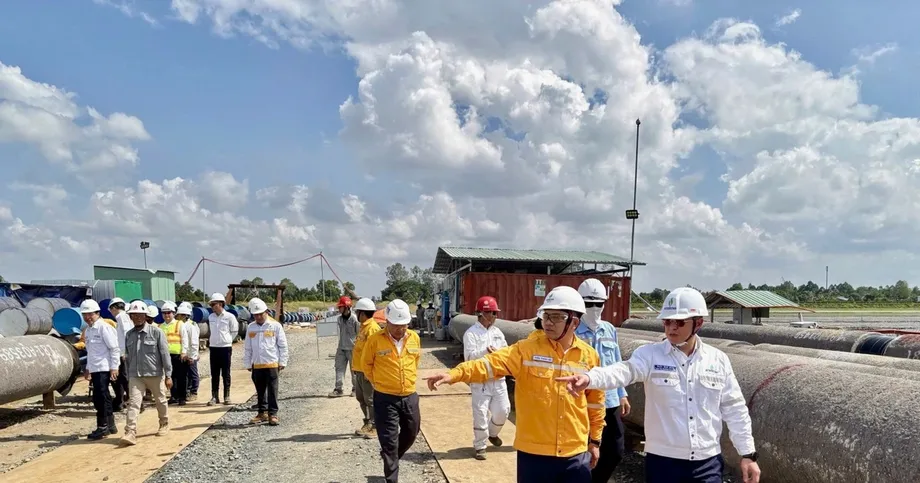
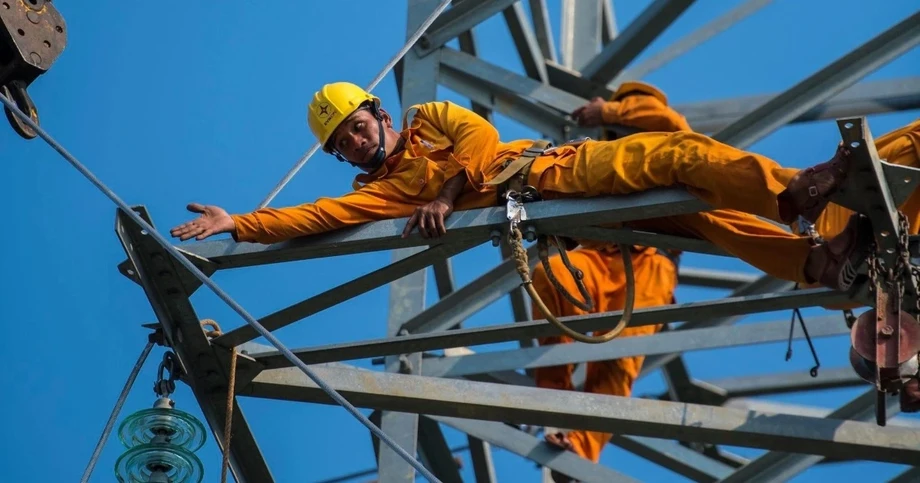
Vietnam's Ministry of Industry and Trade has proposed another adjustment to Power Development Plan VIII, the national roadmap for electricity to 2030 and 2050. The aim is to cut shortage risks from 2027 as factories, homes, electric vehicles and data centres use more power. The draft keeps the broad goal of earlier plans, but it puts more weight on projects that can be completed before 2030.
Contents
- Why Vietnam is revising its power plan again
- What earlier plans promised and what changed
- Why project delays matter more than paper targets
- What the new 2030 mix would look like
- How much the expansion will cost
- Gas and coal as near term insurance
- Why the North is the pressure point
- The proposed direct current power highway
- Nuclear power slips beyond 2030
- New industries are redrawing demand
- What must happen before the deadline
- Key Points
The planning figures are stark. The draft puts electricity consumption at 456 to 544 terawatt hours by 2030, equal to 456 to 544 billion kWh. That means annual demand could grow by 9.5 to 13.4 percent a year. A summary sent to the Prime Minister uses government approved targets of 560.4 to 624.6 billion kWh and 28 to 36 percent renewables by 2030, so the final demand base is still being tested.
Vietnam also relies more on outside energy than it did a decade ago. The country became a net energy importer in 2015. Net imported energy rose from 8.4 percent of primary energy demand in 2015 to 43.9 percent in 2025, or 53.6 million tonnes of oil equivalent, and is forecast at 43.6 percent, about 83.3 million tonnes, in 2030.
What earlier plans promised and what changed
Power Development Plan VIII was approved in late May 2023 after delays linked to the pandemic, shifting priorities and talks with industry. The PDP VIII investor guide, published by PwC, set out a target of about 150 GW of installed capacity by 2030 and 500 GW by 2050, with nearly USD700 billion needed over three decades. It assumed 5 to 7 percent economic growth and Vietnam's ambition to join the G20 by 2050.
PwC, the professional services firm behind the investor guide, said the plan settled some industry questions but left hard work for companies trying to build projects.
The plan addresses some outstanding uncertainties within the industry, although it introduces additional challenges regarding actual implementation and a pathway forward for investors and all industry stakeholders.
Deputy Prime Minister Bui Thanh Son signed Prime Ministerial Decision No. 768/QD-TTg on April 15, 2025, approving a wider revision. It set 2030 capacity at 183,291 to 236,363 MW, 30 to 50 percent above the earlier 150,489 MW. Solar was set at 46,459 to 73,416 MW, onshore and nearshore wind at 20,066 to 38,029 MW, offshore wind at 17,032 MW, LNG at 22,524 MW and coal at 31,055 MW.
Why project delays matter more than paper targets
The main obstacle is delivery. The planning draft says Vietnam needs about 116,000 MW of new generation in 2025 to 2030, excluding provincial plan projects, storage and Laos imports. About 4 percent is operating and about 42 percent has not received investment approval. A ministry representative gave a wider count of about 127 GW needed by 2030, with 5 percent operating, 9 percent under construction, 28 percent with an investor chosen, 12 percent with investment policy approved and 45 percent with no investment policy.
Both counts leave most capacity on paper rather than in production. The ministry told the Prime Minister that many large power sources cannot be commissioned by 2030, putting capacity and output supply at risk from 2027. About 49 GW of projects have not completed investor selection or gained investment policy approval. As of the end of September, progress on 500 kV and 220 kV grid projects stood at about 4 to 11 percent. Deputy Prime Minister Pham Gia Tuc has ordered delayed projects removed from PDP8.
EVN alone has VND166 trillion a year and VND830 trillion across the period for power and grid work, including nearly 300 grid projects and nearly 17,000 km of lines. Of 18 LNG projects totaling more than 20,000 MW, only Hiep Phuoc LNG is judged able to meet schedule. Of 16 hydropower projects with investors selected, only two are under construction and 14 are still completing preparation.
What the new 2030 mix would look like
Solar gets the largest addition. The draft proposes 28.4 to 44.5 GW of utility scale solar and a further 15.4 to 18.7 GW of rooftop solar, taking total solar to 62 to 82 GW by 2030. Onshore and nearshore wind would gain 9.4 to 32.9 GW, with the Central region taking 6.4 to 17.6 GW. Storage would reach 13 to 25 GW by 2030 and 36 to 53 GW by 2035.
Batteries and pumped storage work like a tank for electricity. They save power when solar and wind are strong and release it later. EVN has also been told to urgently study battery storage on local distribution grids, especially in the North, where peak demand is growing fastest.
Other proposed additions include 3.2 GW of domestic gas fired power, 2.7 GW of LNG fired power, 300 MW of flexible thermal plants, 1.5 GW of hydropower, 3 to 6.3 GW of small hydropower, 0.2 to 2.3 GW of biomass and 0.3 to 2.1 GW of waste to energy. The draft counts 6.5 to 8.7 GW of imports from Laos and about 600 MW from China. The approved revision set imports from Laos and China at 9,360 to 12,100 MW by 2030.
By 2050, the approved revision projects 774,503 to 838,681 MW of total capacity, including 293,088 to 295,646 MW of solar and 113,503 to 139,079 MW of offshore wind. It also looks toward 400 MW of exports to Cambodia by 2030 and 5,000 to 10,000 MW to Singapore, Malaysia and other partners by 2035.
How much the expansion will cost
After reviewing nine power source cases under high demand, the planning work selected scenario KB2A, which caps CO2 emissions at 60 percent of the energy sector limit and excludes carbon costs. It estimates USD134.9 billion for generation and transmission in 2026 to 2030. Generation takes USD114.5 billion, or 85 percent, and transmission takes USD20.4 billion, or 15 percent. That is about USD27 billion a year.
For 2026 to 2050, the plan estimates USD943 billion, made up of USD853.8 billion for generation and USD89.2 billion for grids. From 2031 to 2050 alone, Vietnam would need USD808.1 billion, about USD40.4 billion a year. Offshore wind, nuclear and solar account for about 61 percent of generation investment, at USD195.2 billion, USD187.3 billion and USD142 billion.
Grid financing is a particular squeeze. Transmission needs about VND536,200 billion in 2026 to 2030, roughly VND107,000 billion a year, while EVNNPT has net funding capacity of about VND13,000 billion a year. The ministry proposes state and private capital, domestic and foreign investors, official development assistance, green credit, build operate transfer arrangements for grids and updated transmission fees. It also wants electricity prices overhauled to attract LNG, wind, solar and storage investment.
Gas and coal as near term insurance
The O Mon power centre is central to the gas plan. O Mon IV has signed an engineering, procurement and construction contract and started work. O Mon III is seeking official development assistance, while O Mon II is negotiating its power purchase agreement and gas supply. The draft expects about 3,200 MW of combined cycle gas turbines using Lo B gas by 2030.
LNG is natural gas cooled into liquid form so it can be shipped and stored. It can change output more flexibly than coal, but it needs ports, storage, fuel contracts and a power purchase agreement. About 22,800 MW of LNG projects have approval or investors but have not been built, mainly because of power contracts and turbine orders.
Coal plants under construction, about 1,960 MW, would be finished, and more coal projects could be accepted if investors can commission them before 2030. Ninh Binh and Pha Lai I are not counted as stopped. The Energy Institute modelled seven extra coal plants, or 9,240 MW, in the North in 2030 and 2031. That raises system costs by about USD42 billion over 30 years, or USD52 billion with carbon costs, because older coal plants may run less while the system still pays for them.
EVN has been told to keep coal, gas and oil supplies available and shorten equipment repairs. Petrovietnam must accelerate key power and gas chain projects, while TKV and Binh Doan 19 must secure domestic coal output.
Why the North is the pressure point
The North recorded an expected peak of 30,248 MW in 2026, up 7.3 percent, while the whole system peak is put at 57,537 MW. Peak means the highest moment of demand. Electricity transfer from the Central region to the North is expected to rise from 32.8 billion kWh in 2027 to 47.4 billion kWh in 2030. The 500 kV grid is planned to carry that increase until a larger direct current corridor can be ready.
Two 500 kV corridors are prioritised. The Vung Ang to Hoa Binh 2 to West Hanoi route is due in 2028. The Quynh Luu to Quynh Lap to Nghi Son to Hung Yen 2 to Hung Yen 1 route is due in 2030. The Central and southern network also needs the Krong Buk to Tay Ninh 1 line by 2028, Ninh Son to Chon Thanh by 2029 and earlier work on the Dak Nong to Cau Bong second circuit. The plan also calls for Thot Not to Duc Hoa and new 500 kV stations in Bac Lieu and Ca Mau.
Four 500 kV circuits now move power between regions. EVNNPT says they can supply nearly 20 percent of northern demand during hot weather peaks. Provincial authorities are responsible for land clearance, permits and administrative procedures, and can be held responsible if delays are caused by local handling.
The proposed direct current power highway
The ministry wants early study of a ±800 kV HVDC line from the south central coast to the Red River Delta. HVDC means high voltage direct current. Converter stations would take alternating current from the 500 kV grid, change it into direct current for the trip north, then change it back for the northern grid.
The line would be about 1,050 km long and carry 6,000 to 8,000 MW. It would be Vietnam's first ultra high voltage direct current project. The Institute of Energy puts the preliminary cost at USD3.47 billion, or USD3.6 billion in current value terms, below other options such as 765 kV and 1,000 kV alternating current lines. Preparation and construction could take seven to 10 years. By 2035, transfers to the North could reach 90.5 billion kWh, with about 45 billion kWh on the new corridor.
Nuclear power slips beyond 2030
Nuclear power returned in the approved revision, with 4,000 to 6,400 MW planned for 2030 to 2035 and 10,500 to 14,000 MW by 2050. The newer draft assumes about 5,000 MW from Ninh Thuan would arrive in 2036 to 2040. That timing matters because a nuclear plant provides steady base power but takes many years to prepare.
Ninh Thuan 1, invested by EVN, uses two 1,200 MW units based on Rosatom technology. EVN has submitted a preliminary feasibility study to the Ministry of Finance. The Russian partner and planners say at least 12 years are needed from feasibility study to operation, putting startup in 2037 to 2038, though EVN proposes 2034 to 2035 if conditions allow. Ninh Thuan 2, prepared by Petrovietnam with a South Korean partner, uses two 1,455 MW units and is estimated for 2039 to 2040, with an earlier proposal of 2035 to 2036.
Scenario KB2A projects about 30,771 MW of nuclear capacity by 2050 and about USD187.3 billion of capital need from 2026 to 2050. The ministry proposes special mechanisms for investment, capital, human resources and infrastructure, plus a review of nuclear sites in the North.
New industries are redrawing demand
Deputy Minister of Industry and Trade Truong Thanh Hoai has called for more accurate input data and demand forecasts, plus a full review of delays at major projects. The ministry is revising the Electricity Law to address implementation problems. The review covers local demand data, generation mix, system stability and transmission solutions. Nguyen Ngoc Hung of the Energy Institute says local authorities have registered about 68.6 GW of extra demand by 2035, including 44 GW by 2030 and 24 GW from 2031 to 2035.
Electric vehicles are now part of planning. Vietnam had more than 200,000 electric cars and about 2.2 million electric motorbikes in 2025, using around 750 million kWh. Charging stations used about 600 million kWh last year. Data centre capacity is below 200 MW, but registered projects could be larger. Semiconductor plants, high tech industrial parks and the proposed North South high speed railway also need power in particular places and at reliable quality.
Nguyen Huy Hoach of the Vietnam Energy Review scientific council says a shortage can appear in one area even when national capacity looks enough. He calls for several demand cases matched with realistic project schedules, including replacement sources if LNG, offshore wind, batteries or pumped storage slip by two or three years. Nguyen Duc Cuong, director of the Electricity Authority of Vietnam, has also been named in the review of priorities and risks.
Ho Chi Minh City has asked for 23,177.86 MW more power in the plan, split into 10,477.86 MW for 2026 to 2030 and 12,700 MW for 2031 to 2035. Its mix includes 4.7 GW of LNG, 15.5 GW of wind and 2,633 MW of concentrated solar. Wind clusters include 6.5 GW in the former Ba Ria Vung Tau area and 9 GW in Can Gio, with Can Gio 1, 2 and 4 prioritised. The city also wants a 220/500 kV HBRE Can Gio substation, more circuits on the Hiep Phuoc 2 to Binh Chanh line and a Vung Tau to Can Gio line.
What must happen before the deadline
The Ministry of Industry and Trade sent the current consultation to ministries, localities and enterprises on November 24, after the Government Party Committee agreed on November 1 to use shortened procedures under Article 54 of the Law on Planning. Comments are due by 17:00 on November 27.
- Late May 2023: The original PDP VIII was approved after delays.
- April 15, 2025: Decision No. 768/QD-TTg approved the revised plan.
- July 24: The adjustment project was sent for feedback.
- November 1: Shortened procedures were approved.
- November 24: The current consultation began.
- November 27, 17:00: The comment deadline.
The State Bank must assess financing, especially for coal plants. The Ministry of Agriculture and Environment and Ministry of Foreign Affairs must comment on new coal projects under Conclusion No. 18-KL/TW dated April 2, 2026. TKV, PVGAS and Binh Doan 19 must assess fuel supply. Localities must confirm whether proposed projects can be built and commissioned on time, and projects should be assigned to capable investors.
The final capacity mix, project list and financing arrangements are not settled. The next test is whether permits, land clearance, fuel contracts, money and transmission lines can turn the plan into electricity before the 2027 to 2030 squeeze arrives.
Key Points
- Vietnam is revising Power Development Plan VIII to reduce shortage risks as demand could reach 456 to 544 TWh by 2030.
- The draft estimates USD134.9 billion for generation and transmission in 2026 to 2030, and USD943 billion through 2050.
- Only about 4 percent of needed generation is operating, while about 42 percent lacks investment approval; another ministry count puts the figures at 5 percent and 45 percent.
- Solar, wind, storage, LNG, coal completion and power imports all gain roles in the proposed 2030 mix.
- The North faces the biggest pressure, with 30,248 MW peak demand expected in 2026 and major 500 kV lines planned before 2030.
- Nuclear and a proposed 1,050 km direct current transmission line are part of the long range plan, but neither solves the near term gap.
- Comments on the draft are due by 17:00 on November 27.