A Marriage Journey Ends at Midnight
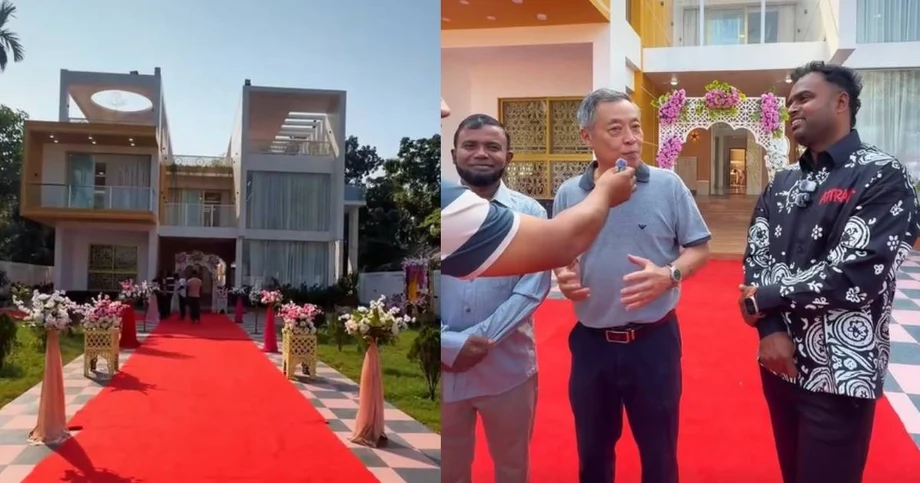
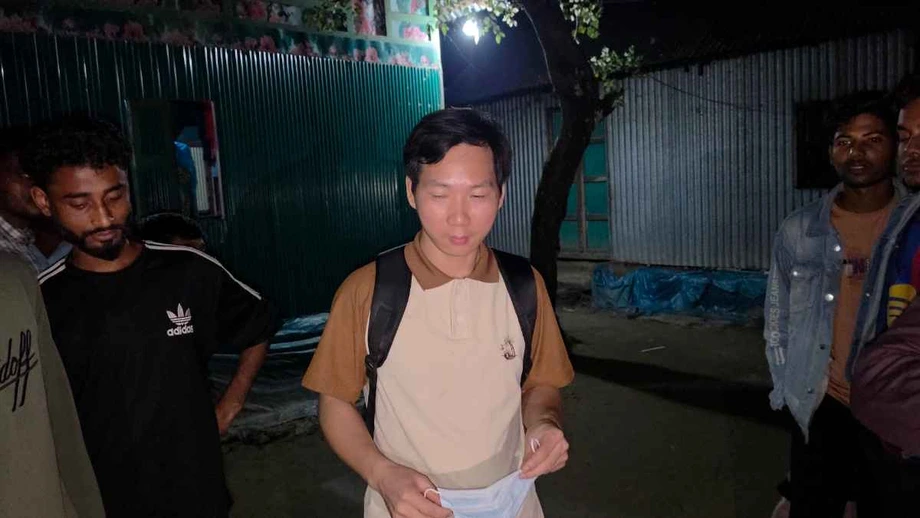
A Chinese restaurant worker who travelled to Bangladesh to marry a young woman he had come to know on WeChat left her village without a wedding after her family refused consent. Mo Jiaqian, 34, reached Sultanpur village in Fatehabad Union, within Debidwar upazila in Cumilla, on Friday, 27 November 2026. By midnight, police had escorted him from the house, ending a visit that drew hundreds of curious residents and turned an online romance into a public discussion about consent, documents and safety.
Contents
Jiaqian had entered Bangladesh on a travel visa valid for one month and stayed at a residential hotel in Dhaka before hiring a car to Sultanpur. He hoped to marry Nusrat Jahan Tamanna, 19, also identified locally as Tamanna Akhter, and take her to China. Tamanna said she was willing. Her parents and people in the area were not, and hours of discussion failed to change their position.
The house became the centre of attention through Friday afternoon and evening. News that a foreign visitor had come for love spread quickly, and people gathered to see him. Discussions between Jiaqian and Tamanna's relatives lasted for hours. When consent still was not forthcoming, local administrators and police were contacted so that the gathering could be managed calmly.
Debidwar police station's officer in charge, Mohammad Moniruzzaman, confirmed the episode on Saturday, 28 November. He said officers were sent because a foreign citizen's presence had become widely known and his safety needed attention. The immediate obstacle was the family's refusal to proceed without Jiaqian's relatives and the legal documents needed for marriage.
A Romance Conducted Through Translation
Relatives said the pair made contact about six months earlier through WeChat, a widely used Chinese messaging service. Their conversations crossed a language barrier with translation applications, including tools that translated speech. They gradually developed a romantic relationship and eventually decided that they wanted to marry. Jiaqian's journey was intended to turn those online conversations into a direct meeting with Tamanna and her family and, if possible, a wedding.
A later description based on local police inquiries put the relationship at three months, rather than six. No official record settled its exact length. Both versions describe the same sequence: contact on WeChat, communication through translation tools, a growing attachment and finally a plan for Jiaqian to visit Bangladesh.
Police checks provided the most precise personal details. His passport named him as MO JIAQIAN and gave his date of birth as 17 March 1992, making him 34 when he arrived in Sultanpur. He was identified as a resident of Guangdong province who worked in a restaurant in China, with one description specifying that he was a chef. Other descriptions called him 35, rendered his name as Jekuin and placed his home in the Zhaoqing area of Huaijing city. Police used the passport details when verifying his identity and Chinese citizenship.
Jiaqian said he arrived in Bangladesh on 19 November, while relatives' earliest description gave 20 November. Both dates place him in Dhaka for about a week before he travelled to Cumilla. His visa was repeatedly described by Tamanna's father and local officials as a travel visa lasting one month.
Why Tamanna's Family Refused to Proceed
Amir Hossain, Tamanna's father and a farmer, based his refusal on two missing elements: Jiaqian's family members were not with him, and he had brought none of the legal documents needed for marriage. The father was also identified as Amir Khondkar in local descriptions. He said his daughter was young and that the family did not want to send her into an uncertain future without papers. Speaking by telephone, he described their circumstances in simple terms.
We are poor people. My daughter is also young.
Amir said his daughter and Jiaqian had made contact by mobile phone. He told the visitor to return through the legal process with members of his family and legal documents from China. Only then would the family consider arranging the marriage. Amir also said it was difficult to tell whether Jiaqian had come purely out of love or had another purpose. His stated fear was that his daughter could be left in uncertainty if she married without the necessary papers.
Tamanna herself had said she wanted to marry Jiaqian and go to China. Her parents and local residents opposed the plan. After police spoke with her about her safety and the discussions continued, she accepted her parents' decision. The wedding did not take place, and Tamanna remained with her family as Jiaqian prepared to leave.
The father's position left room for another discussion rather than announcing a permanent rejection. His condition was that Jiaqian demonstrate family involvement and produce legal consent documents. For the visit that had just taken place, however, the answer remained no.
How Officials Managed the Gathering
Rafiqul Islam, the acting chairman of Fatehabad Union Parishad, went to the house after hearing about the Chinese visitor. A union parishad is the elected council responsible for local rural administration. Rafiqul said Jiaqian had arrived on a travel visa valid for one month and possessed no papers granting permission for the proposed marriage. He also referred to incidents elsewhere in which people had faced blackmail after marriage.
By Friday evening, the crowd and the unsuccessful marriage discussions had made the situation a concern for the local administration. Police were informed so that order could be maintained. On the advice of the Upazila Nirbahi Officer, the senior civil administrator in the subdistrict, two police officers and local residents spoke with Jiaqian. Officers checked his passport and recorded the necessary information to confirm his Chinese citizenship.
Moniruzzaman said the police deployment was intended to protect the Chinese citizen as well as keep the situation calm. No complaint from either side was filed, and police said no legal action was taken. Officers consequently concentrated on managing the gathering, verifying Jiaqian's identity and arranging his safe departure.
Police assistance also provided a way out after the family refused consent. Jiaqian left the house around midnight without a confrontation becoming a criminal case. Local officials then turned their attention to explaining what he would need if he wished to return and pursue marriage lawfully.
The Safety Warning Behind the Documents
Moniruzzaman explained why police and local officials treated the missing documents as more than a formality. Speaking in his capacity as Debidwar police station's officer in charge, he described a broader concern about young women being approached from abroad and warned about the dangers that can accompany promises of marriage.
We have learned that a foreign ring targets young girls and builds romantic relationships. There have also been cases of trafficking abroad or trapping them in various ways in the name of marriage. In such cases, families fall into trouble if the necessary legal documents are missing. Jiaqian came to Bangladesh on a travel visa. He did not have the documents needed for marriage with him.
Rafiqul Islam separately mentioned deception and blackmail following some marriages. Those general warnings help explain why the missing papers carried such weight in Sultanpur. In Jiaqian's case, police had checked his passport, confirmed his citizenship and received no complaint. The official response was protective and administrative, ending with an escort and advice about any future marriage process.
The concerns also shaped the conversation with Tamanna. She had initially expressed a wish to leave for China as Jiaqian's wife, but police discussed her safety with her during the family dispute. Her eventual acceptance of her parents' decision brought the immediate marriage effort to an end.
What Another Marriage Attempt Would Require
Before leaving Sultanpur, Jiaqian was advised to return to China for the time being. If he wished to pursue the marriage later, he was told to obtain the necessary documents involving his embassy and family, complete the appropriate visa process and follow the law in Bangladesh. He was also told that a marriage according to Muslim rites would require observance of the relevant religious and legal rules.
His travel visa had allowed him to visit, but it did not supply either the marriage permission papers sought by the union chairman or the family participation and legal consent documents sought by Amir. Entering the country as a visitor and preparing a documented marriage were therefore separate tasks. That distinction lay at the heart of the family's refusal.
Police and the family did not publish a list of individual certificates, a fee, a processing period or an appointment for any future application. Amir's wording was that the family would consider the marriage if Jiaqian returned with his relatives and the legal documents, not that approval was guaranteed. No new wedding date or return journey was announced.
The advice gave Jiaqian a practical description of what was missing during this visit. It also gave Tamanna's family a way to assess any future proposal through documents and direct participation by his relatives, rather than relying entirely on conversations conducted through messaging and translation applications.
The Visit, Date by Date
Jiaqian's week in Bangladesh unfolded as follows:
- About six months before the visit: Jiaqian and Tamanna began talking on WeChat, according to relatives, using translation tools to overcome the language barrier. A later local description gave three months.
- 19 or 20 November: Jiaqian arrived in Bangladesh on a travel visa valid for one month and stayed at a residential hotel in Dhaka. He gave 19 November, while relatives initially gave 20 November.
- Friday, 27 November: He travelled by hired car to Tamanna's home in Sultanpur, part of Fatehabad Union in Debidwar. Hundreds of residents gathered after news of his arrival spread.
- Friday afternoon and evening: Tamanna's family discussed the proposal with him but refused consent because his relatives were absent and he lacked the necessary marriage documents. Local officials and police became involved.
- Around midnight: Police escorted Jiaqian away from the house after the lengthy discussions failed to secure the family's agreement.
- Saturday, 28 November: Moniruzzaman publicly confirmed the incident, the police deployment and the family's refusal.
Police gave two descriptions of his destination after the escort. The fuller version said he was taken to a hotel in Cumilla city for security. Moniruzzaman's earlier statement said police learned that he had returned to Dhaka that night. No time for an onward journey was supplied, and his location after Saturday was not announced.
By Saturday, Tamanna remained with her family, no wedding had occurred and no complaint had produced a legal case. Any future proposal depended on the documents, family involvement and consent that had been absent during this visit.
Key Points
- Mo Jiaqian travelled to Sultanpur in Debidwar, Cumilla, on 27 November 2026 hoping to marry Nusrat Jahan Tamanna, 19.
- His passport gave his birth date as 17 March 1992, making him 34, and identified him as a resident of Guangdong province who worked in a restaurant.
- The couple communicated through WeChat and translation applications, with the relationship described as lasting either six months or three months.
- Tamanna initially wanted to marry him and move to China, but her parents and local residents refused to support the wedding.
- Her father asked Jiaqian to return with his family members and legal consent documents before the marriage could be considered.
- Police verified Jiaqian's passport and citizenship, escorted him away around midnight and took no legal action because neither side filed a complaint.
- Officials advised him to obtain embassy and family documents, complete the appropriate visa process and follow Bangladeshi legal and religious requirements before any future attempt.