A Wounded Elephant Returns to the Village
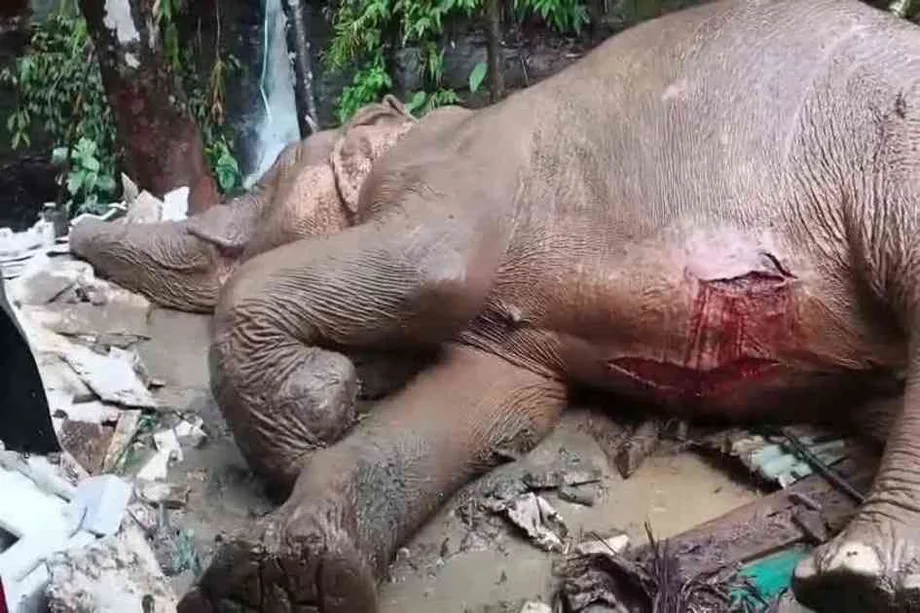
In Holbonia village early on Saturday, 28 November 2026, residents saw a female wild elephant, about 30 to 35 years old, moving through Baharchhara union in Teknaf, Cox's Bazar, with eight gunshot wounds in her body. The animal entered a homestead, broke several betel nut trees and damaged houses, according to residents and forest staff. Fear spread through the area, and hundreds of people later gathered to watch.
Contents
- A Wounded Elephant Returns to the Village
- What Happened, Day by Day
- How the Elephant Was Found and Treated
- Why the Right Hind Leg Matters So Much
- A Crowd, a Fire and the Risk of Panic
- Who Is Handling the Response
- The Wider Pattern of Gunshot Injuries
- What Changes for Residents and Rescuers
- What Is Still Unknown
- Why This Case Matters Beyond One Elephant
- Key Points
The same elephant had been treated and sent back to the hills about 10 days earlier. Forest staff said illness and the damaged right hind leg likely brought her down from the hills again. She could not place that leg properly on the ground and walked with a limp, which made the return risky for people and for the animal.
Residents said their anger grew after the damage. Some threw bricks and stones, beat the animal with sticks, lit fires and tried to drive her away. One person was seen trying to set her tail alight with a burning torch. Forest Department workers, members of the Elephant Response Team (ERT) and local residents moved in to guide her toward the hills. The range office said she was still near the forest edge at times. The Baharchhara ERT later said its members escorted the elephant deep into the forest without harming it.
What Happened, Day by Day
The return followed a short, tense sequence that began in the middle of November and left officials considering how to keep both residents and the elephant safe.
- 16 November: A limping female elephant was seen in the area with another elephant staying close.
- 18 November: After a search lasting two days, a joint team found the animal in difficult hill terrain. The Baharchhara range office placed the site in the Jahajpura hill area, while the initial forest update named Gorjanbagan.
- 18 November treatment: Forest staff and Dulahazara Safari Park veterinarians sedated the elephant, examined her wounds and removed bullet parts and shells.
- About 10 days later: After treatment and release into the hills, the elephant came back to Holbonia and moved into a homestead.
- 28 November morning: Residents reported damaged betel nut gardens and homes. Angry residents threw objects, used sticks and tried to frighten the animal with fire.
- 28 November afternoon: Forest staff, ERT members and residents guided the elephant back toward the hills, with the ERT saying it reached deep forest.
Those dates show why the latest episode raised fresh concern. An animal that could barely manage a normal walk had returned to the same kind of terrain where people keep gardens and homes close to forest cover.
How the Elephant Was Found and Treated
During the 18 November operation, the Forest Department worked with Dulahazara Safari Park's veterinary team and wildlife rescuers. The search used drones and ground teams across steep, remote hill terrain. The Baharchhara range office identified the place as Jahajpura hill, and the first forest update used the name Gorjanbagan for the same area of Shilkhali range.
The team used a tranquilliser, a drug that calms and immobilises an animal so veterinarians can examine and treat it safely. Mohammad Touhidul Islam, officer of the Baharchhara Shilkhali Range, said treatment continued for several hours. The veterinary team described about one hour of work after the elephant was sedated. Both descriptions place the operation on 18 November, after the animal had been found weak in the hills.
Mustafizur Rahman, veterinary surgeon at Dulahazara Safari Park, found bullet wounds under the trunk, beside the ear and on other parts of the body. The veterinary description put the elephant at about 35 years old; the range office gave an estimate of 30 to 35 years. During treatment, a male elephant stayed nearby, and forest staff split into two groups to reduce the chance of an accident while the wounded animal received care.
Why the Right Hind Leg Matters So Much
The two worst wounds were on the bone and joint of the right hind leg. Mustafizur Rahman said those wounds were 8 to 10 inches deep. The joint is the tarsal joint, the joint in a hind leg that works much like an ankle. It carries weight when an elephant walks, so damage there can change every step.
One bullet remained inside that joint, and removing it was described as extremely difficult. Six of the eight wounds, or three of every four, had been treated by Saturday. Treatment could improve her condition, but the two hardest injuries were still serious enough that a full recovery was considered unlikely.
The injured leg helps explain the animal's behaviour. She could not put her right hind leg firmly on the ground, and she limped as she moved. That made it harder for her to retreat quickly when people gathered, shouted, threw objects or lit fires nearby.
A Crowd, a Fire and the Risk of Panic
The elephant's return stirred fear because it came without warning and damaged property. Local resident Nazrul Islam said people lit fires and threw clods to drive the animal back toward the forest. Habib Ullah, another resident, described the elephant entering a homestead in Halbania village and struggling to walk because of the leg wound.
Mohammad Touhidul Islam, officer of the Baharchhara Shilkhali Range, said the animal probably came down because it was ill. He said residents became angry after tree damage and that forest staff tried to calm them from early morning. The crowd of curious onlookers made that work harder.
Locals got very angry after the elephant damaged several trees this morning. We were there from the morning and managed to calm them down. However, controlling the large crowd of curious people was difficult.
Mohammad Touhidul Islam, the Baharchhara Shilkhali Range officer, also said his team stayed close to the animal and tried to arrange care while reporting the situation to senior officials. He described monitoring that continued after the crowd was dispersed.
Our team is around the elephant, and we are trying to provide treatment. We have also informed the higher authorities so that the animal can receive the best possible treatment.
H M Nazrul Islam, Cox's Bazar organisational secretary of Bangladesh Paribesh Andolan, also known as the Bangladesh Environmental Movement, said people should not frighten or provoke the elephant. He urged residents to keep a safe distance because a wounded animal under stress can put both people and the elephant in danger.
Who Is Handling the Response
Kazi Tarikur Rahman, divisional forest officer of Cox's Bazar South Forest Division, said the Forest Department, Safari Park veterinarians and the Wildlife Rescue Team worked together on the case. He said the elephant's return after treatment created new concern and called on residents to remain alert while avoiding contact with the animal.
The ERT has a practical role in Teknaf. It is a local response group that helps move elephants away from homes and fields in a coordinated way, rather than letting every resident react alone. On Saturday, ERT members worked with forest staff and residents to guide the elephant back toward cover. Habib Hossein, president of the Baharchhara ERT, said his team was checking whether this was the same elephant with bullet wounds treated on 18 November. He said the animal had marks on the right hind leg.
The forest office said the animal was placed in a designated area and watched around the clock. Mohammad Touhidul Islam said three to four Forest Department personnel were stationed nearby to prevent disturbances and keep the elephant in a safe area inside the forest. Staff tried to provide basic treatment while senior officials considered the next step. He said the matter had been reported to senior authorities, who would decide on further treatment. No final care plan was announced in the statements made on Saturday.
The Wider Pattern of Gunshot Injuries
A 21 November push for stronger wildlife protection in Cox's Bazar had already framed elephant shootings as part of a wider security problem. Forest Department data show that at least nine elephants were killed by gunfire in Cox's Bazar between 2016 and 2025. Other counts put the number higher. The department believes this elephant was shot by armed criminals based in the deep Teknaf forest, where human traffickers and armed groups have hideouts.
Elephants are listed as critically endangered in Bangladesh. That term means the species faces a very high risk of disappearing from the wild. Protecting the remaining animals also protects biodiversity, the variety of plant and animal life that keeps forests healthy.
Coordinated action is needed against forest occupation, wildlife killing, arms use and human trafficking. That includes identifying people involved in elephant shootings and ensuring punishment. For Teknaf, the practical task is to make forest routes and habitats safe enough that wounded animals are not driven back into villages by fear, injury or pressure from people.
What Changes for Residents and Rescuers
Holbonia residents now face a problem that does not end when an elephant walks into the hills. Damaged trees and homes leave families worried about safety and losses. The presence of hundreds of onlookers also makes each return harder to manage, because more people near the animal means more noise, more fear and more chances of a dangerous reaction.
For rescuers, the case calls for repeated watching rather than a single push back into the forest. A healthy elephant can move away quickly. This elephant could not rely on the injured leg, so staff had to consider its movement, the crowd and the nearby hills at the same time.
For local authorities, the case links wildlife care with public safety. Forest guards have warned residents not to disturb the animal. Residents near the forest need clear instructions on how to respond if it returns, especially at dawn, when the first sightings happened.
What Is Still Unknown
Several points remained unsettled in the information released on Saturday. No date was announced for further treatment, transfer or a review of the monitoring plan. Officials did not say who fired the shots, whether Saturday's attacks caused new injuries or how much the damaged trees and houses were worth.
The identity question also remained a point of verification for the ERT, even though the range officer treated the animal as the same wounded elephant. Habib Hossein said his team was still checking the marks on the leg. Forest staff and residents who knew the earlier animal were more certain.
Authorities said senior officials would decide the next step after discussion. Until then, the immediate measure was watching the elephant and keeping people away from it.
Why This Case Matters Beyond One Elephant
This episode brings together three problems that meet in Teknaf: an injured protected animal, a frightened village and a forest where armed activity has been reported. Treating wounds can ease suffering, but it leaves the source of the gunfire unresolved if the wider security problem remains.
A coordinated response would need forest protection, wildlife rescue, local cooperation and action against illegal arms. The aim is to save the animal, protect forest biodiversity and reduce the risk that people and elephants meet in dangerous conditions.
For now, the elephant's future depends on whether the injured leg can be stabilised and whether officials can keep her in the hills. The people of Holbonia need the same thing: a clear plan, calm behaviour around the animal and protection for homes and gardens close to the forest.
Key Points
- A female wild elephant with eight gunshot wounds returned to Holbonia village in Teknaf on 28 November 2026.
- The animal damaged betel nut trees and homes, and residents threw bricks and stones, used sticks, lit fires and tried to set her tail alight.
- Forest staff said six of eight wounds had been treated; two wounds on the right hind leg were 8 to 10 inches deep and one bullet remained in the joint.
- On 18 November, a joint team found the elephant after a search lasting two days, sedated her and treated her in the hills.
- The animal is about 30 to 35 years old, walks with a limp and has a low chance of full recovery.
- Forest Department data show at least nine elephants were killed by gunfire in Cox's Bazar between 2016 and 2025.
- Officials have not announced the next treatment date, the identity of the shooters or the value of the damage.