A solar push now includes the duty to recycle
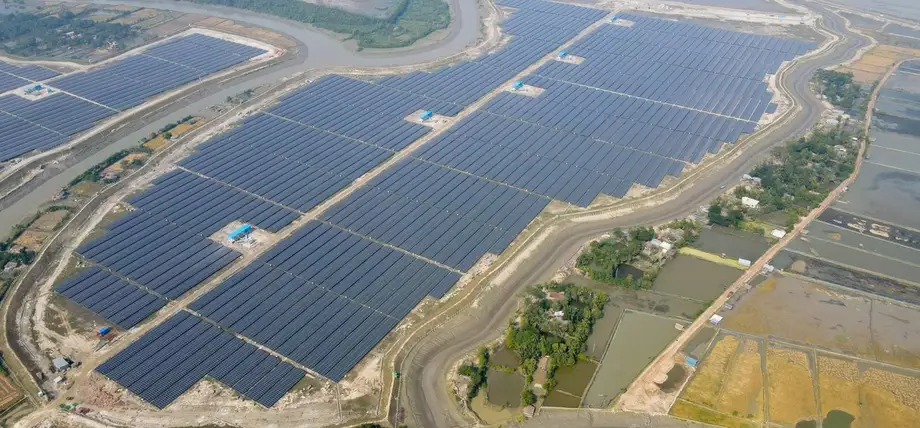
Bangladesh has made manufacturers, suppliers and service providers responsible for recycling solar panels and related equipment when they wear out, suffer accident damage or are hit by natural disasters. The requirement sits inside the Special Solar Power Installation Act, 2026, a wider law designed to spread solar systems across public institutions, factories, commercial buildings and other suitable sites.
Contents
- A solar push now includes the duty to recycle
- Who will collect the waste, and who will pay?
- OPEX takes priority over buying a system outright
- What the standard rooftop contract offers
- How exports earn money, and where the grid can constrain projects
- Why the battery rule is already drawing scrutiny
- The institutions and penalties behind the rollout
- The dates shaping the transition
- The waste framework still has practical gaps
- What to Know
Parliament passed the measure as Law No. 114 of 2026. Following presidential assent, the government published the gazette on Sunday, 22 November 2026. The act is deemed to have been in force since 19 October 2026. It repeals the Special Solar Power Installation Ordinance, 2026, while keeping approvals, activities and processes already begun under that ordinance valid.
The central waste provision requires the company concerned to retrieve machinery that has expired or become unfit for use. The act describes the arrangement in these words:
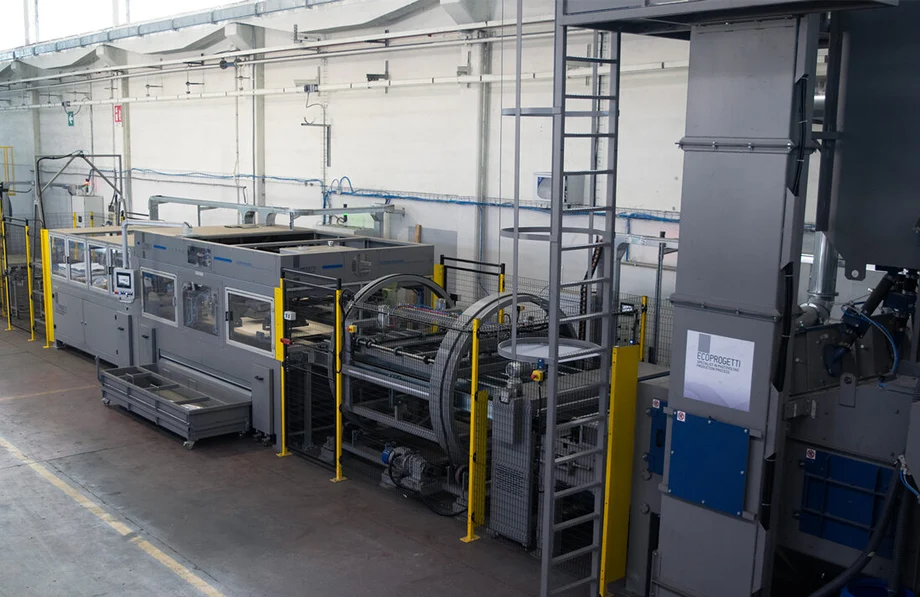
A 'Take-back Scheme' will be implemented by the concerned manufacturer, supplier, or service provider to take back and manage machinery and equipment of the special solar power system when they become expired or unfit for use.
A legal obligation now exists, but Bangladesh still lacks a dedicated policy for managing waste from solar panels and related equipment. In its Renewable Energy Policy 2025, the Power Division said the Ministry of Environment would add provisions for the sustainable disposal and recycling of batteries and photovoltaic panels to e-waste regulations. Photovoltaic, often shortened to PV, describes technology that converts sunlight directly into electricity.
Who will collect the waste, and who will pay?
Dhaka garment factory owner Alamgir Hussain welcomed the initiative and warned that badly managed solar waste could create serious risks in coming years. He linked the concern to the spread of rooftop systems encouraged by government incentives.
Many factories and private building owners are installing solar systems in the rooftops as the government declared incentives for the same. The wastes need proper disposal to avoid hazard.
Imran Chowdhury, deputy director for project implementation management for Bangladesh at ib vogt APAC, said the global solar discussion is moving beyond capacity additions and cost competition toward sustainability across the life of equipment. He noted that Bangladesh's industry has paid comparatively little attention to solar equipment after its working life.
The introduction of a Take-back Scheme is particularly noteworthy.
His support comes with a warning about execution. Bangladesh relies heavily on imported solar equipment, so it is not yet clear whether international manufacturers will establish local collection arrangements. Responsibility could instead fall on local suppliers, distributors or project investors. The costs of collection, transport, recycling and final disposal also need to be allocated in a way that companies and consumers can understand before signing contracts.
Those choices carry particular weight for projects using the OPEX model, in which an outside investor finances and operates the system. An investor must decide whether future waste costs will be included in the electricity price, borne by the service provider or passed to another party. Without predictable arrangements, a distant disposal bill can become an immediate uncertainty in project financing.
OPEX takes priority over buying a system outright
The law offers two principal routes. Under OPEX, an investing company finances, installs, operates and maintains the solar system at a suitable site. The consumer institution receives an agreed portion of the electricity, or the amount specified in its agreement, without having to fund the installation itself. Under CAPEX, the institution spends its own money, installs the system and retains ownership.
OPEX receives priority, but CAPEX remains available to institutions with their own funds or regular income. Their future financial capacity must be taken into consideration. This gives a factory, hospital or public office a choice between avoiding the initial construction expense and owning the equipment from the outset.
The competent authority will enlist eligible companies for investment under both models through a prescribed procedure, subject to a registration fee. Consumers can select a provider from that list through competition. They can also bypass the enlisted companies and choose a provider through an open tender.
Every installation will require a tripartite agreement among the consumer, service provider and competent authority. Its prescribed format will address use of the installation site, equipment standards, safety, consumption of generated electricity, management of surplus power, bill payments and maintenance. The service provider is also responsible for collecting, transporting, recycling and disposing of equipment and components after their useful life.
Special procurement rules are intended to accelerate CAPEX projects. Goods and related services worth up to Tk 50 million (Tk 5 crore) can be purchased through limited tendering. Use of Electronic Government Procurement, or e-GP, will not be mandatory for procurement connected with these programmes.
What the standard rooftop contract offers
A Power Division notification dated 1 November 2026 introduced standard CAPEX and OPEX documents for rooftop solar. Writing on 24 November, Shahriar Ahmed Chowdhury, director of the Centre for Energy Research at United International University, said standard documents could reduce negotiation costs and give building owners and investors clearer terms.
The OPEX documents place ownership and all capital, operating and maintenance costs with the service provider for 15 years from the Commercial Operation Date, the point at which the system enters commercial service. An extension is possible by mutual agreement. When the contract ends, the installation transfers free of charge to the roof owner, subject to the agreed exit arrangements. The provider must also furnish performance security equal to 3% of the proposed system value.
A roof owner receives at least 10% of the generated electricity free of charge. The offered share is a criterion in competitive selection, so bidders can offer more than the minimum. The standard documents do not prescribe conventional cash rent or annual rent increases. The owner's principal benefit is electricity, and its value depends on actual generation and the agreed share.
Electricity consumed beyond the free entitlement is charged separately by the service provider at 80% of the applicable retail tariff. For specified LT-D1 educational, religious and charitable institutions and hospitals, the notification sets a rate of Tk 8.5 per unit. Agreements need to distinguish this consumption from both the free electricity entitlement and power exported to the grid.
Shahriar Ahmed Chowdhury cautioned against selecting a bidder solely because it promises the highest free share. Excessive offers can weaken a project, while inadequate offers can discourage owners. Technical compliance, financial strength, equipment quality, realistic generation estimates, costs across the contract and maintenance capability also deserve assessment. He said participation should follow an informed decision about roof suitability and commercial prospects, rather than an assumption that every rooftop must host solar panels.
How exports earn money, and where the grid can constrain projects
Net metering is an accounting arrangement for electricity flowing in both directions. A building can use solar power itself and export surplus electricity to the distribution network. Under the notification, the utility deducts 10% of the exported electricity and credits the remaining 90%, with settlement every three months. The act separately allows the government to announce incentive programmes related to net metering to pursue renewable energy targets.
Qualifying systems commissioned by 28 February 2027 will receive Tk 10.5 for each kilowatt hour exported until 28 February 2030. A kilowatt hour, written as kWh, is the energy used or supplied when one kilowatt flows for one hour. After the incentive period, rates determined by the government and the applicable net metering guidelines will apply.
The energy researcher said investors still need timely settlement, transparent energy accounting and workable dispute resolution. Financial models must account for electricity consumed on site, exports, variations in generation and financing costs. A predictable tariff framework after 2030 is especially relevant for projects that encounter approval or grid connection delays before qualifying for the present incentive.
Distribution networks present another practical constraint. Large amounts of rooftop generation can create reverse power flow, meaning electricity travels from buildings back into the local network. Voltage increases, transformer capacity, power quality and delays in installing meters that measure flows in both directions can hold up otherwise viable projects. Utilities have been urged to assess how much generation each feeder can accommodate, publish connection requirements and set clear deadlines for approvals and metering.
Why the battery rule is already drawing scrutiny
The notification requires battery storage equivalent to at least 20% of solar system capacity for installations above 25 kWp. A kWp rating describes a solar array's peak generating capacity under standard test conditions. Batteries can store electricity produced around midday for use in the evening, reduce peaks in consumption and improve the use of solar generation.
Shahriar Ahmed Chowdhury argues that applying the requirement universally could increase costs and weaken the viability of smaller rooftop systems. He recommends reviewing the blanket threshold and removing the obligation where storage is not justified technically or economically. Battery needs, he said, should be assessed against consumption patterns, grid conditions, export limits and operational requirements.
Large industrial and commercial installations may have a stronger case for storage. Their contracts and technical specifications should distinguish battery power, measured in kilowatts, from stored energy, measured in kilowatt hours. They should also define usable capacity and discharge duration. Warranties, gradual loss of storage capacity, replacement costs, fire safety and eventual battery management all affect reliability and project finances.
Implementation extends beyond individual contracts. The researcher proposed a unified digital platform for applications, approvals, inspections, grid connections, metering and settlement, supported by deadlines and institutional accountability. Monitoring should track actual generation, system availability, consumer savings, battery condition and contractual compliance. Smaller rooftops could also be grouped into larger portfolios, reducing transaction costs and making schools, hospitals, commercial buildings and industrial clusters more attractive to professional OPEX providers.
The institutions and penalties behind the rollout
A National Policy Council chaired by the Prime Minister will guide expansion and coordinate the institutions involved. Its membership will draw from the Ministry of Power, Energy and Mineral Resources, the finance and law ministries, other relevant ministries, the Cabinet Division, the Prime Minister's Office and the National Board of Revenue. It will review progress under OPEX and CAPEX and provide policy guidance toward national renewable energy targets.
Technical and coordination committees will also operate locally. The Deputy Commissioner will chair each district committee, while the Upazila Nirbahi Officer will lead the committee in each upazila, or subdistrict. Their duties include support, monitoring, advice and guidance. Information about special solar power systems must be maintained on the website of the Sustainable and Renewable Energy Development Authority, known as SREDA, with regular monitoring.
The act creates criminal offences around the systems themselves. Stealing electricity, including any portion of the electricity generated, carries imprisonment for up to three years, a fine of up to Tk 50,000, or both. Damaging a system, illegally supplying a connection to someone else, or obstructing installation, connection, expansion or maintenance carries imprisonment for up to three years, a fine of up to Tk 500,000 (Tk 5 lakh), or both.
A First-Class Magistrate or Metropolitan Magistrate will try these offences. The Code of Criminal Procedure will govern investigation, trial and related proceedings. These provisions give the recycling duty and investment framework a wider legal structure covering system security, public supervision and local coordination.
The dates shaping the transition
The ordinance, act, contract documents and incentive deadlines form a rapid sequence rather than separate policy initiatives.
- 19 October 2026: The Special Solar Power Installation Act is deemed to have entered into force on this date.
- 1 November 2026: The Power Division issued standard CAPEX and OPEX documents for rooftop solar.
- 22 November 2026: The act was gazetted after parliamentary passage and presidential assent, and the earlier ordinance was repealed.
- 28 February 2027: Qualifying systems must be commissioned by this date to receive the stated export incentive.
- 28 February 2030: The Tk 10.5 per kWh export incentive for those qualifying systems runs until this date.
Approvals and continuing processes begun under the ordinance remain valid under the act. That continuity allows existing work to proceed while institutions move onto the new legal framework.
The waste framework still has practical gaps
The act identifies who must take equipment back, but the location and cost of processing imported panels remain unresolved. No date was given for detailed collection procedures, local recycling arrangements or the broader environmental provisions promised in the Renewable Energy Policy 2025. Consumers therefore have a legal route for returning equipment without yet knowing what the collection network will look like.
Imran Chowdhury also called for a broader solar e-waste framework covering projects at utility scale, meaning large installations that feed electricity into the grid. His concern is the volume of equipment those projects will bring into Bangladesh as renewable capacity expands. Rooftop systems covered by standard OPEX contracts represent only part of that eventual waste stream.
For a factory owner, a functioning system would mean knowing who collects a damaged panel and where it goes. For an OPEX investor, it would allow recycling expenses to be priced into a contract lasting 15 years. For environmental authorities, the challenge is to connect SREDA's monitoring of installations with safe disposal and recycling rules, so that rapid solar growth does not leave buildings and local companies storing equipment they cannot legally or safely process.
What to Know
- Law No. 114 of 2026 makes solar equipment recycling and disposal responsibilities mandatory and establishes a take back scheme.
- The act was gazetted on 22 November 2026 and is deemed effective from 19 October.
- Imported equipment creates uncertainty over whether manufacturers, local suppliers, distributors or investors will operate and pay for collection.
- OPEX has priority, while institutions with sufficient funds can install and own systems through CAPEX.
- Standard OPEX terms include a contract lasting 15 years, at least 10% free electricity for the roof owner and eventual free transfer of the system.
- Qualifying exports can earn Tk 10.5 per kWh until 28 February 2030, and installations above 25 kWp face a battery storage requirement.
- A council chaired by the Prime Minister, local committees, SREDA monitoring and criminal penalties support implementation.
- Bangladesh still needs detailed waste procedures and a broader framework covering large solar projects at utility scale.