A perfect score, a fatal morning
Seoul police raided the former home of Lee Jin-woo on Thursday, Nov. 26, 2026, turning a story of academic reinvention into a criminal inquiry over alleged cheating with artificial intelligence. Lee, a dental student aged 32, had earned a perfect score on the Law Education Eligibility Test, or LEET, and was found dead on Nov. 19, one week earlier. He had been due to solve Korean language questions from the College Scholastic Ability Test, known as the Suneung or CSAT, in a live event meant to answer doubts about his results.
Contents
- A perfect score, a fatal morning
- Why the answer sheet drew suspicion
- What police searched, and why death did not end the case
- The book that turned a test record into a product
- The timeline behind a rapid rise and fall
- The digital detox story that drew millions
- What research says about phones and grades
- What research says about adults, mood and attention
- Why brain claims outran the science
- AI cheating fears change exam rules
- Mental health, old court records and public mockery
- Key Points
Lee was found dead at a lodging in Cheonho-dong, Gangdong-gu, Seoul, after he failed to appear at a studio in Gangnam district. The National Forensic Service carried out an autopsy on Nov. 20 and found no indications of homicide. A five line note found at the scene said his body and mind had collapsed, that he had intended to go to the verification event even if it cost him his life but wanted the final moment alone, and that he expected the note to be mocked.
Before his death, Lee offered a simple explanation for a dramatic rise. He said he had been near the bottom on the Suneung, walked across the country, lost his phone during the journey, spent three weeks away from digital devices, cut sugar and started walking and exercising. Then, he said, difficult texts became easier and his concentration improved. That account carried extraordinary appeal: one habit, one clean break from technology, then admission to Korea University, Seoul National University dentistry and a perfect LEET score. The evidence now before police and researchers is far more complicated.
Why the answer sheet drew suspicion
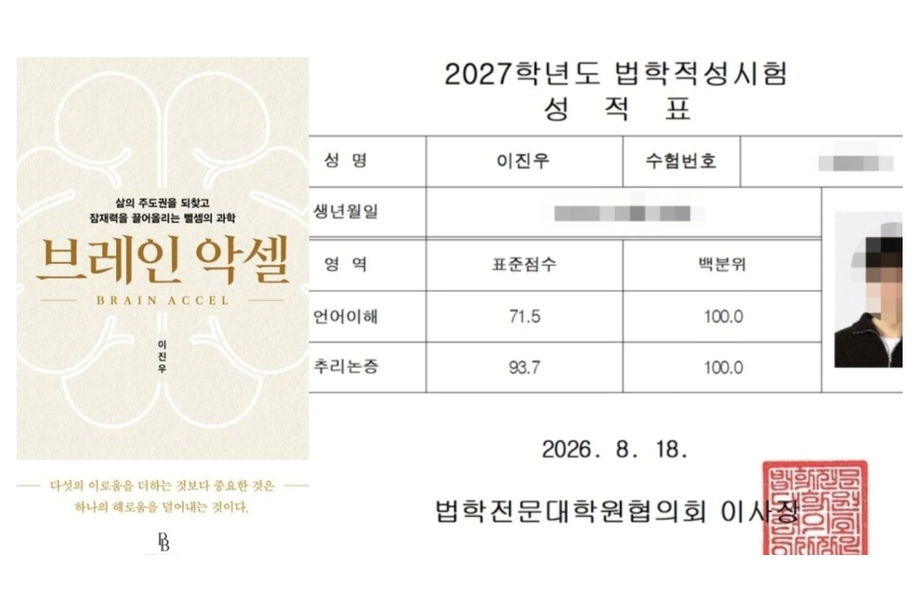
The LEET is an exam used for law school admissions in South Korea. It tests language comprehension and logical reasoning, and Lee answered all 70 questions correctly in July 2026 on the test for the 2027 admissions cycle. He was widely described as the first person ever to achieve that result, but that label was later withdrawn after a Nov. 17 report confirmed that the nationwide top scorer on the 2013 LEET, held for 2014 admissions, had also achieved full marks. That candidate, identified only as A, is now a practicing legal professional.
The doubts began when Lee displayed his LEET answer sheet on the YouTube channel of education creator Mimiminu. Viewers noticed that answers to questions 25 through 29 had been changed, while his first choices matched the correct answers to questions 24 through 28. That pattern suggested answers shifted by one place, and some viewers suspected copied answers, possibly involving AI. Police are now examining whether the paper, devices and usage records fit that suspicion.
Lee denied cheating. He said his concentration slipped late in the exam and led him to erase and rewrite answers. Lawyer Bang Min-woo filed a criminal complaint alleging that Lee used AI to cheat on both the LEET and the Suneung. Lawyer Park Eun-sun alleged that promoting the book Brain Axel could amount to fraud if Lee had gained his score improperly. Police asked education officials to preserve Lee's exam papers.
What police searched, and why death did not end the case
The Financial Crime Investigation Unit of the Seoul Metropolitan Police Agency's Metropolitan Investigation Group executed a search warrant at 11 a.m. on Nov. 26 at Lee's former residence in Sillim-dong, Gwanak-gu, Seoul. Officers also searched Lee's family home and Younghoon High School in Gangbuk-gu, where his 2026 CSAT papers were stored. The warrant named Lee and an 'unidentified accomplice' as suspects and listed the charges as obstruction of official duties by fraud, interference with business and fraud. Police applied for the warrant with the unidentified accomplice included because Lee's death made compulsory investigation directly against him impossible. Police have declined to disclose every detail of the warrant.
The residence search followed a Nov. 23 meeting with Lee's family, at which police discussed the voluntary handover of his phone and laptop. The devices were not provided, and officers proceeded with the search. At Younghoon High School, police secured Lee's past CSAT papers.
National Office of Investigation Head Hong Seok-ki said on Nov. 23 that a dead suspect did not automatically end every avenue of compulsory investigation when other people may be connected.
Apart from the lack of right to indict, if there is a related accomplice relationship, it is a situation where compulsory investigation can sufficiently be conducted if necessary.
Some of the key evidence is harder to reach because Lee is dead. The Korean Association of Law Schools does not retain his LEET answer sheet, while the government has preserved his 2026 CSAT answer sheet. Investigators still need items such as his laptop and phone, and they are considering requests for records from generative AI operators such as ChatGPT. The government previously said it would work with global technology companies to obtain AI usage records from exam takers suspected of cheating.
Seo Jeong-bin, a lawyer at Soul Law Firm, said a warrant for Lee's belongings would depend heavily on whether investigators can identify another person connected to the alleged acts.
A search and seizure warrant for Lee's belongings is likely to be issued only if an accomplice is identified.
Kwak Joon-ho, a lawyer at Law Firm Chung, described the legal effect of a suspect's death in narrower terms.
the only thing lost is the authority to indict.
Police said they were continuing because the public interest remained strong. No court date or charging decision has been announced, and police have not said whether Lee's family will hand over his phone, laptop or other evidence.
The book that turned a test record into a product
Lee published Brain Axel, also translated as Brain Accelerator, in September through a publishing house he founded. The advice book presented his study methods and claimed that changes in daily habits, including cutting sugar and reducing screen time, transformed his exam performance. It went through eight printings in about a month and a half, with at least 30,000 copies printed. For the week of Nov. 15 to 21, it ranked 24th among domestic titles and third in self improvement on Kyobo's bestseller chart, 96th overall at Yes24 and 58th at Aladin.
After Lee's death, Yes24 stopped selling the book and Aladin listed it as out of stock, saying distribution had stopped. Resale sellers on Karrot listed copies for 90,000 won to 250,000 won, including a signed copy at 200,000 won and a first edition at 250,000 won, or $186. That top listing was more than 11 times the cover price.
Lee had promoted the book before it was released. In an August interview with a legal magazine, he described it as a practical guide applying brain science, cognitive psychology and human physiology to exams and daily life. At a Sept. 14 book talk at a bookstore headquarters in Seoul's Jung district, he explained why a dentistry student with no plan to become a lawyer entered the LEET. He said his Suneung record alone could not carry his message and publishers had rejected his manuscript in May.
I thought there was a limit to how much I could communicate my philosophy to people based on my college entrance exam record alone. I submitted a manuscript to publishers in May, but nobody would accept it.
Some readers at the event complained that the book lacked concrete study methods. One attendee summed up the reaction.
It feels like magic.
Lee defended the way he used research on VILPA, short bursts of vigorous physical activity, and said he did not want to be limited by scientific detail.
There is a research paper on VILPA (short bursts of vigorous physical activity) itself. I interpreted it in my own words, without being too constrained by scientific knowledge.
He promised a revised edition with more detail and free shipping, even for 10,000 applicants.
The timeline behind a rapid rise and fall
The sequence matters because Lee's fame, book sales and cheating allegations grew within months. The main dates are:
- 2018: Lee received grade 7 in the Korean section of the Suneung, a low result in a system where grade 1 is the highest.
- 2024 admissions cycle: He received the second highest grade in Korean and top grades in math and English, gaining admission to Korea University political science and international relations.
- 2026 admissions cycle: He missed one question, in Biology II, and received the highest grade in every subject, gaining admission to Seoul National University dentistry.
- May 2026: Publishers rejected his manuscript.
- July 2026: Lee scored full marks on all 70 LEET questions in the language comprehension and logical reasoning sections.
- Sept. 2, 2026: Brain Axel was published.
- Sept. 14, 2026: Lee told readers at a Seoul book talk that the LEET gave him a feat no perfect scorer had achieved.
- Nov. 19, 2026: Lee missed the live verification event and was found dead. Prime Minister Han Seong-sook ordered the Ministry of Education to preserve all of last year's CSAT papers until further notice.
- Nov. 20, 2026: The National Forensic Service autopsy found no indications of homicide.
- Nov. 23 to 26, 2026: Investigators spoke with a relative, questioned a tutor and searched Lee's former home, family home and the school holding his CSAT papers.
That jump from grade 7 in Korean in 2018 to one wrong answer across all subjects in 2026 is why Lee's story drew such attention. It is also why the allegations now reach beyond one exam result and into the way he built a public brand around it.
The digital detox story that drew millions
Digital detox means a planned break from phones, social media or other online services. People use the term for a few hours, a two week break or a month away from devices. Related phrases in South Korea include digital fasting, digital tidying, escape from algorithms, brain reset and focus and immersion. These ideas have become popular among students, parents and office workers who feel pulled toward short videos and feeds.
The term appeared in the early 2010s, when travel companies in Silicon Valley began selling digital detox trips. The idea grew during the 2020 pandemic, when streaming video and platforms such as TikTok and Instagram surged. Books and papers about addiction, attention and disconnection followed. Today, people pay for phone lockboxes, detox cafes, camps and travel packages. Parents fight daily battles over children's phones, and some adults describe themselves as Odysseus tying himself to the mast to resist a song he cannot ignore.
What research says about phones and grades
Schools have provided some of the clearest tests of phone limits. In 2016, schools in four British cities banned smartphones and average exam results rose, with lower performing students showing larger gains. A study from Harvard and Dartmouth examined about 800 American schools and found small improvements in math and reading scores among students who did not use phones. The authors described the effect as similar to gaining one or two additional weeks of class.
Those results give phone limits a real place in the discussion. A phone can interrupt study, feed social comparison and make a short video feel more urgent than homework. School rules also change the whole environment at once, including teacher enforcement, peer behaviour and the amount of time students spend in class. The measured gains are best understood as the result of a package of changes around phone use.
What research says about adults, mood and attention
Adult studies have produced mixed and sometimes surprising numbers. One study of 467 adults in the United States and Canada limited smartphone internet access for two weeks. Participants rated their own cognitive decline as reversed to a level associated with 10 years of aging, and the study described mood improvement as stronger than antidepressants. The result came from self assessment, and 75 percent of participants quit before the end. The 25 percent who completed the program may already have believed digital detox would help.
A larger experiment involving 4,674 people found that stopping social media for a period produced no meaningful change beyond chance in life satisfaction or positive and negative emotions. In plain terms, many participants felt no clear shift in how happy or upset they were.
People who have tried digital detox often point to a different question: what fills the hours after the phone is removed. Putting a phone away at meals or in bed can create space for reading, exercise, sleep, family conversation or time with friends. Those activities can improve daily life, while an empty gap and rising anxiety can make the break feel like failure.
Why brain claims outran the science
The US National Institutes of Health says clinical observations have noted better concentration, memory and longer sleep when people step away from digital dependence. It also separates those observations from claims that digital devices themselves change how the brain functions. That distinction matters for students looking for a quick intellectual upgrade.
Popular claims about popcorn brain and brain rot often lean on dopamine, a chemical messenger involved in reward and motivation. Researchers have challenged the leap from animal experiments to social media use. Rats in dopamine studies receive rewards that do not match a person scrolling through feeds, and blocking one stimulating app does not by itself build study habits. Sleep, practice, mood, goals and repeated work all shape attention.
Lee's account pulled several ideas together: a phone free walk, sugar reduction, exercise, brain science and a dramatic exam result. The useful parts resemble ordinary study advice around sleep, movement and fewer distractions. The claim that one three week detox produced a permanent leap in ability goes beyond the research available.
AI cheating fears change exam rules
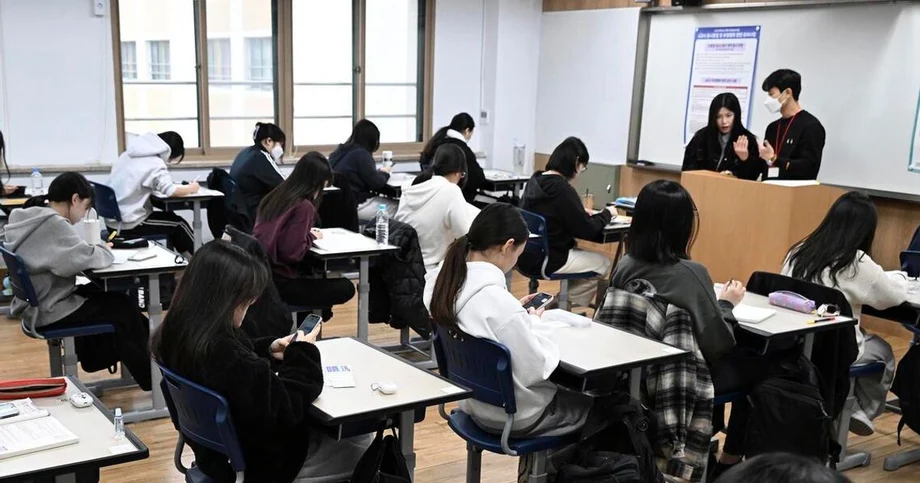
Lee's case sits inside a wider crisis over exam integrity. Shortly before last week's Suneung, the top scorer on the certified tax accountant exam admitted using a hidden micro camera, a smartphone and generative AI to answer 159 of 160 questions correctly. That admission triggered emergency action during the national college exam. Authorities used nationwide mobile alerts, glasses inspections, clothing stickers and aprons to detect hidden devices. Officials identified more than 100 cases of misconduct involving devices, with nearly half detected through phone alerts.
Education Minister Choi Kyo-jin resigned after criticism of the response. The government ordered a review of hundreds of national qualification exams, proposed longer bans on retakes and set up a prime minister led task force to coordinate investigations and policy changes. Some high scorers now keep their identities private, and officials across East Asia are reconsidering how to protect exams with severe consequences.
Police have also considered the 2024 Suneung part of the inquiry. ChatGPT had been available for about a year by then, and the technology was less capable of solving exam questions than it is now. If Lee used it in 2024, the role of another person becomes central to the investigation. For the 2026 Suneung, Lee missed only Biology II and received the highest grade in every subject. Police have not confirmed any cheating allegation against Lee.
Mental health, old court records and public mockery
Lee Soo-jung, a professor of criminal psychology at Kyonggi University, said the public record raised clinical questions but said a definite conclusion about delusion was difficult. She described the possibility of a mood disorder involving inflated self belief.
There is a possibility he was in a state of bipolar disorder accompanied by grandiose delusions.
Bipolar disorder, also called manic depressive illness, involves periods of unusually elevated mood alternating with depressive symptoms. Manic states can include high confidence, grandiose thinking and impulsive acts. Lee Soo-jung linked unstable mood and inflated self awareness to impulsive behaviour.
When emotions are unstable and self-consciousness is inflated, impulsive behavior tends to emerge.
She also described how high expectations and shifting mood can affect school performance.
There are cases where expectations of oneself are high but actual grades do not follow.
Estimates of how common bipolar disorder is vary with the definition used. The Ministry of Health and Welfare's 2016 survey put lifetime prevalence at 0.1 percent. A 2011 analysis of 3,013 adults put the broader bipolar spectrum, including milder symptoms, at 4.3 percent.
A court ruling involving a person whose birth date and former name match Lee's has also drawn attention. That person received an eight month prison sentence suspended for two years in January 2022 on extortion and attempted extortion charges. In September 2022, the person received a six month prison term for staged bicycle accidents that brought 2.42 million won, or $1,600, from five drivers, with fines over incidents involving a taxi driver and a police officer.
Since Lee's death, online users have shared AI generated composite images mocking him, dividing opinion over whether the ridicule crossed a line. Yu Hyun-jae, a communications professor at Sogang University, said public discussion failed to preserve a basic legal principle. Presumption of innocence means a person is treated as innocent until guilt is proved.
Lee was not given the presumption of innocence in news coverage or online commentary.
The police investigation continues without Lee's account. That absence leaves investigators relying on papers, devices, records and possible accomplices, while students and exam officials face a wider question about trust in tests that can shape entire lives.
Key Points
- Lee Jin-woo, a dental student aged 32, was found dead in Seoul on Nov. 19, 2026, amid allegations that he used AI to cheat on the LEET and Suneung.
- Police searched his former home, family home and Younghoon High School on Nov. 26, seeking exam papers, devices and evidence of possible accomplices.
- Lee answered all 70 LEET questions correctly, missed one question on the 2026 Suneung and promoted a book titled Brain Axel built around his study story.
- Resale listings for Brain Axel reached 250,000 won, or $186, more than 11 times the cover price, after sales were halted.
- Research links phone limits in schools with small grade gains, but studies of adults show mixed results and high dropout rates.
- The case has widened an exam security crisis in South Korea, with new device checks, a government review and a prime minister led task force.