A Resignation After a Week of Exam Chaos
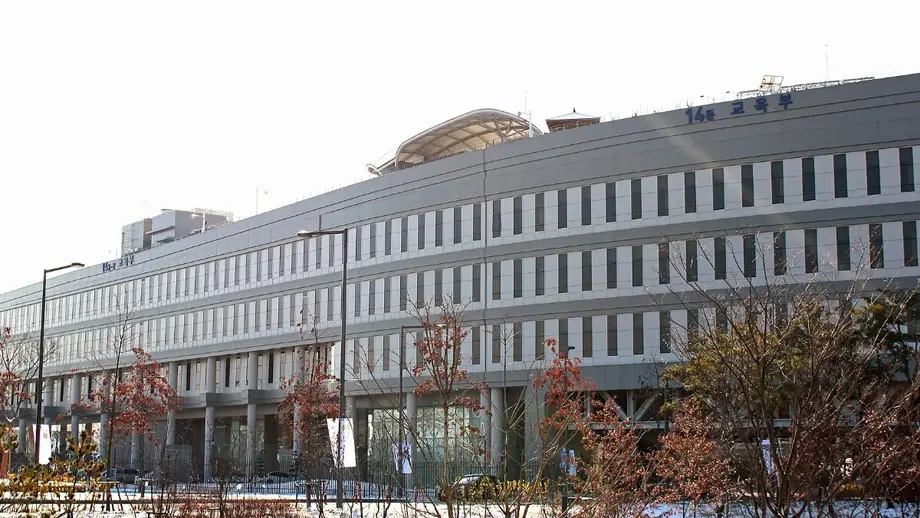
Education Minister Choi Kyo-jin, 72, resigned on Sunday, 22 November 2026, taking responsibility for the confusion caused by emergency measures to stop cheating with artificial intelligence during South Korea's national university entrance exam. President Lee Jae Myung accepted the resignation about an hour after it was offered, presidential spokesperson Kang Yu-jung said. Prime Minister Han Seong-sook was put in charge of follow-up measures, and Choi Eun-ok became acting minister.
Contents
- A Resignation After a Week of Exam Chaos
- The Confession That Sparked the Crackdown
- Earlier Warnings: Smart Glasses and Other Exams
- Why the Suneung Rules Changed So Late
- The Minister's Remark That Fueled the Backlash
- Exam Day: Alerts, Inspections, and the Numbers
- A Second Scandal: The Law School Exam Death
- Penalties, Rewards, and What Comes Next
- Key Points
- 15 November: Han Won-seok admits cheating on the tax accountant exam.
- 16 November: Minister Choi tells a parliamentary hearing he is not confident about detecting AI cheating.
- 17 November: Government adds about 8,400 staff for the Suneung and President Lee holds an emergency meeting.
- 18 November: Ministry restricts stationery to black pencils and blocks public Wi-Fi.
- 19 November: Suneung held with 551,864 registered candidates. Three emergency alerts sent.
- 20 November: Ministry publishes final figure of 111 suspected device cases.
- 22 November: Choi resigns and President Lee accepts.
- 11 December: Results scheduled for release.
The Suneung, formally the College Scholastic Ability Test, took place on Thursday, 19 November, for university entry in 2027. The education ministry said 551,864 people registered and 497,526 sat the exam at 1,312 centers nationwide. Officials reported 111 suspected breaches involving electronic devices, a figure that included 54 cases detected through three emergency alerts sent to mobile phones across the country.
Choi said in a statement released by the ministry:
As the minister in charge, I believe I cannot escape criticism that we failed to prepare in advance.
He added:
Now that the exam has concluded, I feel a deep sense of responsibility and am offering my resignation.
The education ministry announced the minister's resignation after a week in which rules for the exam were rewritten at short notice and the government revised its own count of detected offences upward.
The Confession That Sparked the Crackdown
The crisis began on 15 November, four days before the Suneung, when Han Won-seok, 34, admitted he had cheated his way to the top of the certified tax accountant examination. Han scored 397.5 out of 400 points in the first round, answering 159 of 160 questions correctly, and secured the top overall rank after the second stage in July.
In a video posted to his lawyer's YouTube channel, Han described his method.
I used a microcamera to photograph the test questions and sent them to an AI, then checked my answers on my smartphone to commit the cheating.
He also said:
I cheated in the tax accountant exam. My top placing is not the result of legitimate effort.
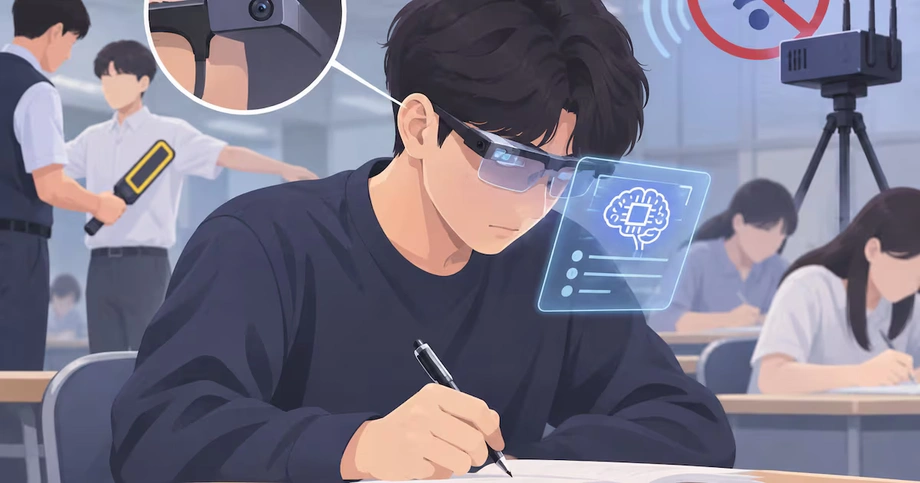
Generative artificial intelligence, the technology Han used, is software that can read a photograph of a question and produce a written answer within seconds. Paired with a miniature camera and a hidden earpiece or phone, it allows a candidate to send questions out of the exam room and receive answers back without being seen.
The Ministry of Employment and Labour invalidated the affected examination, cancelled any qualification granted, and barred Han from taking the test for five years. The ministry also ordered an investigation into possible similar cases across national qualification examinations held in 2026. The confession deepened the AI cheating crisis that had been building for months.
Earlier Warnings: Smart Glasses and Other Exams
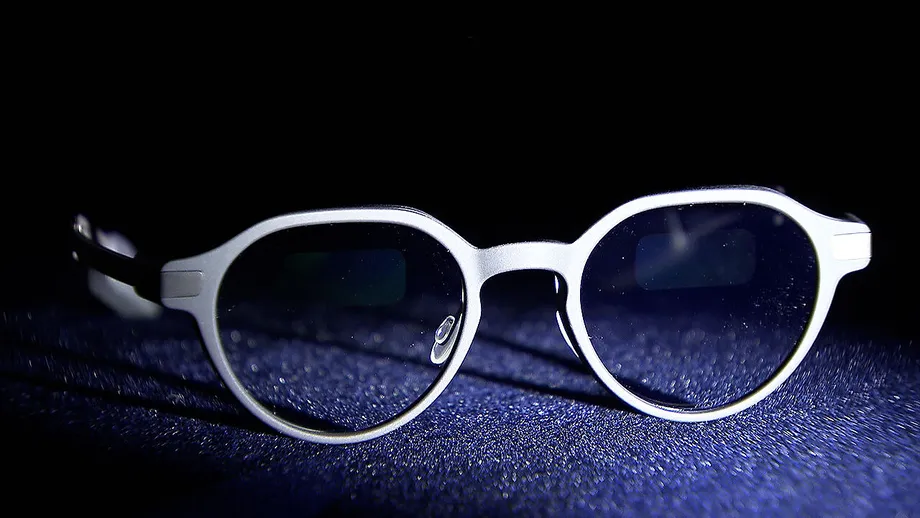
Concern about cheating helped by technology had been growing before the tax exam confession. The Korea TOEIC Committee reported that two candidates were caught using AI glasses during English proficiency tests on 10 May and 31 May 2026, the first confirmed cases involving eyewear in the country. Both had their test results invalidated and received bans of four years. The Human Resources Development Service of Korea reported that an inspector caught a candidate wearing smart glasses during a gas engineer certification exam.
The education ministry had also reported four cases involving smart glasses with AI in middle and high school exams this year. At Yonsei University, a candidate taking a mathematics essay examination on 10 November 2026 was caught wearing a device that blended digital displays with optical frames. The student passed initial visual checks by wearing ordinary spectacles before swapping them for a model with AI once the test papers were distributed. Yonsei received 14,452 applications for 288 spots. A similar incident occurred on 3 October 2026, at the University of Seoul, where a natural sciences applicant was caught using a similar device during an essay test. University officials expelled the student and imposed a ban of three years.
These cases showed that cheating technology had spread across multiple testing boards and that traditional supervision, such as two proctors per room, could fail to detect it.
Why the Suneung Rules Changed So Late
The Suneung, which lasts up to nine hours, plays a major role in university admission and, in turn, career prospects and social standing in South Korea. With only four days between Han's confession and the test, the education ministry scrambled to broaden safeguards that had previously focused on smart glasses.
On 17 November, the government added about 8,400 personnel for the exam, including 1,800 staff dedicated to checking for smart devices and 6,600 corridor invigilators. The Korean Federation of Teachers' Associations criticized the timetable, saying staff were selected on Tuesday, trained on Wednesday, and deployed on Thursday. The union argued that supervisors could not learn to identify sophisticated devices at such short notice.
President Lee had convened an emergency meeting on 17 November, directing officials to strengthen safeguards against cheating involving AI and sophisticated electronic devices. The government considered additional monitoring measures and cooperation with technology companies.
On 18 November, the ministry changed the stationery rules. Candidates could bring their own black pencils, but previously permitted items, including erasers and correction tape, had to stay outside. Exam centers provided those supplies. Authorities also blocked public Wi-Fi in testing areas and told supervisors to place stickers over buttons on candidates' clothing to block hidden cameras. Eyewear inspections were required. The measures followed earlier university security measures, including metal detectors and aprons at some institutions.
Choi did not appear at press conferences in the days leading up to the exam. A vice minister announced the preventive measures instead.
The Minister's Remark That Fueled the Backlash
Choi had already drawn criticism at a parliamentary hearing on 16 November. A lawmaker asked whether he was completely confident that authorities could detect every case of cheating with AI. The 72-year-old minister replied:
Due to my age, I am not confident I could.
The remark drew swift public backlash and became a focal point for questions about the government's ability to police cheating helped by technology. Teachers' unions had demanded his resignation before the exam, arguing that recruiting supervisors one day and training them the next could not create the expertise needed.
In his resignation statement, posted on X, Choi acknowledged the disruption to candidates and the public. He wrote that the exam had concluded without any major incidents, but that he did not believe he was immune from criticism that the government had failed to prepare adequately in advance.
Exam Day: Alerts, Inspections, and the Numbers
The Suneung began on 19 November under unprecedented security. For the first time, South Korea used its national disaster alert system to catch exam cheaters. Three alerts were sent between 08:00 and 15:00 local time. The exact times were 08:30, 14:21, and 14:57. Phones across the country blared in unison, even if they were on silent mode, unless they were switched off or in airplane mode.
Candidates had to turn off and hand in smart devices. Bags left in corridors were checked for devices that were still on. Exam officials inspected all candidates' glasses and watches, as well as their collars and sleeves for concealed cameras. The first two alerts went out during breaks. The third was sent seven minutes into the Korean history section, and schools were told to add any lost time.
The education ministry initially reported 98 suspected device cases as of the end of the fourth session on exam day. On 20 November, it published a final figure of 111. The ministry explained that the earlier number was provisional and excluded later reports from the fifth session. Of the 111 cases, 54 were detected through the emergency alerts, 52 through other methods, and five involved candidates actually using a smart device during the exam. The 111 cases cover device offences only, not other forms of cheating.
Seoul recorded 18 cases, Gyeonggi 12, and Incheon 6. The five confirmed uses involved smart glasses in South Chungcheong, a small camera with Bluetooth earphones in Gyeonggi, a candidate photographing the question paper in Seoul, and two candidates using phones in toilets. The ministry said it was still checking why the five confirmed users were not caught by the alerts.
Even honest test takers felt the pressure. One high school senior told the Korea Times he worried his spectacles with horn rims would be mistaken for smart glasses. Another told Yonhap he usually wore glasses but made an effort to put on contact lenses for the Suneung to avoid raising suspicions.
A Second Scandal: The Law School Exam Death
The anxiety around exam cheating deepened with a second case. Lee Jin-woo, 32, a dentistry student at Seoul National University who earned a perfect score on the Legal Education Eligibility Test, was found dead on Thursday at a motel in eastern Seoul after facing allegations of cheating. Police said they would continue investigating the allegations.
The same week, a high school student filed a constitutional petition challenging the government's decision to go ahead with the Suneung as planned. A court rejected the request, citing insufficient evidence of irreparable harm.
Penalties, Rewards, and What Comes Next
Students caught cheating during the Suneung can be barred from retaking the exam for 10 years and face criminal prosecution. If cheating is discovered after admission, they can be expelled from university. On Monday, the education ministry said it was filing criminal complaints against five candidates caught using smart devices during the exam. Some complaints had already been filed, with the remaining cases due by the end of the day.
President Lee has promised a reward of at least 100 million won ($75,000) for anyone reporting cheating or misconduct. The amount increases with the number of people involved in the scheme. Reduced penalties are available for those who turn in their accomplices. Lee said the reward is a minimum per violator, not a maximum cap. The government had earlier set out the whistleblower bounty.
Prime Minister Han Seong-sook now leads follow-up measures. Lee ordered a review of how national examinations are managed and the relevant laws. One proposal under consideration would add unique identification marks to question papers, allowing authorities to trace where photographed or leaked questions came from. The education ministry said it intended to resolve misconduct cases and appeals before the release of results on 11 December. Sanctions against the 111 candidates will be set by a cheating review committee.
For the tax accountant exam, the Ministry of Employment and Labour invalidated the affected examination, cancelled any qualification, and barred Han from taking the test for five years. The ministry also ordered an investigation into possible similar cases across national qualification examinations held in 2026.
Key Points
- Education Minister Choi Kyo-jin resigned on 22 November 2026 after emergency measures to stop cheating caused confusion before the Suneung.
- President Lee Jae Myung accepted the resignation about an hour later. Prime Minister Han Seong-sook is in charge of follow-up measures.
- The crisis began on 15 November when Han Won-seok, 34, admitted cheating on the certified tax accountant exam using a miniature camera, smartphone, and generative AI.
- The Suneung was held on 19 November with 551,864 registered and 497,526 sitting the exam. Three nationwide emergency alerts helped detect 54 of 111 suspected device breaches.
- Five cases involved confirmed use of a smart device during the exam. The 111 cases cover device offences only.
- A second scandal involved Lee Jin-woo, 32, a Seoul National University dentistry student who scored perfectly on the LEET and was found dead after cheating allegations.
- Cheating students can face a ban of 10 years from retaking the exam, criminal prosecution, and university expulsion.
- Rewards for reporting cheating start at 100 million won ($75,000) and increase with the number of people involved.
- Results are scheduled for release on 11 December 2026.