A Tax Exam Confession That Reached Every Classroom
On November 15, 2026, Han Won-seok, 34, admitted he cheated his way to the top of South Korea's certified tax accountant examination. He scored 397.5 out of 400 in the first round, missing just one of 160 questions. His method: a miniature camera to photograph exam questions, generative AI software to produce answers, and a smartphone to read them back.
Contents
- A Tax Exam Confession That Reached Every Classroom
- A National Emergency in Four Days
- Suneung Day: 551,864 Students, 1,312 Test Sites
- What the 111 Cases Show
- Schools: The Next Front
- Why Detection Is So Difficult
- The Debate Over Replacing the Suneung
- The Psychology Behind the Cheating
- What Comes Next
- Key Points
I used a microcamera to photograph the test questions and sent them to an AI, then checked my answers on my smartphone to commit the cheating.
Han said this in a video posted on his lawyer's YouTube channel. Generative AI is software that can write human-like text, solve complex problems and read text inside images within seconds. Paired with a camera small enough to hide in a button, it lets a candidate send a question out and receive an answer back without ever speaking. Two supervisors were present during Han's exam. They did not notice. The confession, coming four days before the national university entrance exam, turned a distant worry into an operational emergency for every school and testing centre in the country. It also followed earlier reports about the tax exam confession and the widening inquiry.
A National Emergency in Four Days
The government had less than a week to prepare for the College Scholastic Ability Test, known as the Suneung, on November 19. Prime Minister Han Seong-sook told a cabinet meeting that AI cheating was a 'social evil' the government would 'root out.'
We will block outright the carrying of smart devices during the exam.
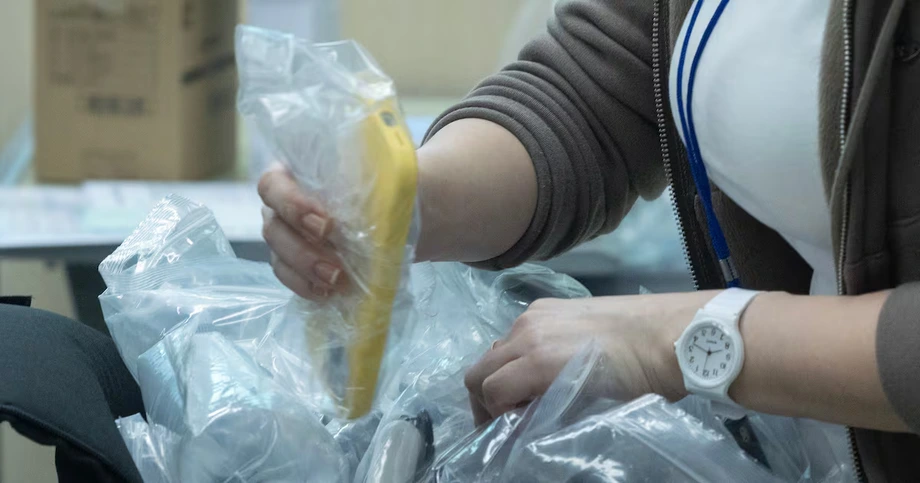
Authorities deployed about 8,400 extra staff, including 1,800 specialists checking for smart devices and 6,600 corridor monitors. They shut down public Wi Fi near exam halls, banned all stationery except black pencils, provided erasers and correction tape at test centres, placed stickers over clothing buttons, and inspected every pair of glasses and watch.
The most unusual tool was the national disaster alert system. Three times during the exam, at 8:30 a.m., 2:21 p.m. and 2:57 p.m., every mobile phone in South Korea sounded at full volume, even on silent mode. The alerts were meant to expose phones that candidates had not handed in. The first alert alone found 22 unsubmitted smartphones in nine cities and provinces. By the end of the day, the Education Ministry reported 111 cases of electronic device misconduct.
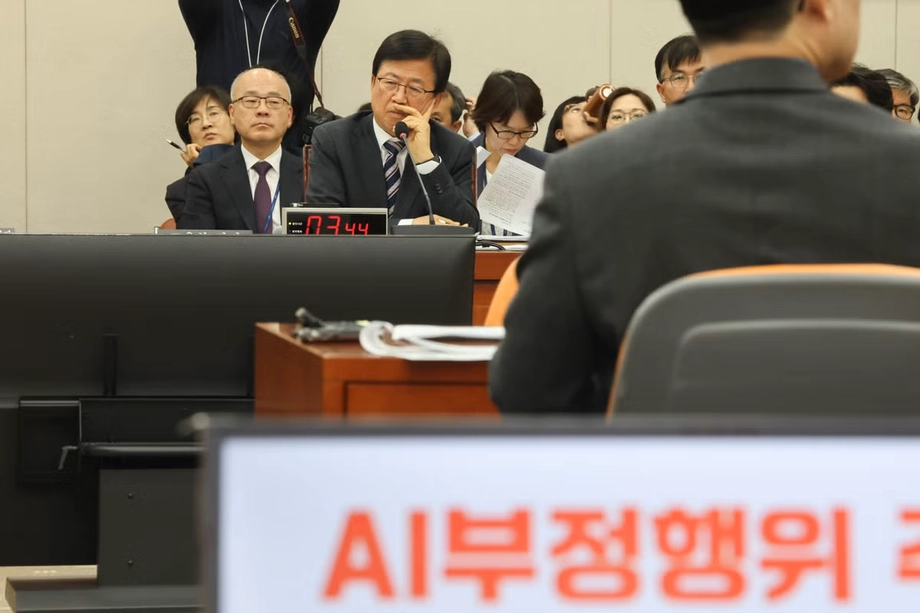
Education Minister Choi Kyo-jin, 72, had told a parliamentary hearing on November 16 that he was not confident he could catch cheaters. 'Due to my age, I am not confident I could,' he said. The remark drew sustained criticism. On November 22, Choi resigned.
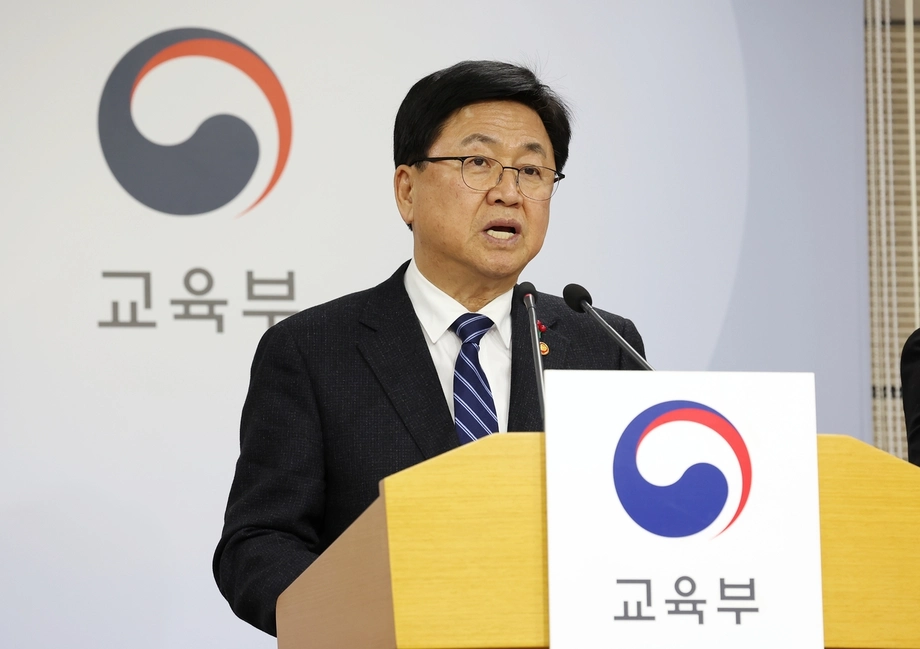
As the minister, I cannot be free from the criticism that we were not prepared in advance.
President Lee Jae Myung accepted the resignation within an hour and put Prime Minister Han in charge of follow up measures. The resignation was reported in earlier coverage of the minister's resignation.
Suneung Day: 551,864 Students, 1,312 Test Sites
On the morning of November 19, the temperature in Seoul fell to minus 0.3 degrees Celsius, the first time in six years it dropped below freezing on exam day. Students arrived at 1,312 test sites in 85 testing districts by 8:10 a.m. A total of 551,864 students had registered, down 0.4 percent (2,310) from last year. The number of repeat test takers reached 196,473, the highest in 23 years. About 10,000 police officers were deployed to 4,198 locations to help with the exam.
Outside Ewha Girls' Foreign Language High School in Seoul's Jung district, Cho Ye-jin, 18, said she was worried that people cheating might disrupt the exam, but added, 'I hope I can do as well as I've prepared to without getting nervous.' Lee Jin-seo, 18, said, 'I'll stay calm and get through it with mental strength.' A 49-year-old parent named Lee, waiting outside Whimoon High School, said, 'People raised concerns about cheating early on, but it seems the issue only blew up when the exam was close.'
Many candidates changed their clothes for the day. A 20-year-old named Lee taking the exam for a second time said, 'I deliberately chose clothes without buttons because I was worried a proctor might check me or I might draw attention from people around me.' A 28-year-old named Choi who quit a job to take the exam said, 'I was concerned that I'd have to adjust to a new format when the exam system changes next year, so I signed up because I saw this as my last chance to take it in a familiar format.'
What the 111 Cases Show
The Education Ministry first reported 98 cases on exam day. Two days later it revised the figure to 111 electronic device cases, explaining that the earlier number was provisional and did not include later reports from the fifth session. Of the 111, 54 were detected through the emergency alerts and 52 through other means, including Wi Fi signals. Five cases involved confirmed use of a smart device during the exam.
The confirmed uses were spread across the country: smart glasses in South Chungcheong province, a small camera with Bluetooth earphones in Gyeonggi province, a candidate photographing the question paper in Seoul, and two candidates using phones in toilets. Seoul recorded 18 cases in total, Gyeonggi 12 and Incheon 6. The ministry said it was still checking why the five confirmed users were not caught by the alert system.
The 111 cases cover device offences only, not other forms of cheating, and officials said the figure does not establish that all 111 involved AI. Sanctions against the candidates will be decided by a cheating review committee. The ministry said the process, including appeals, would be completed before results are published on December 11. The government and the ruling Democratic Party have proposed extending the ban on retaking the exam from one year to as long as 10 years for students caught using AI to cheat.
Schools: The Next Front
The same fear has moved into South Korea's middle and high schools, where internal grades known as naesin help decide university admission. A full survey by the Education Ministry of 5,679 schools this year found four cases of cheating with smart glasses. Teachers caught the students by eye or through reports from classmates. The survey did not look at miniature cameras or other electronic devices.
Performance assessments, which are given throughout the term rather than in a single midterm or final, are harder to supervise. Earlier this month, a high school in Yangcheon district, Seoul, held a Korean language performance assessment on school computers. More than 240 students took it. A complaint accused more than 170 of secretly using AI to write their answers. The education office confirmed about 10 suspicious cases but could not identify who had used AI. In the end, every student had to retake the exam.
A parent in Gyeonggi province wrote online that her child was retaking a performance assessment for the second time because of cheating, saying many students had searched with generative AI during the test and pasted the answers. A high school teacher in Gangwon province with 20 years of experience said that since generative AI became common, student work had more advanced vocabulary and much longer sentences. 'Even if the vocabulary differs from what the children normally use, I cannot give no points,' the teacher said.
Kim Hee-jung, chair of the National Middle School Teachers Union, said teachers cannot stop students who decide to use micro devices.
Even if detection equipment comes out, technology surpassing it will emerge. In the end, we need national level comprehensive measures from technical blocking to procedures for resolving disputes after the fact.
Students are organizing. A group called the CSAT Countermeasures Demand Solidarity, led mostly by high school students, announced on November 23 that 2,964 people had joined its petition. The group wants a full investigation of AI cheating in regular school exams and performance assessments, and common supervision standards. Its representative, Cho Seong-man, a first year high school student, said, 'After the controversy over AI cheating in the CSAT, there is great anxiety that school internal grades will not be fairly evaluated.' He called on the Education Ministry to investigate all exams and prepare a strict supervision manual.
Internal grades are relative, so one question can change a student's ranking. University admissions make those grades more important each year. For the 2027 academic year, 20 percent of university places are filled through regular admission based mainly on the Suneung, while 80 percent are filled through early admission, which relies heavily on school records.
City and provincial education offices have started to act. The Gangwon Provincial Office of Education will distribute 324 metal detectors to high schools to check students suspected of cheating or those who leave for the toilet during an exam. It will collect all electronic devices, including smartphones, have students sit in classrooms other than their own, and block public Wi Fi in each school. The Daejeon Metropolitan Office of Education will also collect devices and store bags away from classrooms. A Ministry of Education official said it would soon discuss with city and provincial education offices to create and share common supervision guidelines.
Why Detection Is So Difficult
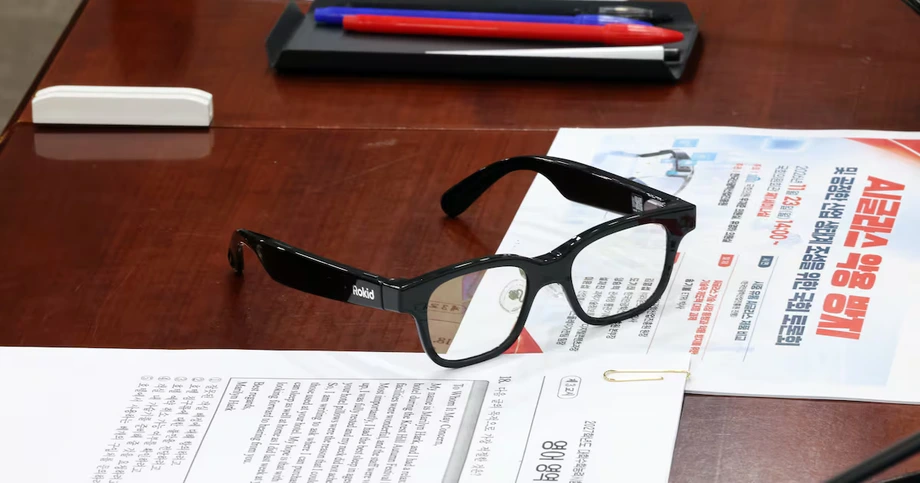
Smart glasses look like ordinary spectacles. A survey of 2,716 secondary school teachers by the Korean Teachers and Education Workers Union found that 82.3 percent could not tell whether a candidate was wearing smart glasses under current procedures. Only 3.5 percent said they could. Some students switched to contact lenses to avoid suspicion. One high school senior told a newspaper he worried his horn rimmed spectacles would be mistaken for smart glasses.
A 2024 study at the University of Reading found that 94 percent of AI generated answers submitted to unproctored undergraduate assessments went undetected by graders. Moon Hyung-nam, a professor at Sookmyung Women's University and president of the Korea AI Education Association, said, 'Simply switching from multiple choice to essay based or oral examinations will not solve AI assisted cheating.' He noted that generative AI can produce sophisticated essays and explanations. The Korea Communications Agency has begun a project to develop radio wave detection equipment for AI smart glasses, but on device AI, which performs computation inside the device itself, is hard to catch with radio waves. Even when a signal is captured, officials must separately prove the device was used for cheating.
The Debate Over Replacing the Suneung
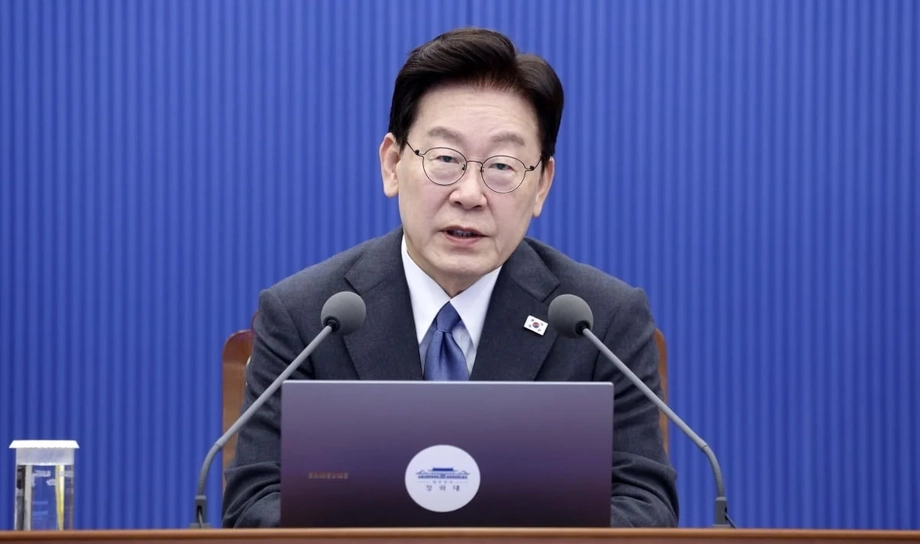
President Lee Jae Myung on November 20 ordered a sweeping review of the national exam system, telling authorities to reconsider testing methods 'from A to Z.' He said using AI to cheat in public exams 'rocks the basic order of our society by undermining fairness and trust.' The call followed earlier coverage of the exam overhaul.
Seoul education chief Jeong Geun-sik proposed in December 2025 introducing essay based testing by 2033 and abolishing the Suneung by 2040. 'What we need for our children who will live in the age of AI is not the ability to simply seek answers, but to ask questions and think critically and creatively,' Jeong said. A deliberative exercise involving 180 citizens found 55.5 percent supported essay based questions, while 41.7 percent opposed. Grading fairness was the top concern for 48.3 percent.
Cha Jeong-in, chair of the National Education Commission, said, 'We are considering ways to gradually expand written response and essay based assessments in schools over a considerable period, allowing the public education system sufficient time to prepare.' He stressed the change could not happen in one or two years. Lee Hye-jung, director of the Institute for Education and Innovation, said, 'The multiple choice system has survived because of the belief that it ensures reliable and fair grading, regardless of who evaluates the answers. But the latest AI cheating scandal has shattered that myth.' She pointed to the International Baccalaureate, which uses written exams, oral presentations and long term projects, as a model that could reduce dependence on a single high stakes test.
The Psychology Behind the Cheating
Psychologists say the technology is new, but the pressures are old. Kwak Keum-joo, professor emeritus at Seoul National University, said, 'Competition is intense, and our society places greater importance on results than on how they are achieved. When results are emphasized so heavily, people become more willing to resort to dishonest means to obtain them.' Kim Hack-jin, a professor at Korea University, said, 'In a high stakes, winner takes all society like Korea, where the outcome of a single exam can have a significant impact on a person's social status and future opportunities, failing an exam feels like more than an academic setback. It can be seen as a collapse of one's sense of self worth and being left behind socially.'
Kim added that using a pair of glasses that looks perfectly ordinary may feel less like cheating than pulling out a cheat sheet. South Korea has seen high profile academic cheating before. In 2013, a Yonsei University law school student stole an exam paper from a professor's office. In 2018, a mother leaked high school test questions to help her twin daughters. Both professors called for stronger ethics education at home and in schools, and for a society where one failed exam does not amount to a life setback.
What Comes Next
Choi Eun-ok became acting education minister after Choi Kyo-jin's resignation. President Lee ordered a comprehensive overhaul of the legal basis for blocking the photographing and external transmission of question papers. He asked officials to consider unique identification marks that would trace leaked papers to their source. All ministries and agencies were told to inspect how they manage exams. Earlier coverage of university security measures showed how fourteen major universities deployed metal detectors and aprons after the exam.
Sanctions against the 111 candidates will be decided by a cheating review committee before results are released on December 11. The government and the ruling party have proposed a 10 year ban on retaking the exam for those caught using AI to cheat, and criminal prosecution remains possible. Authorities are also reviewing past exams for signs of AI cheating. The government will begin selecting a new education minister. Prime Minister Han Seong-sook will coordinate follow up measures.
Questions remain unanswered. The ministry has not explained why the five confirmed users of smart devices were missed by the emergency alerts. The investigation into school exams covered only smart glasses, leaving open how often miniature cameras and other devices were used. The new guidelines for internal school exams have not yet been published. The next deadline is December 11, when Suneung results are due and the cheating review committee is expected to finish its work.
Key Points
- Han Won-seok, 34, confessed on November 15, 2026, to cheating on South Korea's certified tax accountant exam using a miniature camera, generative AI and a smartphone.
- The 2027 Suneung was held on November 19, 2026, with 551,864 registered students at 1,312 test sites.
- Authorities deployed about 8,400 extra staff, blocked Wi Fi, banned all stationery except black pencils and sent three nationwide emergency alerts.
- The Education Ministry reported 111 electronic device cases, including 54 found through alerts and five confirmed uses of smart devices.
- Education Minister Choi Kyo-jin resigned on November 22, 2026; President Lee Jae Myung accepted and put Prime Minister Han Seong-sook in charge of follow up measures.
- Schools face similar problems: a survey of 5,679 schools found four smart glasses cases, and a Yangcheon high school had to retake a performance assessment after more than 170 students were accused of using AI.
- Students and teachers are demanding a full investigation and common supervision standards for internal school exams.
- President Lee ordered an overhaul of the exam system 'from A to Z,' while a citizens' panel showed 55.5 percent support for essay based questions but 48.3 percent worried about grading fairness.