Whistleblower Rewards Surge Fivefold After High Tech Exam Scandal
South Korea will pay whistleblowers up to 500 million won (US$370,888) for each tip that exposes cheating on the nation's college entrance exam, marking a fivefold increase in maximum payouts as investigators confront cheating aided by artificial intelligence. The Anti-Corruption and Civil Rights Commission announced the higher ceiling on Monday, November 23, 2026, four days after hundreds of thousands of students sat for the annual College Scholastic Ability Test, widely known as the Suneung.
Contents
- Whistleblower Rewards Surge Fivefold After High Tech Exam Scandal
- How President Lee Intervened to Raise the Bounty
- What Happened Inside the November 19 Exam Halls
- How Artificial Intelligence Turns Hidden Gadgets Into Cheating Tools
- Missing Past Exam Papers Complicate Retrospective Probes
- How Whistleblowers Can Report Safely and What Penalties Cheaters Face
- Timeline of the Exam Security Crisis
- The Bottom Line
Under the revised rules, each verified case starts with a minimum reward of 100 million won and adds another 100 million won for every additional offender uncovered, up to the 500 million won limit per report. An official at the commission noted that individuals may submit up to 10 separate reports in a single year, meaning a prolific whistleblower could theoretically collect as much as 5 billion won annually. Authorities grounded the ceiling in Article 25-3 of the Enforcement Decree of the Public Interest Whistleblower Protection Act.
For more than 550,000 registered examinees across the country, the eight-hour test held on November 19 carries immense weight because scores heavily shape university admissions and future careers. Regulators launched a two-month intensive reporting drive running from November 20, 2026, through January 19, 2027, after smart devices and hidden cameras bypassed traditional classroom supervision during the 2026 testing season.
How President Lee Intervened to Raise the Bounty
President Lee Jae-myung personally forced the rapid upward revision after earlier announcements fell short of his directive. On November 17, while attending summits linked to the Association of Southeast Asian Nations in the Philippines, Lee chaired an emergency exam review by video conference and instructed officials to set rewards starting at 100 million won per case. However, the Office of the Prime Minister and the anticorruption commission announced on November 18 and November 19 that rewards would be capped at 100 million won.
Lee corrected that cap during a Blue House meeting of senior aides on November 20 and again on social media platform X on November 21. Sharing news of post-exam wireless signal tracing, he stressed that rewards must rise according to the number of conspirators caught. He also backed full payouts and reduced punishments for cheaters who confess and implicate their accomplices, a measure meant to break up organized rings from within.
Cheating on the CSAT is as serious a crime as corruption by public officials. We will pursue every case of exam cheating to the end and punish it severely, because it steals the lifetime efforts of hundreds of thousands of test takers.
Administrative turmoil around the emergency rules also cost the education minister his job. On Sunday, November 22, Education Minister Choi Kyo-jin resigned over public confusion caused by late regulatory shifts, and President Lee accepted his departure within an hour while placing Prime Minister Han Sung-sook in charge of subsequent measures.
What Happened Inside the November 19 Exam Halls
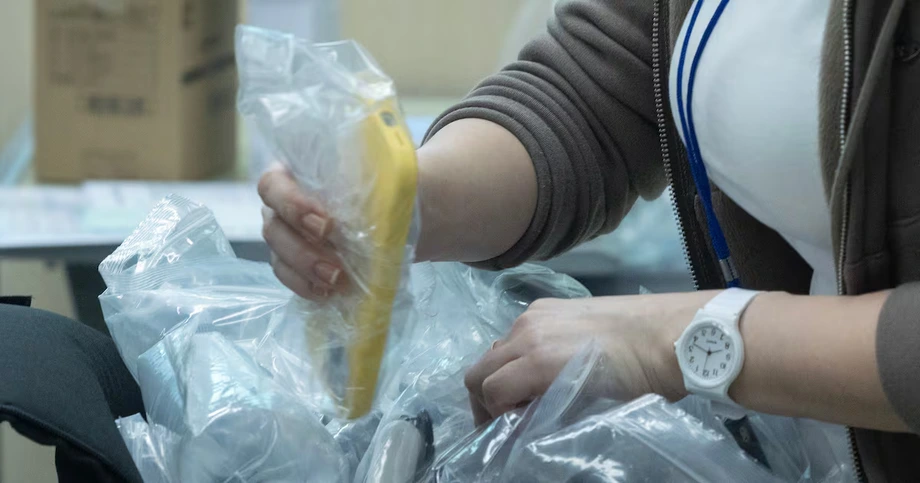
Education officials recorded 111 violations involving smart devices during the November 19 exam across 1,312 testing centers nationwide. Out of that total, 106 candidates were penalized simply for carrying banned electronics that they failed to surrender before testing began, while 5 examinees, roughly 4.5 percent of those caught, actively used smart devices during the test.
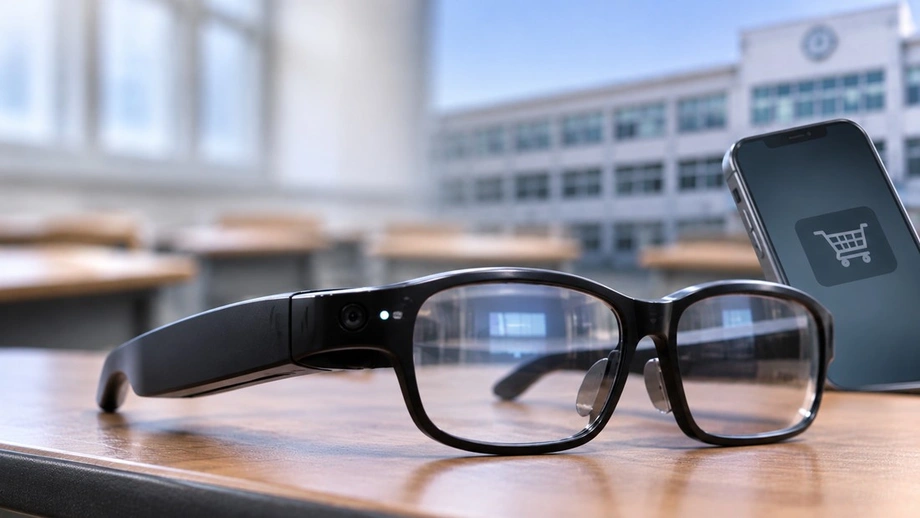
On November 23, the Ministry of Education stated during a morning briefing that it was filing formal criminal complaints against all 5 examinees caught using devices. Police have already opened investigations into 4 of those 5 cases following emergency 112 calls made from exam venues. Seoul Seocho Police Station and Seoul Suseo Police Station are each investigating candidates who concealed mobile phones inside their shoes and clothing, Gyeonggi Nambu Provincial Police Agency is investigating an examinee carrying a camera and wireless Bluetooth earphones, and Chungnam Provincial Police Agency is probing a candidate who brought smart glasses into a test room.
Investigators have questioned two suspects voluntarily and plan to summon two more, while details regarding the fifth case have not yet reached police investigation. Hong Seok-ki, head of the National Office of Investigation at the Korean National Police Agency, stated that officers are simultaneously checking the authenticity of 19 online posts discussing exam fraud. Across all national tests, a dedicated police task force has flagged 33 suspected cases, comprising 15 formal investigations and 18 preliminary inquiries, including 5 suspected instances of using smart glasses or miniature earphones.
Authorities had anticipated electronic smuggling through an initial security push unveiled by Prime Minister Han on November 17. The government deployed about 8,400 extra personnel, an increase of roughly 11.2 percent over the 75,000 regular proctors, assigning 1,800 staff to inspect eyewear and 6,600 to patrol hallways for wireless signals. Proctors required candidates to place glasses on desks before the first period, applied stickers over clothing buttons, stored student bags in hallways, sent emergency alert texts to expose hidden phones, and kept metal detectors ready for suspicious cases.
How Artificial Intelligence Turns Hidden Gadgets Into Cheating Tools
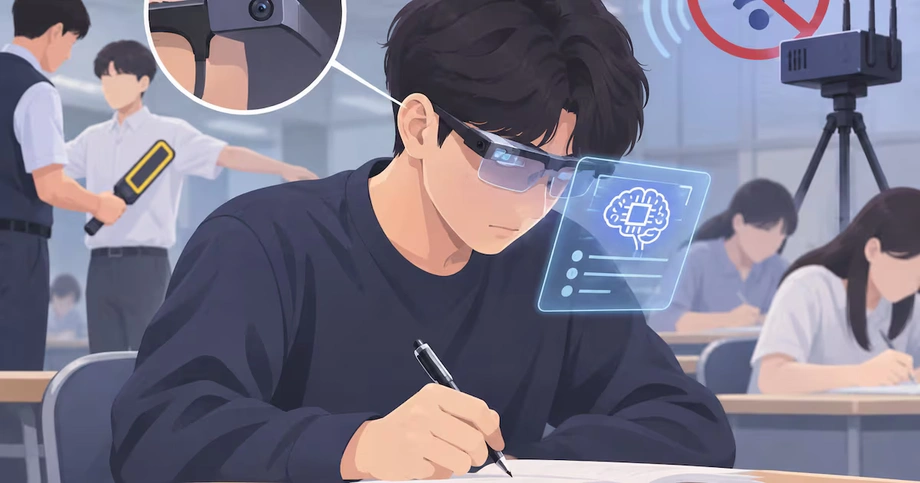
Generative artificial intelligence refers to software capable of reading photographed text, solving advanced math equations, and producing written answers within seconds. When paired with tiny wireless cameras or smart glasses, the technology removes the need for a human helper outside the exam hall. A test taker can photograph a booklet silently, transmit the image through a concealed connection, and receive answers through an earpiece invisible to nearby proctors.
Public alarm surged on November 15 when Han Won-seok, aged 34, confessed on his lawyer's YouTube channel that he had cheated his way to first place on the 63rd certified tax accountant exam. Han had scored 397.5 out of 400 points in April by using a miniature camera, generative AI, and a smartphone. Investigators had already uncovered similar tactics across several earlier qualification tests, including two TOEIC English tests in May, a gas engineer certification exam, and four middle and high school assessments documented by the Education Ministry.
University admissions faced parallel disruptions earlier in the autumn. Proctors caught applicants wearing smart glasses during natural science essay exams at the University of Seoul on October 3 and Yonsei University on November 10, prompting universities added strict screening such as disposable plastic aprons, metal detector scans after restroom breaks, and hair tie mandates. Meanwhile, on November 19, 32-year-old Lee Jin-woo, who faced public allegations of using AI to earn a perfect score on the Legal Education Eligibility Test, was found dead at a motel in Gangdong-gu, Seoul.
Overseas gadget vendors continue to market cheating hardware directly to South Korean buyers despite the crackdown. A company based in Cyprus, operating since 2014 with Korean customer support, sells miniature cameras and rice grain sized earphones designed to sit near the eardrum for 600,000 to 1.53 million won, claiming its gear avoids button stickers and wireless tracing while admitting metal detectors could spot it. Another seller based in China, running a messenger channel with over 22,000 subscribers, boasted of helping the tax accountant exam top scorer and reported surging inquiries from South Korean students, prompting authorities to consider investigating both buyers and sellers.
Missing Past Exam Papers Complicate Retrospective Probes
Government officials pledged to accept tips and punish cheating from previous years' college entrance exams as well as the November 19 test, yet key physical evidence from earlier cycles has largely vanished. According to the office of People Power Party lawmaker Jung Sung-kook, education offices in Gyeonggi, Jeonnam, Gwangju, and Incheon verbally informed the National Assembly's Education Committee that they had already destroyed substantial portions of last year's exam papers.
Under current administrative rules, schools serving as testing venues are required to retain exam papers for one year and may discard them immediately once that period ends. Retention requirements for last year's papers expired on November 12, 2026, six days before the Education Ministry sent an official notice on November 18 instructing regional offices to preserve the booklets. Most exam booklets from earlier years are also presumed destroyed, though Education Ministry officials stated that other records can still serve as evidence.
To overcome physical gaps, Prime Minister Han has led an interagency task force since November 20 involving the Ministry of Education and the Ministry of Science and ICT. Investigators are analyzing Wi-Fi and Bluetooth connection logs captured inside exam centers and working with major global technology firms to trace AI service access locations and timestamps. The government is also drafting legislation to compel major technology platforms to hand over user data for inquiries into both the Suneung and national licensing exams.
How Whistleblowers Can Report Safely and What Penalties Cheaters Face
Members of the public and insiders wishing to submit tips through January 19, 2027, can file reports online through the Clean Portal, visit the Anti-Corruption and Civil Rights Commission in person, or send documents by mail. Whistleblowers who prefer complete anonymity may use a proxy system in which an attorney listed on the commission's website submits the evidence without revealing the informant's identity. Under the Public Interest Whistleblower Protection Act, reporters receive strict confidentiality, legal restoration of any lost job or academic standing caused by retaliation, and physical protection if threatened.
Jung Il-yeon, Chairperson of the Anti-Corruption and Civil Rights Commission, underscored the agency's commitment to backing informants who step forward during the two-month drive.
As this CSAT cheating scandal is an act detrimental to the public interest that undermines the foundation of fairness in our society, we will provide sufficient reward money to courageous whistleblowers who correct cheating and protect them to the very end.
Under Article 34, Paragraph 5 of the Higher Education Act, confirmed cheaters have their exam scores invalidated and currently face a one-year ban from retaking the test. The ruling party and government are advancing bills in the National Assembly to extend that ban to 10 years, applied retroactively starting with the November 19 exam, alongside a 10-year ban on university admission coordinated with the Korea Council for University Education. Offenders who use smart devices also face criminal prosecution for obstructing official duties by fraudulent means, which carries up to five years in prison, as well as admission cancellation or expulsion if they are already enrolled at a university.
Timeline of the Exam Security Crisis
- October 3 and November 10, 2026: Applicants at the University of Seoul and Yonsei University are caught wearing smart glasses during admissions essay tests.
- November 12, 2026: Mandatory one-year storage deadlines expire for last year's college entrance exam booklets, leading multiple regional offices to destroy them.
- November 15, 2026: Tax accountant exam top scorer Han Won-seok confesses to using a miniature camera, generative AI, and a smartphone.
- November 17, 2026: President Lee Jae-myung orders minimum 100 million won cheating rewards while Prime Minister Han Sung-sook announces 8,400 extra exam staff.
- November 18 and 19, 2026: Officials initially announce a 100 million won reward cap as over 550,000 candidates take the Suneung and 111 smart device violations are detected.
- November 20, 2026: The two-month intensive reporting campaign begins alongside a cross-ministry investigation task force led by the Prime Minister.
- November 21, 2026: President Lee corrects the 100 million won cap on social media, demanding higher payouts tied to the number of offenders.
- November 22, 2026: Education Minister Choi Kyo-jin resigns over pre-test rule confusion and President Lee places Prime Minister Han in charge of follow-up enforcement.
- November 23, 2026: The anticorruption commission raises the reward ceiling to 500 million won per case as the Education Ministry files complaints against 5 device users and regional exam paper destructions come to light.
- January 19, 2027: Closing date for the government's two-month intensive cheating reporting period.
The Bottom Line
- Whistleblowers who report college entrance exam cheating before January 19, 2027, can earn between 100 million won and 500 million won per case, adding 100 million won for every cheater exposed.
- Participants who confess and report their accomplices receive the full cash reward alongside reduced or waived penalties, and anonymous reporting through lawyers is available.
- Authorities caught 111 candidates with smart devices on November 19, including 5 who actively used them, triggering criminal complaints and 4 active police investigations.
- Police and ministries are tracing exam hall Wi-Fi and Bluetooth logs and seeking AI access records from technology firms, though many test booklets from prior years have already been destroyed.
- Proposed legal amendments would retroactively bar cheaters from taking the exam for 10 years while exposing device users to up to five years in prison and university expulsion.