Two exams, zero marks and a five day suspension
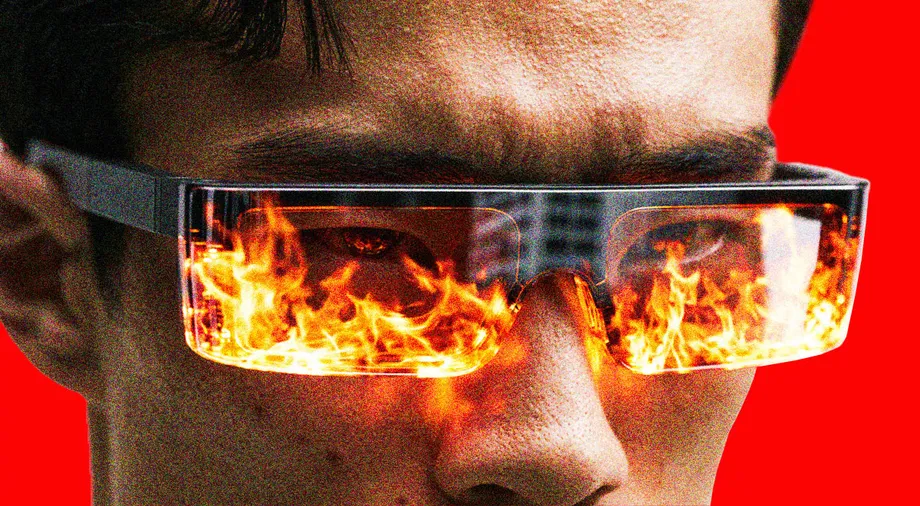
A high school student in Jeju received zeros in Korean language and social studies and was suspended for five days after using artificial intelligence smart glasses during midterm exams. The case was one of four identified in a South Korean Education Ministry survey covering 5,679 middle and high schools, whose results were announced on November 9.
Contents
- Two exams, zero marks and a five day suspension
- How the Jeju student was caught
- What the nationwide survey counted
- The small clues teachers noticed
- Grades and discipline were handled separately
- Schools will tighten collection of prohibited devices
- A national exam brings a different supervision challenge
- University incidents brought presidential attention
- The next steps, from training to detection tests
- Key Points
The student, in the first year of high school, was caught in early October after another student alerted a teacher supervising the exams. The teacher watched the student switch from ordinary glasses to smart glasses after the second day's test had begun. A check after the exam confirmed the device.
The Jeju case involved more than glasses brought into an examination room. The student reportedly handed in a decoy phone while hiding another smartphone, connected to the glasses, inside the classroom beforehand. Scores usually in the 20s reportedly rose above 80 on the tests taken while wearing the device.
The ministry's findings put precise numbers behind concerns about cheating with electronic devices disguised as everyday objects: two cases in Seoul, one in North Jeolla Province and one in Jeju. Three involved high school students and one involved a middle school student. All four received zeros on the affected exams.
The announcement came 10 days before the November 19 College Scholastic Ability Test, known as the CSAT or Suneung. Officials were preparing tighter checks for that national examination while also changing how schools collect prohibited devices before their own tests.
How the Jeju student was caught
The Jeju student wore smart glasses during the Korean language exam on the first day of midterms. On the second day, during social studies, the student initially wore ordinary glasses before changing to the electronic pair after the test started.
A tip from another student gave the proctor a reason to pay closer attention. After the switch was observed and the glasses checked, the student acknowledged using them on the first day as well. The school then recorded zeros for both subjects under its academic assessment rules.
The Jeju education office said the student described buying the glasses through Daangn, a marketplace app for secondhand goods. The purchase account places an ordinary consumer marketplace at the beginning of a cheating scheme that also involved a concealed phone and a change of glasses during an exam.
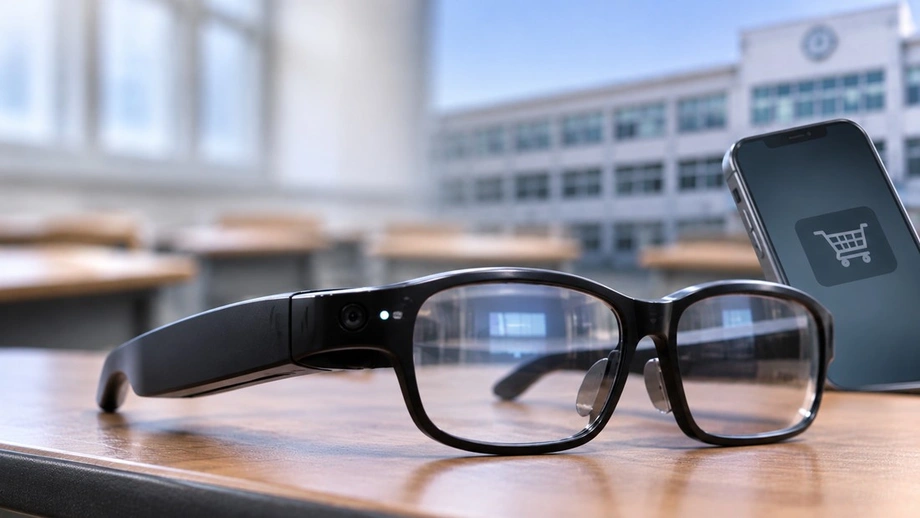
The exact glasses model, the AI service involved and the method used to deliver answers have not been disclosed. Smart glasses can combine a small camera with a connection to a phone or an AI service, allowing information captured by the glasses to be processed elsewhere.
The hidden phone explains why collecting the device a student voluntarily hands over may leave another route for communication inside the room. In Jeju, the decisive intervention came from a student tip followed by a teacher's observation.
What the nationwide survey counted
The Education Ministry collected information from schools between October 27 and November 3 about cheating involving smart glasses during the 2026 school year. Its survey covered 3,292 middle schools and 2,387 high schools, including international schools, schools providing specialist or vocational education, and schools for students with disabilities.
All four identified incidents occurred at ordinary middle or high schools. Seoul accounted for the middle school case and one high school case. The other two high school cases occurred in North Jeolla and Jeju. Three happened during first semester final exams; Jeju was the only case during second semester midterms.
The two Seoul incidents were already publicly known. The collection of school records added the North Jeolla and Jeju cases, bringing the confirmed total from two to four.
The ministry gathered cases schools had already detected and recorded. Teachers did not conduct a fresh inspection of every examination through this survey. Four is therefore the number of identified incidents collected through that process; the extent of any undetected use remains unknown.
The small clues teachers noticed
Repeated touching of glasses frames drew teachers' attention in three of the four cases. In Seoul, the students did not normally wear glasses, making their appearance during exams another reason for proctors to look more closely. Teachers confirmed after the tests that the glasses contained AI technology.
The North Jeolla student also repeatedly handled the frames. A proctor then noticed a green light reflected in the glasses, providing another visible clue. That incident occurred during first semester finals.
Kim Han-seung, head of the Education Ministry's Curriculum Support and Operations Division, explained why teachers' familiarity with their students helped them notice unusual eyewear:
Unlike other national exams, it was easier to catch cheating because proctors and students know each other well enough to recognize what kind of glasses the students usually wear.
Every identified case depended on a teacher noticing something unusual or following up on a student's warning. The Jeju incident also shows why checks made only before an exam can miss a device introduced after testing begins: the student changed glasses while already seated for the test.
Grades and discipline were handled separately
The four students all received zeros on the affected exams under their schools' academic assessment rules. Those decisions changed their marks. Schools then considered separate disciplinary measures under their own rules.
The Seoul high school imposed three days of special education. The North Jeolla high school ordered four hours of community service. The Jeju high school suspended its student for five days, alongside the zeros in two subjects.
The middle school student in Seoul received no formal disciplinary sanction, but performed service within the school at its suggestion. The ministry's detailed breakdown therefore describes different consequences across the four schools, with additional formal discipline imposed on the three high school students.
The ministry also said schools could consider further action when they establish that smart glasses were used in earlier exams. Jeju provides a concrete example: discovery during the second day's test led to the first day's Korean language result being cancelled too.
For students, the immediate consequences reach beyond losing access to a device. A zero becomes part of the school's assessment record for the subject, while suspension, service or special education is a separate response to the misconduct.
Schools will tighten collection of prohibited devices
The Education Ministry plans to strengthen procedures before second semester final exams. Schools will be asked to collect prohibited items, including AI glasses, before testing and check that students have handed them over. The ministry intends to put those submission and checking steps into its examination management manual.
Schools already tell students about prohibited items before midterms and finals. The planned change adds a more explicit process on the day of the exam, including reminders and collection of devices before students begin answering questions.
The ministry plans to distribute educational materials describing the four cases, together with guidance for supervising teachers, in the third week of November as schools prepare for finals. The examples give staff specific conduct to watch for, including repeated frame touching and switching glasses during a test.
Regional education offices and the Korea Institute for Curriculum and Evaluation will discuss prevention and support through the Joint Student Assessment Management Committee. The ministry had already sent education offices a warning on June 16 asking them to manage assessments carefully to prevent cheating with smart glasses.
Jeju's education office held training on November 5 for high school administrators and teachers involved in CSAT preparation. It also planned further instruction for proctors on the day before the national exam and before testing begins on exam day.
A national exam brings a different supervision challenge
The November 19 CSAT brings together candidates and proctors who may never have met. Teachers' knowledge of a student's usual glasses, which helped expose the school cases, is less useful in that setting.
The ministry plans to assign a member of staff responsible for identifying smart glasses at each of the 1,312 examination sites. Smart glasses will be explicitly included in prohibited item announcements, with an announcement scheduled for 8:05 a.m. on exam day. Notices will also be displayed at test sites.
The announced rules cover possession as well as use. Candidates carrying prohibited devices can have their results invalidated. Wearing AI smart glasses during the exam can bring cancellation and exclusion from the following year's test; refusing a proctor's request to check glasses may also lead to a cheating finding after review.
The ministry has also announced plans for criminal complaints over cheating involving AI glasses and is seeking to extend the exclusion period from one year to three years. The longer period is a proposed change, while cancellation and the existing exclusion rules form the immediate examination framework.
University incidents brought presidential attention
Suspected smart glasses incidents during October admission essay examinations at Yonsei University and the University of Seoul had already increased concern before the school survey was released. One candidate at each university was caught with, or attempting to use, the devices.
The candidates reportedly wore ordinary glasses during checks before the exams and changed to smart glasses after testing began. That sequence resembles the switch observed in Jeju and places attention on supervision throughout an examination, alongside checks at the entrance.
President Lee Jae Myung addressed the issue at a November 5 meeting with senior aides and secretaries. He called for stronger safeguards before the CSAT and described fair conditions for candidates as the government's responsibility:
The government must make every effort to manage examination sites so that all test-takers can demonstrate their abilities in a safe and fair environment,
Lee also called for better training for supervisors and protection from unreasonable complaints when they carry out legitimate checks. His request extended to examinations administered by government bodies, public institutions and schools, reflecting concern about devices that could be used across several kinds of testing.
The next steps, from training to detection tests
The response has moved from a June warning to schools toward more specific collection procedures, dedicated CSAT staff and possible technical testing. The main dates show how those measures developed around the examination calendar:
- June 16: The Education Ministry asked regional education offices to guard against cheating with smart glasses.
- Early October: The Jeju student was caught during second semester midterms.
- October 27 to November 3: The ministry collected school records of detected cases nationwide.
- November 5: Jeju held training, and President Lee called for stronger examination safeguards.
- November 9: The ministry announced four confirmed school cases.
- Third week of November: The ministry planned school guidance and student education materials.
- November 19: The CSAT is scheduled, with dedicated staff to identify smart glasses.
- First half of the following year: The ministry is considering tests of technology to detect the devices.
The ministry has been researching and commissioning work on technical detection, but has not announced a ready solution. An official said testing might be possible in the first half of the following year, with the outcome depending on the technology developed.
Until then, the concrete measures centre on people and procedures: train proctors, explain prohibited items, collect devices, check suspicious eyewear and continue watching after an exam starts. Jeju's two affected subjects show why following up on a single discovery can also change the result of an earlier test.
Key Points
- A Jeju high school student received zeros in Korean language and social studies and a suspension lasting five days after using AI smart glasses.
- A student tip helped a proctor catch the switch from ordinary glasses during the second day's exam.
- The ministry collected four confirmed cases from 5,679 schools: two in Seoul, one in North Jeolla and one in Jeju.
- All four students received zeros on affected exams; the three high school students also received formal disciplinary measures.
- Schools will strengthen procedures for collecting and checking prohibited devices before final exams.
- The November 19 CSAT will have dedicated staff to identify smart glasses at 1,312 examination sites.
- The ministry is seeking a longer exclusion period for exam cheating and considering technical detection tests in the following year.