A November 28 vote with consequences beyond restarting reactors
Taiwan will vote on November 28, 2026, on whether to abandon its nuclear-free homeland policy, as international nuclear forecasts reveal a wide gap between expansion targets and the factories, financing and fuel supplies needed to achieve them. The OECD Nuclear Energy Agency projects global nuclear capacity of 619 gigawatts by 2050 under current trends, compared with about 1,324 gigawatts in the much more demanding scenario that exceeds the international goal of tripling capacity.
Contents
- A November 28 vote with consequences beyond restarting reactors
- How the proposal reached the ballot
- Global nuclear growth depends on which scenario succeeds
- Record generation comes with a large unfinished project list
- Small reactors face a timetable and fuel problem
- Can nuclear and renewable electricity share the grid?
- AI demand brings fuel security and financing into focus
- Fukushima recovery and Taiwan's waste responsibilities
- An emissions shortfall adds urgency to the choice
- Key Points
National referendum No. 22, proposed by the Chinese Nationalist Party (KMT) caucus, asks voters whether they support using nuclear power to revive the economy and abolishing the nuclear-free homeland energy policy. The vote will coincide with local elections. The KMT has promoted nuclear energy as a way to secure electricity for artificial intelligence and protect industrial competitiveness.
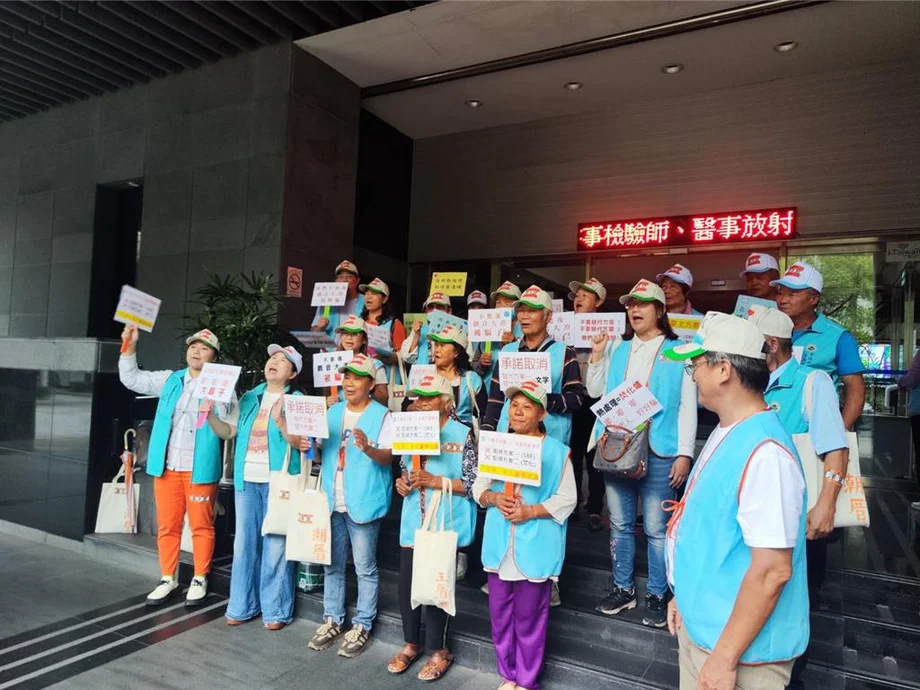
At a November 9 press conference, the Taiwan Climate Action Network brought together researchers who urged a no vote. Their objections covered construction costs, competition with renewable electricity, accident recovery and the expense of managing radioactive waste. Taiwan currently has no operating nuclear generating units.
The competing positions meet at a practical problem: Taiwan needs dependable electricity while reducing emissions, but every proposed route requires money, infrastructure and time. Restarting existing reactors, building large new units and introducing small modular reactors involve different schedules and supply chains. The referendum concerns the direction of energy policy; safety reviews, fuel procurement, financing and waste arrangements will shape individual projects.
How the proposal reached the ballot
The Central Election Commission approved the nuclear policy referendum with six members supporting it and one abstaining. Chairman Michael You said it met the requirements of the Referendum Act. The Legislative Yuan had approved the proposal on August 14.
The election commission planned five televised debates, with the first scheduled for Thursday following the November 9 press conference. Those debates give voters another opportunity to compare the economic case for nuclear power with questions about delivery and long term responsibilities.
- March 27, 2026: Taipower submitted its restart plan for the Ma-anshan nuclear plant.
- April 2026: The nuclear regulator opened its review, while an environmental impact assessment began alongside it.
- August 14, 2026: The legislature approved the nuclear policy referendum proposal.
- November 9, 2026: Environmental groups and scholars publicly challenged the proposal's supporting arguments.
- November 28, 2026: Voters are scheduled to decide the referendum alongside local elections.
Taipower expects safety inspections for Ma-anshan to take 18 to 24 months before the regulator makes its decision. A possible restart in 2028 would also require advance fuel procurement. Voters are therefore choosing a policy direction while work on a specific restart application proceeds through technical reviews.
Global nuclear growth depends on which scenario succeeds
The OECD Nuclear Energy Agency's July outlook announcement sets out four possible levels of global nuclear capacity in 2050: 347 gigawatts in its Low Scenario, 619 in Current Trends, 883 in Ambitious and about 1,324 in Transformative. A gigawatt measures generating capacity, or how much electricity equipment can produce at a given moment; annual generation also depends on how often it operates.
The highest scenario includes the United States' goal of quadrupling nuclear capacity by 2050 and India's target of 100 gigawatts by 2047. It requires faster construction, continued operation of existing reactors and substantial deployment of small modular reactors. The agency says construction rates would have to go far beyond recent experience.
Taiwan Climate Action Network director Chao Chia-wei described the current trend projection as roughly 55% growth by 2050. He also argued that tripling would require all existing reactors to operate for 100 years and small reactors to reach mass production before 2035. The agency's published description instead builds its highest scenario around a combination of extended operation, accelerated construction and new technology; its discussion of existing reactors focuses on operation to 60 and 80 years.
The construction geography is also uneven. OECD countries hold about 78% of current global nuclear capacity, while roughly 80% of the 70 gigawatts under construction is outside the OECD. China accounts for more than 33 gigawatts. For Taiwan, the relevant international comparison involves the ability to deliver projects, as well as announcements of support for nuclear energy.
Record generation comes with a large unfinished project list
Taiwan's Energy Administration, in its September nuclear outlook assessment, summarizes the World Nuclear Association's 2026 projections and the conditions attached to them. Nuclear plants produced a record 2,702 terawatt hours worldwide in 2025, up from 2,667 in 2024. Nuclear energy supplied about 9% of global electricity, compared with roughly 17% in the middle of the 1990s, as total electricity production grew faster.
Asia has driven much of the expansion. Its nuclear generation rose to about 2.5 times its 2012 level by 2025, supported by China and additions in India, Pakistan and the United Arab Emirates. All 11 reactor construction starts recorded in 2025 were in China or Russia. Three reactors first connected to electricity grids that year, while seven permanently closed, including Taiwan's Ma-anshan Unit 2.
The assessment describes a possible 1,457 gigawatts of global gross nuclear capacity in 2050, assuming national targets and identified projects are delivered and existing plants continue operating under the report's assumptions. More than 550 gigawatts of that total still needs to become identifiable construction, planned or proposed projects. Gross capacity includes electricity consumed by the power station itself; net capacity deducts that use.
The association estimates that construction starts must reach about six times the current rate by the middle of the 2030s to achieve the tripling goal, supported by 38 countries. Its projection assumes existing reactors can operate for up to 80 years unless a shorter period is specified. The work ahead includes securing sites, submitting licence applications, arranging financing and placing equipment orders.
Small reactors face a timetable and fuel problem
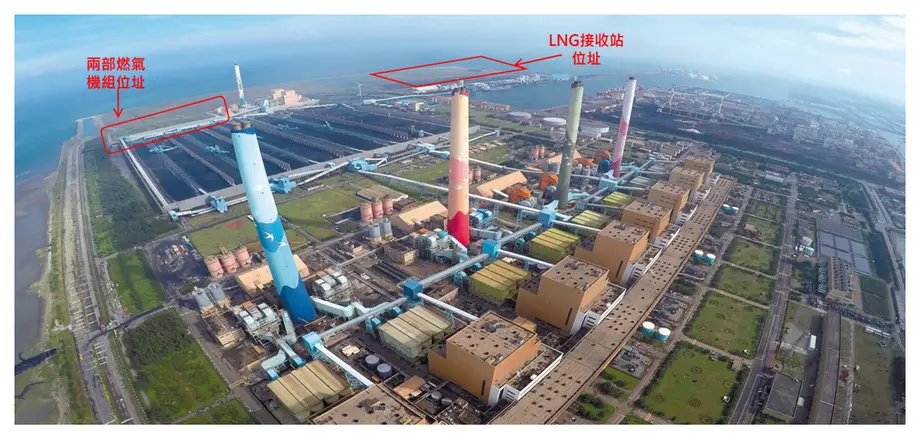
The referendum's supporting statement proposes new reactors or small modular reactors at the Lungmen site, also known as the Fourth Nuclear Power Plant. It also suggests using heat from small reactors for seawater desalination, the process of removing salt to produce usable water.
Small modular reactors, or SMRs, are designed around smaller generating units and greater use of components manufactured in factories. Their economic promise depends partly on repeating designs and collecting enough orders to make production efficient. The OECD agency's full nuclear outlook says the conditions for mass manufacturing are unlikely to be fully in place before the 2040s.
The agency projects about 30 gigawatts of SMR capacity by 2050 under Current Trends and roughly 150 gigawatts or more in its highest scenario. Chao cited a smaller projected share of 5% to 8% of global nuclear capacity; the agency's Transformative Scenario puts the share above 10%. In either case, large reactors supply most projected nuclear capacity in 2050.
Fuel is another constraint. More than half of SMR designs under development plan to use high-assay low-enriched uranium, known as HALEU. This fuel contains a higher concentration of the uranium isotope used to sustain the reaction than conventional reactor fuel. The agency says commercial supply is not yet available in OECD countries.
Chao argued that even mass production would leave SMR electricity more expensive than conventional large nuclear generation and renewable power. The agency says rapid deployment at scale still needs demonstration and actual project costs remain largely unknown. Taiwan has no confirmed SMR construction timetable or electricity price in the referendum proposal.
Can nuclear and renewable electricity share the grid?
National Taiwan Ocean University assistant professor Yen Dong-bai challenged the proposal's argument that nuclear energy can provide steady output alongside renewable electricity. He pointed to Japan's Kyushu region, where substantial nuclear output and strong solar generation can coincide with more electricity than the grid can absorb.
Yen said renewable generation cuts reached 50% on one day in March 2025. Such cuts, called curtailment, mean available wind or solar electricity is deliberately left unused to keep supply and demand balanced. Repeated curtailment reduces the electricity renewable generators can sell and can weaken their incentive to invest.
Nuclear operators can reduce output to make room for renewable electricity, but their construction, staffing and other fixed expenses continue. Spreading those expenses across fewer units of electricity raises the cost per unit. The practical challenge is to plan generation, storage, transmission and operating rules together.
Chao also described competition over budgets. He said legislators supporting nuclear power had proposed cuts to renewable energy spending, including subsidies for household rooftop solar. His organization's modelling suggests that restarting Taiwan's first three nuclear plants could leave renewables supplying 25% of electricity in 2035, against the government's 36% target. The difference is 11 percentage points, conditional on that model's assumptions.
Yen, whose research focuses on sustainable development, described his concern about directing scarce investment toward expensive construction:
It might turn out that Taiwan's economy is being used to revive the nuclear industry,
Supporters frame nuclear investment as protection for industry. Opponents argue that renewable energy, batteries and a more flexible grid would deliver greater benefits from the same limited resources. The debate concerns the cost and timing of the whole electricity system, rather than the generating price of a single plant.
AI demand brings fuel security and financing into focus
Taiwan's Ministry of Economic Affairs expects electricity consumption to rise 13% between 2023 and 2030, with artificial intelligence alone requiring 2.24 gigawatts by 2028. Taiwan imports about 96% of its energy. Gas supplied 42.4% of electricity in 2024 and nuclear supplied 4.2%, making supply security a concrete concern for households and manufacturers.
Nuclear fuel offers a storage advantage: Taipower's first restart order would cover at least 18 months. Reactors also depend on imported fuel fabrication, specialist maintenance, spare parts and vendor support. Taiwan's nuclear cooperation arrangements with the United States operate under a Section 123 agreement, and Taiwan committed in 2012 to forgo domestic uranium enrichment and spent fuel reprocessing.
Lungmen illustrates how equipment decisions can leave continuing bills. Its last 120 unused fuel bundles were returned to the manufacturer in March 2021. Taipower chairman Tseng Wen-sheng put annual overseas storage costs at NT$100 million to NT$200 million, while the auditor-general valued the unused fuel at roughly NT$8 billion. No sale has been publicly announced. Fuel built for Lungmen's reactors cannot simply be loaded into Ma-anshan's different reactor design.
Financing requirements extend far beyond Taiwan. The OECD agency estimates average annual capital needs of US$143 billion for OECD countries under its Transformative Scenario, approaching US$200 billion during the 2030s. Existing plants also need investment and regulatory approval: more than 50 gigawatts of OECD capacity has yet to secure licences to operate through 2040.
Fukushima recovery and Taiwan's waste responsibilities
National Sun Yat-sen University sociology associate professor Chiu Hua-mei used Fukushima's continuing recovery to explain the long duration of accident costs. Fifteen years after the 2011 disaster, she said, some affected communities near the plant had fewer than one tenth of their former residents back, including areas in Futaba, Okuma and Namie.
Chiu put the area still under evacuation orders at about 303 square kilometres, roughly 2.2 times the size of Hengchun Township, where Ma-anshan is located. Nearly 5,000 people work on decommissioning Fukushima Daiichi each day, she said. Japan has promised to move contaminated cleanup soil out of Fukushima by 2045, leaving decisions about its destination and the communities that would receive it.
Green Citizens' Action Alliance researcher Lin Cheng-yuan said the referendum wording leaves nuclear waste responsibilities unaddressed. He called for clear answers on decommissioning schedules, budgets and who would bear the burden of additional waste. Those responsibilities concern both the existing inventory and any fuel consumed after a restart.
Taiwan has no legislated final disposal site for spent nuclear fuel. Approval for Kuosheng's dry storage facility also remains tied to a New Taipei City completion certificate. Dry storage uses sealed, protected containers to hold spent fuel after sufficient cooling; it is an interim step in managing material that requires much longer isolation.
An emissions shortfall adds urgency to the choice
Taiwan's preliminary emissions figures show the pressure to make progress. The Climate Change Administration estimated net greenhouse gas emissions of about 245 million metric tons in 2025, down 2.3% from 2024 and 8.74% below the 2005 baseline. Taiwan's target was a 10% reduction, leaving a gap of 1.26 percentage points.
Environment Minister Peng Chi-ming linked the missed target largely to slower renewable energy development. Emissions have declined each year since 2022. Final official figures for 2025 are expected in 2027.
Renewable expansion also featured in the international discussion as COP31 began in Antalya, Turkey, on November 9. Chao pointed to Turkey's advocacy of increasing global geothermal supply twelvefold by 2050 and Australia's goal of 300 million homes with rooftop solar worldwide by 2030. Environmental campaigners also said global wind and solar generation would each exceed nuclear generation in 2026.
For Taiwan, November 28 will settle the referendum question while leaving concrete delivery decisions to follow. Ma-anshan's inspection period, advance fuel orders, renewable construction, grid investment and funded waste management will determine how quickly policy choices become reliable electricity and lower emissions.
Key Points
- Taiwan will vote on November 28, 2026, on abandoning its nuclear-free homeland policy.
- The KMT links nuclear power to AI demand and industrial competitiveness; environmental groups urge a no vote.
- The OECD agency projects 619 gigawatts of nuclear capacity in 2050 under current trends, versus about 1,324 in its highest scenario.
- Conditions for mass production of small modular reactors are unlikely to be fully ready before the 2040s, according to the agency.
- Ma-anshan's restart inspections are expected to take 18 to 24 months, with fuel procurement also required.
- Taiwan has no legislated final disposal site for spent nuclear fuel.
- Preliminary 2025 emissions were 8.74% below 2005 levels, short of the 10% reduction target.