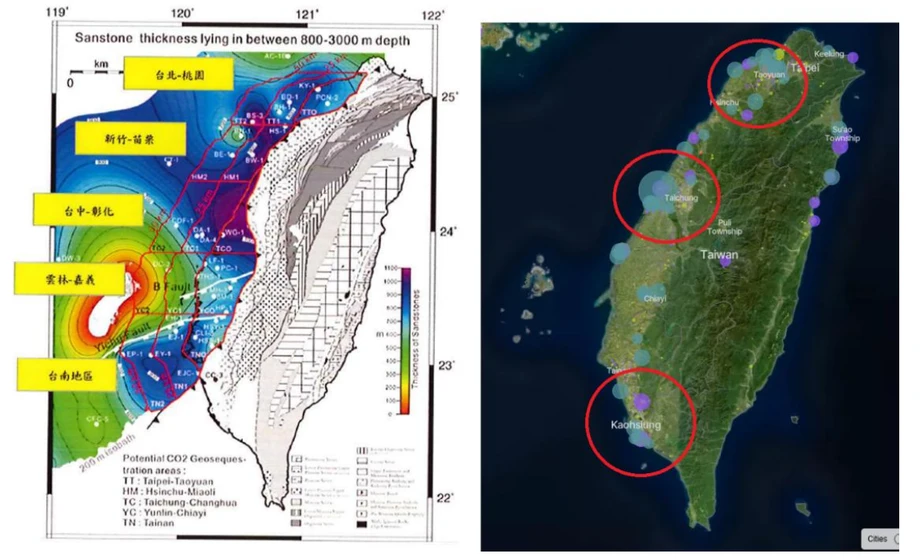
A vast storage plan beneath Taiwan's western waters
Taiwan is planning a network to store captured carbon dioxide beneath the seabed off its western coast, with projected annual storage demand reaching 40.2 million tonnes by 2050. The Climate Change Administration proposes northern, central and southern hubs connecting industrial emitters, transport infrastructure and underground storage sites.
Contents
- A vast storage plan beneath Taiwan's western waters
- How the carbon would reach underground reservoirs
- What the targets and timetable mean
- Two levels of review, with different jobs
- Leaks, groundwater and the need for an early warning
- Coastal communities want a clearer voice
- Can storage attract enough investment?
- Approval times could squeeze the construction schedule
- Japan offers a nearby example and monitoring research
- Key Points
The government's current targets are to cut emissions through carbon capture, utilization and storage, known as CCUS, by 1.76 million tonnes in 2030, 4 million tonnes in 2032 and 6 million tonnes in 2035. The projected annual demand for 2050 would be 6.7 times the 2035 target, requiring a substantial expansion of facilities and transport networks.
The administration expects to publish potential storage areas by mid-2027. Before then, its policy environmental assessment is expected to reach the environmental impact assessment committee in January 2027. An expert advisory panel has recommended changes covering geological safety, water monitoring, emergency planning and public access to information.
For steelmakers, cement producers and petrochemical companies, the proposed network could provide somewhere to send carbon dioxide captured at their plants. For coastal communities and fishing businesses, it brings immediate questions about where wells and transport routes would go, how leaks would be detected and who would respond if something went wrong.
The government is assessing broad areas first. Each developer would still have to investigate its chosen location and obtain approval through a separate environmental impact assessment before proceeding with a storage project.
How the carbon would reach underground reservoirs
Carbon capture and storage, or CCS, means collecting carbon dioxide from an industrial process, transporting it and injecting it into suitable rock formations deep underground. CCUS also includes using captured carbon dioxide in products or industrial processes. Taiwan's proposed storage scheme focuses on the underground destination.
Deep saline formations are a central option. These are layers of porous rock containing salty water. Carbon dioxide can enter spaces within the rock, while an overlying layer called caprock acts as a seal that limits its upward movement.
A National Taiwan University assessment identified four geological settings: enclosed formations on land, including depleted oil and gas fields; open saline formations near the coast; open saline formations farther offshore; and enclosed formations beneath the seabed. The research team identified coastal saline formations as an option deserving early consideration because of their estimated capacity, proximity to major emitters and potentially favorable geological conditions.
Offshore formations could also hold substantial quantities, although their development would involve technical and management challenges. A company's exploration would need to examine the reservoir, the sealing rock and nearby faults before it could submit a project for environmental review.
The proposed regional hubs would link several emitters with shared transport and storage infrastructure. Their usefulness depends on matching the amount factories can capture with the amount a reservoir can safely accept, and doing so at a cost companies will pay.
What the targets and timetable mean
The latest policy assessment uses a 2035 emissions reduction target of 6 million tonnes. An earlier account of the draft management discussions gave targets of 1.74 million tonnes in 2030 and 4 million tonnes in 2035; the current schedule places the 4 million tonne milestone in 2032 and raises the 2035 figure to 6 million tonnes.
The 40.2 million tonnes projected for 2050 is an annual storage requirement. A reservoir's total capacity, by contrast, describes how much it might hold over its operating life. Developers need both sufficient underground space and wells capable of accepting the required amount each year.
The main policy milestones are:
- February 15, 2023: Taiwan's climate legislation was promulgated, bringing CCS into its climate regulatory framework.
- December 2025: The Ministry of Environment published draft rules governing storage of captured carbon dioxide.
- January 2027: The policy environmental assessment is expected to be discussed by the environmental impact assessment committee.
- Mid-2027: The Climate Change Administration expects to publish potential storage areas.
- 2030, 2032 and 2035: Current CCUS emissions reduction targets rise from 1.76 million to 4 million and then 6 million tonnes.
- 2050: Projected annual storage demand reaches 40.2 million tonnes.
No starting date has been given for commercial injection under the proposed hub network. Publishing potential areas would guide company investigations, followed by exploration, project assessment and permit applications.
Two levels of review, with different jobs
The Ministry of Environment commissioned National Taiwan University's Graduate Institute of Environmental Engineering to assess potential storage areas. Climate Change Administration Director-General Tsai Ling-yi said the ministry voluntarily undertook the strategic environmental assessment under Article 4 of the Regulations Governing Strategic Environmental Assessments, although it was not legally required to conduct that policy review.
A strategic environmental assessment examines a broad government policy, including where development might be suitable and where different uses of land or sea could conflict. A project environmental impact assessment examines a specific development, its location, design and possible effects.
The proposed policy would exclude protected areas, environmentally sensitive areas and places where development is legally restricted. Tsai said it would also bring fault information together, set common assessment requirements and strengthen safety management and public participation.
The expert panel produced eight groups of recommendations containing 26 individual items. The administration must revise the assessment before it proceeds to the full committee. Once approved, the policy would guide government agencies, while individual developments would remain subject to their own environmental review.
Tsai acknowledged the environmental risks when explaining why the ministry undertook the broader assessment.
"We understand that CCS activity could result in adverse environmental impacts," Tsai said.
Leaks, groundwater and the need for an early warning
Environmental reviewers focused on how injected carbon dioxide might move through rock and what would happen if it escaped. Faults and weaknesses in the sealing layer require investigation because they can affect the routes available to underground fluids.
Carbon dioxide dissolving in water can make it more acidic. Reviewers raised concerns about groundwater quality, seawater acidification, agricultural soil, ecosystems and fisheries. Carbon dioxide accumulating in air can also displace oxygen and cause breathing difficulties, creating a safety concern for workers and other people nearby.
Reviewers recommended monitoring wells and measurements of groundwater conditions before injection begins. Those initial measurements provide a reference point: operators can compare later samples with the water's earlier condition to detect changes.
The recommendations also call for stronger geological safety assessments, ways to detect water quality changes, emergency response plans and public access to site assessments, risk analyses and monitoring results.
The Climate Change Administration said injection sites would be monitored and operations halted if abnormal carbon dioxide levels were detected. The proposed project process also includes monitoring for 20 years after storage operations end. That makes the ability to track underground conditions a responsibility extending well beyond the period when companies are injecting gas.
Coastal communities want a clearer voice
Yunlin County officials raised concerns about land subsidence and groundwater use along the coast, asking that storage development avoid transferring damage and costs to government or residents. The Fisheries Agency called for communication with fishing groups, whose working waters could be affected by offshore development.
Taipower asked how far storage sites should be from active faults. A common distance rule would give developers an initial screening tool, while detailed geological investigations would address the conditions at each proposed location.
Chen Chi-chung, identified as president of the Miaoli County Environmental Protection Association, called for fuller disclosure of the technical methods and implementation status of the Miaoli demonstration site. He also asked for clearer boundaries around potential storage zones and a mechanism to announce projects early and convey objections to decision makers.
Chen's concern extends beyond places already protected by law. Taiwan's dense settlement and limited space mean an area outside a statutory protection boundary can still contain habitats or livelihoods that residents want considered.
Publishing site investigations and monitoring results would give communities information they can use throughout a project's life. Early notice would also allow residents and fishing businesses to raise concerns while developers are still considering locations and designs.
Can storage attract enough investment?
The December 2025 draft storage rules proposed permits lasting up to 10 years, with one extension allowing a maximum of 20 years. Companies and research specialists warned that this could be too short for projects requiring expensive wells, lengthy preparation and lasting customer contracts.
Tsai Chen-chiu, environmental technology director at the Industrial Technology Research Institute's green energy research division, put the cost of each well at several billion New Taiwan dollars. An ExxonMobil representative said design and construction after a permit was issued could leave only four to five years for actual injection during the initial permit period.
The ministry said its proposed limit was intended to discourage companies from obtaining permits and leaving sites undeveloped. Officials said they could remove the restriction on the number of extensions in response to investment concerns.
The draft also restricts storage to carbon dioxide originating in Taiwan. Business representatives argued that accepting carbon from abroad could attract more customers and spread infrastructure costs across larger volumes. Tsai said domestic storage must first serve Taiwan's emissions reduction needs, while leaving open the possibility of discussing overseas carbon after the first domestic sites are operating.
Officials also promised to revise a provision allowing the ministry to require sites to accept a specified share of domestic carbon dioxide. Under the proposed revision described by Tsai, mandatory allocation would apply to facilities receiving government subsidies.
The ministry is considering green finance and subsidies to reduce initial costs. Tsai said steel, petrochemical and cement companies worry that captured carbon dioxide would have nowhere to go. She also said Taiwan still needs a method to calculate actual emissions savings across capture, transport and storage before projects can receive carbon credits.
Approval times could squeeze the construction schedule
Taipower representatives warned that overlapping controls under climate legislation and environmental assessment rules could make administrative work take five to six years, followed by another two to three years for procurement. Their estimate puts those stages at seven to nine years, creating pressure on the 2032 and 2035 targets.
Taipower supported environmental assessment for CCS but asked for reviews to be combined. It also proposed exempting experimental storage projects. Lu Ching-hui, secretary-general of the Taiwan Carbon Capture Storage and Utilization Association, suggested dedicated reviews or management requirements scaled to different types of project.
The Ministry of Environment's draft changes to the rules defining which developments require environmental assessment would add storage sites for captured carbon dioxide under Article 42, paragraph 7. The changes were proposed alongside amendments to other development assessment provisions at the end of 2025.
Tsai said the main tasks were finding suitable sites, addressing public concerns and confirming sources of captured carbon dioxide. She argued that experimental projects would not operate commercially and that debate over exemptions should not delay the broader rules.
The practical challenge is coordinating exploration, environmental review, permits and infrastructure contracts. A factory needs confidence that storage will be available before investing in capture equipment, while a storage developer needs customers before committing to costly wells.
Japan offers a nearby example and monitoring research
Japan's CCS roadmap targets annual storage capacity of 6 million to 12 million tonnes by 2030. It enacted the CCS Business Act in May 2024, establishing licensing for storage businesses and notification requirements for carbon dioxide pipeline transport businesses, and selected nine advanced projects covering capture, transport and storage.
Deputy Environment Minister Hsieh Yein-rui pointed to Japan's experience at an international CCS conference, citing the geological similarities between the two places.
"As Japan is in an earthquake belt like Taiwan, its legal infrastructure, technological development and public communication are exemplary for us," Hsieh said.
Japan's Tomakomai project had stored 300,000 tonnes by 2019. Taiwan's 2035 annual target of 6 million tonnes is 20 times that demonstration's accumulated volume, illustrating the scale of infrastructure needed when moving from a demonstration to a national network.
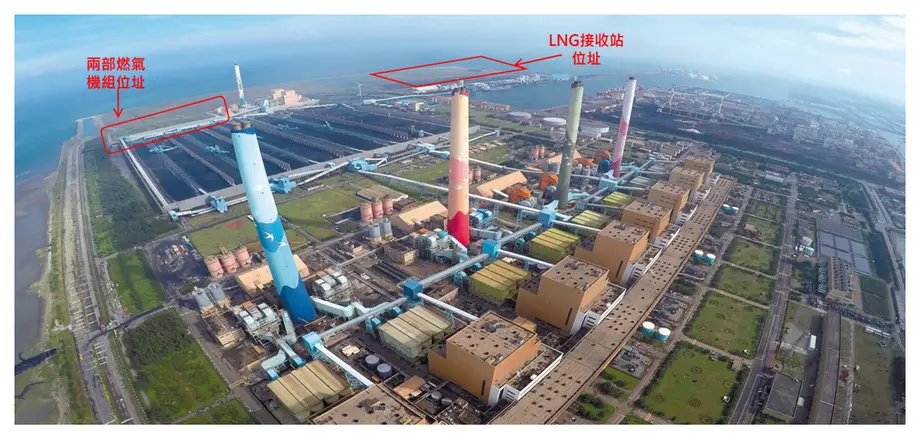
National Central University Carbon Storage and Geothermal Research Center director Lin Tien-shun estimated western Taiwan's geological storage potential at more than 40 billion tonnes. He identified Tiezhenshan and Mailiao among pilot locations. Turning that estimated resource into operating capacity requires detailed investigation of individual reservoirs.
The University of Tokyo and National Taiwan University are also developing a portable device that generates seismic signals to monitor reservoirs about one kilometer underground. University of Tokyo professor Takeshi Tsuji described the work as a way to support continuous monitoring, a central requirement as Taiwan moves toward larger storage projects.
Key Points
- Taiwan projects annual carbon storage demand of 40.2 million tonnes by 2050, centered on potential formations off its western coast.
- Current CCUS emissions reduction targets are 1.76 million tonnes in 2030, 4 million in 2032 and 6 million in 2035.
- The policy assessment is expected before the environmental impact assessment committee in January 2027, with potential storage areas due by mid-2027.
- Individual projects would require exploration, environmental review and monitoring, including checks for leaks and water quality changes.
- Permit duration, investment costs, domestic carbon supply and approval schedules remain central issues in the draft rules.
- Coastal officials and environmental groups are seeking early consultation, geological information and public access to safety assessments and monitoring results.