The Changing Landscape of University Entrance Exams
University admissions in South Korea face a sudden and difficult transformation as institutions grapple with high-tech cheating methods. Following the completion of the 2027 College Scholastic Ability Test, fourteen major universities including Korea University, Kyung Hee University, Sogang University, and Sungkyunkwan University held their individual essay and oral examinations over a single weekend. The urgency to secure examination halls stems from a series of high-profile cheating admissions that shattered public trust in national testing standards. Education authorities and university officials deployed unprecedented physical security measures to restore order and ensure fairness for hundreds of thousands of applicants. These developments echo similar concerns raised after generative artificial intelligence scandals rattled confidence in academic evaluations.
Contents
- The Changing Landscape of University Entrance Exams
- Aprons and Metal Detectors Take Center Stage
- The Smartphone and Smart Glasses Incidents That Sparked the Crisis
- Demonstrations Expose the Speed of Artificial Intelligence Solutions
- Student and Parent Reactions to Sudden Rule Changes
- Government Response and Financial Bounties for Whistleblowers
- The Essentials
Aprons and Metal Detectors Take Center Stage
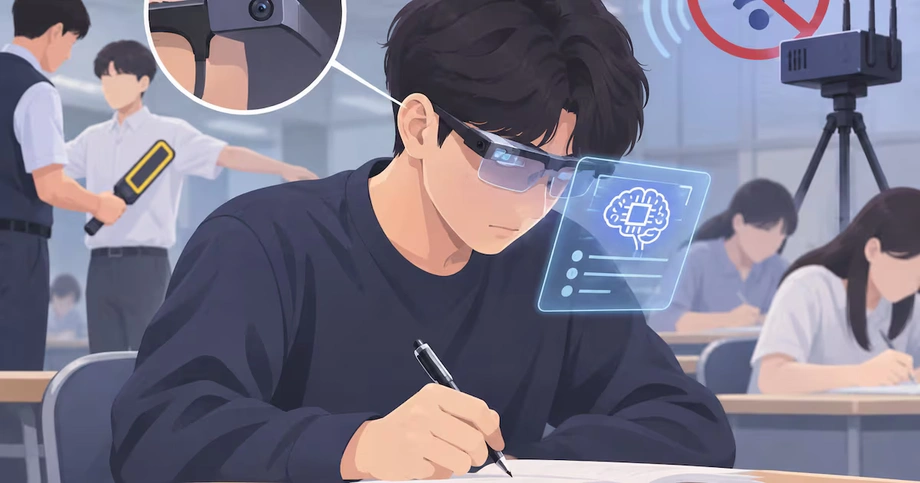
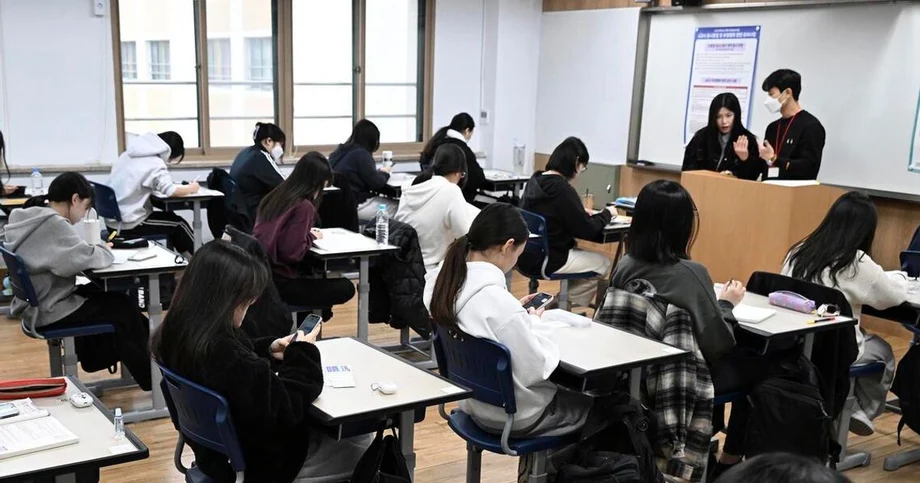
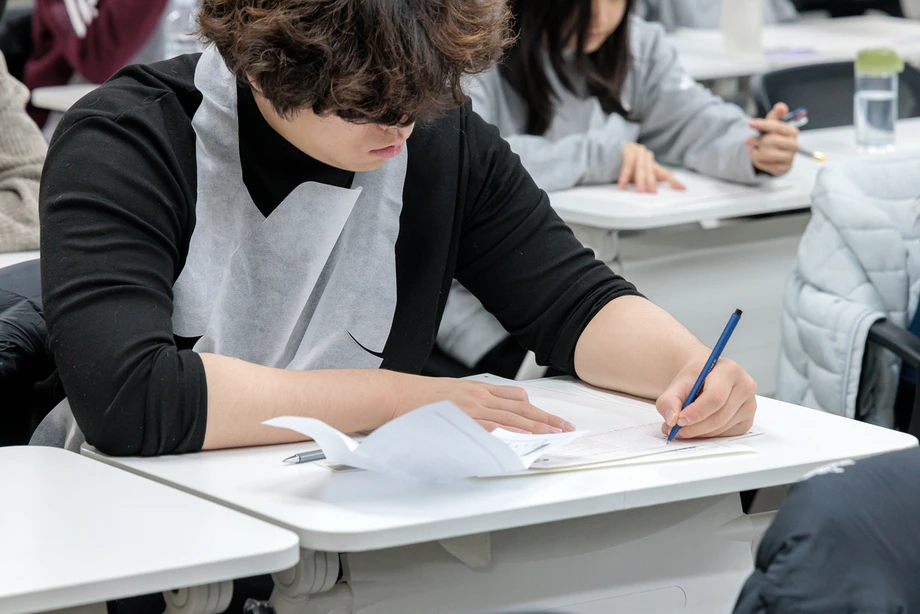
Kyung Hee University introduced disposable plastic aprons for all test takers to prevent students from concealing micro cameras beneath their clothing. Proctors required candidates to wear the garments throughout the test, and anyone who refused faced immediate expulsion from the room. Supervisors also accompanied students to restrooms during breaks, using handheld metal detectors to scan for hidden mobile phones or wireless earphones before allowing re-entry. Sogang University deployed specialised equipment to detect hidden cameras across multiple testing rooms. Sookmyung Women's University banned earplugs entirely and required all applicants to tie their hair back, while enforcing a strict inspection of eyeglasses that included placing tamper-evident stickers on frames after thorough examination. Sungkyunkwan University prohibited personal writing instruments, requiring applicants to use only pens and pencils provided by the institution. Seoul National University prepared special gowns for upcoming oral examinations, and Yonsei University explored radio frequency signal blocking for future transfer admissions.
The Smartphone and Smart Glasses Incidents That Sparked the Crisis
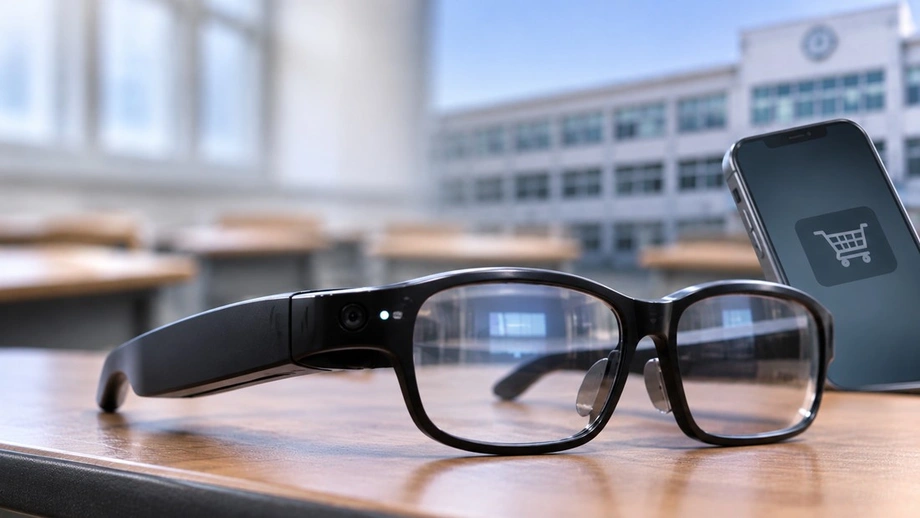
Security fears intensified after investigators uncovered how advanced technology had infiltrated professional and university testing rooms. On November 10, 2026, a candidate taking the Yonsei University mathematics essay examination for natural sciences and integrated subjects was caught wearing a device that blended digital displays with optical frames. The student passed initial visual checks by wearing ordinary spectacles before swapping them for an artificial intelligence-enabled model once the test papers were distributed. Yonsei University received 14,452 applications for 288 available spots, creating a competitive pressure of 50.18 to one. A similar incident occurred on October 3, 2026, at the University of Seoul, where a natural sciences applicant was caught using a similar device during an essay test. University officials immediately expelled the student and imposed a three-year ban on taking future tests. These discoveries followed an even larger controversy involving the 63rd certified tax accountant examination, where a top-scoring candidate named Han Won-seok confessed to using a miniature camera and generative artificial intelligence to solve questions. The scandal prompted widespread investigations, which researchers and legal experts discussed extensively in police inquiries into cheating methods.
Demonstrations Expose the Speed of Artificial Intelligence Solutions
Public anxiety grew after technical demonstrations showed how easily wearable computers could solve complex national test papers. A test conducted on November 16, 2026, using a 49-gram augmented reality device called Rokid Glasses AI, revealed that artificial intelligence could complete a thirty-question university entrance mathematics test in just twenty-two minutes instead of the allotted one hundred minutes. The machine achieved a score of ninety-eight out of one hundred, missing only a single introductory question due to an initial setting error. The demonstration utilized Google Gemini software to interpret photographs of test questions and transmit solutions back through an internal display. While the device excelled at numerical problem-solving, it struggled with complex biological charts and long textual passages, highlighting both the power and the current limitations of automated assistance. These trials mirrored the security challenges that plagued smart glasses math trials conducted just days before the main national tests.
Student and Parent Reactions to Sudden Rule Changes
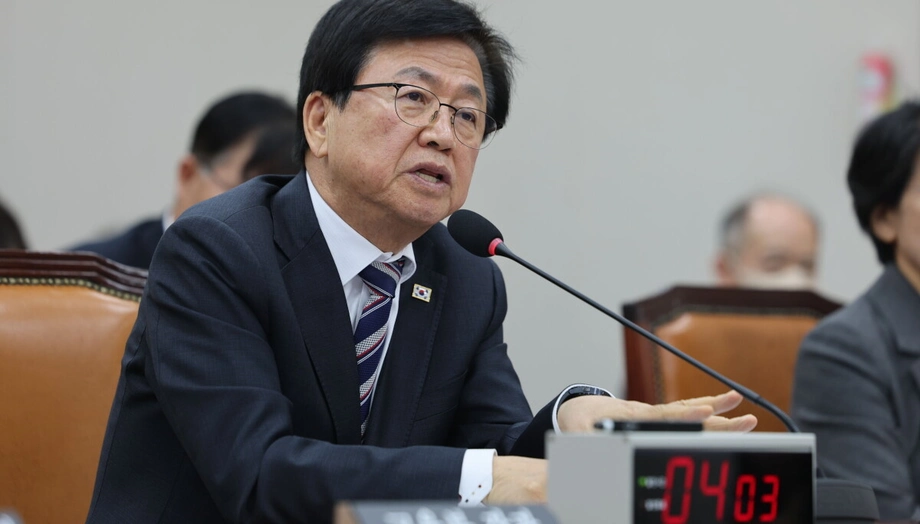
Aspirants arriving at university gates expressed a mixture of frustration and resignation regarding the sudden influx of security protocols. Choi Yoon-seo, a nineteen-year-old test taker at Kyung Hee University, explained that the revelations made her feel as though years of dedicated preparation had been unfairly undermined. Another applicant, Jung Se-jun, emphasized that strict punishments must be applied to deter future misconduct and protect honest students from bearing the consequences of dishonest actions. Parents accompanying their children voiced deeper concerns about the long-term integrity of the education system. Lee Bong-gyu, whose son attended the essay tests, argued that administrative bodies reacted too slowly to technological threats that had been developing for years. Another parent, identified by the surname Kim, suggested that authorities should study international security methods and implement stronger signal-blocking technology inside all testing facilities. These concerns about institutional readiness directly mirrored the political fallout that led to the resignation of the education minister following intense parliamentary questioning.
Government Response and Financial Bounties for Whistleblowers
The administration of President Lee Jae-myung responded to the crisis by announcing aggressive financial incentives and structural overhauls across all state examinations. Following cabinet discussions, the government clarified that rewards for reporting examination fraud would start at a minimum of one hundred million won per verified violation, providing substantial backing for whistleblowers within coordinated cheating rings. Investigators also deployed emergency alert notifications during the national entrance examination, resulting in the surrender of twenty-two hidden mobile phones across nine provinces. Lawmakers began drafting legislation to compel artificial intelligence developers to share user query data when state prosecutors investigate academic fraud. These enforcement updates built upon the emergency measures established during bounty rules for exam cheating reports issued earlier in the week.
The Essentials
- University entrance essay examinations introduced strict physical checks, including disposable aprons, metal detectors, and mandatory eyeglass inspections.
- A Yonsei University applicant was caught using an artificial intelligence-enabled wearable device after swapping regular spectacles for a digital model during a mathematics essay test.
- The University of Seoul barred a cheating applicant from taking future tests for three years following a similar discovery during an October examination.
- Government officials established a minimum reward of one hundred million won for whistleblowers reporting examination fraud.
- Technical demonstrations proved that modern wearable artificial intelligence systems could solve complex mathematics papers in a fraction of the allotted time.