A Sudden Reversal at the Top of the AI World
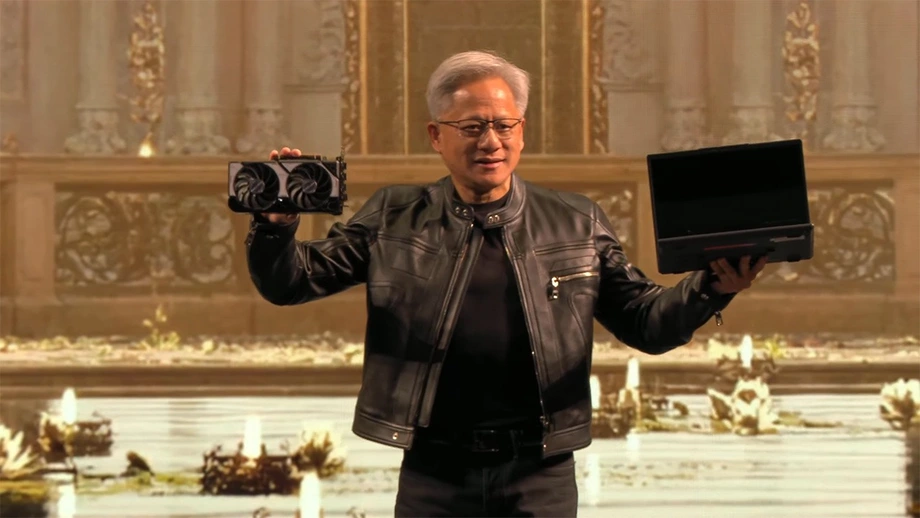
Nvidia announced on November 23, 2026, that its board of directors voted unanimously to restore co-founder Jensen Huang as president, chief executive officer, and member of the board, effective immediately. The dramatic reversal ends an 11-day leadership crisis at the world's premier artificial intelligence semiconductor manufacturer, which began when Huang stepped down on the morning of November 12 following disclosures of extramarital affairs and federal inquiries into whether one of the women involved had ties to Chinese intelligence.
Contents
Directors stated that they reached the decision after holding extensive discussions and interviews with Huang that convinced them of his candor and his continuing ability to lead the company he founded in 1993. Crucially, the board noted that it received input from the highest levels of the United States government and became confident that reinstating Huang poses no risk to national security.
Colette Kress, the executive vice president and chief financial officer who stepped in as interim chief executive during the 11-day interregnum, has returned exclusively to her financial duties. Harvey C. Jones, a director since 1993 and former chief executive of Synopsys who was named Nvidia's first board chairman during the crisis, will remain in that leadership post.
Jones issued a formal statement explaining the board's decision to bring back the 33-year company veteran and thanking Kress for guiding the enterprise through the transition.
The board believes that Jensen is the right person to lead Nvidia and that his return is in the best interests of shareholders, employees, partners, and customers.
Huang also released a statement expressing gratitude to the board, Jones, Kress, the executive management team, employees, shareholders, industry partners, and his family for their support during his absence.
I am honored to return and lead Nvidia, one of the most important technology companies in the world, at the beginning of a new industrial revolution. I cannot wait to get back to work.
From Defiant Rejection to Unanimous Reinstatement
The board's unanimous vote represents an abrupt reversal from the public stance directors took just six days earlier. Following Huang's sudden November 12 resignation, the former chief executive released a written statement on November 17 noting that employees, investors, and business partners had urged him to come back, and declaring that he would accept if the board judged his return to be in the best interests of the company and the country.
Hours after Huang made that offer on November 17, Nvidia held its third-quarter earnings conference call for fiscal year 2027. During that session, Jones explicitly ruled out bringing the founder back, telling analysts and investors that the board had unanimously accepted Huang's resignation after uncovering personal conduct that fell short of the company's code of conduct, standards, and corporate culture norms. Jones stated on the call that the board had no intention of reappointing Jensen Huang as chief executive officer, adding that he would provide no further details about the ongoing investigation and would take no questions on the matter.
At that time, Nvidia appeared committed to finding a permanent replacement. The board had retained the global executive search firm Heidrick and Struggles to evaluate internal and external candidates. Kress assured investors on the November 17 call that Nvidia's product roadmap was progressing smoothly in Huang's absence, while Vice President Ian Buck, widely viewed as an internal contender for the top job, joined the executives on the conference call.
Observers initially compared the push by Huang's supporters to the November 2023 boardroom drama at OpenAI, where chief executive Sam Altman was abruptly fired by directors only to be reinstated days later following an employee revolt and intense pressure from Silicon Valley investors. Unlike Altman's ouster, which centered on communication clashes with directors, Huang's exit involved both internal workplace misconduct and sensitive geopolitical inquiries, making his rapid return far more complex.
- November 8, 2026: Nvidia initiates an independent board investigation following reports that Huang was targeted by foreign intelligence operatives.
- November 12, 2026: Huang resigns as president, chief executive officer, and board director on the morning after directors meet to discuss an impending report about an affair with a direct subordinate.
- November 17, 2026: Huang offers to return if asked, while Chairman Harvey C. Jones tells an earnings call the board has no intention of reappointing him and has hired Heidrick and Struggles to find a successor.
- November 22, 2026: President Donald Trump posts on Truth Social at 9:54 p.m. Eastern Time publicly calling on Nvidia's board to rehire Huang.
- November 23, 2026: Nvidia announces Huang's immediate, unanimous reinstatement; President Trump praises the move at 9:07 a.m. Eastern Time, and Nvidia shares surge over 35 percent in intraday trading.
Presidential Intervention and Washington Infighting
The deadlock between Huang and the board broke after direct public intervention from the White House. President Donald Trump, who had earlier urged a second chance for the chip leader during a Friday press conference following an Asia trip, escalated his campaign on the night of November 22. At 9:54 p.m. Eastern Time, Trump posted a message on Truth Social publicly demanding that Nvidia's board of directors rehire Huang.
Following Nvidia's official announcement the next morning, Trump returned to Truth Social at 9:07 a.m. Eastern Time on November 23 to celebrate the reinstatement as the right and proper decision. Trump disclosed in his post that he had received confirmation directly from the United States Attorney General that the federal government possesses no evidence indicating any illegal conduct by Huang. The president added that the United States government sees no reason to believe Huang's return poses a national security risk, while separately urging Nvidia to continue a thorough internal investigation into compliance with American export controls as part of its legal obligations and national security protection.
The crisis had exposed sharp divisions within the Trump administration regarding how to handle the semiconductor giant and its founder. Longstanding suspicion of Huang among China hawks in Washington, including Secretary of State Marco Rubio, surfaced alongside a dispute over intelligence assessments of Huang's personal contacts. During the height of the Washington power struggle, Treasury Secretary Scott Bessent publicly criticized Commerce Secretary Howard Lutnick by name over policy responses concerning Nvidia, insisting the company needed outside leadership and strict adherence to trade restrictions.
Historic Trillion Dollar Surge on Wall Street
Financial markets greeted the founder's return with an immediate buying frenzy that reversed the steep losses suffered during his 11-day absence. In pre-market trading on November 23, Nvidia shares jumped roughly 30 percent, and the rally accelerated once regular trading opened on United States exchanges.
During intraday trading on November 23, Nvidia's stock price surged by more than 35 percent, with the Wall Street Journal tracking gains of approximately 34 percent alongside a single-day market capitalization increase exceeding 1 trillion dollars. Market watchers noted that if those intraday gains held through the closing bell, Nvidia would achieve the first single-day market value gain of 1 trillion dollars by an individual corporation in financial history. The figures remained intraday benchmarks during trading hours rather than confirmed closing totals.
The explosive rally highlighted how heavily investor confidence in the artificial intelligence sector rests on Huang personally. After Huang stepped down on November 12, global equity markets suffered a massive correction that erased over 10 trillion dollars in value across worldwide exchanges and triggered severe capital outflows from technology stocks in Taiwan. Prior to his reinstatement, Nvidia shares had fallen roughly 17 percent for the year, trailing a 4 percent gain in the broader Nasdaq index as corporate governance experts criticized the company for having an unusually flat management structure with 60 direct reports to Huang and no emergency succession plan.
Espionage Questions and Workplace Scandals
The turmoil that nearly ended Huang's three-decade tenure stemmed from the convergence of foreign intelligence concerns and internal corporate affairs. The geopolitical controversy began in 2025 when federal authorities opened an inquiry into reports that Megaspeed International, a Singapore-based data center firm, was diverting restricted Nvidia processors to Chinese entities in violation of American export regulations.
In October 2026, reports emerged that United States intelligence officials suspected former Megaspeed executive Alice Huang, also known as Huang Le and unrelated to the Nvidia chief, of acting as a collaborator for China's Ministry of State Security while maintaining a close personal relationship with Jensen Huang. After Jensen Huang admitted to an extramarital affair with Alice Huang while denying any knowledge of her suspected intelligence links, Nvidia initially backed him on November 8 and opened an independent inquiry into whether foreign intelligence operatives had targeted him.
The board's support collapsed days later when journalists notified Nvidia that they were preparing to publish a report detailing a separate extramarital affair between Huang and a direct subordinate inside the company. Directors convened an emergency meeting, and Huang resigned the following morning on November 12. Subsequent reporting uncovered a third alleged affair involving another Nvidia employee, compounding scrutiny of a corporate culture already shaken by workplace bullying allegations from former staff and executives.
New Compliance Safeguards and Ongoing Inquiries
While restoring Huang to his full executive and board powers, Nvidia announced sweeping changes to its corporate governance architecture designed to satisfy federal regulators and prevent future security breaches. The board emphasized that the independent special committee established on November 8 to investigate reports that Huang was targeted by foreign intelligence operatives will continue its work until completion. That committee consists exclusively of independent directors assisted by independent outside legal counsel, and Nvidia stated that Huang fully supports the inquiry and will continue to cooperate.
To institutionalize oversight of trade restrictions, the board created a new National Security and Export Control Committee. Like the investigative panel, this permanent body is composed entirely of independent directors. The committee has retained legal counsel experienced in national security law, who will in turn appoint specialized technical and intelligence advisors to monitor the company's global hardware distribution.
Nvidia has also initiated an executive search to fill a newly created position of Chief Compliance Officer. This executive will oversee enterprise-wide regulatory compliance and report directly to the board's Nominating and Corporate Governance Committee. No timetable was announced for when the Chief Compliance Officer will be hired or when the independent board committee will conclude its foreign intelligence investigation.
Beyond its internal reforms, Nvidia confirmed it will continue cooperating with ongoing federal inquiries and government export investigations. Those external probes include joint enforcement actions by the Department of Justice and the Department of Commerce regarding Megaspeed's chip shipments, Securities and Exchange Commission inquiries, and requests from United States lawmakers for Huang to testify at a closed House briefing and an open Senate hearing scheduled for December 2026.
At a Glance
- Nvidia's board of directors voted unanimously on November 23, 2026, to reinstate co-founder Jensen Huang as president, chief executive officer, and director, 11 days after his November 12 resignation.
- Directors reversed their November 17 declaration that Huang would not return after interviewing him and receiving high-level United States government assurances that his reinstatement poses no national security risk.
- President Donald Trump publicly called on the board to rehire Huang on the night of November 22 and revealed on November 23 that the Attorney General confirmed the government holds no evidence of illegal acts by Huang.
- Nvidia shares surged over 35 percent in intraday trading on November 23, briefly adding more than 1 trillion dollars to the company's market capitalization in a single trading session.
- Interim CEO Colette Kress returns to her role as chief financial officer, while Harvey C. Jones remains chairman of the board.
- An independent board committee will complete its investigation into whether foreign intelligence targeted Huang, while Nvidia establishes a new National Security and Export Control Committee and recruits its first Chief Compliance Officer.