Jakarta Says US Coal Gasification Project Is Close to Execution
Indonesia's Coordinating Minister for Downstreaming and Energy, Bahlil Lahadalia, told a press conference at the Ministry of Energy and Mineral Resources in Jakarta on Monday, November 23, 2026, that a project to turn coal into synthetic gas with US technology firm Latitude Energy is being finalized and could be implemented soon.
Contents
- Jakarta Says US Coal Gasification Project Is Close to Execution
- What the July MoU Actually Commits
- How TRIG Turns Coal Into Gas
- The $2 Billion Question: White House Numbers and Project Value
- China Track: Coal-to-Ethanol and the Bakrie Group
- Why Coal Downstreaming Has Been Hard to Deliver
- Energy Security, Fuel Reserves and a Regional Ambition
- What Is Known, What Is Missing
- Key Points
Bahlil separated the US track from a Chinese coal-to-ethanol effort now at the construction stage. On the US project, he said:
The project is currently under development and could be implemented soon.
On China, Bahlil said the cooperation involves technology. The US project is being developed through Danantara Indonesia, the country's sovereign wealth fund, working through PT Danantara Development Management Fund. Latitude Energy would deploy Transport Integrated Gasification, or TRIG, to turn coal into syngas. Jakarta casts the plan as a step toward energy independence and more domestic processing of a resource Indonesia has long exported raw.
What the July MoU Actually Commits
The paperwork dates to the middle of 2026. PT Danantara Development Management Fund and Latitude Energy signed a memorandum of understanding in Jakarta on July 8, 2026. The US Embassy in Jakarta announced the agreement on July 10. A statement from the US Embassy in Jakarta described the signing as a milestone in US-Indonesia energy cooperation.
Under the MoU, Latitude may explore coal gasification opportunities in Indonesia using TRIG. The embassy's language covers exploration, while the White House later described negotiations on a $2 billion project. No final investment decision, construction schedule or site has been announced.
Sigit P. Santosa, chief executive of PT Danantara Development Management Fund, said the partnership supports Indonesia's wider strategy to reach energy self-sufficiency by using low-calorie coal. US Embassy Chargé d'Affaires ad interim Joy M. Sakurai framed the deal as part of a broader trade and investment relationship.
The U.S.-Indonesia trade and investment relationship is full of opportunity. American advanced energy technology can support energy security, industrial growth, and long-term economic prosperity for both our countries.
Latitude's president and chief executive, Jacob Thomas, said the company would bring its TRIG technology to Indonesia and develop local capabilities. He described the partnership as linked to Indonesia's energy sovereignty.
How TRIG Turns Coal Into Gas
Gasification is a chemical process, not combustion. It heats coal with controlled amounts of oxygen and steam to produce syngas, a mixture mainly of carbon monoxide and hydrogen. Syngas can then become hydrogen, fertilizers, methanol, fuels and chemicals. Latitude calls its TRIG process advanced and proven; the US Embassy statement says it converts coal into synthetic gas.
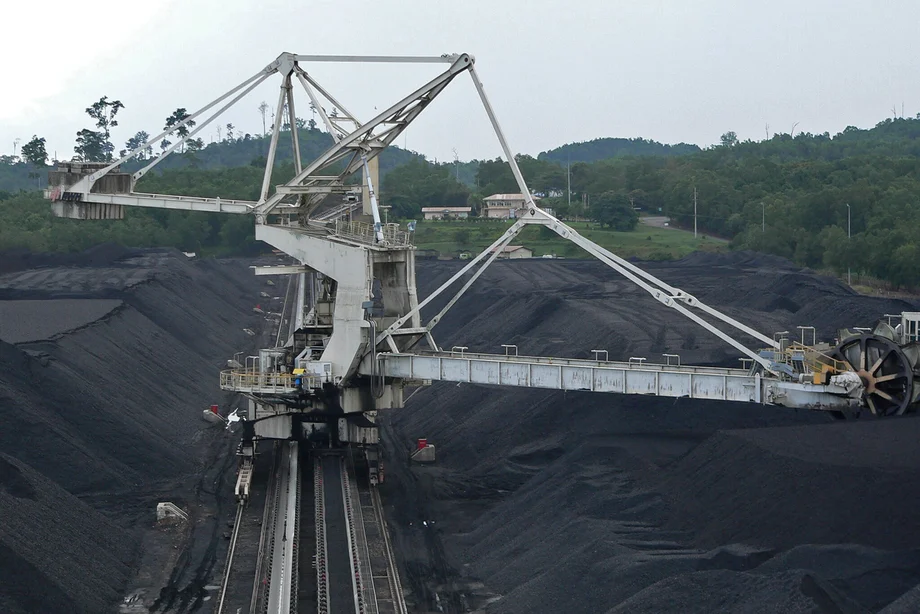
Indonesia's interest lies in the quality of its coal. The country is one of the world's largest coal producers and the largest exporter of thermal coal, the kind burned mainly in power plants. Roughly half its reserves, concentrated in large surface mines in Kalimantan and Sumatra, are low-calorie coal with high moisture, known as sub-bituminous coal or lignite. That coal has low energy density and sells at lower prices abroad. Converting it at home could create new industrial feedstock and reduce imports of products made from gas.
This MoU marks an important milestone in our partnership with Danantara to advance Indonesia's energy security and industrial development. By combining Indonesia's abundant domestic resources with Latitude's TRIG™ technology, the world's most advanced coal gasification technology, we are committed to bringing leading U.S. technology to Indonesia, developing local capabilities, and creating long-term value for the country's downstream industries. This partnership is inextricably linked to Indonesia's energy sovereignty.
Jacob Thomas, president and chief executive of Latitude Energy Holdings Inc., gave that assessment in the company's statement on the MoU. Latitude also views Indonesia as a launchpad for coal gasification projects across Southeast Asia, rather than only as a first market.
The $2 Billion Question: White House Numbers and Project Value
US President Donald Trump's White House put a price on the plan. In a fact sheet issued on Wednesday, November 18, 2026, after Trump's trip to the ASEAN summit, the White House said Latitude Energy and Danantara had announced negotiations on a $2 billion project. The fact sheet said the project would use what it called world-class US technology to improve Indonesia's utilization of its coal resources.
The White House tied the Danantara project to more than $17 billion in commercial deals and strategic investments for US companies announced after Trump met Southeast Asian leaders in Manila. The Danantara project was the only Indonesia-related item on that list. At Rp18,200 per dollar, $2 billion is about Rp36.4 trillion. A Rp34 trillion figure also appeared.
Danantara has not disclosed the financial value in its own statements on the July MoU. The $2 billion figure came from the White House. Latitude's July statement described a partnership lasting years, with management attention, technical expertise and investment focus for a scalable coal gasification platform.
China Track: Coal-to-Ethanol and the Bakrie Group
The US project is one of two coal conversion tracks Bahlil described on November 23. The other is a coal-to-ethanol effort with Chinese technology. Bahlil said construction has begun. The local partner is Bakrie Group, which will work in Kalimantan with a Chinese technology provider.
The coal-to-ethanol project will involve cooperation with the Bakrie Group in Kalimantan. They hold a PKP2B that was converted into an IUPK. They are required to develop downstreaming facilities.
Bahlil explained that the project stems from a downstreaming obligation after the conversion of a Coal Contract of Work (PKP2B) into a Special Mining Business Licence (IUPK). In simple terms, an old mining concession agreement has become a special licence with conditions attached, including a requirement to build processing facilities. Bakrie Group is responsible for mobilizing the coal-to-ethanol technology from China, Bahlil said.
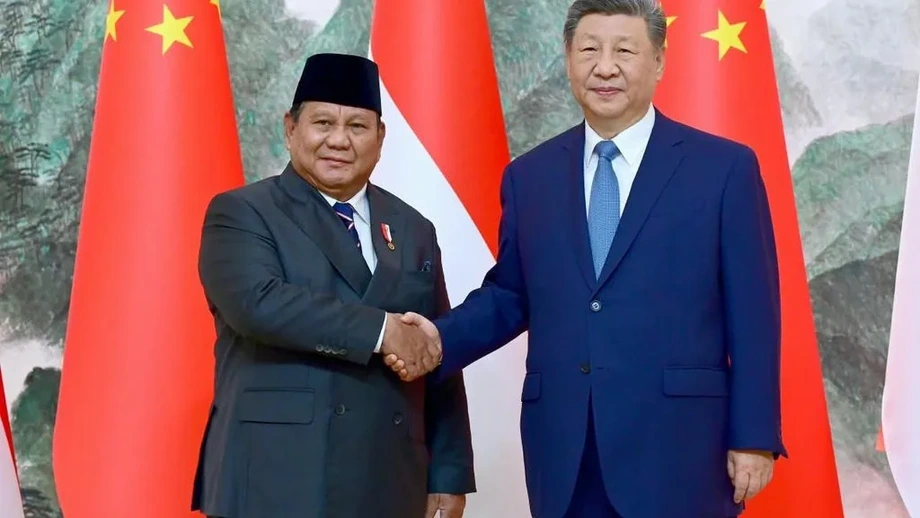
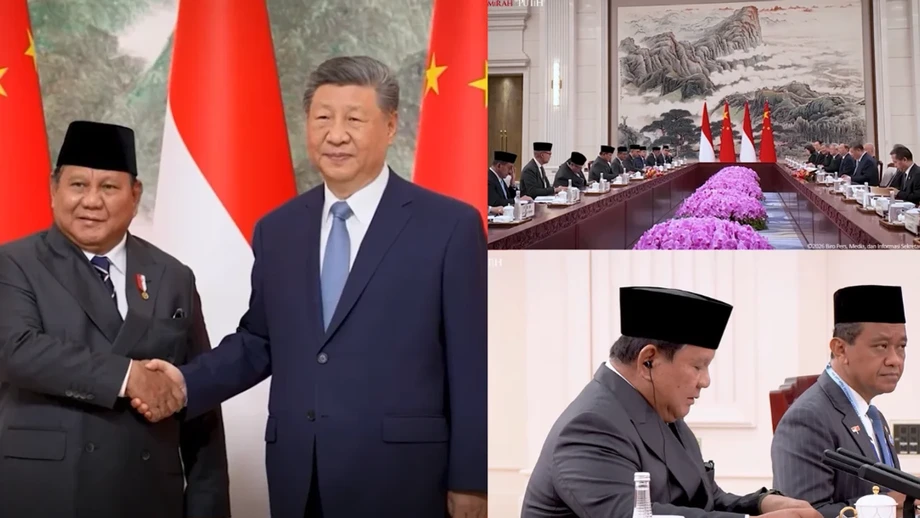
The China track also has a national-level agreement. On Tuesday, November 17, 2026, President Prabowo Subianto witnessed the signing of deals worth $71.8 billion, bringing total investment and economic agreements to $86.8 billion, or nearly Rp1,600 trillion. The package covered smart city development, manufacturing and technology, infrastructure financing, and coal-to-ethanol technology. Danantara Indonesia, state agencies and companies, and Chinese firms and consortiums are involved.
Among the signings was a memorandum of understanding on coal-to-ethanol cooperation between the Ministry of Higher Education, Science, and Technology, state energy firm Pertamina, and Beijing Petrochemical Engineering Co., Ltd. That agreement carries an investment value of $1.8 billion and is meant to drive technology development and transfer in Indonesia.
Why Coal Downstreaming Has Been Hard to Deliver
Indonesia has tried coal downstreaming before. For nearly a decade, successive pushes focused on dimethyl ether, or DME, as a substitute for imported LPG, the liquefied petroleum gas used for cooking and industry. Most of those projects never reached commercial operations. The economics were the obstacle: making coal derivatives at home cost more than importing the products they were meant to replace.
Singgih Widagdo, chairman of the Indonesian Mining and Energy Forum, said the public needs a detailed breakdown of how TRIG will be deployed. He estimated that a functional gasification facility requires capital expenditure above $2.5 billion, depending on the volume of coal processed.
I think the understanding remains DME, and then the process is strengthened up to its transport infrastructure. If integrated, it will better secure the link between downstream output and transportation, thereby easing market connectivity.
Widagdo said the ultimate decider is raw feedstock pricing. If low-rank coal continues to be valued at market prices, project profitability is unlikely, in his view. Putra Adhiguna, managing director of the Energy Shift Institute, has said the core challenge is no longer the chemical conversion of coal to syngas but securing a market that can absorb the output. The identity of prospective offtakers, private companies or state entities such as Pertamina or PLN, changes the project's risk profile.
Energy Security, Fuel Reserves and a Regional Ambition
Jakarta frames both coal tracks as energy security measures. Bahlil said Indonesia will increase its domestic fuel reserves from 21 days to 60 days of consumption. The country currently holds enough fuel for about three weeks of national demand. The change would give Indonesia a larger buffer against supply shocks and price swings in imported crude and refined products.
For Danantara, the US project is also an industrial policy tool. Syngas can feed fertilizer, petrochemical, methanol and synthetic fuel plants. If those plants are built, Indonesia could process low-calorie coal that today earns less on export markets. The project could create construction jobs and industrial supply chains, especially if gasification facilities are integrated with transport links to ports.
Latitude sees a wider Southeast Asian market. The company said Indonesia is not merely a first market but a launchpad for broader coal gasification scale-ups across the region. That ambition depends on the first project proving its economics and securing buyers.
What Is Known, What Is Missing
The known pieces are the July 8 MoU, the White House's November 18 announcement of negotiations on a $2 billion project, and Bahlil's November 23 statement that the US project is being finalized. The missing pieces are central to whether the project becomes a working plant. No site, construction start date, final investment decision or offtake agreement has been announced.
No date has been given for the next round of talks, a financial close or the start of construction. The White House described negotiations. The US Embassy statement said Latitude may explore opportunities. Danantara has not disclosed the project's financial value in its own statements. Those details will decide whether the project moves from a memorandum and a White House announcement into steel, pipelines and buyers.
Key Points
- Bahlil Lahadalia said on November 23, 2026, that the US coal gasification project with Latitude Energy is being finalized and could be implemented soon.
- PT Danantara Development Management Fund and Latitude Energy signed an MoU on July 8, 2026, to explore coal gasification using TRIG technology.
- The White House announced on November 18, 2026, that the two sides were negotiating a $2 billion project, about Rp36.4 trillion at Rp18,200 per dollar.
- Indonesia also has a coal-to-ethanol project with Chinese technology involving Bakrie Group in Kalimantan, which Bahlil said has entered construction.
- On November 17, 2026, President Prabowo Subianto witnessed $71.8 billion in deals, part of $86.8 billion in total agreements, including a $1.8 billion coal-to-ethanol MoU with Pertamina and Beijing Petrochemical Engineering.
- Industry figures warn that gasification costs can exceed $2.5 billion and that feedstock pricing and offtake markets will determine commercial viability.
- Indonesia plans to raise domestic fuel reserves from 21 days to 60 days of consumption.
- No site, construction date, final investment decision or offtake agreement for the US project has been announced.