Securing the Semiconductor Supply Chain
South Korean semiconductor giants Samsung Electronics and SK Hynix face mounting pressure as artificial intelligence and robotics reshape global manufacturing. Global technology leaders have highlighted the arrival of physical artificial intelligence, prompting both companies to reexamine their supply chains. The production of sixth-generation high bandwidth memory, known as HBM4, and ultra-fine fabrication nodes depends heavily on raw materials, specialized components, and advanced equipment. Investment banking industry observers suggest that Samsung and SK Hynix may soon pursue direct equity stakes or corporate takeovers of material, parts, and equipment suppliers to protect their manufacturing operations against external bottlenecks.
Contents
- Securing the Semiconductor Supply Chain
- Building Dedicated Proving Grounds
- Record National Exports and Industry Partnerships
- Expanding Financial and Technological Support Programs
- Protecting Core Intellectual Property
- Global Market Realities and Financial Pressures
- Global Manufacturing Strategies for Advanced Memory
- The Essentials
Financial investment data shows that Samsung and SK Hynix have outlined massive spending plans through 2040, reaching approximately 2100 trillion won and 1100 trillion won respectively. Both corporations have generated record cash flows during recent market booms, enabling significant capital deployment. Rather than focusing solely on factory expansions, industry attention is turning toward vertical integration. When major global technology companies design custom artificial intelligence chips and control their supply chains tightly, domestic memory manufacturers risk severe disruption if essential equipment and material suppliers are acquired by foreign private equity funds or international equipment rivals.
Market participants note that acquiring critical suppliers represents a strategic defense mechanism in an era where technological sovereignty dictates market leadership. Suppliers that provide irreplaceable foundational technologies while depending on the memory giants for a large share of their revenue emerge as primary acquisition targets. SK Hynix has expanded production at facilities such as the Cheョン M15X plant, drawing attention to domestic suppliers of wafer cleaning and etching equipment. Cleaning removes surface impurities from silicon wafers, while etching selectively removes material to define complex circuit patterns. Both processes occur during the initial stages of semiconductor fabrication.
Building Dedicated Proving Grounds
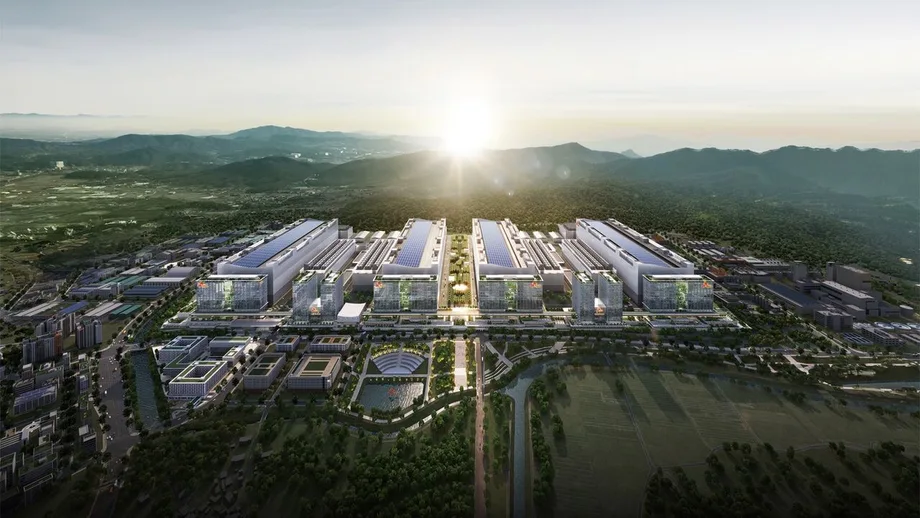
SK Hynix is establishing a specialized collaborative testing facility named the Trinity Fab within its massive industrial complex in Yongin, Gyeonggi Province. The facility addresses a persistent bottleneck where domestic material, parts, and equipment suppliers struggle to validate newly developed technologies in true mass production environments. Construction on the site involves a total budget of 8746 billion won, with SK Hynix contributing 4432 billion won, the central government providing 3736 billion won, and local authorities including Gyeonggi Province and Yongin City supplying 577 billion won. The project will place a 3305 square meter cleanroom on the third floor of the first fabrication building, equipped with 51 specialized systems including 26 front-end manufacturing tools, 11 measurement and inspection instruments, and 14 auxiliary devices.
Trinity Fab Foundation representative Lee Gi-jung explained the practical purpose of the initiative, noting that suppliers face severe commercialization delays without access to production-grade testing environments. Lee Gi-jung stated:
Soubang is a core strategic asset where a supply disruption in even a single component halts an entire semiconductor line, and our goal is to shorten the commercialization period, which typically takes three to four years for equipment, by at least 30 percent or over a year.
Suppliers have welcomed the initiative because securing high-end analytical equipment independently is cost-prohibitive for smaller enterprises. TES vice chairman Lee Jae-ho noted that measurement devices can cost between 1 billion and 5 billion won, making them difficult for typical equipment developers to acquire on their own. Similarly, TEMC CEO Yu Won-yang highlighted that evaluating a single specialized material can take anywhere from six months to two years, meaning that a dedicated evaluation facility will remove a major development hurdle.
Record National Exports and Industry Partnerships
South Korea achieved a historic milestone as total annual exports surpassed 1 trillion dollars, driven largely by global investments in artificial intelligence infrastructure. Ministry and customs trade data shows that national exports reached 7093 billion dollars in 2025 before climbing to 9300 billion dollars in the first ten months of the current year. Semiconductor shipments played a dominant role in this expansion, with the memory sector accounting for 42.8 percent of cumulative exports between January and October. SK Hynix emphasized that this export milestone reflects the collective strength of the domestic semiconductor ecosystem rather than the achievements of a single manufacturer.
The collaborative foundation behind these production milestones builds on earlier market dynamics. As examined in previous coverage regarding Samsung, SK Hynix Face 2027 Memory Crunch as DRAM Prices Seen Rising 40%, accelerating demand from artificial intelligence data centers is tightening global memory supplies and pushing contract prices upward. That structural tightness increases the urgency for chipmakers to secure reliable equipment access and maintain stable component deliveries across every layer of production.
Expanding Financial and Technological Support Programs
SK Hynix has structured its support for suppliers across four distinct categories encompassing technology development, commercialization, financing, and workforce recruitment. The company introduced a research and development challenge reward system that covers up to 50 percent of development costs upfront for critical technologies. Under this program, the corporation absorbs financial risks by providing compensation even if a project fails to yield a commercial product or result in a direct purchase order. Purchasing strategy manager Lee Hyun-철 noted that management is willing to treat unsuccessful projects as necessary investments to give suppliers the freedom to innovate without fear of financial ruin.
Financial safety nets for smaller enterprises have also expanded significantly. SK Hynix partnered with four commercial banks and the state-run trade insurance agency to establish a 2 trillion won export supply chain reinforcement guarantee program. A zero-interest delivery payment support fund was simultaneously doubled from 50 billion won to 100 billion won, extending direct financial assistance beyond primary vendors to secondary and tertiary suppliers. These funding mechanisms operate alongside specialized talent acquisition initiatives designed to address persistent labor shortages across specialized engineering fields.
Protecting Core Intellectual Property
Factory security measures have intensified across South Korea as manufacturers seek to safeguard proprietary manufacturing methods from industrial espionage. As detailed in earlier reports covering Samsung Reviews AI Glasses Ban as SK hynix and Other Korean Manufacturers Tighten Security, semiconductor fabrication facilities contain sensitive layouts and process displays that reveal how microchips are assembled. SK Hynix enforces strict prohibitions against wearable recording devices inside its production complexes and inspects conventional eyewear at security checkpoints. Semiconductor fabrication sites operate under national core technology protections governed by strict government oversight, making physical and digital perimeter security a vital element of supply chain defense.
These security protocols complement industrial investments such as Samsung's regional expansion in the Chungcheong provinces. As discussed in earlier analysis regarding Samsung Raises Chungcheong Investment to 144 Trillion Won, Accelerates HBM Packaging Hub, capital commitments across Asan, Cheonan, and Sejong prioritize advanced memory packaging facilities that assemble vertical stacks of dynamic random-access memory chips. Packaging precision directly dictates the operational efficiency of artificial intelligence processors by minimizing the physical distance data must travel between computational logic and memory storage.
Global Market Realities and Financial Pressures
Market volatility has accompanied rapid technological scaling, affecting both corporate valuations and retail investor portfolios. As reported in earlier financial tracking under Foreign Investors Sell 7.6 Trillion Won in Samsung and SK Hynix as Korea's Chip Stocks Slide, overseas investors withdrew substantial capital from South Korean semiconductor equities during trading corrections, reflecting shifting expectations regarding artificial intelligence infrastructure spending. The resulting share price contractions tested domestic market liquidity as retail investors and institutional buyers absorbed the sell-off.
Leveraged trading products tied to the daily movements of individual chip stocks further compounded retail losses during market downturns. Financial supervisory disclosures examined in previous coverage concerning Samsung and SK Hynix Leveraged Bets Leave Korean Retail Accounts With 6.3 Trillion Won in Losses highlighted the risks absorbed by individual accounts trading exchange-traded funds and notes linked to semiconductor volatility. Regulators subsequently tightened product entry rules to curb excessive speculative exposure among retail participants.
Global Manufacturing Strategies for Advanced Memory
International expansion plans continue to take shape alongside domestic investments. As outlined in previous reporting on Samsung Plans 2nm HBM Base Die Production in Texas, With AMD Leading Reported Orders, Samsung Electronics is developing advanced fabrication capabilities at its second manufacturing campus in Taylor, Texas, scheduled to begin production in 2030. The proposed facility utilizes a 2 nanometer manufacturing process to produce the logic base dies that support high bandwidth memory stacks, connecting American logic fabrication directly with South Korean memory production lines.
The convergence of direct mergers and acquisitions, collaborative testing facilities, and international production hubs underscores a fundamental shift in corporate strategy. Semiconductor manufacturing is no longer defined solely by internal plant capacity. Supply chain security now requires deep vertical integration and active technological partnerships to ensure uninterrupted material and equipment flows in the artificial intelligence era.
The Essentials
- Samsung and SK Hynix are considering direct equity investments and corporate acquisitions of key material, parts, and equipment suppliers to secure their supply chains against external bottlenecks and technology leakage.
- SK Hynix is building the 1000-square-foot Trinity Fab testing facility within its Yongin semiconductor cluster, backed by an 8746 billion won budget to help suppliers validate technologies in real mass production environments.
- South Korea surpassed 1 trillion dollars in annual exports, with semiconductor shipments accounting for 42.8 percent of cumulative exports between January and October.
- SK Hynix introduced a research and development challenge reward system covering up to 50 percent of development costs upfront while absorbing financial losses from unsuccessful technology trials.
- Financial support programs include a 2 trillion won export supply chain guarantee and a 100 billion won delivery payment support fund extended to secondary and tertiary suppliers.