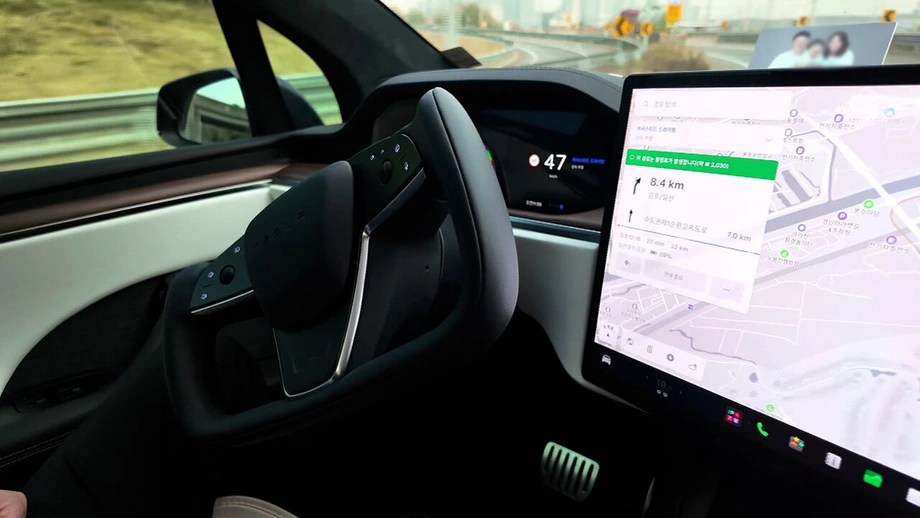
Five pages were not enough for a safety review
South Korea's transport ministry says Tesla Korea must provide more evidence before regulators can review its request to let certain cars use the company's FSD (Supervised) driving feature. The application, sent by email on Oct. 22, included two pages of technical explanation and three cover pages from Dutch approval documents, the ministry said on Nov. 20.
Contents
The Korea Transportation Safety Authority, which examines vehicle performance and safety for the government, judged that the documents did not contain enough technical detail or safety evidence for a review. The ministry asked Tesla to supplement the application within 15 days. Tesla reportedly plans to submit additional documents, but the ministry has not said what those documents will include or when a full technical review might begin.
The decision pauses Tesla's effort to expand FSD access in South Korea. It is not a final decision on whether the feature is safe or whether the requested exception can be granted. For now, regulators say they cannot assess the request using what Tesla has submitted.
What did Tesla ask regulators to approve?
Tesla Korea sought a special exception to offer FSD (Supervised) beyond the limits of South Korea's current vehicle safety standards. The request concerns Model 3 and Model Y cars made at Tesla's Shanghai factory. The application was submitted under the Rules on the Performance and Standards of Motor Vehicles and Motor Vehicle Parts.
FSD is Tesla's name for driving assistance software. The word "Supervised" matters: the feature is not permission for the driver to stop paying attention. The driver remains responsible for watching the road and being ready to take control. South Korea's rules include requirements for how a driver must intervene, including when changing lanes. The transport ministry has said FSD operating on ordinary roads does not meet the current rules.
South Korean regulations allow authorities to consider an exception for technology that has established international standards or whose safety has been demonstrated. That process requires regulators to assess evidence about the technology, rather than simply accept a company's claim that it is safe.
What was missing from the application?
The authority said the two page technical description amounted to general information about FSD, similar to material on Tesla's website. It did not provide the detailed technical grounds or safety data needed to judge how the feature works under South Korean conditions.
The Dutch documents also did not let reviewers verify the substance of Tesla's case. The application included their cover pages, but not the approval details, scope or supporting material. The authority said the submission lacked facts and explanations that could support the company's claims.
The ministry said it had previously made formal requests for information on FSD safety demonstrations, U.S. defect investigations and sales contracts involving FSD that is not permitted for use on some vehicles in South Korea. It said Tesla had not provided specific answers. The government has not publicly detailed the investigations or contracts it asked about.
A transport ministry official described the problem as one that prevented a technical assessment, and said the company must take responsibility for supplying evidence. The ministry's statement said:
The automaker needs to take greater responsibility in providing the necessary documentation.
Why does the country of manufacture matter?
Teslas made in the United States can use FSD in South Korea because the country recognizes compliance with U.S. safety rules under the Korea-U.S. Free Trade Agreement. Cars made in China do not receive the same treatment and must meet South Korean standards or obtain special approval.
The request therefore matters particularly to owners of Shanghai made Model 3 and Model Y cars. Data provided to lawmaker Jang Jong-tae put the number of those China made cars unable to use FSD at 183,407 at the end of September 2026. The same data listed 238,968 Teslas registered in South Korea, meaning the China made Model 3 and Model Y count was about 76.7 percent of the total.
A separate figure cited in coverage of the ministry's announcement put the number of registered Teslas unable to use FSD at 185,491, or 77.6 percent of the same total. That figure is slightly higher than the count for China made Model 3 and Model Y alone. The figures describe closely related groups, but the published information does not explain the difference between them.
How did the application reach this point?
The request followed a public exchange during a National Assembly audit. On Oct. 8, Tesla Korea chief executive Seo Young-deuk said he had not asked the transport ministry to conduct an official verification of FSD. Tesla Korea submitted its exception request two weeks later, on Oct. 22.
The request was sent by email shortly before the final day of the National Assembly's audit of the transport ministry. The ministry then asked the Korea Transportation Safety Authority, the designated vehicle performance testing body, to examine the documents. On Nov. 20, the authority's view that additional evidence was needed was delivered to Tesla Korea.
- Oct. 8: Tesla Korea's chief executive told lawmakers he had not requested an official FSD verification from the ministry.
- Oct. 22: Tesla Korea emailed its exception application, with two pages of technical description and three Dutch document cover pages.
- Nov. 20: The authority told Tesla Korea that the submission needed verification and additional material.
- Within 15 days: The ministry requested supplementary documents. Tesla reportedly intends to submit them.
Can this kind of exception cover software?
Tesla's request relies on a provision for exceptions to vehicle rules. The provision has generally been used to consider new devices that meet or exceed existing standards. The fact that FSD is delivered through software raises a regulatory question about how that provision applies to a driving feature, but the authority has not yet reached that stage of its review.
The immediate issue is more basic: reviewers say they do not have the evidence needed to assess the technology or decide whether it qualifies for an exception. Tesla would need to provide material that explains how the system works, what safety testing has been done and how the evidence supports its request.
What happens next?
Tesla's reported plan to supplement the application could allow technical examination to begin, but filing more papers would not itself grant permission to use FSD. Regulators would still need to review the evidence against the legal conditions for an exception and South Korea's vehicle safety requirements.
The ministry has not announced a date for a decision, described the full set of documents Tesla must provide, or said whether it will release a timetable after receiving them. Until regulators complete their review and grant any necessary approval, the requested access for the affected China made vehicles remains unavailable.
What to Know
- Tesla Korea filed its FSD (Supervised) exception request by email on Oct. 22.
- The application contained two pages of technical description and three Dutch document cover pages.
- South Korea's transport ministry says the material is too limited for a safety review and requested additions within 15 days.
- The request concerns Model 3 and Model Y cars made in Shanghai, which do not receive the same FSD treatment as Teslas made in the United States.
- Lawmakers' data listed 183,407 China made Model 3 and Model Y cars unable to use FSD among 238,968 registered Teslas at the end of September 2026.
- Tesla reportedly plans to submit more documents, but no final review date or approval decision has been announced.