The Sudden Exit of a Silicon Valley Leader
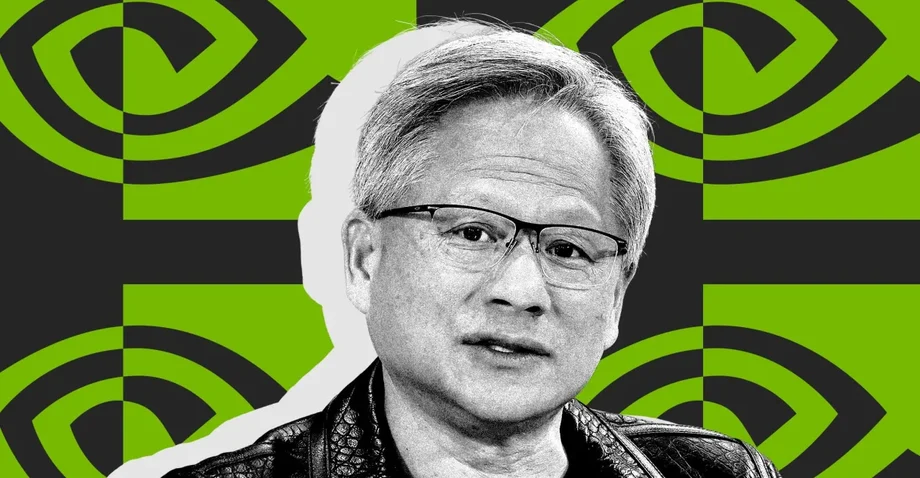
Jensen Huang stepped down as chief executive officer of Nvidia on November 12, 2026, ending a 33-year tenure that transformed the company into a giant of the artificial intelligence industry. His departure followed public disclosures regarding personal relationships, including an affair with Alice Huang, a businesswoman who formerly led the Singapore-based data center company Megaspeed International. United States intelligence officials suspected that Alice Huang had connections to the Chinese Ministry of State Security and attempted to gather intelligence from the former executive. Jensen Huang acknowledged being unfaithful to his wife in a message to employees, though he denied intentional wrongdoing and stated he had no idea she was a suspected intelligence asset. President Donald Trump later stated that Jensen Huang told him he had no idea about those ties and that he believed him.
Contents
- The Sudden Exit of a Silicon Valley Leader
- Global Market Fallout and Stock Plunges
- The Washington Power Struggle and National Security Inquiries
- Corporate Governance Failures and Key Man Risk
- Congressional Hearings and Upcoming Deadlines
- Industry Impact on Silicon Photonics and Supply Chains
- The Bottom Line
Financial markets reacted with immediate turmoil following the announcement. The global financial system experienced a massive correction that erased over 10 trillion dollars in value. Nvidia shares dropped significantly, and the company is now searching for a permanent leader. Chief Financial Officer Colette Kress stepped in as interim chief executive while the board considers candidates. Meanwhile, Nvidia's board made it clear that a return for the former chief executive is not currently planned. The decision came shortly after the executive issued a written statement expressing willingness to return if the board deemed it beneficial for shareholders and the country.
Global Market Fallout and Stock Plunges
The abrupt leadership change triggered a severe contraction across worldwide stock exchanges. Financial markets suffered historic losses as investors reassessed the stability of the artificial intelligence sector without its founding architect. Market analysts noted that the rapid evaporation of value demonstrated how heavily modern technology valuations relied on a single prominent leader. Individual stock prices fell across major technology exchanges, reflecting deep uncertainty among institutional investors and retail traders alike.
Asian markets felt the shockwaves immediately. Taiwan faced severe capital outflows as local technology stocks plunged alongside global semiconductor indexes. Trade data from late November showed sharp declines in major hardware manufacturers and suppliers. Economic commentators pointed out that the sudden loss of market confidence created a temporary liquidity squeeze, forcing regulatory bodies to monitor trading activity closely to prevent widespread panic among market participants.
The Washington Power Struggle and National Security Inquiries
United States political figures divided sharply over the leadership crisis and subsequent investigations. President Trump expressed support for the former executive, emphasizing the importance of maintaining American technological dominance in artificial intelligence. Conversely, Treasury Secretary Scott Bessent adopted a stricter regulatory stance, insisting that the corporation must look outside its current ranks for leadership and adhere strictly to export control laws. Lawmakers in Washington initiated multiple congressional inquiries to determine whether advanced silicon processors reached restricted entities overseas.
Congressional committees scheduled formal hearings to examine supply chain vulnerabilities and intelligence exposures. Intelligence directors and cabinet officials testified regarding the strategic value of advanced processors in modern geopolitical competition. Investigators focused on whether intermediary firms in Southeast Asia bypassed federal trade restrictions to funnel restricted hardware into mainland markets. The legislative scrutiny heightened pressure on corporate governance standards across the entire semiconductor sector.
Corporate Governance Failures and Key Man Risk
Management experts criticized the board of directors for failing to establish a formalized emergency succession plan. Corporate governance specialists noted that operating a multi-trillion-dollar enterprise without a designated successor represented a severe oversight in fiduciary responsibility. The corporate structure maintained an unusually flat hierarchy where dozens of direct reports answered to a single leader, concentrating vital strategic relationships and operational decisions in one individual. Business advisors emphasized that this design created extreme vulnerability when unexpected crises emerged.
The board responded to the governance crisis by forming a dedicated National Security and Export Control Oversight Committee. This new internal body aims to strengthen compliance frameworks and improve communication with federal regulatory agencies. Independent legal counsel and specialized investigative firms were retained to review past transactions and ensure future adherence to international trade laws. Directors stressed that institutionalizing these compliance measures is essential for restoring long-term confidence among institutional shareholders.
Congressional Hearings and Upcoming Deadlines
Federal lawmakers accelerated preparations for comprehensive legislative oversight regarding the semiconductor industry. Congressional leaders subpoenaed relevant corporate records and scheduled closed-door interviews with key personnel involved in international trade operations. The legislative timeline includes scheduled appearances by corporate legal counsel and former executives to answer questions regarding export compliance. Regulatory agencies continue to review shipping manifests and corporate registries associated with overseas partner networks.
- December 1, 2026: The former chief executive is scheduled to participate in a closed congressional briefing with House committees.
- December 2, 2026: Nvidia General Counsel Tim Teter is scheduled to testify separately before congressional investigators.
- December 12, 2026: Parliamentary and legislative deadlines approach for related economic bills in other allied jurisdictions.
- January 2027: Newly convened legislative sessions plan to review broader regulatory frameworks surrounding advanced computing exports.
Industry Impact on Silicon Photonics and Supply Chains
The hardware ecosystem supporting artificial intelligence development faced significant disruptions following the leadership transition. Advanced optical communication technologies, such as silicon photonics, experienced sharp equity corrections as investors scaled back forward-looking capital expenditure projections. Analysts observed that collaborative research initiatives slowed down as partner firms awaited clarity on future product roadmaps and strategic direction. The absence of traditional long-term written supply agreements between major designers and manufacturing foundries introduced additional operational risks into the global technology supply chain.
Semiconductor manufacturing partners adjusted their production forecasts to account for potential shifts in demand. Major cloud computing providers evaluated alternative hardware architectures to mitigate supply chain concentration risks. Despite these adjustments, foundational infrastructure projects continued moving forward as enterprise customers demanded increased computational capacity for large-scale machine learning models. Industry leaders emphasized that technological innovation must proceed regardless of executive-level personnel changes.
The Bottom Line
- Jensen Huang resigned on November 12, 2026, after three decades leading the semiconductor giant.
- Global financial markets experienced severe corrections, evaporating trillions of dollars in market capitalization.
- Nvidia board chairman Harvey Jones confirmed the board does not intend to reinstate the former executive.
- Colette Kress continues serving as interim chief executive while a permanent search is underway.
- United States congressional committees scheduled formal investigative hearings regarding export compliance and national security.