IPO puts a price on a nationwide dumpling network
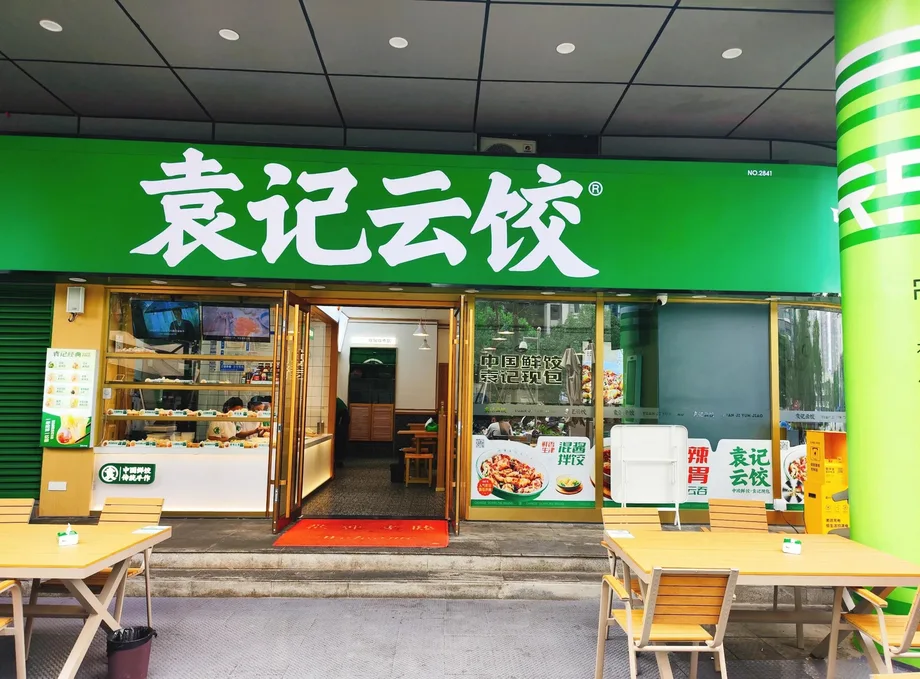
Yuen Kee Food Group, the company behind Yuen Kee Dumpling, opened its Hong Kong initial public offering on 27 November 2026. It is offering 16.3123 million H shares at HK$23 to HK$28 each, seeking as much as HK$457 million before an expected trading debut on 7 December under stock code 3364. H shares are shares issued by a mainland Chinese company and traded in Hong Kong. If completed, the listing would give Hong Kong its first public company whose main business is dumplings and wontons.
Contents
- IPO puts a price on a nationwide dumpling network
- How a physical education graduate built the business
- The visible craft is in shops, but the economic control sits upstream
- Profits accelerated as pork became cheaper
- Headquarters is growing faster than sales at the average shop
- A food safety complaint exposed the cost of managing thousands of operators
- Most of the IPO money is aimed at taking the supply chain abroad
- Packaged food, larger shops and burgers provide three other tests
- The timetable, valuation and control of the company
- Key Points
The Hong Kong public offer covers 1.6313 million shares, or 10% of the sale, while 14.681 million shares are reserved for international investors. Applications close on 2 December. One board lot contains 100 shares, requiring about HK$2,828.24 at the top of the price range, including transaction charges. Huatai International and GF Securities are the joint sponsors.
Two cornerstone investors, who commit money before the public subscription period, have agreed to buy about HK$66.81 million of shares. At the midpoint price of HK$25.50, Yuen Kee expects net proceeds of approximately HK$347 million, assuming no extra shares are issued through an overallotment option.
The network being presented to investors contained 4,773 stores at 31 May 2026. Franchises numbered 4,750 and only 23 were operated directly by the company, making the franchise share about 99.5%. CIC, the industry consultant cited in the listing documents, ranked Yuen Kee as China's largest Chinese fast food company by store count at the end of 2025.
How a physical education graduate built the business
Founder Yuan Lianghong was born in 1990 in Yiyang, Hunan. He earned a bachelor's degree in physical education from Xiaoxiang College at Hunan University of Science and Technology in June 2013, but his business education began much earlier. Influenced by his parents' commercial activities, he ran a mobile phone shop in his town for three years during high school. At university, he sold swimming equipment through a Taobao shop. A venture involving a roast duck franchise failed because he lacked experience.
Yuan moved to Guangzhou in 2012 and noticed that shoppers wanted dumplings wrapped and sold on the spot, while much of the market offered frozen products. He and university classmate Tian Wei rented a stall measuring just 5 square metres in Liwan. Yuan, now chairman and general manager, later recalled the scene that helped inspire the venture.
I walked into a Cantonese dumpling shop. Neighbours, elderly people and children sat around a table, eating and chatting. The atmosphere deeply moved me.
The stall's early team adjusted recipes around customer preferences, testing ingredients including fresh shrimp, crab roe, mushrooms and water chestnuts. After franchising began, the chain reached 100 stores within two years. Yuan has since described entrepreneurship as a marathon without a finishing line, arguing that running quickly for a short period does not determine success.
The visible craft is in shops, but the economic control sits upstream
Rapid expansion created a production problem. Making every filling and wrapper by hand in each shop was slow, expensive and difficult to keep consistent. Yuen Kee responded by building central production capacity in Foshan. Factories prepare the fillings and wrappers, while employees in shops complete the visible work of wrapping and cooking.
That arrangement has also attracted criticism from consumers who argued that the hand wrapping amounted to theatre because important ingredients were prepared elsewhere. Yuen Kee Dumpling responded that it uses central kitchen distribution, with meat transported through processes and channels comparable to those used for chilled meat in supermarkets. Thawed pork is mixed into fillings under a common formula before distribution to stores.
By May 2026, the group operated six factories, 24 warehouses and 10 front warehouses. A front warehouse is a smaller local depot that allows frequent deliveries without sending every shipment from a distant factory. More than 82% of stores were within 200 kilometres of a warehouse or front warehouse, and core ingredients reached nearly 70% of stores on a delivery cycle of two days. Inventory turnover was 13.7 days in 2025, compared with an industry average of roughly 25 days cited in the listing analysis.
The financial statements show how much power sits with headquarters. Goods sales generated RMB2.657 billion in 2025, or 95.1% of revenue. Sales to franchisees alone contributed about RMB2.505 billion, nearly 90% of total revenue, while fillings accounted for 53.5%. Franchise service fees were much smaller. The 23 directly operated stores recorded negative gross margins on food sales in every disclosed period, reaching as low as minus 19.6%. In simple terms, headquarters has made money by supplying the people who run shops, not by selling dumplings through its own shops.
A BA Capital portfolio profile dates the company's entry into Hong Kong to 2018 and the start of its overseas strategy to 2024. It lists Yuen Kee Dumpling, Yuan Liang Hong and Yuen Kee Wei Xiang as sub brands, supported by an internal system covering research, production and distribution. The profile describes coverage across 34 provincial level regions, while the offer documents use 33; both describe more than 4,700 stores in over 250 cities.
Profits accelerated as pork became cheaper
Yuen Kee's revenue rose from RMB2.026 billion in 2023 to RMB2.561 billion in 2024 and RMB2.795 billion in 2025. Statutory net profit moved less smoothly, from RMB167 million to RMB142 million and then RMB199 million. Adjusted net profit, a company measure that excludes specified items, was RMB179 million, RMB180 million and RMB262 million across those three years.
Growth accelerated in the first five months of 2026. Revenue increased 39.8% from a year earlier to RMB1.306 billion. Statutory profit reached approximately RMB157 million, compared with RMB57 million a year earlier, while adjusted profit rose 163.8% to RMB185 million. The adjusted net margin reached 14.1%.
Gross margin, which measures revenue remaining after the direct cost of sales, climbed from 23.2% in the comparable period of 2025 to 28.4%. The company attributed the improvement to lower pork and other ingredient prices, better procurement, higher production volumes and savings in labour for each unit produced. Average pork prices fell from RMB27.67 per kilogram in 2024 to about RMB21.30 in early 2026.
Raw materials consistently represented more than 80% of the cost of sales, leaving earnings exposed when prices reverse. A sensitivity calculation in the listing materials estimates that a 10% increase in raw material prices, with other conditions unchanged, would have reduced profit before tax by about RMB56.4 million in the first five months of 2026. Procurement and factory improvements can remain with the business, but the benefit from cheaper pork can disappear when the commodity cycle turns.
CIC's rankings also put the store count into perspective. By 2025 store sales, Yuen Kee ranked eighth in China's entire fast food industry with a 0.5% share, and third within Chinese fast food with 0.7%. CIC valued the Chinese fast food market at RMB867.9 billion in 2025 and projected RMB1.33 trillion by 2030. Thousands of shops therefore provide reach without giving the company dominance over industry spending.
Headquarters is growing faster than sales at the average shop
Gross merchandise value, or GMV, is the money customers spend at stores before rent, wages, delivery platform charges and ingredients are deducted. Most of it belongs to franchisees rather than Yuen Kee headquarters. Stores generated RMB6.662 billion of GMV in 2025, compared with the RMB2.795 billion that the company recognised as its own revenue.
Average daily GMV for each store fell from RMB5,394.40 in 2023 to RMB5,010.80 in 2024 and RMB4,687.60 in 2025. It recovered 12.1% year on year to RMB4,627.30 in the first five months of 2026, but remained about 14% below the 2023 figure. Average spending per order dropped from RMB26.10 in 2023 to roughly RMB22.50 in 2025, and stood at RMB22.70 in early 2026.
Total orders still rose from 182.6 million in 2023 to 295.8 million in 2025 as new shops opened, while online orders reached 51.8% of store GMV. The company attributed weaker sales at each location to aggressive price competition and customer diversion caused by a denser store network. The listing materials do not provide a full distribution of franchisee profits or payback periods, so GMV alone cannot show how much a typical owner keeps.
There are signs of commitment alongside the strain. Yuen Kee had 2,304 franchisees at the end of May 2026, 143 more than at the end of 2025. Among them, 751 operated at least two shops, and the average was 2.1 franchised stores for each franchisee. The franchise closure rate was 4.1% in 2023, jumped to 8.13% in 2024 and eased to 5.5% in 2025.
Expansion is also moving away from the largest cities. Stores in third tier cities and smaller markets increased from 19.8% of the network in 2023 to 29.4% by May 2026, while the first tier city share fell from 58.1% to 47.2%. Zhu Danpeng, a food industry analyst and vice president of the Guangdong Food Safety Assurance Promotion Association, said rapid franchising creates a management test.
The franchise model can cut both ways. During rapid expansion, control of the franchise stores will be an issue that Yuen Kee Dumpling needs to watch closely.
A food safety complaint exposed the cost of managing thousands of operators
A complaint in November 2024 showed how quickly one shop's problem can affect the wider brand. A customer reported finding an earthworm in fresh meat wonton noodles at a franchised store in Beijing's Haidian district. The local market regulation authority opened a case over a foreign object in food. Two other Yuen Kee Dumpling stores were ordered to make corrections and received warnings over failures to implement food safety responsibilities.
The store involved compensated the customer with RMB500, closed for a week of rectification and dismissed its manager, according to details disclosed during the listing process. Co-founder Tian Wei subsequently said revenue at some stores fell by 30% within a short period after the incident. The company's wider response included changes to franchise management, complaint handling and supply chain controls.
Financial controls presented another challenge. More than 700 franchisees used third party personal accounts to pay RMB437 million of goods invoices in 2023, an amount exceeding one fifth of that year's revenue. Such arrangements can make it harder to establish who paid for supplies and whether transactions match the underlying orders. By 2025, the number involved had fallen to 284 franchisees and RMB153 million, and the company said all third party payment channels had been closed by the end of that year.
Most of the IPO money is aimed at taking the supply chain abroad
Singapore received Yuen Kee's first overseas store in December 2024. At 31 May 2026, the company had 41 outlets outside mainland China: 36 in Singapore, three in Thailand, one in Malaysia and one in the United Kingdom. By 17 November, the total had reached 77, comprising 53 in Singapore, 16 in Thailand, seven in Malaysia and one in the United Kingdom.
Stores outside mainland China produced about RMB172.5 million of GMV in the first five months of 2026, an increase of approximately 97% from a year earlier. That remained below 6% of total store GMV. Average GMV for each overseas order was RMB66.34, compared with RMB22.70 domestically, although the disclosure does not by itself show whether higher menu prices produce higher profits after local rent and labour costs.
About 52% of the IPO's net proceeds are assigned to overseas supply chains and store networks, faster international expansion, and possible investments or acquisitions. Another 20% is intended for digital and intelligent systems, 10% for brand building and product research, 8% for domestic supply chain upgrades, and 10% for working capital and general corporate purposes.
The company aims to have about 100 stores across Singapore, Malaysia and Thailand by the end of 2027 and about 150 by the end of 2028. It also targets five stores each in Japan, South Korea and Australia by the end of 2028. Its overseas model combines local purchases of ingredients such as meat and vegetables with sauces, dry goods and packaging supplied from China. Future investment in local production, warehousing and delivery is intended to support larger clusters of shops rather than isolated outlets.
Packaged food, larger shops and burgers provide three other tests
Yuen Kee Wei Xiang extends the business beyond restaurant counters by selling packaged dumplings and wontons through retailers including Hema, Qian Da Ma and AEON South China. It offered 22 products by May 2026. Revenue increased from RMB63.16 million in 2024 to RMB96.13 million in 2025, then reached RMB69.28 million in the first five months of 2026, up 172.5% year on year. The business contributed 5.3% of group revenue and recorded a gross margin of 37.1%, but it remains much smaller than ingredient sales to franchisees.
A separate experiment arrived in September 2026, when the first version 5.0 Yuen Kee Dumpling store opened in Zhumadian, Henan. The format added braised dishes, steamed dumplings and shaomai, noodles, tea, desserts and alcoholic drinks, with 24 hour operation. Many additions draw on existing meat processing, dough production and chilled distribution, while the longer opening hours require a different staffing plan.
The boldest departure appeared during IPO week. A Yuan China Burger opened its first national store at the Entrepreneurs Building in Foshan, selling black pork burgers priced mainly at RMB15 to RMB19, together with freshly cut fries and draft beer. The trial store's average customer bill was about RMB24, and the format was designed for 24 hour service.
Pork procurement and cold storage can support the burger venture, but burger patties, bread and sauces require production standards different from dumpling fillings and wrappers. No dedicated burger production lines were identified in the announced use of IPO proceeds. The format also enters a crowded market: Wallace has more than 18,000 stores, KFC China about 13,000 and Tastien about 12,000. The first Foshan shop will therefore test whether Yuen Kee's franchise system can handle table service, late night staffing and alcohol sales as well as quick dumpling collection.
The timetable, valuation and control of the company
Before the IPO, Yuen Kee raised approximately RMB460 million across three funding rounds. Black Ant Capital invested RMB30 million in the 2023 A round. A RMB150 million B round followed in September 2025, and a RMB280 million B+ round in December 2025 valued the company at RMB3.5 billion after the investment. That valuation equals about 13.4 times the RMB262 million adjusted profit for 2025, although it does not determine the eventual public market valuation.
GenBridge Capital, which participated in the B and B+ rounds, and Shunde state capital through an investment vehicle supplied the cornerstone commitments. Yuen Kee's headquarters are in Lecong, Shunde, Foshan. Yuan directly holds 22.23% of the issued shares and, together with Yuanji Investment and four partnership platforms, controls 82.54% of the voting rights. The company paid no dividends during its track record period and had no formal dividend policy or predetermined payout ratio when the offer opened.
- 2012: Yuan Lianghong and Tian Wei open the 5 square metre Guangzhou stall.
- 2018: The business enters Hong Kong. Its overseas strategy begins in 2024, led by Singapore.
- 12 January 2026: Yuen Kee submits its listing application to the Hong Kong Stock Exchange.
- 17 July 2026: China's securities regulator issues an overseas listing filing notice covering up to 23.824 million shares.
- 19 November 2026: The company clears the Hong Kong Stock Exchange listing hearing.
- 27 November to 2 December 2026: Investors can subscribe for the offer, with trading expected to begin on 7 December.
Key Points
- Yuen Kee Food is offering 16.3123 million shares at HK$23 to HK$28, raising up to HK$457 million.
- Its 4,773 stores at May 2026 were about 99.5% franchised, and goods sales supplied 95.1% of 2025 revenue.
- Revenue reached RMB2.795 billion in 2025, while adjusted profit was RMB262 million.
- Adjusted profit rose 163.8% to RMB185 million in the first five months of 2026, helped by wider margins and cheaper pork.
- Average daily store sales remain below their 2023 level despite a 12.1% year on year recovery in early 2026.
- Overseas stores increased from 41 at the end of May to 77 by 17 November, with 52% of IPO proceeds assigned mainly to international expansion.
- Packaged food, larger 24 hour shops and the A Yuan burger trial provide additional growth tests.
- Yuan Lianghong and entities he controls retain 82.54% of voting power ahead of the expected 7 December listing.