A Hallway, a Board and an Unsettled Number
Newly released federal records put a simulated drowning session inside a secret CIA prison north of Kabul, at a site known as the Salt Pit or Detention Site Cobalt. In a 2012 interview with an FBI agent, a former CIA contract translator described a detainee called Bahir strapped to a board with its head tilted downward into water. The agent wrote that three or four people were carrying out the procedure in a crowded hallway, and that the translator saw it while passing by.
Contents
- A Hallway, a Board and an Unsettled Number
- What the Translator Saw
- Who Was Bahir?
- Three Men in the CIA's Official Count
- Why the Salt Pit Was Already in Question
- What Waterboarding Means in Plain Language
- How the Secret Program Was Built
- A Short Timeline of the Key Dates
- Tapes, Prosecution Fears and Pardon Talk
- What the New Account Changes
- Key Points
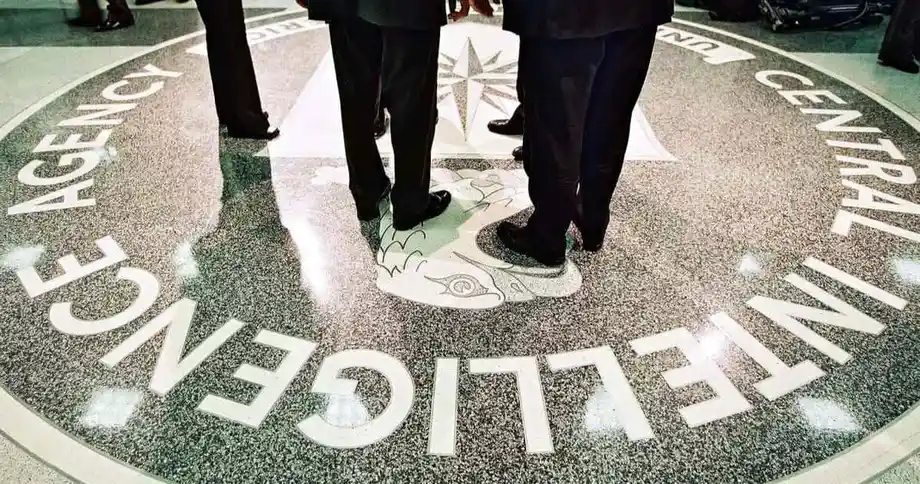
The account matters because the CIA has acknowledged waterboarding only three men, Abu Zubaydah, Khalid Sheikh Mohammed and Abd al-Rahim al-Nashiri, and has placed those sessions at secret prisons in Thailand and Poland. The new material points to a possible case in Afghanistan and renews a question that has followed the agency for two decades: whether its public tally captured all the people subjected to one of the defining interrogation methods after the September 11 attacks.
The documents were released after a Freedom of Information Act lawsuit and come from the inquiry led by John Durham, the special prosecutor appointed to examine CIA interrogation practices and the destruction of videotapes. Durham brought no criminal charges, and his findings remain classified. The CIA press office did not respond to requests for comment on the material. The release has become the newest piece of a public record the agency kept hidden for years. It also revives attention on a program built around secret prisons whose locations, methods and records stayed outside ordinary public scrutiny for years.
What the Translator Saw
The central evidence is an FBI summary of a 2012 interview with the former translator. He worked under contract for the CIA at a black site, a secret prison outside the normal court and prison system. The released report does not name the facility, but the translator discussed the death of a detainee by freezing, a detail that matches the Afghanistan site known as Cobalt.
An FBI agent summarized the translator's words. The agent wrote that the witness described a man called Bahir lying on a board tilted down toward water and said several people took part in the session.
There were approximately three to four people 'doing this,'" the agent wrote. The witness "saw the incident in passing but did not participate himself. The waterboard session was in the hallway and there was not a lot of room.
The setting is as striking as the act. Waterboarding needs equipment, space and people to restrain the detainee. The hallway detail suggests a procedure carried out in a cramped working area, not an isolated room designed for a formal interview. The account gives the CIA's public number of three a new challenge, because it places a waterboard scene at a site where the agency has never acknowledged using the technique.
Who Was Bahir?
The translator told the FBI that Bahir was 'a relative of Hekmatyar,' an apparent reference to Gulbuddin Hekmatyar, the former Afghan prime minister and a militia leader and politician prominent in the 1980s and 1990s. Ghairat Bahir is identified as married to a daughter of Hekmatyar and as a senior figure in Hezb-e Islami Afghanistan. CIA records list Ghairat Bahir, also spelled Ghayrat, as a man held for about two years beginning in 2002 after a raid in Islamabad. The agency says he underwent what it called enhanced interrogation techniques.
The name is not settled. One passage of the FBI summary spells it Bashir. The released material leaves the man's identity, the exact technique and the number of sessions open. That uncertainty is central to the story: the account is strong enough to raise a specific question about Kabul, but the records do not supply a firm fourth name to set beside the three the CIA has listed.
Three Men in the CIA's Official Count
On February 5, 2008, then CIA Director Michael Hayden told the Senate Intelligence Committee that waterboarding had been used on only three detainees, in 2002 and 2003. In December 2007, Hayden had given a wider figure to the committee: of about 100 prisoners in the CIA program, enhanced interrogation techniques were used on about 30 and waterboarding on just three. Using those numbers, about 30 in 100 faced the harsher program and about three in 100 faced waterboarding.
The Senate report identified the three as Abu Zubaydah, Khalid Sheikh Mohammed and Abd al-Rahim al-Nashiri. A broader description of the program names Mohammed al-Qahtani instead of al-Nashiri. The new FBI material and the main Senate account use al-Nashiri, who is accused of helping plan al-Qaida's 2000 bombing of the USS Cole, a US Navy destroyer.
All three are now held at the Guantanamo Bay military prison. The CIA has said their waterboarding took place at secret prisons in Thailand and Poland, often described as special rendition sites, not at the Afghan prison. Abu Zubaydah was the first detainee held in the agency's black site network, in Thailand. The 2014 Senate Intelligence Committee report found that he was waterboarded 83 times, sometimes while interrogators used his case to instruct others in the method. US intelligence reports later said he was wrongly depicted by the government as a senior al-Qaida member; he was not a member.
Why the Salt Pit Was Already in Question
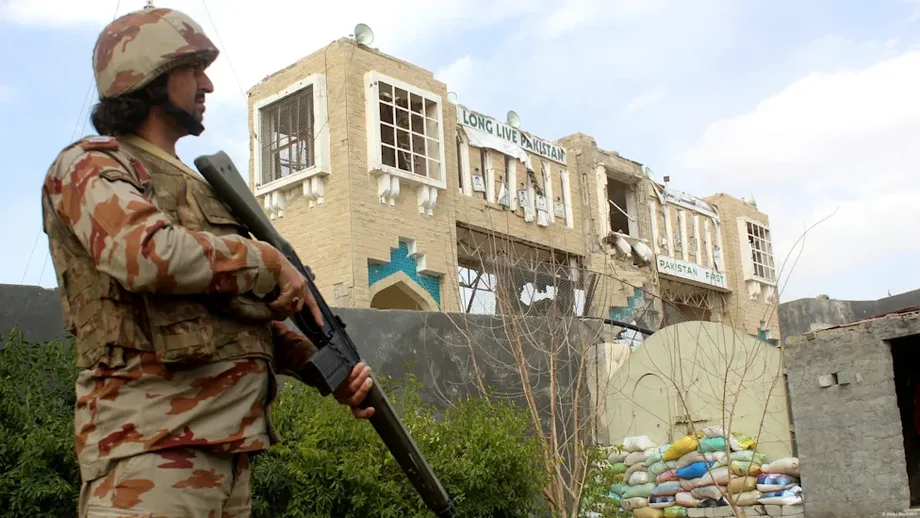
Detention Site Cobalt sat near Kabul, outside Bagram Air Force Base, and became known as the Salt Pit because of its cold, harsh conditions. A satellite image of the facility near Kabul taken on July 17, 2003 later became part of the public record. The 2014 Senate Intelligence Committee summary ran more than 500 pages and described a prison where detainees were held in cramped boxes and painful stress positions, and where some techniques were not recorded in CIA cable traffic.
The committee had already found evidence that pointed toward waterboarding at Cobalt. Investigators obtained a photograph of a wooden waterboard at the site, surrounded by buckets of water and a watering can. CIA records showed no use of the waterboard technique there, and the agency could not explain the equipment when committee staff questioned it in 2013.
The report also described water dousing of detainee Mustafa al-Hawsawi at Cobalt on April 5 and 6, 2003. One interrogator wrote that the treatment might have been waterboarding or could be 'indistinguishable from the waterboard.' In 2012, a Libyan man who had been held by the CIA in Afghanistan told Human Rights Watch he had been waterboarded. Each item is separate, but together they explain why the new translator account lands on an already contested site.
What Waterboarding Means in Plain Language
Waterboarding restrains a person, covers the face with cloth and pours water over it to create the feeling of drowning. The body reacts as if it is suffocating, even when the person is not actually submerged for long. The United States had earlier treated waterboarding as torture in war crimes prosecutions. The Bush administration used the label enhanced interrogation techniques for a wider set of methods that included sleep disruption, walling, stress positions, hooding and confinement in tight spaces.
Juan E. Méndez, the United Nations special rapporteur on torture, said the method was torture and morally and legally wrong.
waterboarding is torture and immoral and illegal.
President Barack Obama and Attorney General Eric Holder repudiated certain techniques in 2009, saying they amounted to torture. A 2009 executive order barred continued waterboarding, and Congress passed restrictions. The CIA removed waterboarding from its list of acceptable techniques in 2006, and the last official use was in 2003. The 2012 date in the newly released material is the year of the FBI interview, not a date given for the session itself. In July 2014, the European Court of Human Rights ruled that enhanced interrogation was tantamount to torture and ordered Poland to pay restitution to men tortured at a CIA site there.
How the Secret Program Was Built
The interrogation system grew from decisions taken soon after the September 11 attacks. On September 17, 2001, President George W. Bush signed a still classified directive giving the CIA power to secretly hold and interrogate detainees. Officials chose to treat the attacks as acts of war rather than crimes, and Justice Department lawyer John Yoo argued that captured suspects should be treated as detainees outside the protections of the Geneva Conventions.
Early prisoners were taken to places such as Kandahar, where they faced beatings, electric shocks, cold exposure, suspension by the arms and drowning in buckets. In 2002, Justice Department lawyers Jay Bybee and John Yoo drafted the Torture Memos, which narrowly defined torture and broadened executive authority. Condoleezza Rice told the CIA that the techniques were approved in July 2002. Vice President Dick Cheney later said he signed off on the program. Attorney General John Ashcroft is reported to have asked why the White House was discussing the issue at all, saying history would not judge it kindly.
A Short Timeline of the Key Dates
The sequence runs from the creation of the secret prison system to the release of records that reopen one of its disputed episodes.
- September 17, 2001: President Bush signs a classified directive authorizing secret CIA detention and interrogation.
- 2002: Ghairat Bahir is held from about this year, and the CIA acknowledges waterboarding in 2002 and 2003.
- April 5 and 6, 2003: CIA interrogators use water dousing on Mustafa al-Hawsawi at Cobalt; a photograph later shows a waterboard at the site.
- 2005: The CIA destroys videotapes of interrogations, including waterboarding sessions.
- January 2, 2008: Attorney General Michael Mukasey appoints John Durham to investigate the destruction of the recordings.
- February 5, 2008: Michael Hayden tells the Senate the agency waterboarded three men.
- January 22, 2009: An interview records concerns about possible pardons after Barack Obama takes office.
- August 2009: Attorney General Eric Holder expands Durham's review to possible unlawful treatment of detainees overseas.
- November 2010 and August 2012: The Justice Department declines charges over the tapes and closes two death inquiries without charges.
- 2012: A former CIA translator tells the FBI he saw a detainee called Bahir on a waterboard.
- December 2014: The Senate publishes about 10 percent of its investigation into CIA torture.
The end dates matter because the Durham file closed before the Senate summary was published, leaving two official records that did not merge into a single public finding.
Tapes, Prosecution Fears and Pardon Talk
The Durham inquiry became a repository for the agency's own worries about what the interrogation record would do if it became public. An internal CIA justification for destroying the tapes in 2005 said the images were so disturbing they would be devastating to the CIA. Another line argued that the heat from destroying the tapes was nothing compared with what would happen if they entered the public domain.
One official told FBI investigators that he had kept interrogation tapes in a safe and called them serious business. The official said their release into the wrong hands could destroy a president. In an interview dated January 22, 2009, an official recalled that CIA representatives had raised prosecution concerns with Andrew H. Card, then White House chief of staff, and that Card conveyed them to President George W. Bush. The official's account, as summarized by the FBI, was:
there was only one person he could not pardon, and that was himself, implying the president would take executive action should any CIA employees find themselves being prosecuted for their work on the interrogation program.
Durham's investigation ran from 2008 to 2012 and ended without criminal charges against CIA personnel. His reports remain classified. The Justice Department said in November 2010 that it would not bring charges over the tapes, and in August 2012 it closed investigations into two detainee deaths without charges, saying admissible evidence would not sustain convictions beyond a reasonable doubt. The Senate committee held a parallel inquiry, relying on millions of pages of internal CIA records because agency witnesses were unwilling to be interviewed while a criminal investigation was under way.
What the New Account Changes
The practical change is not a new legal ruling or a fresh charge. It is a sharper map of where waterboarding may have happened and who may have been subjected to it. For detainees at Cobalt, the account adds a named episode in a hallway to a record that already includes unexplained equipment, water dousing and claims of abuse. For Ghairat Bahir, if the translator's Bahir was him, the public record would include a fourth waterboarding case at a site the CIA has not acknowledged.
For the agency, the official tally now sits beside a witness statement from inside its own prison system. The documentary trail also shows senior officials thinking about prosecution and pardons while the factual record stayed hidden. The documents give no date for a new investigation, hearing or release. Former FBI agent Ali Soufan, who helped question Abu Zubaydah and opposed the CIA's use of torture, said interview accounts matched his recollection, including that Zubaydah had cooperated before he was tortured.
Key Points
- Newly released FBI records describe a 2012 interview in which a former CIA contract translator saw a detainee called Bahir on a waterboard at a secret prison near Kabul.
- The site was likely Detention Site Cobalt, the Salt Pit, where a 2014 Senate summary found a waterboard photograph, water dousing and unexplained equipment.
- The CIA has acknowledged waterboarding three men, Abu Zubaydah, Khalid Sheikh Mohammed and Abd al-Rahim al-Nashiri, at prisons in Thailand and Poland.
- CIA records identify Ghairat Bahir as a detainee held about two years from 2002, but the new records leave his identity as the man called Bahir unsettled.
- John Durham's inquiry ended without charges, his findings remain classified, and the documents show concern inside the CIA about prosecution and public disclosure.