Opponents of the Taliban take a constitutional plan to the UN
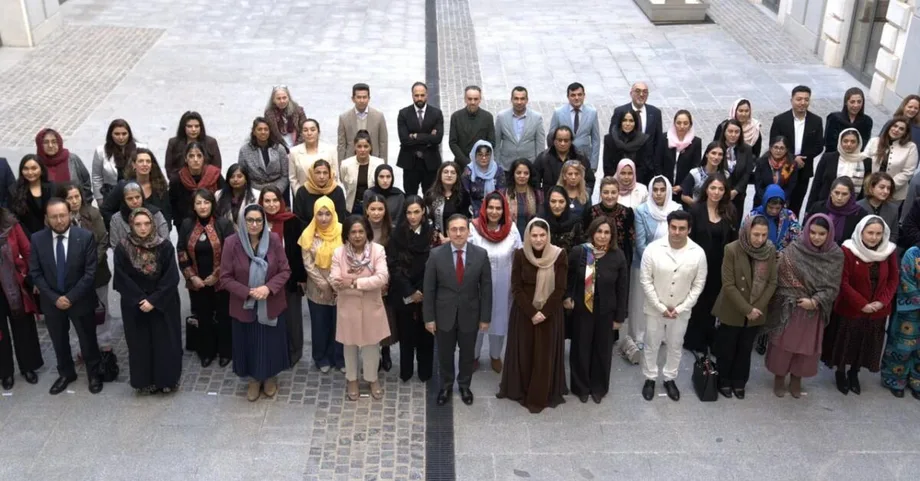
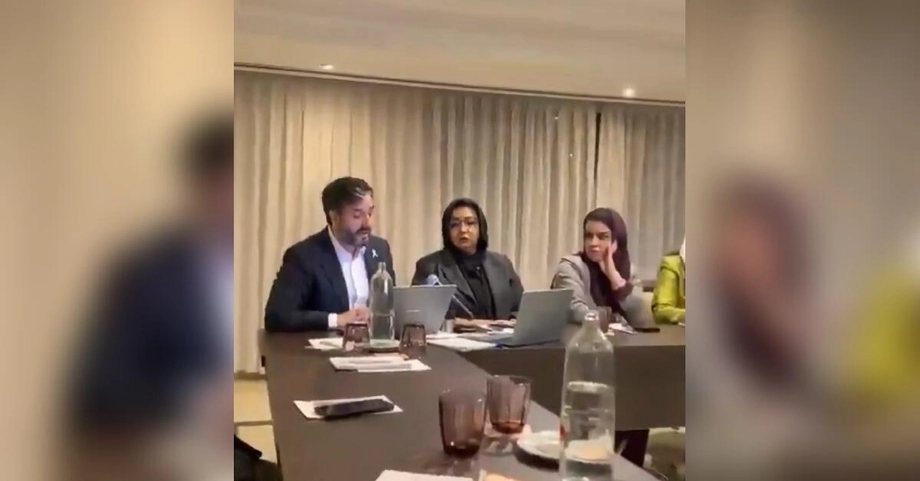
More than 40 Afghan political figures and activists opposed to the Taliban met at Spain's Foreign Ministry on 25 November 2026 and proposed an elected council to write a new constitution. Nasir Ahmad Andisha, Afghanistan's permanent representative to the United Nations Office at Geneva, said participants subsequently presented their case to around six representatives of UN Security Council member states. They want the United Nations to support a constitutional process as the starting point for a wider political settlement.
Contents
- Opponents of the Taliban take a constitutional plan to the UN
- Who met in Madrid, and what they discussed
- What the opposition asked Security Council representatives to do
- How the proposed constitution process would work
- Why Andisha pointed to Syria's Geneva experience
- A roadmap built around inclusion and women's participation
- A wider Madrid gathering and Spain's position
- The Taliban system that the proposal seeks to replace
- From Islamabad to Madrid, and what comes next
- What to Know
The proposal seeks to establish the basic rules of government before attempting to resolve every dispute over Afghanistan's future leadership. A constitution would define where political authority comes from, how institutions operate, what rights citizens possess and how those in power can be held accountable. Andisha described the desired system as democratic and grounded in popular sovereignty, meaning that political authority belongs to the people rather than to a ruler or an armed movement.
Andisha coupled that request with a sharp assessment of the United Nations Assistance Mission in Afghanistan, known as UNAMA. He said its political component had failed during the past five years, while also arguing that its mandate should be strengthened. His position was that the UN needs a more effective political approach, with a broad constitutional process giving Afghanistan's divided political forces something concrete on which to work.
Women for Afghanistan, which organised the Madrid dialogue, announced no specific agreements or political decisions in its initial statement. No timetable was given for electing the constitutional council, choosing its members or beginning negotiations. The immediate diplomatic result was that representatives of Security Council member states received the opposition's recommendations for UNAMA's forthcoming report.
Who met in Madrid, and what they discussed
The meeting at the Spanish Foreign Ministry lasted one day and carried the title Towards Trust and Solidarity. It was organised by Women for Afghanistan, led by Fawzia Koofi, a former member of parliament and former deputy speaker of Afghanistan's House of Representatives. This was the third round in a dialogue series that had previously met in Islamabad and London.
Participants included representatives of political parties, movements and civic networks, alongside former ministers, former lawmakers, diplomats, academics, researchers, religious scholars and independent civil society activists. Those named among the attendees were Rahila Dostum of the National Islamic Movement Party, Hussein Yasa, Koofi, Abbas Basir and Mustafa Mastoor.
The agenda covered Afghanistan's political, economic and social conditions during the past five years. Participants examined possible scenarios for the country's future, including the opportunities and difficulties attached to each, rather than limiting the discussion to a general demand for political change. Andisha said the goal was to reach an understanding acceptable to Afghans, the international community and the United Nations.
Their statement said a future political system should rest on citizens' rights, justice, the rule of law, national unity and territorial integrity. It also called for stronger diplomatic engagement with the UN, national governments and regional actors. Participants wanted better coordination among opposition groups and communication channels with democratic forces inside Afghanistan so that their views could be reflected in future political processes.
What the opposition asked Security Council representatives to do
Andisha said the exchange with Security Council representatives was informal, virtual and separate from the main Madrid sessions. It took place at the conclusion of the conference. Liberia and Panama hosted the discussion together, with Liberia due to assume the Security Council's rotating presidency in December.
The Council's presidency rotates among its members and involves managing its work and meetings for the month. Liberia's approaching presidency gives the December date practical relevance, although Andisha did not announce a Council meeting, vote or formal decision on the Afghan proposal.
According to Andisha, the representatives heard arguments for establishing a democratic political system and for UN support for a constitutional process. They also received recommendations about strengthening UNAMA's mandate. A mandate is the formal authorisation that defines what a UN mission is expected and permitted to do.
Andisha wrote on X that the proposed process should involve political figures, governance specialists, religious scholars and legal experts. That combination reflects the range of questions involved: forming institutions, reconciling political demands, addressing religious interpretations of governance and writing enforceable legal rules. No publication date was given for the UNAMA report in which the participants want their recommendations considered.
How the proposed constitution process would work
The elected constitutional council is the conference's central institutional proposal. Its assigned task would be to draft a new constitution reflecting the will of the Afghan people and supplying the legal foundation for a legitimate, inclusive and democratic political system. The organisers did not announce the council's size, the electorate that would choose it or the territory in which an election could take place.
Andisha's suggested group of political, legal, religious and governance specialists addresses a related part of the plan: who would help move the process forward. He argued that participation needed to be broad enough to include different perspectives. The Madrid statement similarly called for coordination among political and social forces and for a shared national framework to manage a transition.
Women's participation was written into the proposed political principles rather than left as a separate promise. Participants called for women to have full and meaningful involvement and a central role in the transition, the building of institutions and future governance. They also said political efforts alone might not be sufficient to escape the present deadlock and that other available routes towards change deserved consideration.
Why Andisha pointed to Syria's Geneva experience
Andisha used the Syrian Constitutional Committee as an example of the UN bringing adversaries into the same room. The committee began work in Geneva in October 2019 and held eight rounds of talks through June 2022. Its participants included representatives of Bashar al-Assad's government at that time, the Syrian opposition and civil society.
Afghanistan's permanent representative in Geneva explained the comparison in his account of the Madrid discussions:
The Syrian Constitutional Committee began in Geneva in October 2019. Between 2019 and June 2022, it held eight rounds of comprehensive talks and brought representatives of Bashar al-Assad's government at the time, the opposition and civil society to one table. Despite numerous problems, this process showed that a neutral venue and host, accessible to all parties, can invite the relevant sides to talk about the basic rules of government and popular sovereignty.
The comparison therefore concerns the setting and composition of talks, rather than a claim that Syria produced a completed constitutional settlement. Andisha's argument was that a neutral and accessible location could allow relevant Afghan parties to discuss governance even when their wider disagreements remained unresolved.
He connected that approach to his larger objective of sustainable peace:
A credible, democratic and consultative constitutional process can lay the foundation for the peace that the people of Afghanistan deserve.
A roadmap built around inclusion and women's participation
Andisha told participants that domestic, regional and international pressure on the Taliban had created an opportunity for political, military and civil society forces to move beyond presenting separate demands. He wants them to develop a joint roadmap for political transition. In his account, even the UN had been unable to advance the process it had started, leaving opponents of the Taliban with a need for greater coordination.
His definition of inclusive government extended beyond placing representatives of different ethnic groups in visible positions. He said no group, movement, value or voice should be removed from Afghanistan's future political structure. He also urged acceptance of differences among Taliban opponents, including between those favouring civil resistance and those supporting security options.
Andisha warned that refusing to hear other views would reproduce the behaviour that the opposition criticises:
The Taliban listen to no opinion other than their own and impose it on everyone.
Women for Afghanistan placed women's rights and participation alongside human dignity, justice, the rule of law and respect for Afghanistan's diversity. Andisha said women should hold an effective political role in decisions, rather than serving as symbolic attendees. Koofi's leadership of all three dialogue rounds gave that objective an institutional place within the process itself.
A wider Madrid gathering and Spain's position
The opposition dialogue followed the fourth Hear Our Voice conference, held at the Spanish Foreign Ministry on 22 and 23 November with around 70 participants. That gathering focused on Afghan women's leadership in achieving justice and peace through accountability. Afghan women's rights advocates called for greater participation in political processes and accountability for human rights violations under Taliban rule.
Spanish Foreign Minister José Manuel Albares addressed that conference and said Spain would never recognise the Taliban administration. His statement gave the Madrid meetings a clear diplomatic setting: Spain provided the venue for discussion while rejecting formal recognition of the authorities currently governing Afghanistan.
The two events addressed connected but different tasks. Hear Our Voice concentrated on women's leadership, justice and accountability, while the third dialogue examined political scenarios, trust among opposition forces and the constitutional proposal. Together, they placed women's participation within both the demand for accountability and the design of a possible political transition.
The Taliban system that the proposal seeks to replace
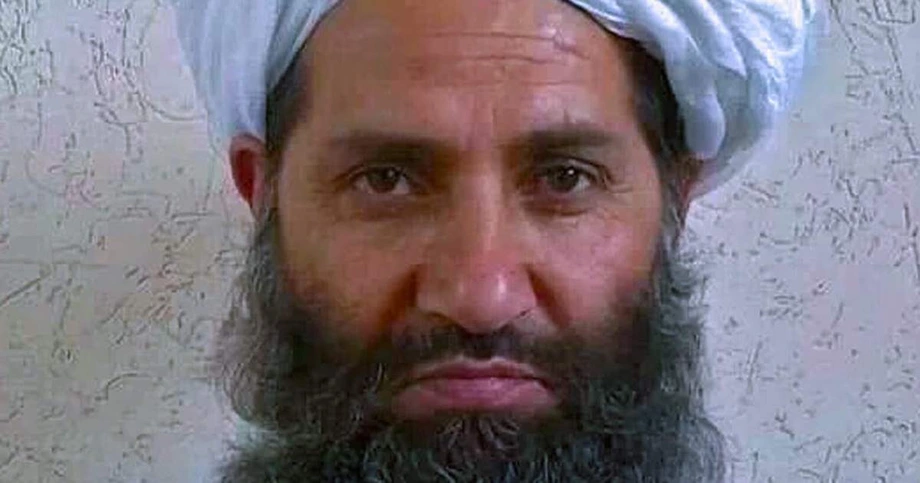
The Taliban revoked Afghanistan's previous laws after returning to power and now govern through decrees issued by their leader, Hibatullah Akhundzada. He says those decrees are based on Sharia and the Quran. Afghanistan consequently lacks a constitution agreed through the kind of public and representative process proposed in Madrid.
For conference participants, a new constitution would supply rules that stand above individual decrees. It would provide a basis for deciding how leaders are chosen, how institutions are formed and how citizens' rights receive legal protection. Their references to justice and accountability indicate that the proposed text would also need to address grievances and abuses, although the Madrid statement did not set out detailed mechanisms for doing so.
No Taliban participation in the Madrid dialogue or response to its constitutional proposal was announced. The organisers also did not announce a negotiating format involving the Taliban. The plan therefore remains an opposition proposal seeking international support, while day-to-day authority inside Afghanistan continues to operate through the Taliban leadership's decrees.
From Islamabad to Madrid, and what comes next
The Madrid proposal developed through a sequence of meetings rather than emerging from a single gathering. Each round was intended to build trust and identify principles that political and civil society groups could share despite their different views.
- 29 and 30 September 2025: The first dialogue took place in Islamabad.
- 24 and 25 March 2026: The second round was held in London.
- 22 and 23 November 2026: Around 70 people attended the fourth Hear Our Voice conference at Spain's Foreign Ministry.
- 25 November 2026: More than 40 participants attended the third political dialogue in Madrid, followed by the separate virtual discussion with Security Council representatives.
- December 2026: Liberia is due to assume the Security Council's rotating presidency.
The next practical test concerns the treatment of the opposition's recommendations in UNAMA's forthcoming report and any subsequent discussion of its mandate. Andisha gave no release date for that report. There is also no announced date for a fourth opposition dialogue, the election of a constitutional council or the opening of constitutional talks.
For now, the concrete achievement is a more specific set of proposals: an elected drafting council, a broad range of participants, meaningful women's involvement, a neutral venue and a common transition roadmap. Those proposals have reached representatives of Security Council member states, but the decisions required to put them into practice have not yet been announced.
What to Know
- More than 40 Taliban opponents met at Spain's Foreign Ministry on 25 November 2026 for their third dialogue round.
- Participants proposed an elected constitutional council to draft a new Afghan constitution reflecting popular sovereignty and citizens' rights.
- Nasir Ahmad Andisha said around six representatives of Security Council member states joined a separate virtual discussion hosted by Liberia and Panama.
- The opposition criticised UNAMA's political performance while recommending a stronger mandate and UN support for a constitutional process.
- Andisha cited the Syrian Constitutional Committee's eight Geneva rounds between October 2019 and June 2022 as an example of neutral talks.
- Women for Afghanistan, led by Fawzia Koofi, organised the dialogue and called for women to play a central role in transition and governance.
- The Taliban govern through decrees from Hibatullah Akhundzada after revoking Afghanistan's previous laws.
- No timetable, formal political agreement or Taliban participation was announced; Liberia's Security Council presidency in December is the next dated marker.