A job offer to exiles meets a record of reprisals
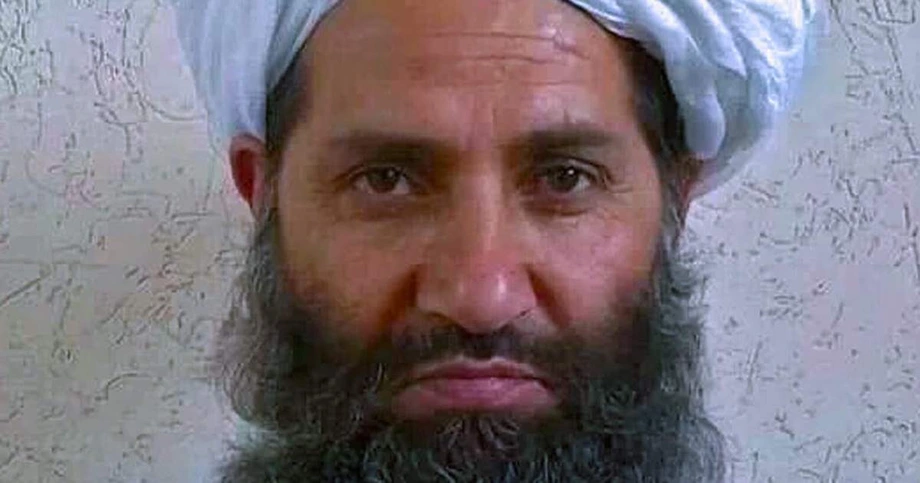
Taliban leader Hibatullah Akhundzada has offered government positions to qualified opponents, including Afghans who worked with American forces, in an address at Kabul University on November 17, 2026. The invitation comes as United Nations monitoring continues to document killings and arbitrary detention of former Afghan security personnel despite the Taliban's general amnesty.
Contents
- A job offer to exiles meets a record of reprisals
- What conditions did Akhundzada attach?
- An invitation to join, with authority staying in place
- What the UN recorded after the amnesty
- A forced return followed by disappearance
- How the return appeals developed
- A warning against fighting and internal rivalry
- A university conference centred on the leader's decrees
- What the offer means for potential returnees
- Key Points
Speaking on the second day of a conference examining his decrees, Akhundzada said appointments should depend on competence rather than language, ethnicity or regional background. He urged Afghans abroad to return and said they would not be judged solely on their past actions.
Akhundzada, the Taliban's supreme leader, presented government employment as open to opponents with the necessary skills:
Do you want a role in government? Do you want government posts? Whatever you want, these will be granted on the basis of competence and ability. If you are qualified, we will give them to you. If someone else is qualified, we will give them to that person.
The explicit offer of posts goes further than his earlier appeals for former officials to return home. It also places two issues side by side: whether opponents can work within the Taliban administration, and whether people associated with the former government can return safely.
UNAMA, the United Nations Assistance Mission in Afghanistan, documented at least eight killings of former security personnel between April and June 2026. Its update for July through September recorded another four killings and at least 14 cases of arbitrary arrest or detention involving former security personnel.
For Afghans considering the invitation, the practical stakes extend beyond employment. Returning means deciding whether promises from the leadership will protect them when dealing with local authorities and security officials.
What conditions did Akhundzada attach?
Akhundzada said giving a position to an unqualified person would wrong the entire population. Government appointments affect public services and the exercise of authority, making his promise of competence relevant both to applicants and to the people they would serve.
His invitation also carried restrictions. He urged opponents to avoid what he called "new seditions" and said the amnesty remained available to former officials provided they did not commit crimes or stir unrest. Those terms leave the Taliban authorities responsible for deciding which activities fall outside the protection being promised.
Akhundzada said opponents could take responsibilities within the existing administration. He also argued that people should refrain from requesting positions of authority because seeking such posts was religiously improper, even as he invited qualified opponents to serve.
No application process, list of available posts, qualification standards or timetable for appointments was announced. The offer therefore leaves potential returnees without a stated procedure for turning the invitation into a job.
Akhundzada said he did not regard Taliban opponents as his enemies, reserving that description for people he called "disbelievers". His assurances of equal treatment were framed within the Taliban's Islamic system and its interpretation of Sharia, or Islamic law.
An invitation to join, with authority staying in place
Senior Taliban officials have continued to defend the movement's control over the political system. Their remarks help explain the structure into which Akhundzada is inviting opponents.
Chief Justice Abdul Hakim Haqqani defended the Taliban's arrival in power without an agreement to divide authority with other Afghan political forces. He argued that including former officials through such a deal could have allowed them to regain strength with international support.
Foreign Minister Amir Khan Muttaqi has said negotiations with opponents are not taking place. Shahabuddin Delawar, who heads the Taliban commission responsible for contacts with Afghan figures, has also rejected political negotiations, arguing that talks would give opponents recognition as a party to Afghanistan's political affairs.
The offer described at Kabul University is consequently a route for individuals to work under Taliban authority. Negotiated participation by political groups would involve a different process, including agreement over how decisions and responsibilities are shared.
Taliban officials have sometimes sent different signals. Borders and Tribal Affairs Minister Noorullah Noori expressed readiness for dialogue with opponents before subsequently retreating from that position. Akhundzada's speech now gives the invitation to return the weight of the movement's highest authority.
What the UN recorded after the amnesty
The Taliban announced a general amnesty after returning to power in August 2021. An amnesty is a promise that a defined group will not face punishment for specified past conduct. In this case, the pledge was central to assurances given to former government employees and security personnel.
UNAMA's report published on August 22, 2023, documented at least 800 human rights violations against former officials and former members of Afghanistan's security forces between the Taliban takeover and June 30, 2023. The findings included 218 extrajudicial killings, 424 cases of arbitrary arrest and detention, 144 cases of torture and ill treatment, and 14 enforced disappearances.
Extrajudicial killings are killings carried out without lawful judicial proceedings. Arbitrary detention means holding someone without adequate legal grounds or safeguards. Enforced disappearance involves concealing a person's whereabouts after detention or abduction by authorities or people acting with their involvement.
UNAMA's April to June update records further abuses between April 1 and June 30, 2026. The mission documented at least 29 instances of arbitrary arrest and detention and at least five instances of torture and ill treatment involving former officials and former members of the Afghan National Defense and Security Forces. It also recorded at least eight killings of former security personnel.
UNAMA's following quarterly update, covering July through September 2026, documented at least 14 arbitrary arrests or detentions and four killings of former security personnel. The European Union Agency for Asylum has likewise described continuing reprisals against former officials and security personnel despite the amnesty.
A forced return followed by disappearance
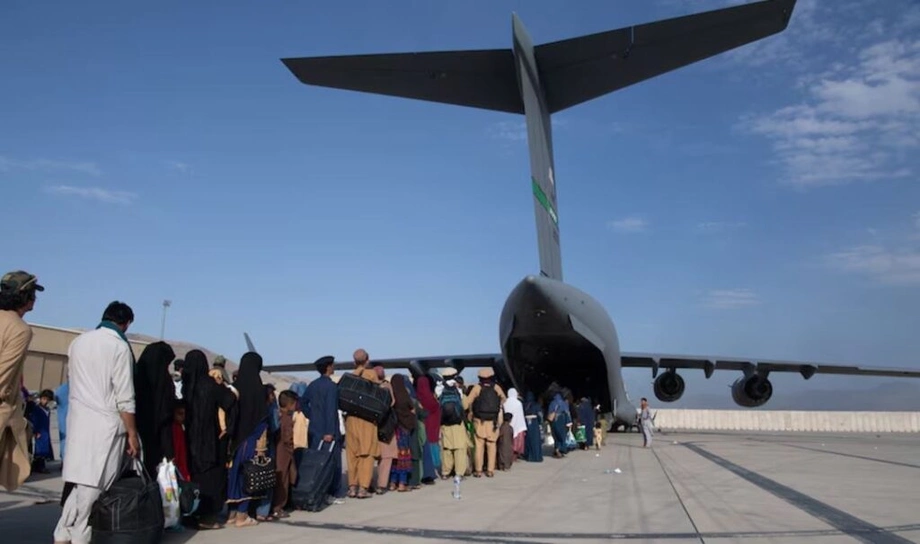
UNAMA's April to June report gives a concrete example of the danger facing some returnees. On April 10, 2026, Iranian authorities forcibly returned a former Afghan National Army officer to Afghanistan through Herat.
The officer went missing that same day. At the time covered by the report, his family had not heard from him.
UNAMA said former government officials and former security personnel returned involuntarily to Afghanistan continued to face risks of human rights violations. Its next quarterly update also warned about risks facing returning former officials and security personnel.
Afghans abroad face different circumstances. Some may consider returning voluntarily in response to the invitation; others face removal by the countries where they live. For both groups, the officer's case makes the question of protection immediate: what happens after arrival, and who can help if someone disappears or is detained?
How the return appeals developed
Akhundzada has previously encouraged former government employees to come home. During visits to northern Afghanistan in August and September 2024, he appealed to their sense of belonging and dignity.
The Taliban leader told former employees:
Return to Afghanistan and live with dignity, because the dignity you have in your own home cannot be found anywhere else.
The latest address adds a direct employment offer to that earlier appeal. The sequence also shows that assurances about return have continued alongside UN documentation of abuses:
- August 2021: The Taliban returned to power and announced a general amnesty.
- August 22, 2023: UNAMA published findings documenting at least 800 violations against former officials and security personnel through June 2023.
- August and September 2024: Akhundzada urged former government employees to return during visits to northern provinces.
- April through September 2026: UNAMA recorded further killings, arbitrary detention and other abuses involving people linked to the former state.
- November 17, 2026: Akhundzada offered posts to qualified opponents at Kabul University.
Akhundzada also recalled his concerns during negotiations over the withdrawal of American forces. He said he had expected those forces to leave but feared further fighting with Afghans who had worked alongside them.
Explaining that concern, he said:
My fear was that the Americans would leave, but those who had worked with them would remain and we would fight them. My concern was that we might end up killing Muslims with our own hands.
A warning against fighting and internal rivalry
Akhundzada said nobody in Afghanistan wanted war and urged opponents preparing for armed conflict to avoid violence in pursuit of government positions. He also said he would not allow Muslims to fight one another simply to preserve his authority, while treating rebellion as a separate matter.
Taliban members received a parallel message: avoid disputes over posts and responsibilities and preserve the movement's unity. That warning came amid public disagreements over the concentration of authority.
Interior Minister Sirajuddin Haqqani had criticised dependence on a single leader during the Kabul gathering. He said officials should attend to their responsibilities and listen to public problems rather than praise Akhundzada, whose policies he said many people opposed.
Haqqani leads an influential network within the Taliban, while Akhundzada governs from Kandahar. Their disagreements involve the distribution of decision making power inside the administration, including the influence of officials and networks based in Kabul.
The speech addressed both audiences at once. Opponents were urged to return rather than fight for positions, while Taliban members were told to keep competition for those same positions from dividing the movement.
A university conference centred on the leader's decrees
Kabul University's gathering examined implementation of Akhundzada's directives, including the Law on the Promotion of Virtue and Prevention of Vice and his religious writings. Senior officials, provincial religious council leaders and religious scholars attended.
Akhundzada rarely travels from Kandahar to the capital. His previous address to a large gathering of religious scholars in Kabul took place in July 2022 at the Loya Jirga hall. Scholars at the latest conference conferred on him the title "Sheikh-ul-Islam", an honorific associated with religious authority.
Kabul University suspended academic activities from November 15 to 19, according to its notice. The closure was linked to preparations for the conference, and some students living in dormitories were reportedly moved to Kabul Polytechnic University.
Akhundzada used the gathering to call on religious scholars to explain the Taliban system and its principles to the public. He also claimed that no part of Afghanistan's territory was under the control of others.
His comments on criminal punishment placed responsibility at the top of the administration. He said Qisas, an Islamic legal principle of retribution, and punishments prescribed under Sharia required his executive order. Together with the discussion of decrees and the call for unity, those remarks centred the conference on the leader's authority.
What the offer means for potential returnees
Qualified former officials now have a public assurance from Akhundzada that their previous employment need not exclude them from government service. His promise to assess ability rather than ethnicity, language or region speaks directly to who may be considered for a position.
Former security personnel face an especially difficult calculation. UNAMA has continued to document abuses against this group, including after return from abroad, while the leadership says the amnesty remains in force.
The immediate test of the invitation will be practical: whether qualified opponents receive appointments, whether authorities protect returnees, and whether families can obtain answers when someone is detained or goes missing. Those are the points at which the promise of a place in government meets the daily experience of people asked to come home.
Key Points
- Akhundzada offered government posts to qualified opponents during a November 17, 2026, address at Kabul University.
- He said appointments should depend on ability rather than language, ethnicity or regional background.
- The invitation covered people who worked with American forces and repeated assurances under the Taliban's general amnesty.
- No recruitment procedure, list of posts or appointment timetable was announced.
- UNAMA recorded further killings and arbitrary detention of former security personnel during 2026 and warned of risks to returnees.
- The speech also urged Taliban members to avoid disputes over authority amid public criticism of concentrated power.