Paris seeks a route to return Afghans without legal residency
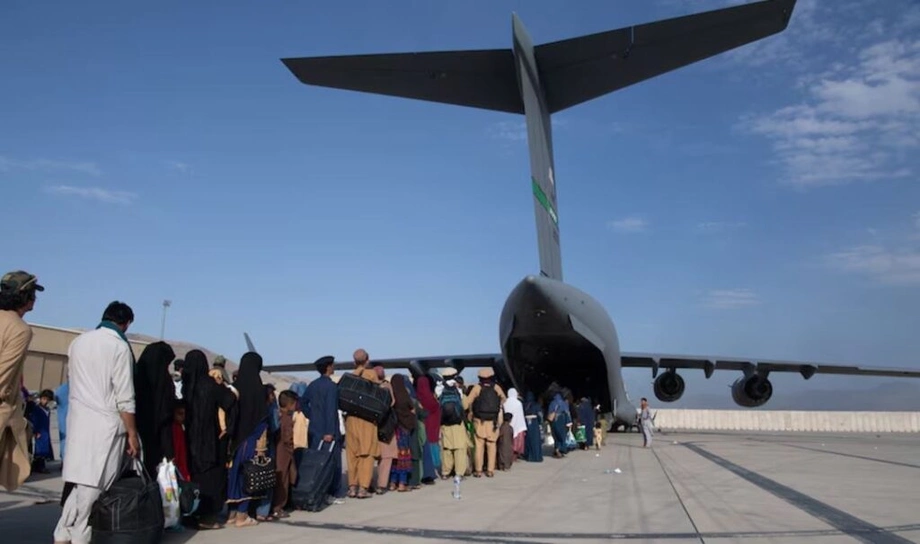
France is holding technical discussions with Afghanistan's Taliban authorities to arrange the return of some Afghan nationals without legal residency, Interior Minister Laurent Nuñez told parliament on Monday, November 3. The announcement puts France's security priorities alongside a difficult question: how to arrange deportations to a country whose rulers Paris does not formally recognize.
Contents
Nuñez confirmed the contacts while answering questions from lawmakers. He said some of the people concerned could threaten public order and described their removal as a government priority. Germany, he added, was pursuing similar steps.
The interior minister described the purpose of the discussions in these terms:
We are trying to obtain the possibility to return a certain number of Afghans who are in an irregular situation. These are technical discussions.
France's Foreign Ministry has said that any returns would respect the country's international obligations. It has also stated that asylum seekers and women would not be returned to Afghanistan under any circumstances, a restriction that sets an important boundary around the proposed policy.
Human Rights Watch has urged France to stop the plans, warning that cooperation with Taliban authorities could expose people sent back to persecution, torture and other serious abuses. Green Party lawmaker Léa Balage El Mariky has challenged the political cost of the contacts, accusing the government of moving toward normal relations with the Taliban.
France has announced neither a timetable for deportations nor the number of people it hopes to return. The immediate development is confirmation of negotiations, with the practical arrangements and individual protection decisions still to be explained.
Who would be affected?
Nuñez referred to Afghans in an irregular situation, meaning people who do not have legal permission to remain in France. He also pointed to public order concerns. Those descriptions address different issues: a person's right to stay and the government's assessment of their conduct or security risk.
The Foreign Ministry has described the discussions as concerning Afghans without valid residency documents and people considered a threat to public security. In the statement recalled in the warning over French deportations, the ministry described the intended group as people who were both unlawfully present and considered a national security risk.
European efforts to accelerate Afghan returns have placed particular attention on people convicted by courts. A criminal conviction, an assessment of a security threat and a lack of legal residency are separate matters, however, and each affects a person's case in a different way.
For those facing removal, the ministry's pledge to exclude women and asylum seekers is consequential. An asylum seeker is someone asking another country for protection because returning home could put them in danger. France says those seeking that protection would be outside the proposed return arrangements.
Technical contacts carry political weight
France neither formally recognizes the Taliban government nor maintains diplomatic relations with it. The Taliban returned to power in Afghanistan in 2021, leaving European governments to decide how to handle practical matters involving authorities they do not accept as a recognized government.
Paris calls the discussions technical because they concern the arrangements needed to return people. Such arrangements can include confirming identity, obtaining travel documents and securing acceptance by the destination country.
The Foreign Ministry has said the technical dialogue does not change France's position on Afghanistan. Paris also reaffirmed its support for the Afghan population, particularly Afghan women, and said it was not considering allowing Taliban representatives into France to facilitate deportations.
Balage El Mariky, a Green Party representative in the French parliament, argues that cooperation of this kind moves France toward diplomatic normalization. She accused the Taliban of imposing what she called "gender apartheid," referring to restrictions that separate women and girls from much of public life.
The government presents the contacts as a way to carry out removals and protect French citizens. Its parliamentary critics focus on the relationship created when French authorities need the Taliban's cooperation to implement that policy.
How the discussions developed
French diplomatic contacts became public before Nuñez addressed parliament. The contacts were first disclosed on October 7 and confirmed at the Foreign Ministry's October 8 press briefing. A French diplomatic source said Paris had begun a technical dialogue with Taliban officials to facilitate the direct removal to Afghanistan of Afghan nationals who were unlawfully present and represented a threat to public order. The source described the talks as a "necessary step to ensure the safety of French citizens."
Foreign Ministry spokesperson Pascal Confavreux described the dialogue as "strictly technical," intended to facilitate the removal of Afghan nationals illegally in France who posed a national security risk. He said the contacts did not mean France would recognize Taliban rule. The diplomatic source gave no number of potential returnees and said practical arrangements were still being studied. A separate source close to the matter estimated that hundreds of people could be affected.
The sequence places the French announcement within a broader European effort:
- In 2021, the Taliban returned to power in Afghanistan.
- In June, a Taliban delegation met officials from 15 European Union countries in Brussels to discuss irregular migration and faster deportations.
- In September, UN human rights chief Volker Türk condemned international silence over Afghanistan's worsening human rights and humanitarian crisis and called for an end to forced returns.
- On October 7, French diplomatic contacts with Taliban officials became public; the Foreign Ministry confirmed them on October 8.
- On Monday, November 3, Nuñez confirmed the technical discussions in parliament.
France has joined about 20 European Union countries, including Germany, Belgium and Sweden, in efforts to speed up Afghan returns. The June meeting involved officials from 15 member states, while the broader initiative includes a larger group of countries.
Rights groups and lawmakers from the European Parliament's left criticized the Brussels meeting. Their objections concern both the dangers facing people sent back and the political acceptance the Taliban may gain through repeated dealings with European governments.
Why the destination matters
Afghanistan's conditions are central to the dispute. The Taliban have barred girls over 12 from continuing their education and excluded women from higher education. Those restrictions affect access to learning, qualifications and future employment, while sharply limiting the choices available to women and girls.
The International Criminal Court has issued arrest warrants for Taliban Supreme Leader Haibatullah Akhundzada and the movement's chief justice over alleged crimes against humanity connected to the persecution of women and girls. The allegations place the conduct of Afghanistan's rulers at the center of international legal scrutiny.
Türk's September appeal connected the deteriorating rights situation with the pressure on Afghans being forced to return. The UN High Commissioner for Human Rights called for an end to forced returns while also criticizing the international response to the country's humanitarian crisis.
Human Rights Watch's warning to France focuses on what could happen after arrival. It says people deported through cooperation with Taliban authorities could face persecution, torture or other serious violations. The danger awaiting an individual is therefore a central issue in deciding whether a removal can proceed.
What France's protection pledge means
The Foreign Ministry says returns would comply with France's international obligations. A central protection in this area is the rule against sending someone to a place where they face persecution, torture or other grave harm. In plain terms, a government must consider the danger at the destination when deciding whether to remove a person.
France's stated exclusion of women and asylum seekers gives two groups a direct assurance. Other Afghans facing removal would still need decisions that account for their own circumstances and the risks they could face in Afghanistan.
Human Rights Watch researcher Farashta Abbasi has challenged the policy on precisely this issue. Her criticism, described in the earlier warning over the French plans, was that officials had offered no specific guarantees explaining how people at particular risk would be protected after return.
The government's security argument and the rights group's protection argument address different stages of the same process. French authorities are concerned about people remaining in France; the rights organization is concerned about the treatment those people may receive once transferred to Afghanistan.
Switzerland shows the practical demands of returns
The Swiss deportation records illustrate the kind of administrative cooperation that can sit behind discussions described as technical. Switzerland supplied Taliban authorities with personal information about Afghans facing removal and hosted a delegation for identification work in Geneva from August 19 to 21, 2025.
The visit concerned 13 Afghan nationals. Nine were eventually identified, officials agreed to issue travel documents for six, and Switzerland's State Secretariat for Migration later confirmed three deportations. The progression shows how several decisions can stand between identifying a person and carrying out a return.
Swiss authorities said Kabul accepts only travel documents issued by its own authorities for these returns. A person without a suitable passport may therefore need a laissez-passer, a document allowing a specific journey, before removal becomes possible.
The Swiss records also show why personal information is a sensitive part of the process. Authorities shared information sheets with the Taliban administration, and some people facing removal refused later requests for contact details of relatives in Afghanistan. France's discussions now carry the same practical questions about identity checks, documentation and the handling of personal data.
The Bottom Line
- France has confirmed strictly technical talks with Taliban authorities about returning Afghans who are unlawfully present and considered a national security risk.
- Interior Minister Laurent Nuñez says removing people who threaten public order is a priority.
- The Foreign Ministry says women and asylum seekers would not be returned and that France's international obligations would apply.
- France does not formally recognize the Taliban government or maintain diplomatic relations with it, and says the talks do not change its position on Afghanistan.
- Human Rights Watch and UN human rights chief Volker Türk have warned against forced returns amid serious rights abuses in Afghanistan.
- No French deportation timetable or number of intended returnees has been announced.