A crackdown reaching across public life
Sixty-one of 74 organisations led by Afghan women face possible closure, restrictions on broadcasting images of living beings now extend to 25 of Afghanistan's 34 provinces, and Shia educational and cultural institutions have been shut down in Kabul. Together, these developments show how the Taliban are narrowing the places where Afghans can seek help, exchange information and challenge those in power.
Contents
- A crackdown reaching across public life
- Women's organisations are losing the means to operate
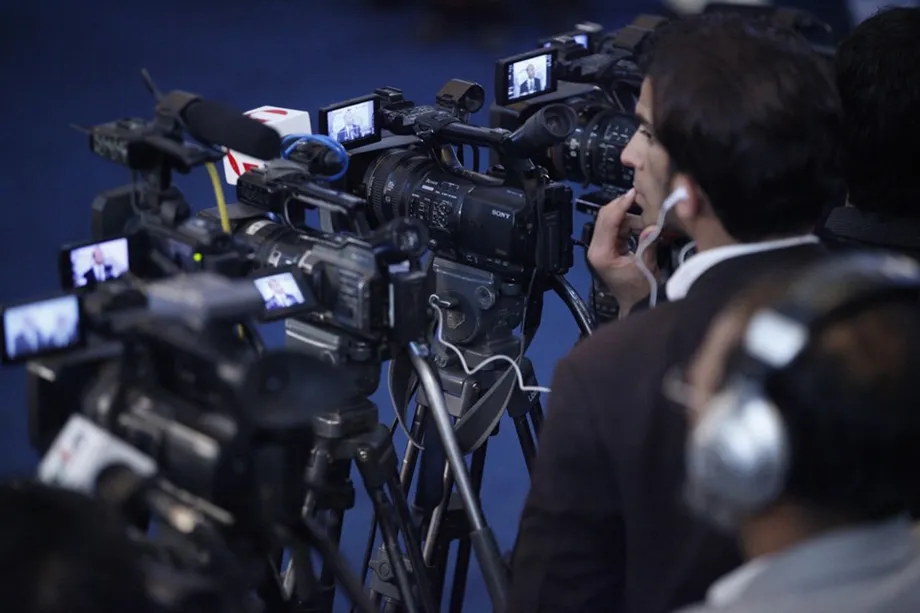
- Media closures are becoming a wider system of control
- Raids and arrests interrupt the flow of news
- Rules shape both the story and who can tell it
- Shia institutions face closures and detentions
- Women keep protesting under assumed names
- Expression carries risks beyond the newsroom
- UN scrutiny continues into 2027
- Key Points
The pressure intensified through August, September and October 2026, with raids on media offices, arrests of journalists and activists, and the closure of a university operating in Kabul and Ghazni. On 13 October, the Taliban confirmed that BBC World Service programming had been suspended from FM transmitters across Afghanistan. Women continued protesting through small gatherings and online campaigns despite a complete prohibition on demonstrations under the Taliban's Police Law.
Afghanistan's civic space, meaning the freedom people have to organise, speak and participate in public life, has remained closed since the Taliban seized power in August 2021. The latest measures affect much more than political debate. They interrupt education, reduce services for survivors of violence and weaken organisations through which minority communities seek representation.
UN High Commissioner for Human Rights Volker Türk warned that more than 200 Taliban decrees and directives had institutionalised the repression of women. Forty-two states and the European Union condemned discrimination and repression against Afghan women and girls. In September, UN Secretary-General António Guterres called for restrictions preventing Afghan female UN staff from entering their workplaces to be removed, describing them as contrary to international law and warning that they undermined assistance that saves lives.
Women's organisations are losing the means to operate
A UN Women study of 74 organisations found that 61, or 82 per cent, were at risk of closure. Forty anticipated possible suspension or closure within the following year. That is more than half of all organisations surveyed, making the threat an immediate concern for the people depending on their services.
The study recorded cuts across several kinds of assistance. Seventy-six per cent reported reduced or suspended case management and referral services for survivors of violence. These services help a person assess their needs and reach medical, legal or other support. Seventy per cent reported reduced or unavailable safe spaces, while 68 per cent reported disruption to services helping women earn a living.
The Taliban ban on Afghan women working for national and international nongovernmental organisations has combined with declining international funding to squeeze these groups. Restrictions on female staff also make it harder to reach women who face limits on movement or contact with men outside their families.
UNAMA, the UN assistance mission in Afghanistan, raised concerns about arrests over dress requirements and travel without a male guardian. For women seeking assistance, such restrictions can make the journey to a service another source of risk. For organisations, losing staff, funding and meeting spaces also weakens the networks through which women share information and advocate for change.
Media closures are becoming a wider system of control
The Afghanistan Journalists Center documented 102 violations of media and journalist freedom over a reporting period of 12 months, including the detention of 15 journalists and media workers. Three other journalists and media activists had already been imprisoned for more than a year and were serving sentences. At least 29 media outlets, organisations and institutions were closed or had their operating licences revoked during that period.
Restrictions on images of living beings applied in 25 of 34 provinces, almost three quarters of the country's provinces. Some television stations suspended operations or switched to radio. At least five outlets stopped operating after failing to comply with Taliban orders, while at least two radio stations halted operations after allowing women to join live programmes by telephone.
The Committee to Protect Journalists described the wider controls in its August 2026 statement. In 2024, authorities restricted interviews to 68 approved analysts and suspended licences belonging to 14 media outlets in Nangarhar. By 2025, the Taliban operated about 15 major media outlets and platforms.
Waliullah Rahmani, the committee's Afghanistan-Pakistan representative, described the conditions facing journalists:
Journalists are surveilled, detained, beaten, censored, or driven into exile. Women journalists face additional discrimination, and people are increasingly terrified to speak.
Raids and arrests interrupt the flow of news
On 26 August, intelligence personnel closed the Kabul office of Lapis, an affiliate of the Moby media group, and confiscated computers and storage devices. Officials cited an investigation into content allegedly contradicting local values and promoting Western narratives. On 6 September, Taliban security forces closed Rah-e-Farda TV and detained its owner, Salman Akhlaqi.
Rah-e-Farda had already experienced intervention earlier in the year. The Committee to Protect Journalists said intelligence agents took control of the station before it resumed broadcasting under a new owner licensed by the Taliban. Other major actions included the detention of two TOLOnews reporters in May, followed by a raid on the station, and the forced closure of Tamadon TV in June. Tamadon was one of the last television stations carrying Shia programming.
On 7 September, Taliban morality police detained 12 journalists covering a book exhibition in Khost and confiscated their cameras. On 24 September, personnel raided Afghan Voice Agency's Kabul office, seized equipment and documents, sealed the premises and detained its security manager. Five people, including reporter Zamin Ali Chavoshi, were detained after answering a summons the next day. The Committee to Protect Journalists called for all six to be released and the office reopened.
The suspension of BBC programming on FM transmitters followed on 13 October. The BBC said it continued reaching audiences in Dari, Pashto and English through other platforms. Internet access has also been vulnerable: a nationwide blackout in September 2025 lasted about 48 hours, disrupting the channels journalists use to gather and distribute information.
Rules shape both the story and who can tell it
The Taliban's August 2024 Law on the Propagation of Virtue and Prevention of Vice requires media content to comply with Sharia, or Islamic law, and bars images of living beings. Human Rights Watch's October 2025 findings, based on 18 remote interviews in Afghanistan and 13 interviews conducted in person in Türkiye, described surveillance, censorship and punishment for perceived criticism. Most interviews took place in August 2025.
Fereshta Abbasi, an Afghanistan researcher at Human Rights Watch, described how pressure shapes daily reporting:
While all Afghan journalists have been affected and many have fled the country, women journalists have been among the hardest hit.
The number of women working in media fell from as many as 1,400 before 2021 to 600 in 2024, a decline of about 57 per cent using those figures. Men working in media fell from roughly 4,000 to 2,000 in 2022. The different dates show how the contraction affected both groups over the early years of Taliban rule.
Women journalists face restrictions on attending press conferences, interviewing officials and working outside their homes. Smartphone restrictions in government offices further limit access to information. In January 2025, journalists were reportedly prohibited from asking about internal disagreements over the ban on women's education.
Journalists also described rules varying between provinces and agencies, leaving them vulnerable even when one official had approved their work. Hundreds have fled. Human Rights Watch said more than 150 Afghan journalists in Pakistan were believed to face a risk of forced return as of the middle of 2025, alongside insecurity for journalists in Türkiye and the United States.
Shia institutions face closures and detentions
Five members of the High Shia Commission were reportedly detained in Kabul on 13 September. The Ministry of Justice allegedly declared the commission illegal, dissolved it and confiscated membership cards. The action weakened a structure through which Shia communities could seek representation.
On 16 September, the Ministry of Higher Education revoked Khatam al-Nabieen University's operating licence and ordered its Kabul and Ghazni campuses closed. Officials alleged violations of ministry policies but supplied no detailed evidence. The university's owner rejected the accusations.
The closure followed a confrontation over an associated seminary, where a disputed property claim led to evacuation and detentions. Residents protested the planned evacuation on 5 September. Taliban forces reportedly used violence against students and teachers. Twenty-eight people were detained; four were later released, leaving 24 in custody at the time described. The seminary was evacuated on 7 September.
On 21 September, intelligence forces reportedly raided the separate Khatam-ul-Anbia Religious School in western Kabul, expelled students and staff, sealed parts of the premises and detained its head and several teachers. On 29 September, the Ministry of Justice shut Kabul's Tebyan Cultural Center, a Shia religious and cultural organisation.
These actions remove different kinds of community infrastructure at once: a representative body, places of education and a cultural centre. Their effects extend to the students, teachers and families who relied on them, as well as to the people detained.
Women keep protesting under assumed names
The Taliban defended the Police Law's complete prohibition on demonstrations by arguing that protests belonged to political systems such as democracies or republics. The Spontaneous Movement of Afghan Women condemned the ban and described women continuing through smaller gatherings, symbolic actions and online posts.
Members of the Free Women's Network protested for freedom, justice and equality on the International Day of Peace, 21 September. On 6 October, the Women's Freedom Network protested restrictions preventing teachers and girls from accessing work and education.
Gulsuum, a pseudonym used by a 28-year-old activist in Parwan, belongs to the Kabul Critical Thinking Movement. She previously studied law and taught at a private school. She said she joined the movement two years earlier and gradually moved from following its statements to participating in online meetings and campaigns.
The movement publishes statements, photographs and videos through its Facebook page. Members avoid sharing campaign material on their personal accounts and use assumed names, covered faces and carefully chosen recording locations to reduce the risk of identification. Gulsuum also fears restrictions from her family if her activism is discovered.
Gulsuum described why she continues despite those fears:
I believe that no voice raised for justice goes to waste. Change may not happen today. But if no one speaks, there is no hope for tomorrow.
Expression carries risks beyond the newsroom
Civil society and education activist Ehsan Sadat was reportedly released on 12 September after being arrested in Khost on 6 August on allegations of propaganda against the authorities. His release followed reports that he had been severely tortured and left in a coma. His condition after release was not established.
Journalist Shakib Ahmad Nazari was released on 1 September after 405 days in Taliban custody. An intelligence linked military court had sentenced him to three years in prison on allegations of propaganda and collaboration with media in exile. Tawana News Agency director Abuzar Sarem Sar-e-Puli remained detained.
Singer and dambura player Sayed Ghafar Agha was reportedly detained in Kabul on 25 August after posting a video mourning a National Resistance Front commander. Around 30 September, poet and schoolteacher Muzhda Uzbek was reportedly arrested in Takhar over poems critical of the Taliban and alleged links to a former senator. Her whereabouts and condition were unknown.
On 22 September, Taliban authorities detained a young man in Ghazni over social media posts allegedly critical of the group. The targeting of musicians, poets, teachers and ordinary social media users broadens the pressure beyond people employed to report the news. A public post or poem can carry consequences for its author and family.
UN scrutiny continues into 2027
Richard Bennett, the UN special rapporteur on human rights in Afghanistan, published report A/HRC/63/22 on 28 August 2026. Submitted under Human Rights Council resolution 60/2, it covers developments from November 2025 to August 2026 and reviews five years of Taliban policies, with particular attention to children's rights.
Bennett also warned about rules governing sexual conduct. He said the Taliban's Penal Code for Courts fails to distinguish consensual sex from sexual violence, placing survivors at risk of the same punishment as perpetrators. He described LGBTQ people as extremely vulnerable and said the code prescribes imprisonment for sex between men and death for certain repeated sexual acts.
On 5 October, the Human Rights Council renewed Bennett's mandate for one year through resolution A/HRC/63/L.8, adopted by consensus without a vote. The next scheduled steps include a discussion focused on gender concerns in June 2027 and Bennett's requested study on minorities, due in September 2027.
The International Criminal Court also unsealed four arrest warrants concerning alleged persecution of women, girls, people considered incompatible with Taliban gender policies and perceived supporters of women's rights. The proceedings place individual criminal responsibility alongside the UN's continuing documentation of restrictions.
The recent sequence shows how quickly pressure spread across institutions:
- 26 August 2026: Intelligence personnel closed the Kabul office of Lapis.
- 5 to 16 September: A seminary protest, evacuation and detentions preceded the closure of Khatam al-Nabieen University.
- 21 to 29 September: Authorities targeted a religious school, Afghan Voice Agency and Tebyan Cultural Center.
- 5 October: The Human Rights Council extended Bennett's mandate for one year.
- 13 October: The Taliban confirmed the suspension of BBC World Service programming on FM transmitters.
For Afghans, the combined effect is fewer places to study, report abuse, obtain support or organise a response. Women's organisations are losing operating capacity while journalists and community institutions face restrictions that make those losses harder to document and challenge publicly.
Key Points
- A UN Women study found 61 of 74 organisations led by women at risk of closure.
- A media watchdog recorded 102 press freedom violations over 12 months, including 15 detentions.
- Restrictions on images of living beings extended to 25 of Afghanistan's 34 provinces.
- Raids, closures and detentions affected media outlets, Shia institutions, activists and cultural figures.
- Women continued protesting through small gatherings and online campaigns despite a ban on demonstrations.
- UN scrutiny will continue with a gender focused discussion in June 2027 and a minorities study due in September 2027.