A premium launch with software still catching up
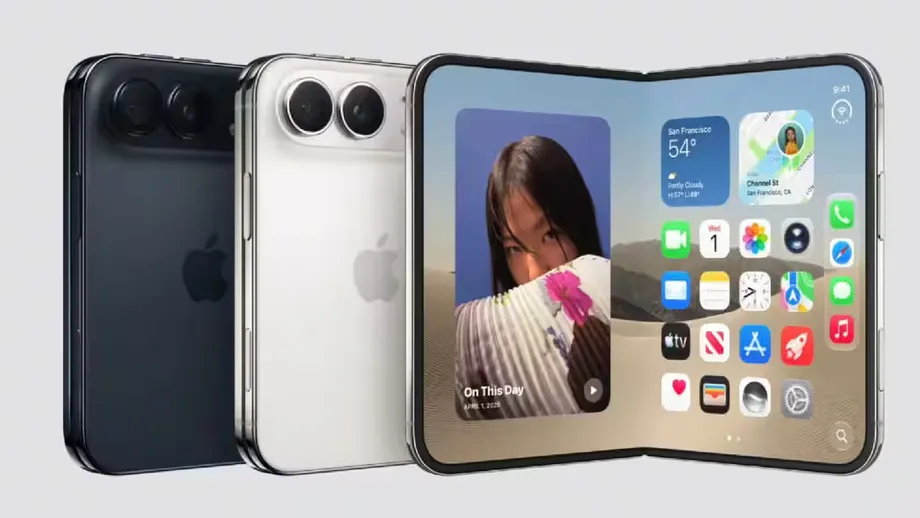
Apple's first foldable iPhone reaches buyers on October 23, 2026, starting at $1,999, with Microsoft Word and Outlook still awaiting layouts designed for its larger screen. Apple has highlighted more than 50 apps and games that are ready or coming soon, while early testing found familiar services such as Gmail, Google Maps, Uber and Kindle still using layouts built for conventional phones.
Contents
- A premium launch with software still catching up
- Why some apps fill the screen and others do not
- A short preparation window, with conflicting submission dates
- Netflix, Prime Video and MLB put the fold to work
- Word and Outlook arrive later than the phone
- Two apps at once, within limits
- Asian services broaden the launch lineup
- Creative apps and games have their own schedules
- What Apple's tools and badge tell buyers
- The purchase depends on more than future updates
- Key Points
The iPhone Duo opens from a device with a 5.4-inch outer display into one with a 7.6-inch inner display. Apple says the inner screen is 50 percent larger than the iPhone 18 Pro Max display. Its appeal depends on what developers do with that space: a film can fill the screen, an inbox can sit beside a message, or two different apps can run together.
Apple's October 22 announcement describes Netflix, Prime Video, Fantastical and numerous regional services adapting to the design. Early reviews describe a less consistent experience across the wider app library, including narrow windows surrounded by unused black space.
For buyers, the practical issue is specific: whether the apps they open every day make useful use of a phone priced close to $2,000. Someone who mainly watches Netflix and writes in Bear may have a different experience from someone whose work revolves around Gmail and Microsoft Office.
Why some apps fill the screen and others do not
Apple says both displays share the same aspect ratio, meaning the relationship between their width and height is the same. That helps an app grow proportionally when the phone opens and lets users continue an activity across the two screens.
Developers still have to decide where buttons, menus and content belong. Enlarging a conventional phone interface offers fewer benefits than arranging an inbox beside an email or showing editing controls alongside a document.
Existing iPhone apps can run on the Duo, but their appearance varies according to the version of Apple's software development kit used to build them. A software development kit, or SDK, contains the tools and components developers use to make an app work with the operating system.
Early testing found several levels of support. Some apps occupied a small central window, others expanded while retaining black borders, and adapted apps used the wider display for additional columns or controls. Google Maps, Gmail, Call of Duty Mobile, Uber and Kindle were among the apps identified as awaiting fuller support during testing. Telegram and Sword of Convallaria also drew criticism for their layouts.
Updates were arriving even during the review period. Google Search, TikTok, Instagram and Threads received changes, and Slack gained support shortly before one workday test. Users may also find that an app works better with the phone turned horizontally than vertically.
A short preparation window, with conflicting submission dates
Apple announced the Duo on September 9, leaving 44 days before its first retail release. Developers outside the launch partnerships generally had limited access to physical devices, making software simulation an important part of their preparation.
The development schedule also contains a discrepancy. Apple's October 5 developer guidance says optimized apps could be submitted that day, while another account places the first permitted submissions on October 8. Those dates leave 18 or 15 days, respectively, before the October 23 launch.
The main milestones show how closely the software work followed the hardware announcement:
- September 9, 2026: Apple announced the iPhone Duo.
- About a week later: Xcode support arrived for building and simulating Duo apps.
- October 5: Apple published guidance saying developers could submit optimized apps.
- October 22: Apple detailed its app lineup and developer support program.
- October 23: Sales begin in more than 70 countries and regions.
- October 30: Availability expands to 28 additional countries and regions.
Developers had to review their layouts, write changes, test different positions and prepare App Store material within that period. Teams working with a simulator could preview a folding screen, while physical devices offered the chance to assess touch controls, viewing angles and movement between displays.
Netflix, Prime Video and MLB put the fold to work
Netflix uses the outer display for browsing Clips, its feed of short videos for discovering shows and films. Opening the phone moves viewing onto the larger inner screen, with layouts responding as the device opens, closes or rotates.
Tom Richards, Netflix's senior director of Engineering, described the intention behind the design:
People watch Netflix in all kinds of moments, and we built our new experience to move with them.
Prime Video assigns different jobs to the two halves of a partially folded screen. Video plays on the upper half, while X-Ray information about cast members and bonus content appears below. Paramount+ adds more playback controls and room to browse shows and live channels.
MLB uses a similar arrangement for baseball: the live game occupies the upright half, and statistics fill the part resting on the table. Kenny Gersh, MLB's executive vice president of Media, Business Development, and Product, said the company worked with Apple to have the app ready for the World Series.
PGA Tour brings scores, highlights and leaderboards to the wider screen. Together, these examples show the benefit of treating a fold as a boundary between related activities, rather than merely stretching a video across a larger rectangle.
Word and Outlook arrive later than the phone
Microsoft Word and Outlook are due to receive what Apple calls a desktop-class experience in the coming weeks. Word will place formatting tools beside a document, while Outlook will show the inbox next to a full message. Apple has given no exact release date for either update.
Bear, Things and Notewise are among the productivity apps already adapted. OmniFocus and OmniOutliner also have layouts for the compact outer display and the wider inner screen. Fantastical brings calendars, tasks and menus together instead of requiring users to move repeatedly between them.
Michael Simmons, cofounder and CEO of Flexibits, which makes Fantastical and Cardhop, described the combined view:
With calendars, tasks, and menus visible together on the inner display, it feels like the full Fantastical experience from Mac and iPad, right in your pocket.
Apple also describes Zoom showing shared material alongside participants, Slack exposing more of a workspace, and Salesforce displaying more dashboard information. During earlier testing, Slack's updated layout was available while Zoom still had problems adapting to the device, illustrating how quickly app readiness was changing around launch.
Two apps at once, within limits
Split View lets the Duo run two apps side by side, a first for iPhone. A user can keep a calendar next to an inbox, consult contact details while planning an appointment, or drag an image from Photos into a message.
Pairs of apps can be pinned together for later use, reducing the work of rebuilding a familiar arrangement. One early review also found that an app had to be open before starting Split View.
A workday test identified a more substantial restriction: two apps shared the display equally, with no adjustable divider to give a document more room than a reference window. On a screen measuring 7.6 inches diagonally, dividing the available space in half can make each app feel confined.
The same test used Bear for sustained writing with a portable keyboard. Mouse and trackpad use required enabling AssistiveTouch in accessibility settings to obtain a cursor. The Duo could handle focused writing and communication, but the process still involved the rules and settings of iOS rather than those of a conventional laptop.
Asian services broaden the launch lineup
Apple's regional app lineup gives buyers in Asia examples beyond the global streaming and office services. In China, Taobao uses the inner display for product images and details together, with zoom gestures changing how many products appear in each row.
WPS Office adapts its controls to different folding positions, while Xmind places mind maps beside outlines. AMap changes between a portrait view of the road ahead and a wider landscape view. Weibo adjusts feeds, video and posting tools, while rednote brings playback and comments into the same view. iQIYI also adapts browsing and playback controls.
In South Korea, KakaoTalk keeps chats and groups visible while a user reads a particular conversation. WEBTOON and NAVER SERIES use the larger display for comics and books, KakaoPage offers a reading experience using Split View, and BAND brings community posts, events and albums together.
Travel and local discovery apps apply the same approach to practical decisions. Lyft shows ride choices beside a larger route map, Yelp places reviews beside maps, and Flighty adds a mode for monitoring a flight with the phone propped up. American Airlines and United Airlines rearrange trip information and navigation for the wider screen.
Creative apps and games have their own schedules
Detail places video beside its transcript so creators can edit interviews and podcasts while reading the spoken words. The developer says its artificial intelligence models run on the device for tasks such as captions and removing filler words.
Instagram shows more posts and Stories, while Edits and VLLO bring footage, timelines and editing tools into the same workspace. Early testing nevertheless found bugs in some adapted apps, including Instagram, so buyers can expect further fixes alongside new layouts.
Apple Arcade titles Sneaky Sasquatch and Retrocade are among the games prepared for the folding display. Asphalt Legends uses the larger screen for racing, while other releases follow later: Zenless Zone Zero's Duo update is due in November, and UnGodly is scheduled to launch that month.
Apple attributes up to 35 percent better sustained performance than iPhone 17 Pro to the A20 Pro chip and a custom vapor chamber, which helps move heat away from the processor. Sustained performance concerns how well a device maintains its speed during longer sessions, such as gaming.
DoorDash's larger delivery tracking map is scheduled for later in 2026. Cooking, shopping and creative apps therefore join office software and games in a rollout that continues beyond the phone's first day on sale.
What Apple's tools and badge tell buyers
Apple says more than 2,000 developers have attended over 50 workshops across 19 cities. Further sessions are planned in London, Mexico City, Montreal, Paris and Toronto, giving more teams access to hardware and help from Apple engineers and designers.
Xcode 27.1 includes Device Hub, which simulates the Duo opening, closing, folding and rotating. Standard SwiftUI and UIKit components can adapt automatically, including moving controls and expanding content into columns. Custom layouts can use tools that respond to the hinge angle or keep buttons away from the fold.
Apple is introducing a Made for iPhone Duo badge and App Store collections to help customers find adapted software. Its developer guidance says submitting Duo screenshots triggers the product page badge. Starting in April 2027, submitted apps and games must include Duo screenshots.
For buyers, checking the current version of a must-have app is more useful than relying on a broad list of announced support. Apple's lineup includes both available updates and releases scheduled for later, while early testing shows that adapted layouts may still need fixes.
The purchase depends on more than future updates
The Duo comes in storage capacities from 256GB to 2TB, with initial availability covering markets including China, India, Japan, Malaysia, Singapore, South Korea and Vietnam. Limited quantities are expected for customers buying without a preorder.
Software can change after purchase, while the physical tradeoffs remain. Early reviews put the phone's weight at 254 grams and identify the absence of a telephoto camera, which affects the detail available in zoomed photographs compared with iPhone 18 Pro.
Battery observations were encouraging but varied by use. One workday test ended with about 45 percent charge after six hours of screen use; another review usually reached bedtime with 35 or 46 percent remaining. Those figures describe different usage patterns rather than a single promised runtime.
The strongest reason to buy at launch is a current need for the larger screen in apps that already use it well. Buyers depending on Word, Outlook or other unfinished adaptations face a wait for the experience Apple is promoting. The value of the foldable design will become more consistent as those specific updates reach users.
Key Points
- The iPhone Duo launches October 23, 2026, starting at $1,999, with a 7.6-inch inner display.
- Apple highlighted more than 50 apps and games that are adapted or scheduled for updates.
- Microsoft Word and Outlook updates are expected in the coming weeks, without exact release dates.
- Existing iPhone apps can run, but some leave substantial screen space unused.
- Netflix, Prime Video, MLB and Fantastical demonstrate layouts built around the larger display and folding positions.
- Availability expands to 28 more countries and regions on October 30.
- App Store submissions will require iPhone Duo screenshots from April 2027.