Astana trials would begin with a safety operator
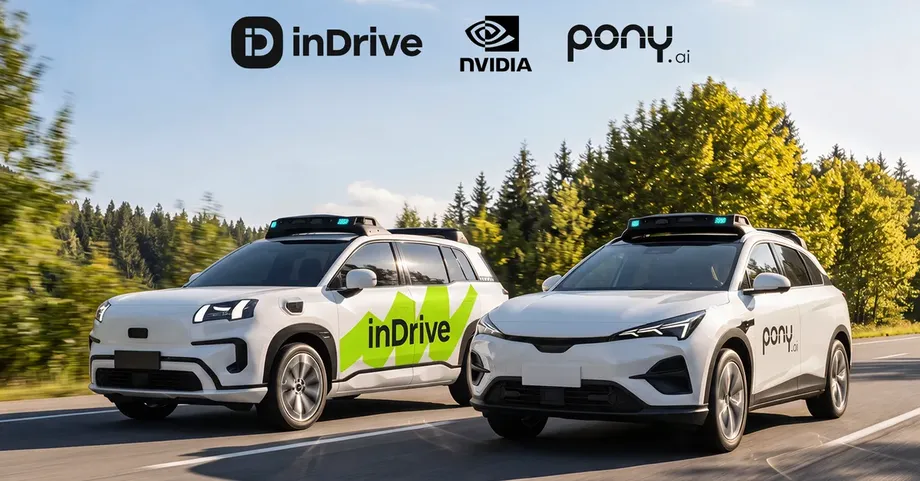
inDrive plans to begin testing Pony.ai robotaxis in Kazakhstan's capital, Astana, in the first half of 2027, with NVIDIA providing artificial intelligence technology. The first vehicles would carry a safety operator, while fully driverless passenger trips remain the eventual goal.
Contents
- Astana trials would begin with a safety operator
- What each company would bring
- What Level 4 means for a passenger
- Kazakhstan has rules, with certification work still in focus
- What the pilot rules require
- Snow and ice will shape the Astana test
- Affordability is part of the engineering problem
- The project joins a larger computing expansion
- Expansion ambitions reach beyond Kazakhstan
- Key Points
The three companies have signed a memorandum of understanding to examine the technical, operational, regulatory and commercial feasibility of the service. Pony.ai would supply its seventh generation Gen-7 robotaxis, and inDrive would offer rides through its app and organise the service. A launch depends on an agreement with Kazakhstan's government.
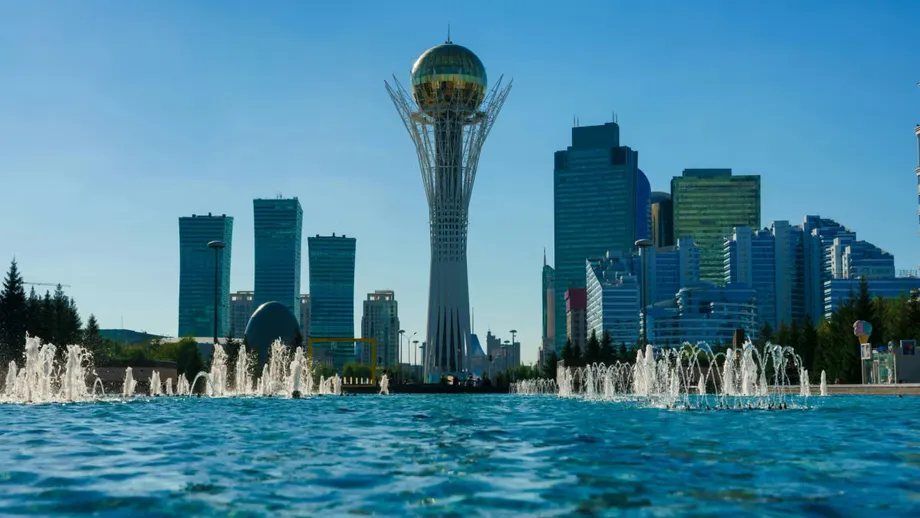
Astana, home to around 1.7 million people, offers both growing demand for transport and a difficult environment for autonomous driving. Months of snow and ice would test whether the technology can handle conditions very different from those in many existing robotaxi markets.
inDrive chief technology officer Yuri Misnik set out the testing schedule. Passenger fares, fleet size, routes and a date for fully driverless service have not been announced. For residents, the immediate prospect is a controlled trial rather than unrestricted access to autonomous taxis across the capital.
What each company would bring
Pony.ai would provide the vehicles and autonomous driving technology. The company says its Level 4 system has already operated in fully driverless commercial services in major Chinese cities, alongside deployments in Europe, the Middle East and Asia. Its Gen-7 vehicles combine information from several sensors and use backup systems designed to maintain operation when components fail.
inDrive would connect passengers to those vehicles through an existing booking platform. The company operates in more than 1,200 cities across 47 countries and also provides delivery, intercity transport and financial services. Its existing ride service is known for allowing passengers and drivers to negotiate fares.
NVIDIA would supply AI infrastructure, including its Hyperion sensor and computing platform and Halos safety system. Hyperion brings together technology that helps a vehicle observe its surroundings and process information. NVIDIA also offers Alpamayo driving software and tools for creating simulated situations in which autonomous systems can be tested.
The partners are examining how these parts would work together in Kazakhstan. Their review includes whether a service can operate reliably, meet local requirements and attract passengers at a commercially workable price.
What Level 4 means for a passenger
Level 4 automation allows a vehicle to drive without a human driver within defined operating conditions. Those conditions can include an approved geographical area, particular roads or limits linked to weather. A vehicle capable of operating autonomously in one area may need a different approval or further testing elsewhere.
The Astana proposal centres on vehicles intended for Level 4 operation inside approved zones. Initial tests would nevertheless include a safety operator. Moving from supervised trials to trips without anyone responsible for driving inside the vehicle would be a later step.
Kazakhstan's broader pilot programme also allows a transitional Level 3 format. At that level, a person must remain available to take over when required. A safety operator aboard an early test vehicle and the vehicle's intended automation level describe different parts of the plan: how a trial is supervised and what the system is designed to do.
Passengers would book through an app rather than hail an unidentified experimental vehicle. The national pilot rules also require access to technical support, recording equipment and arrangements for contacting the company responsible for the vehicle.
Kazakhstan has rules, with certification work still in focus
The companies selected Kazakhstan because of its preparations for autonomous transport regulation. The government has designated 2026 the Year of Digitalization and Artificial Intelligence and has been developing a framework for testing automated vehicles on specified public roads.
The Ministry of Artificial Intelligence and Digital Development has described a pilot lasting three years, implemented in stages. Earlier memorandums involved that ministry, the Ministry of Transport, Astana's city administration, inDrive and Yandex Qazaqstan. Preparation begins with testing grounds and route checks before monitored urban deployment.
The ministry's earlier outline named Astana and Almaty. The approved pilot rules described in August 2026 cover those cities and Kosshy in the Akmola region, as well as testing grounds and designated routes on public roads. Road markings, signs and passenger pickup and dropoff areas had been scheduled for preparation in the first quarter of 2026.
An August 24, 2026 assessment identified an outstanding practical problem: Kazakhstan then lacked both a standard for certifying these vehicles and a laboratory able to test them. Vehicles need a certificate confirming the safety of their construction and state registration to participate. Completing that certification process is part of the work required before road trials can proceed.
The ministry's earlier programme description left vehicle models and configurations open. The new partnership identifies Pony.ai's Gen-7 as the proposed vehicle for inDrive's Astana project.
What the pilot rules require
Kazakhstan's rules put numerical requirements around the testing process. Before entering road trials, an autonomous vehicle must complete at least 100 hours of testing without an accident at a testing ground. During the trial period, it must travel at least 10,000 kilometres and carry passengers on at least 100 trips, without an accident caused by the automated system.
The company responsible for each vehicle must arrange insurance worth 60 million tenge for the benefit of passengers. Required equipment includes continuous recording of sensor data, video recording inside and around the vehicle, and protection against unauthorised activation of the automated system.
Vehicles must carry an autonomous driving sign and contact information for the responsible company. The rules provide for an operator to select routes and stopping locations remotely, with remote deactivation of the automated driving system permitted only after the vehicle has stopped.
Police would contact the operator to stop an autonomous vehicle, while crashes would be reported through the 102 emergency channel. Recorded video would help establish what happened. These requirements give passengers, operators and authorities specific procedures to follow during a trial.
The main steps announced so far are:
- First quarter of 2026: the ministry's earlier schedule called for road markings, signs and passenger stopping areas to be prepared.
- August 24, 2026: details of the approved pilot rules included testing distances, insurance and vehicle equipment requirements, alongside the certification gap identified at that time.
- First half of 2027: inDrive plans to begin Astana tests with a safety operator.
- Later stages: fully driverless passenger trips and expansion would depend on testing, government agreement and operating approvals.
Snow and ice will shape the Astana test
Astana's winter conditions are central to the project's practical value. Snow can cover road markings, ice changes braking distances, and severe weather can make interpreting the surrounding road more difficult. Autonomous systems must handle those conditions within the limits approved for their operation.
inDrive founder and chief executive Arsen Tomsky described the reason for choosing a demanding environment:
Launching here will provide an important opportunity to evaluate autonomous driving technology in challenging winter conditions,
Tomsky also explained how the experience could inform later projects:
Success in Astana could offer valuable insights for expanding autonomous mobility to other locations facing similar challenges.
For Astana residents, reliable operation through the seasons would matter as much as the novelty of a vehicle without a driver. The companies intend robotaxis to supplement existing transport services as demand grows. The trials would help determine where and under what conditions that additional service can operate.
Affordability is part of the engineering problem
inDrive's focus on affordable rides makes costs a central part of the feasibility review. Buying vehicles is only one expense. The service must also account for computing equipment, maintenance, insurance, support staff and the infrastructure needed to run a fleet.
Misnik described the company's investment approach:
Our approach is capital-light by design,
The inDrive technology chief said the company works with different partners across markets, combining their capabilities with its own. In practical terms, this means relying on vehicle and technology partners rather than developing every part of an autonomous taxi system itself.
NVIDIA automotive vice president Ali Kani said Hyperion could reduce development costs by providing an integrated foundation of sensors and computing equipment. He explained why that matters for the proposed market:
Those savings are particularly relevant in emerging markets, where ride-hailing is already relatively affordable and autonomous services need to compete on cost,
Kazakhstan's ministry says operators will set their own fares, taking account of market conditions, operating costs, technology, infrastructure and legislation. Whether inDrive's familiar fare negotiation model would apply to robotaxis remains part of the service design still to be announced.
The project joins a larger computing expansion
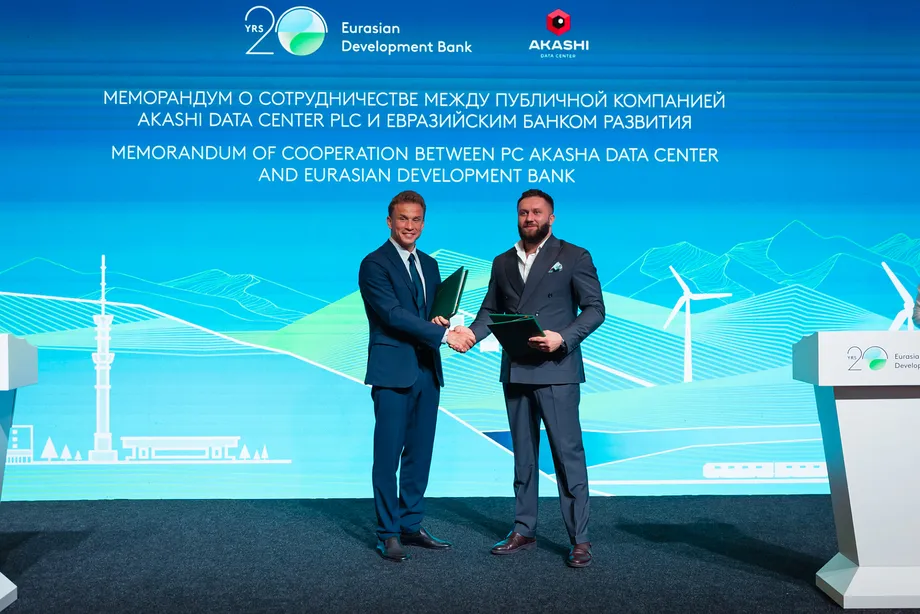
NVIDIA's involvement comes as Kazakhstan expands computing infrastructure for AI. In an October 22, 2026 post, NVIDIA vice president Rev Lebaredian said Kazakhtelecom had deployed 400 H200 and 480 B300 graphics processing units in Astana and Almaty. Together, that is 880 GPUs, specialised chips used to process large amounts of data and run AI systems.
NVIDIA described plans for more than 1,000 additional GPUs at each of two further sites in 2027, including more than 1,000 Vera Rubin GPUs in the Ekibastuz region. Kazakhtelecom had announced an H200 based sovereign AI factory on May 29, 2025, with estimated computing performance of 56.4 petaflops at FP16 precision and cloud access intended for government, businesses, startups and universities.
The Prime Minister's office said agreements on AI and digital infrastructure worth $10 billion were signed on June 15, 2026, following talks involving Prime Minister Olzhas Bektenov, NVIDIA and Firebird. The Data Center Valley project in Ekibastuz was described as having 300 megawatts of power available, with phased expansion designed to reach one gigawatt.
Deputy Prime Minister and AI minister Zhaslan Madiyev said the planned investment could support a cluster of 100,000 GPUs and generate at least $3 billion in annual export revenue. Those figures describe planned national computing capacity and projected business returns, while the Astana vehicle project has its own feasibility and approval process.
Pony.ai has worked with NVIDIA since 2017. Its Gen-7 computing controller uses four DRIVE Orin X chips. An upgraded controller announced in April 2026 can link two DRIVE Thor chips for maximum performance of 4,000 FP4 TFLOPS, a measure of computing speed for particular AI calculations.
Expansion ambitions reach beyond Kazakhstan
Pony.ai aims to operate more than 3,500 robotaxis in over 20 cities by the end of 2026, compared with 1,975 vehicles at the end of June. Reaching 3,500 would mean adding 1,525 vehicles, an increase of about 77%. Its shares rose 2.8% in Hong Kong trading following the partnership announcement, which coincided with NVIDIA chief executive Jensen Huang's first visit to Kazakhstan.
inDrive is also pursuing a separate project with Saudi Arabia's AI Driver to explore vehicles using WeRide technology, starting in Riyadh. That partnership had targeted a pilot in the first half of 2026; whether testing began has not been confirmed. It gives inDrive another potential route into autonomous services through a different technology partner.
After Astana, inDrive, Pony.ai and NVIDIA intend to examine expansion to other Kazakh cities and countries where inDrive operates. The immediate task is narrower: secure the necessary government arrangements, prepare vehicles and routes, and begin supervised testing in the first half of 2027.
Key Points
- inDrive plans Astana robotaxi tests in the first half of 2027, initially with a safety operator.
- Pony.ai would supply Gen-7 vehicles, inDrive would operate the app and service, and NVIDIA would provide AI technology.
- Fully driverless rides are a later objective, subject to government agreement and approvals.
- Kazakhstan's pilot rules require 100 hours of testing without an accident before road trials, followed by at least 10,000 kilometres and 100 passenger trips during testing.
- Each vehicle must have insurance worth 60 million tenge for passengers.
- Astana's snow, ice and affordable existing taxi services make winter reliability and costs central to the project's prospects.