A smaller leadership gathers before the 2027 reshuffle
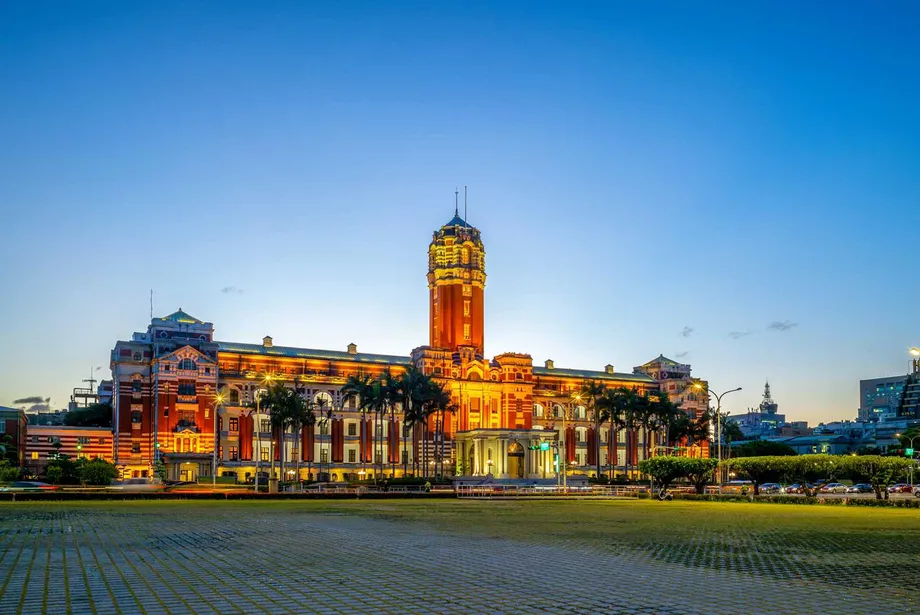
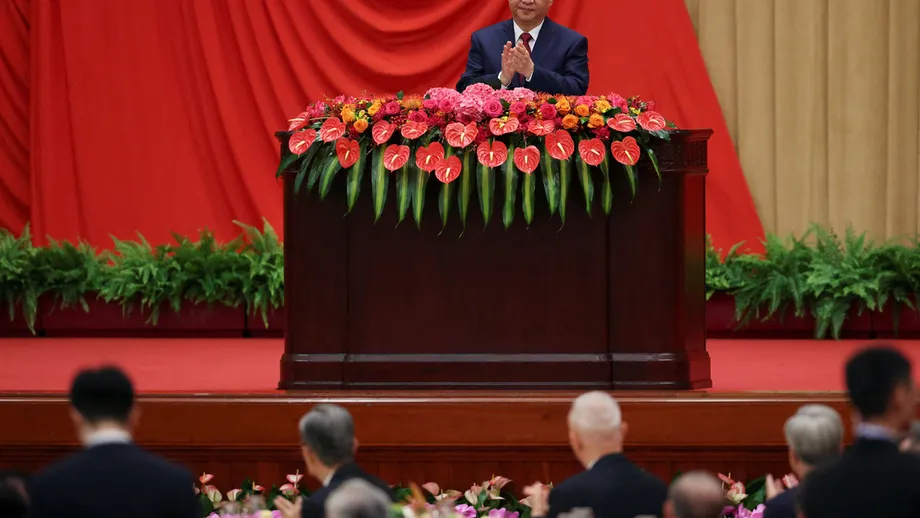
China's Communist Party will hold its fifth plenum in Beijing from October 26 to 29, 2026, with a sweeping decision on party discipline before it and a leadership body diminished by investigations, expulsions and prolonged absences. The gathering comes roughly a year before the 21st Party Congress, where Xi Jinping is widely expected to secure a fourth term as party chief.
Contents
- A smaller leadership gathers before the 2027 reshuffle
- Why this fifth plenum is about discipline
- Xi wants obedience that produces results
- The figures show pressure across the bureaucracy
- Retirement offers no shelter from investigation
- Military vacancies give personnel decisions extra weight
- Empty seats could reshape the leadership pipeline
- What tighter supervision could change locally
- The dates and documents to watch
- Key Points
Asia Society Policy Institute researchers estimate that 161 full Central Committee members and 130 alternates could attend. That would total 291, equivalent to 77.4% of the 376 people elected in 2022. Last October's plenum drew 315 participants, including 168 full members and 147 alternates.
The anticipated decision concerns how officials are selected, supervised, evaluated and punished. Its reach extends from corruption investigations to local government spending, military leadership and whether officials actually carry out Beijing's instructions.
The Politburo, the party's smaller senior leadership body, established the agenda at a meeting chaired by Xi on July 30. The government's July announcement said the plenum would hear the Politburo's work report and study major issues concerning full and rigorous party self-governance. It called for stronger centralized leadership and higher standards of internal oversight.
Xi's immediate task is therefore both political and practical: reinforcing his authority while getting a vast bureaucracy to deliver the policies he has already approved. Decisions made in Beijing depend on provincial, municipal and county officials to become spending, services and enforceable rules.
Why this fifth plenum is about discipline
A plenum is a full meeting of the Central Committee between national party congresses. Congresses normally take place every five years and choose a new Central Committee, which then selects the party's top leadership.
Fifth plenums usually consider recommendations for the next national development plan. This leadership cycle has followed a different timetable. The third plenum, normally expected in 2023, took place in July 2024. The fourth plenum, in October 2025, adopted recommendations for the 15th Five-Year Plan covering 2026 to 2030.
The October 2026 gathering consequently takes up party governance, an agenda more commonly associated with a sixth plenum. At its September 21 meeting, the Politburo agreed to submit a revised draft titled Decision of the CCP Central Committee on Several Major Issues on Persistently Advancing the Comprehensive Strict Governance of the Party.
Hou Yichao, a researcher on China's political economy, describes five systems within this approach: organization, education, supervision, institutions and accountability. In everyday terms, these cover who gets appointed, what officials are taught, who watches them, which rules apply and who answers when things go wrong.
The meeting may be the last substantial policy gathering before the next congress, according to Asia Society's assessment. National University of Singapore associate professor Chong Ja Ian points out that the usual seven-plenum cycle still allows a sixth plenum in 2027 and a seventh shortly before the congress.
Xi wants obedience that produces results
Xi's warnings before the meeting link political loyalty with performance. Qiushi, the party's theoretical journal, published his January 12 speech on October 16, bringing his instructions to discipline inspectors back into public view shortly before the plenum.
Xi, who serves as Communist Party general secretary as well as China's president, said officials must carry out the Central Committee's decisions rather than merely profess support:
We cannot just shout slogans, much less say one thing and do another.
His speech attacked officials who publicly proclaim loyalty while privately disregarding orders, cultivate factions or protect their own interests. He also demanded criticism, reassignment or disciplinary action where warranted.
The campaign extends to what Beijing calls a correct outlook on performance. Its targets include impressive but wasteful construction projects, abrupt policy reversals and officials who avoid acting because they fear making mistakes.
Xi has criticized local leaders who copy other places' semiconductor or electric vehicle projects without considering local conditions. A project can look ambitious on paper yet consume money that a locality needs elsewhere. The governance debate concerns how promotions and assessments can reward lasting public benefits rather than short bursts of visible activity.
Ruby Osman, a senior policy adviser on China at London's Tony Blair Institute, connects the discipline agenda to the coming leadership transition:
The growing focus on discipline is not because behaviour is getting worse, but because the stakes are getting higher.
Osman expects disciplinary campaigns to help align a new generation of officials, many with fewer personal ties to Xi, with his political standards as senior associates approach retirement.
The figures show pressure across the bureaucracy
China's disciplinary authorities opened 1.01 million cases in 2025, compared with about 155,000 in 2012, according to figures assembled in the Asia Society analysis by Neil Thomas, Lobsang Tsering and Shengyu Wang. That is about 6.5 times the earlier total.
Punishments for formalism and bureaucratism rose from about 46,000 in 2023 to 118,000 in 2025, more than doubling. Formalism means going through the motions, such as producing paperwork to show apparent compliance. Bureaucratism includes passing responsibility elsewhere or putting administrative habits ahead of solving problems.
The first eight months of 2026 brought a further increase of 16% compared with the same period in 2025. Nearly nine in ten punishments in these categories during 2025 concerned shirking, inaction, improper conduct or sham performance of duties.
The Central Commission for Discipline Inspection disclosed investigations involving 181 centrally managed cadres in 2025, up from 92 in 2024. Cases also involved 41,000 officials at county and division level and 137,000 at township and section level. Asia Society's own tally, covering announced investigations and specified expulsions among senior civilian and military leaders, counted 77 in 2025 and 71 during the first nine months of 2026.
Andrew Wedeman, a Georgia State University political science professor who studies corruption in China, argues that the continuing flow of cases shows the limits of deterrence. He says some officials now falling under investigation had engaged in misconduct for years while continuing to win promotion. His concern is whether punishment changes behavior throughout the appointment system, rather than simply removing its latest offenders.
Retirement offers no shelter from investigation
Investigations immediately before the plenum have reinforced the message that leaving office offers no protection. Jiangxi governor Ye Jianchun came under investigation on August 27. Authorities announced an investigation into retired former Chongqing mayor Huang Qifan on October 13.
Huang had left the mayor's post about a decade earlier and remained publicly active as an economic commentator. His case gives the discipline drive a reach beyond serving officeholders and the immediate competition for jobs in 2027.
Zhu Jiangnan, an associate professor at the University of Hong Kong, says the recent cases signal that officials cannot assume a safe retirement after misconduct. The message reaches people who may have considered their exposure to scrutiny finished once they departed a powerful position.
Research by Huang Hsin-hao of National Taiwan Normal University adds another measure of that reach. Reviewing cases involving centrally managed cadres from 2012 through June 2026, he found that retired officials and those who had left their posts accounted for more than 40% of cases. The share involving officials at department level rose from about 7% during the leadership cycle beginning in 2012 to nearly 20%.
Guo Xuezhi, a political science professor at Guilford College, found that 156 of 221 regulations concerning corruption issued since the People's Republic was founded appeared under Xi. His research also found that 97% of local party secretaries and discipline chiefs had no career connections, reflecting efforts to weaken personal networks between officials and those assigned to supervise them.
Military vacancies give personnel decisions extra weight
The sharpest contraction has occurred in the military leadership. The Central Military Commission began its current term with seven members. Asia Society's assessment says only Xi and Zhang Shengmin remain after the removal of the other five original members.
The January military investigations involving Zhang Youxia and Liu Zhenli accelerated that collapse. Zhang was the commission's senior vice chairman and China's highest ranking uniformed officer. Liu headed its Joint Staff Department, which helps direct military operations.
Zhang's removal was particularly striking because of his longstanding family connections to Xi and his survival through previous rounds of investigations. The party's allegations against senior officers have combined financial misconduct with accusations concerning political loyalty and obedience to its command.
The plenum is expected to endorse expulsions involving Zhang Youxia and former Xinjiang party secretary Ma Xingrui. Alongside He Weidong's earlier removal, their departures would bring the number removed from the original Politburo of 24 members to three. University of Zurich scholar Jean Christopher Mittelstaedt describes this as the largest such loss from a sitting Politburo during one term since 1980.
Military appointments are more plausible at this meeting than new Politburo appointments, according to Asia Society. The party has not added someone to the Politburo at a plenum in the middle of a leadership term since Huang Ju's promotion in 1994. Filling military vacancies could restore senior oversight of operations, personnel and procurement before the congress.
Public discussion of the armed forces is also facing tighter controls. A campaign announced on October 15 will run for two months and target misleading military content and disclosures about installations, units, equipment, training and operations. The announcement came from civilian internet and veterans authorities together with military departments.
Empty seats could reshape the leadership pipeline
The Central Committee elected in 2022 comprised 205 full members and 171 alternates. Asia Society's projected attendance of 291 would be 24 below the 315 who attended in October 2025.
The institute's estimate accounts for several kinds of loss: expulsions, investigations, prolonged disappearances from public view, Qin Gang's resignation and Yu Jianhua's death. Its projection therefore describes a broader thinning of the leadership than formal disciplinary removals alone.
Alternates can move into full membership when vacancies arise through expulsion, resignation or death. Advancement follows the votes received at the preceding congress, with surname stroke count breaking ties. Fourteen alternates have already advanced during the previous two plenums.
Asia Society calculates that as many as 23 alternates could move up at this meeting if all 15 full members under investigation are expelled before or during it. Kou Chien-wen, a professor at National Chengchi University, estimates that 18 to 30 Central Committee replacements may be needed. Both assessments point to a substantial renewal of personnel before 2027.
Political loyalty will be central to that process, Kou argues. The leadership must choose replacements for officials whom Xi's own administration previously promoted. Scrutiny of candidates therefore reaches beyond identifying opponents to judging the reliability of people already selected within his system.
What tighter supervision could change locally
Neil Thomas, a China politics researcher at Asia Society, expects possible measures to include closer checks on major projects and public spending, stronger accountability for party secretaries, greater use of large datasets to detect corruption and more power for discipline bodies.
The decision's detailed provisions and any appointment list have not been announced. Possible institutional changes, including an expansion of the Central Commission for Discipline Inspection's authority, remain forecasts ahead of the meeting.
Oversight is likely to focus on implementation of the 15th Five-Year Plan, including industrial upgrading, local government debt, environmental protection and a unified national market. The last term refers to efforts to reduce local barriers and inconsistent rules that make it harder for businesses to trade across China.
The July Politburo meeting connected governance with an extensive economic agenda: stronger fiscal support, appropriately accommodative monetary policy, domestic demand, employment, property market stabilization and debt risk. Officials must turn those priorities into workable decisions while managing their own budgets.
Better supervision could reduce waste and make local policy more predictable. Thomas also warns that harsher accountability may leave officials less willing to take reasonable risks. For a local administration, approving a project can bring scrutiny if it fails, while delaying it can hold back spending and investment.
Local governments also need money to deliver services and complete useful projects. Asia Society's analysis argues that discipline alone cannot resolve their financial constraints. The practical test will be whether the new rules give officials clearer priorities and room for responsible experimentation alongside stronger penalties.
The dates and documents to watch
The leadup to the plenum has combined policy preparation with prominent investigations. The main dates are:
- July 30, 2026: The Politburo announces an October plenum focused on party governance.
- August 27: Jiangxi governor Ye Jianchun comes under investigation.
- September 21: The Politburo agrees to submit a revised governance decision to the plenum.
- October 13: Authorities announce the investigation of former Chongqing mayor Huang Qifan.
- October 16: Qiushi publishes Xi's January 12 speech on discipline and corruption.
- October 26 to 29: The fifth plenum meets in Beijing.
- Second half of 2027: The 21st Party Congress is expected to choose the next leadership.
Proceedings will take place behind closed doors. Attendees are traditionally confined to the venue to prevent leaks, and foreign media and most Chinese journalists have no access. Previous plenums used Beijing's Jingxi Hotel; the venue for this meeting has not been announced.
Xinhua is expected to release a closing dispatch on October 29, with a fuller decision usually appearing several days later. Attendance figures, confirmed expulsions, promotions and the wording of new oversight rules will provide the first concrete account of what the leadership has agreed.
A successor to Xi is unlikely to emerge from this gathering, according to the analysts. Xi is expected to retain the top party post in 2027, while the plenum shapes the officials, rules and enforcement machinery through which he intends to govern.
Key Points
- The fifth plenum meets in Beijing from October 26 to 29, 2026, to consider a major party governance decision.
- Asia Society estimates attendance at 291 full members and alternates, equivalent to 77.4% of the original 2022 cohort.
- The agenda reaches beyond corruption to political loyalty, appointments, spending and policy execution.
- Military leadership vacancies and Central Committee replacements give the meeting substantial personnel stakes.
- A closing statement is expected on October 29, followed by a more detailed document.
- Xi is widely expected to seek a fourth term as party chief at the 2027 congress.