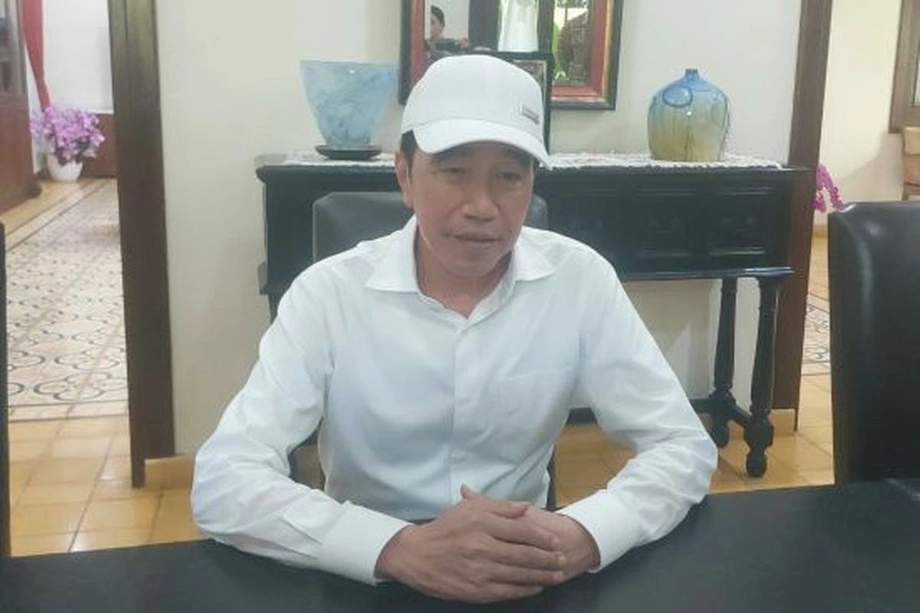
Four diplomas, two hearings and a tightly controlled courtroom
Former Indonesian president Joko Widodo displayed four educational diplomas at the East Jakarta District Court on November 5, 2026, as he testified in a defamation case against former minister Roy Suryo. The court limited its audience to 80 people, while authorities deployed around 1,200 security personnel and installed television screens outside so more people could follow proceedings.
Contents
- Four diplomas, two hearings and a tightly controlled courtroom
- Why only 80 people could enter
- How Jokowi's court appearance unfolded
- The display followed an exchange with the judge
- Three dates at the center of his university account
- The photograph and access to the originals
- Why Jokowi said he went to police
- Roy rejected the testimony and sought new testing
- What the charges require the court to examine
- Key Points
Jokowi, Indonesia's seventh president, appeared as a prosecution witness over allegations that his undergraduate diploma from Gadjah Mada University (UGM) was forged. He rejected the accusations, described his education from primary school through university and identified the photograph on his university diploma as his own.
Roy rejected his testimony and requested another forensic examination of the evidence. The hearing brought the dispute into direct questioning before judges, with prosecutors, defense lawyers and Roy himself questioning the former president.
Jokowi was scheduled to testify in two separate cases that Thursday: Roy's at 9 a.m. and the case involving health activist Tifauzia Tyassuma, widely known as Dokter Tifa, at 2 p.m. Both defendants face accusations connected to their challenges to his academic credentials.
The day's central developments went beyond the display of documents. Jokowi gave precise dates for his 1985 thesis examination, diploma and graduation ceremony, explained why he had taken legal action in 2025 and described his refusal to show original documents to demonstrators who visited his home. Roy's response kept the examination of those documents at the center of the defense.
Why only 80 people could enter
Court head Efendi announced the attendance limit on November 3, saying the courtroom could accommodate no more than 80 visitors. He said the hearings remained open to the public and that supporters of Jokowi, supporters of the defendants and other members of the public would be treated equally.
Efendi presented the limit as a matter of space, comfort and order. He also said the court would remain neutral: prosecutors would seek to prove the charges, while defense lawyers would represent their clients.
Television screens outside the courthouse gave journalists and members of the public another way to follow proceedings. The arrangement extended access beyond the courtroom while keeping the number of people physically inside within its stated capacity.
East Jakarta police chief Senior Commissioner Alfian Nurrizal described three security zones: inside the courtroom, around the court building and outside the building. Police also arranged separate parking locations for the opposing groups of supporters and diverted traffic around the courthouse.
Those measures addressed two practical concerns at once: keeping the hearing orderly inside and reducing encounters between rival groups outside. Around 1,200 security personnel were deployed, although the number assigned to each zone was not specified.
How Jokowi's court appearance unfolded
Jokowi arrived at approximately 8:30 a.m. in a black Toyota Kijang Innova Zenix, accompanied by his adjutants. His children Kahiyang Ayu and Kaesang Pangarep also attended and sat near the front of the courtroom.
Asked about the educational documents he had brought, the former president gave a brief answer:
All of them are on me.
Jokowi entered the courtroom at about 9:13 a.m., confirmed his identity and swore to give truthful testimony. His arrival drew supporters to the courthouse, where the security arrangements had been prepared in anticipation of competing groups.
The schedule followed requests made during the preceding week's hearings. Prosecutors had sought to put the two witness appearances on the same day because of safety concerns.
- October 28, 2026: Prosecutors in Roy's case requested a November 5 hearing to match the date in Tifa's case, citing safety concerns.
- October 29: Prosecutor Tri Yanti Merlyn Christin announced plans to call Jokowi as a witness in Tifa's trial.
- November 3: Efendi announced the courtroom's maximum audience of 80.
- November 5: Jokowi arrived for the morning hearing involving Roy, with Tifa's hearing scheduled for the afternoon.
The display followed an exchange with the judge
Prosecutors first brought diploma evidence before the panel of judges. Jokowi, Roy and members of the defense team approached to inspect it. Jokowi then asked to show the documents to journalists and other people attending the hearing.
Presiding judge Christina Endarwati initially suggested that he display them on another occasion, possibly after the hearing. Jokowi repeated his request, explaining that he had publicly promised to show his diplomas from primary school, junior high school, senior high school and university.
The judges subsequently allowed the display. Jokowi turned toward the audience and held up the four documents one after another before returning to the witness stand.
Jokowi said he had attended State Primary School 111, State Junior High School 1 and State Senior High School 6, all in Surakarta, Central Java. He then studied at UGM's Faculty of Forestry in Yogyakarta.
Supporters cheered during the display. Roy, who was seen laughing, asked the judge to remove people who were shouting. The exchange put the court's concern about order into immediate focus: the public could attend, but proceedings still required controlled questioning and responses.
Three dates at the center of his university account
Jokowi's testimony separated three stages of completing his undergraduate education: passing his thesis examination, receiving a diploma dated by the university and attending the graduation ceremony.
The former president gave the date of his thesis examination directly to the court:
My thesis examination took place on October 23, 1985, Your Honor.
Jokowi said he passed with an A, made minor revisions and had his thesis printed at Percetakan Perdana. He said the printer handled its cover and approval sheet.
His diploma, he testified, was dated November 5, 1985, and signed by UGM's rector and the dean of the Faculty of Forestry. He placed his graduation ceremony on November 19, 1985, at the Purna Budaya building in Bulaksumur, Yogyakarta.
Those dates put the diploma 13 days after the thesis examination and the ceremony another 14 days later. In his account, the examination completed the academic assessment, the diploma recorded the qualification and the ceremony marked graduation publicly.
Jokowi recalled 14 Faculty of Forestry graduates attending the ceremony and said he was listed 12th. He could not remember every graduate's name.
The photograph and access to the originals
Prosecutors asked Jokowi whether the university diploma presented in court belonged to him and whether its photograph showed him or Dumatno Budi Utomo, identified in the dispute as his cousin.
Jokowi confirmed that both the diploma and photograph were his. He explained that he had worn glasses and had a thin mustache while at university, giving the court an account of why his appearance in the photograph differed from his familiar public image.
Jokowi also said police had seized his senior high school and undergraduate diplomas during the investigation. His thesis remained in his possession.
Roy and Tifa have alleged that the UGM qualification was forged and that Jokowi never graduated. The disputed diploma was among the documents used for his 2014 presidential election candidacy. Jokowi and UGM have repeatedly rejected the allegations.
Jokowi challenged the basis of Roy's examination of the document, saying Roy had never seen the original before reaching his conclusion. He also testified that Roy and his associates had neither asked his permission nor notified him that they were using his diploma for research. He said their allegations lacked primary data, meaning information drawn directly from the original material.
Why Jokowi said he went to police
Jokowi told the court that an aide showed him a video of Roy questioning his undergraduate diploma around March 26, 2025. He said similar allegations had circulated since 2020, returned in 2024 and become more serious during 2025.
He described feeling insulted and demeaned, saying the accusations damaged his reputation and that of his family. After consulting his lawyers, he filed a complaint with Jakarta's metropolitan police on April 30, 2025.
Jokowi said the complaint set out a chronology rather than naming Roy or another specific person as the reported party. He described the allegations as spreading through television discussions, online programs and social media, including Facebook, X and YouTube.
He attended police questioning in Jakarta in May 2025 and pledged to produce his original diploma when requested. Roy and Tifa were named suspects in November 2025. Accounts of their subsequent detention give June 19 as the arrest date, followed by their release, without specifying the year.
Jokowi also described demonstrators arriving by bus at his Surakarta home. He allowed three representatives inside, he said, but refused their request to inspect his original diploma because they lacked official authority. He told the court that he would show it when requested by investigators, prosecutors or judges.
Roy rejected the testimony and sought new testing
Judge Christina asked Roy for his response after Jokowi finished testifying. Roy rejected the testimony, described the answers as convoluted and said basic questions had gone unanswered. When pressed on which parts he disputed, he said most were wrong.
Roy requested another independent examination of the evidence, including the diploma, through the police forensic laboratory. He referred to changed police leadership in explaining that request. The judge recorded his rejection of the witness's testimony.
Defense lawyer Refly Harun also challenged the documents displayed in court, saying they looked different from those shown during a special case review. The immediate point of dispute was therefore both Jokowi's account and the defense's demand for further examination of the physical evidence.
The hearing accounts give no decision on that testing request or date for the next session. Tifa's hearing was still underway when the day's coverage was published.
After giving evidence and answering questions from prosecutors, defense lawyers and Roy, Jokowi walked toward the defense seating area and shook hands with Roy and his lawyers.
What the charges require the court to examine
Roy, who served as youth and sports minister under former president Susilo Bambang Yudhoyono, faces charges concerning alleged defamation and electronic information offenses. Prosecutors accuse him of spreading false information about Jokowi's diploma.
The principal criminal code provisions cited in the indictment are Article 433(1), read together with Article 441(1), of Law No. 1 of 2023 on the Criminal Code. The indictment also cites provisions of Law No. 11 of 2008 on Electronic Information and Transactions, commonly called the ITE Law.
Those electronic information provisions include Article 35 together with Article 51(1), and Article 32 together with Article 48(1), alongside Law No. 1 of 2026 on Criminal Adjustments. The legal term "read together with" means that the cited provisions operate in combination. A subsidiary charge gives judges an alternative legal basis to consider if the principal charge is not made out.
The court must examine the accusations through evidence and questioning, with the prosecution seeking to prove its case and the defense able to challenge witnesses and documents. Jokowi's testimony supplied his account of his education and the harm he said he suffered; Roy's response placed further document testing before the judges.
Key Points
- Jokowi displayed four educational diplomas while testifying at the East Jakarta District Court on November 5, 2026.
- The court limited its audience to 80 people, with television screens outside and around 1,200 security personnel deployed.
- Jokowi dated his thesis examination to October 23, 1985, his diploma to November 5 and his graduation ceremony to November 19.
- Roy rejected the testimony and requested another forensic examination of the evidence.
- Roy's case and Tifa's case had separate witness hearings scheduled for the same day.
- No decision on Roy's testing request or next hearing date was given.