The Purple Apple Behind a Luxury Price
By March 12, 2026, retail figures most often cited put each Black Diamond apple at $7 to $20, and the Vietnamese reference price was close to $20, about VND500,000. An Rs500 price had appeared by November 17, 2023, while a wider $10 to $40 range, up to 2,000 Turkish lira, has also been cited. Those numbers explain why wealthy buyers have noticed the fruit: a single apple is being sold as a small luxury item.
Contents
- The Purple Apple Behind a Luxury Price
- Where the Purple Skin Comes From
- Why Eight Years of Patience Matter
- How the Fruit Reaches the Luxury Shelf
- A Real Cultivar With a Complicated Image
- How It Compares With Other Dark Apples
- Why a Single Apple Can Cost So Much
- What Shoppers and Growers Still Do Not Know
- Key Points
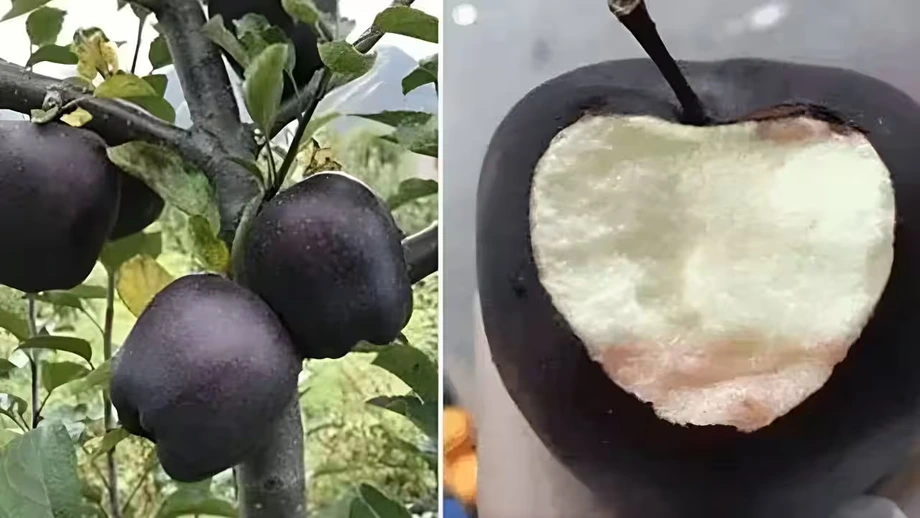
Its skin is deep purple and can look nearly black in photographs, while the flesh inside is white. Sellers describe it as a rare product from high orchards in Tibet, where limited harvests and trees that grow slowly keep supply tight. The name does much of the work too, turning an apple into something that sounds collectible.
- October 5, 2021: James Nave challenged online claims about the fruit's color and taste.
- November 17, 2023: An Rs500 price was attached to a fruit described as coming from Nyingchi.
- March 12, 2026: Published figures put the price range at $7 to $20 per apple.
Where the Purple Skin Comes From
Nyingchi, in the Tibet Autonomous Region, is the orchard home most often attached to this cultivar. Some descriptions say the fruit is grown exclusively there, on slopes above 3,500 m. The claim that Nyingchi is the only growing place has been questioned, but the marketed fruit is tied to that city high in Tibet.
The color starts with place. At high altitude, ultraviolet light is stronger because thinner air filters less sunlight. Apples can respond to that intense light by building pigments called anthocyanins, which make skins purple or deep red. Warm days and cool nights also shape how the fruit develops.
High altitude sunlight explains why the apple looks black in many pictures while remaining purple in real life. The skin is dark violet; the inside is white. Intense ultraviolet light and sharp changes between day and night temperatures are the growing conditions most often named for that exterior.
Why Eight Years of Patience Matter
Black Diamond trees need about eight years to reach full yield. Common apple trees can mature in two or three years, so the Tibetan cultivar asks growers to wait roughly five to six years longer, or about three to four times as long, before the same stage of production.
Time is only one cost. Steep mountain orchards make work harder, and the variety needs high maintenance. A tree that takes eight years to reach full strength ties up land, labour and care long before it earns money.
The harvest window is short as well. It lasts only two months a year, and about 30% of production meets luxury market standards. In simple terms, roughly 3 apples in 10 reach that grade, while about 7 in 10 do not.
How the Fruit Reaches the Luxury Shelf
Quality control is central to the price. Only apples that pass strict checks reach the market, so shoppers are not being offered every fruit from the orchard. Limited harvests, high maintenance costs and rejections at grading all reduce the number of apples that can be sold as Black Diamond.
Luxury supermarkets in Asia are the main retail setting named for the cultivar, with individual fruits in the commonly cited range. The Vietnamese example sat near the top of that range, and the Turkish example stretched higher, showing how country and store can change the shelf price.
The buyer is often buying more than breakfast. James Nave's description places Black Diamond mainly in the gift market, where fruit is chosen for appearance, name and status. Fruit gifts are common in China and Japan, and an unusual purple apple fits that role neatly.
A Real Cultivar With a Complicated Image
Black Diamond is a real apple cultivar, but its public image is more dramatic than the fruit itself. It is linked to the Chinese Huaniu apple from Gansu province, either as a seedling or as a bud sport. A bud sport is a natural change in a bud that growers can propagate by grafting, which means a branch with a new trait becomes the source of new trees.
The cultivar may also be the same as one called Afal Diamond. Its internet image grew through Facebook posts and widely shared photos. Its color is more purplish than the reddish black seen in some other dark apples. It is not literally black, and its flesh is white.
James Nave, a member of the North American Fruit Explorers, wrote on October 5, 2021 that widely circulated photos were altered and that the fruit was being oversold as black and delicious. He was arguing that the cultivar exists but that marketing images and taste claims went too far.
The Black Diamond apple photos you see posted everywhere are photoshopped. It is a real apple cultivar, but it is NOT BLACK.
Nave also said Black Diamond was not recommended for widespread production in China because its taste was not superior. He described it as a gift apple rather than a leading eating apple. That matters for buyers, because the high price is tied more to appearance, place and scarcity than to a promise of extraordinary flavor.
How It Compares With Other Dark Apples
Black Diamond is not the only apple with a dark name. Other cultivars named alongside it include Arkansas Black, King David, Black Amish, Black Anne, Black Bud, Black Ben, Kingston Black, Black Gilliflower, Black Jersey, Black Limbertwig, Black Oxford and Birkenfelder Rotäpfelchen. Some are reddish black, while Black Diamond is described as more purplish.
Nave said several of those apples, especially Arkansas Black and King David, have better taste than Black Diamond. His point was that darkness is not rare among apples. This particular cultivar became valuable because Tibetan growing conditions and marketing gave it a distinct look and story.
Miekal And, whose comment appeared in the same North American Fruit Explorers discussion, questioned the claim that the apples can only grow in Nyingchi. He asked why they could not also be grown in the United States and noted a claim that they are a different genotype from Arkansas Black. A genotype is the genetic makeup of a plant. No answer to that question was given, so the exact line between fruit grown in Tibet and possible production elsewhere remains unclear.
Why a Single Apple Can Cost So Much
The economics of the fruit are simple when the pieces are lined up. Trees take eight years to reach full yield. Harvest lasts two months. Only about 30% of the crop meets luxury standards. High altitude orchards require more care, and the fruit must look right to enter the gift market.
A short harvest gives the apple scarcity. A dark purple fruit from Tibet also has a clear story, a memorable name and a visual advantage in photographs. Social media users reacted with amazement, with one hoping to taste the fruit, another praising the color and a third joking that the blacker the apple, the sweeter the juice. A tweet by Massimo was also part of that online reaction, with no text given.
Those reactions help explain demand, but the eating experience is more contested. Nave said the taste was not superior, while other descriptions praise sweetness like honey. No tasting result or sugar measurement was given, so readers have only the competing descriptions to weigh.
What Shoppers and Growers Still Do Not Know
No official yield figure, export total, farmgate price or planted area was given, so the size of the Black Diamond apple trade is not known. Farmgate price, the amount paid to the grower before retail markups, is especially important because a $7 to $40 shelf price can hide very different returns along the chain.
No harvest date, grading rule or announced date for wider sale outside Asia was given either. Prices are quoted per fruit, not by the kilogram, and no single price covers every market. The retail figures reflect different places and different selling points.
For now, the apple's future depends on whether buyers keep paying for the look and story, and whether growers can handle the long wait and tight quality demands. Tibet's high orchards have produced a fruit that travels well as an image. Its next test is the less glamorous work of steady production, honest labeling and repeat sales.
Key Points
- Black Diamond apples are grown in Tibet, with Nyingchi named as the main orchard area and some fruit described from altitudes above 3,500 m.
- Prices most often cited are $7 to $20 a fruit, while other figures include close to VND500,000, Rs500 and $10 to $40, up to 2,000 Turkish lira.
- The dark purple skin is linked to intense ultraviolet light and temperature changes between warm days and cool nights; the flesh is white.
- Trees need about eight years to reach full yield, harvest lasts two months a year and about 30% of output meets luxury market standards.
- The cultivar is linked to Huaniu apples from Gansu province and is sold mainly as a gift apple, not as a leading eating apple.
- Growers and shoppers still lack clear figures for yield, exports, farmgate prices and a single global retail price.