A Record Signing Total Puts AI Culture in Focus
Guangzhou closed the 2026 Greater Bay Area Cultural Industries Investment Conference on November 26 with about 8.6 billion yuan in intended investment agreements, the highest total since the event began in 2023. The meeting lasting three days drew nearly 5,000 participants, including almost 200 investment institutions, 300 cultural company leaders and 600 representatives of cultural organisations. Organisers said 48 roadshow firms and institutions reached signing intentions and nine projects signed during the conference. The organiser did not give a date by which all the intentions would become final deals.
Contents
- A Record Signing Total Puts AI Culture in Focus
- Who Came, and Which Projects Got a Hearing
- A Souvenir Made in 30 Seconds Shows the Supply Chain
- From 15 Months to Six Months for a Digital Scene
- The Money Is Flowing to Hardware, Robots and AI Content
- Guangdong's Manufacturing Base Gives Culture a Physical Form
- Investors Ask How the Money Comes Back
- AI Makes Content Cheap, but Attention Still Costs Money
- Robots Move Into Paid Work, Not Just Demonstrations
- Pazhou and the Project Pipeline Seek a Longer Life
- One Person Companies Become a Policy Target
- Cultural Exports and Guochao IP Go Global Together
- Guochao Turns Cultural Symbols Into Everyday Products
- Key Points
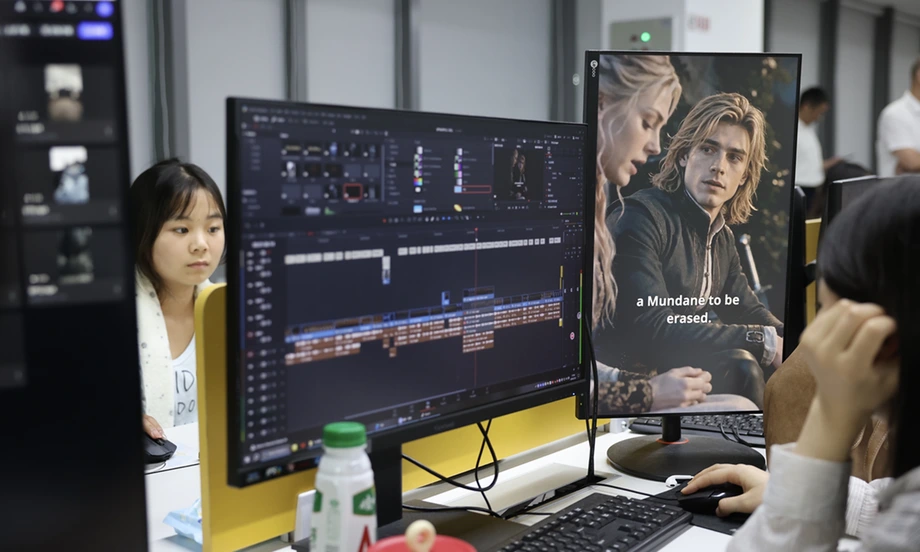
Artificial intelligence ran through the meeting like an assembly line. Exhibitors showed machines that turn a visitor's photo into a personal souvenir, software that turns words and images into 3D scenes, robots that work in shops and temples, and tools that make videos, comics and virtual worlds faster. Investors judged whether lower costs can turn into products people pay for again and again.
- November 24: The conference opened in Guangzhou with a main forum and the first roadshow sessions.
- November 25: Sessions covered digital entertainment, culture technology, national trend IP, Pazhou companies, AI one person companies and cultural exports.
- November 26: The conference closed with the 8.6 billion yuan intended signing total.
Who Came, and Which Projects Got a Hearing
The conference built a funnel. Organisers received nearly 400 applications and chose 100 projects for roadshows. Five were valued above 10 billion yuan, and 12 were in the 1 billion to 10 billion yuan range. Organisers said 196 investment institutions registered, including 42 with more than 10 billion yuan in funds and 18 with 5 billion to 10 billion yuan.
Eight sector roadshow sessions, two regional sessions, two online roadshows and six financing events filled the programme. More than half of promoted projects involved AI, including video models, embodied intelligence, AI film and short drama, and AI entertainment hardware. The event also added an AI OPC session, an investor night, and annual meetings of an investment alliance and a think tank alliance. Vietnamese game companies joined for the first time.
Named agreements paired Guangdong Jiesen Entertainment with CICC Capital for annual strategic cooperation. Guangzhou Haizhu City Construction Development Group signed with Zhidong Future Technology, Chopsticks Information Technology and Xinmou Technology. The Xinxin comic drama headquarters project chose Guangzhou.
The design is called 1+8+N: one main conference, eight sector roadshows and many matching activities. Its 3+365 model means three days of meetings plus support across the rest of the year. Guangdong created the conference in 2023, alongside the Shenzhen Cultural Industries Fair, so the province has one event to show cultural results in the first half of the year and another to seek capital in the second half.
A Souvenir Made in 30 Seconds Shows the Supply Chain
A machine occupying one square metre drew a queue at the conference. A visitor took a photo and saw a personal design in about 30 seconds. The same system could turn that design into a badge, a fridge magnet or a commemorative coin on site. The company behind it was only one year old. Its AI agent, software that can plan and carry out steps toward a goal, linked storefront terminals with a flexible supply chain able to make one item for one tourist or many items for a shop.
KuMi Technology, which works in this field, described a wider creative content to manufacturing system, known as C2M. The platform can make designs in about 30 seconds and produce badges, metal fridge magnets and coins in about two minutes, with more than 30 craft processes available. At Beijing's Temple of Heaven in October, one machine took more than 35,000 yuan in revenue, with 49.6 percent of interactions converted into payments.
The same model can carry licensed characters and local culture. One version uses popular animation characters and Lingnan lion dance, Yingge dance and dragon boat customs. For a child, the idea is simple: a photo becomes art, then a physical object, without a large print run.
From 15 Months to Six Months for a Digital Scene
A company in Shenzhen's Nanshan District uses its own large model and AI 3D reconstruction, a method of building a digital model from images or scans, to turn text and pictures into full scenes. A large model is AI trained on huge collections of text, images or video so it can produce new material. The company's VR spaces have reached more than 550 stores worldwide, used in tourism, interactive games and immersive culture.
Yan Erhui, head of the Shenzhen company, explained how the production cycle changed. He said work that once took more than a year could now be completed in months, and that faster launches had raised ticket revenue.
A product of the same quality that once took 12 to 15 months of research and development now takes three to six months. On the consumer side, a new title that once needed three months to launch can now launch in one month, bringing two to three times the box office revenue.
The company was taking part in the conference for the first time and received an intended financing offer of 5 million yuan. Its pitch showed why investors were drawn to tools that touch both production and sales. A studio that spends less time building a scene can release more titles, test audience reaction sooner and keep its supply chain busier.
The Money Is Flowing to Hardware, Robots and AI Content
Tao Feng, dean of the Institute of Industrial Economics at Jinan University, released the conference trend report on investment. It named four hot tracks: cultural manufacturing and smart hardware, AIGC and content technology, digital creativity and IP, and cultural exports. IP means intellectual property, such as characters, stories and brands that can be licensed. AIGC means content made by artificial intelligence.
Over five years, Guangdong recorded 828 financing events in cultural industries worth about 69.265 billion yuan. Technology focused cultural manufacturing accounted for 526 deals worth 51.733 billion yuan, or 63.5 percent of deals and 74.7 percent of the money. Cultural tourism robots took 224 deals, the largest share among its sub sectors. AI centred on AIGC and large models recorded 155 deals worth 6.025 billion yuan. The AIGC field in 2026 was nearly three times its 2025 level.
Tao Feng said investor interest had clustered around machines and content tools rather than only around stories.
From the investment side, AI plus culture hardware and cultural tourism robot projects are the most numerous. Areas linked to content production are also becoming a direction of investment attention.
The trend report also pointed investors toward three broad plates: cultural manufacturing, cultural services and the blend of agriculture, tourism, culture, sport and education. Guangdong said it would deepen AI use in ultra high definition video, performance equipment, tourism, internet services, film and games.
Guangdong's Manufacturing Base Gives Culture a Physical Form
The pull toward hardware fits Guangdong's industrial base. In 2025, the province's cultural consumption terminal production reached 501.669 billion yuan, up 10.4 percent. Service robot output reached 15.1821 million units, or 81.7 percent of China's total. Factories and suppliers let a drawing become a toy, a pair of glasses, a ride or a shop device without sending production abroad.
Chen Ming, deputy general manager at Guotai Haitong Creative, said Guangdong's strength lies in joining stories to production.
Guangdong has formed a composite industrial structure of content plus manufacturing.
That structure appeared in many pitches. Insta360 uses AI to sort travel footage and generate albums or videos. RayNeo is developing full colour AI and AR glasses. Zhidong Future builds robots with multiple forms of interaction and environmental sensing for cultural tours. Guangdong also said in 2025 that it had issued a policy package with 87 measures across film, performance, animation, online games, esports and online audio and video.
The province's scale is large by any measure. An industry overview put 2025 cultural industry revenue at 3.4 trillion yuan, up 12.5 percent. Another measure put 2025 revenue of above scale cultural enterprises at 2.77 trillion yuan, up 8.9 percent. Shenzhen alone had 3,904 above scale cultural firms in 2025 with 1.514 trillion yuan in revenue, up 16.6 percent; its 16 new format sectors recorded 724.198 billion yuan, up 22.7 percent.
Investors Ask How the Money Comes Back
Growth in revenue has not removed pressure on profit. For the first three quarters of 2026, China's above scale cultural enterprises saw revenue rise 4.3 percent, while revenue in new culture formats rose 8.9 percent. Profit at above scale cultural enterprises fell 7.3 percent. In Guangdong, 2025 cultural industry financing reached 213 events worth 13.96 billion yuan, up 79.0 percent and 127.3 percent from the year before.
Huang Huan, founding partner of Sanqian Capital, told the digital entertainment session that startups needed to control the money they could actually manage.
The most important thing is cash flow.
Hailang Technology put water sport equipment in resorts and shared revenue with venue operators. General manager Duan Jinyang said related products had been used more than 340,000 times, with a 41 percent conversion rate. For hotels meeting certain price conditions, he estimated payback in about one month in peak season and three to five months in slower months. Community pools and water parks needed seven to 12 months. Other investors used a four to five year payback as a reference for projects with few heavy assets.
Lenders are also trying to price culture businesses. Ling Yanyi, senior manager at Bank of China's Guangdong branch, said the bank offers Zhi Hui Loan, with up to 10 million yuan against patents, and Ke Chuang Loan, with up to 5 million yuan on credit for specialised cultural firms. The bank is exploring loans based on token use vouchers and computing contracts, so a company with large AI bills can seek credit against those costs.
AI Makes Content Cheap, but Attention Still Costs Money
The digital entertainment roadshow on November 25 brought eight companies before investors. Beijing Yilian together Running Culture said it sold computing time in packages of 199 yuan for 1,800 seconds of video, served more than 3,000 brand clients and expected 2026 revenue of 60 million to 70 million yuan. Its founder Sun Shuche said monthly growth had been 30 to 40 percent in the second half of the year. Investors asked how long supply agreements lasted and whether model prices were locked, because a cheap input today can become an expensive one tomorrow.
Huang Huan said culture and entertainment financing and mergers in China were about 320 billion yuan in 2015 and under 20 billion yuan in 2025. DataEye Research used 50 million views on Douyin as a rough break even line for short dramas and comics. Only about 1.3 percent of new AI dramas and comics launched in the first half of 2026 reached that level.
Chen Ming, deputy general manager at Guotai Haitong Creative, said common tools pushed producers toward similar stories and templates.
The money saved on production is taken back by traffic buying and distribution.
Companies at the session showed different paths around that problem. Century Jicheng has 200,000 hours of licensed film and television material and earns 15 million to 20 million yuan a month from its material business. Pixmax said it began commercialising in April with a four person team and now earns more than 30 million yuan a month, with about 200 million yuan expected for the year. Beijing Yijing's Zoooo social world model is planned for the App Store in early December and can generate virtual worlds that evolve for 90 minutes. Beijing Space Time Journey showed an AI teacher that builds tutoring plans; founder Hao Jingfang said parents reported better maths results and the team would track score gains.
Robots Move Into Paid Work, Not Just Demonstrations
The conference treated embodied intelligence, AI placed in physical machines that sense and act, as a business question. A report by the China Academy of Information and Communications Technology, Tsinghua University and others said 2026 marked a move from future industry to pilot applications. Investors asked who paid, how quickly costs were recovered and whether orders could repeat.
Peng Zefan, financing manager at Cross Dimensional Intelligence, answered questions about customer payback after the company's June 2026 financing round of more than 1 billion yuan. The round put its value above 10 billion yuan, and Lens Technology founder Zhou Qunfei joined as an individual investor.
In some fields, customers can recover the cost of one of our solutions within 18 months. Traditional products such as robot arm drives are already at break even. Our loss making point is humanoid robots, which we expect to reach break even in 2028.
Wuyan Intelligent is designing costs around a two year return on investment, or ROI. COO Xiao Min said a robot could be kept at 200,000 to 250,000 yuan by comparing it with the cost of one worker over two shifts. On September 21, 2026, the company signed a memorandum with Farda Group, which has more than 18,000 stock keeping units and sells to over 130 countries. Tage Intelligent said its driverless mining vehicles cut labour by 70 to 80 percent, had reached more than 40 projects and deployed over 1,000 vehicles, and turned operating cash flow positive in 2025. Zhi Pingfang deployed more than 200 robots in airports and over ten provinces, and seven robots at a Shenzhen summit served more than 10,000 cups of coffee to over 5,000 reporters.
Pazhou and the Project Pipeline Seek a Longer Life
The Pazhou session on November 24 showed how one district is trying to define AI culture. Five companies, Chopsticks Information Technology, Zhidong Future Technology, KuMi Technology, Xiaozan Cloud and Sunzhan Technology, pitched ideas. Chopsticks is building a system in which tokens, countable units of model use similar to units of electricity, connect video creation, automated work, distribution and IP resources. Its KP Wallet, launched in August, gives companies one account for planning, generation, distribution and performance data.
Xiaozan Cloud wants to move film work from single projects to reusable assets such as characters and scenes that can be managed and traded. KuMi connects AI design directly to manufacturing. Zhidong Future put robots into Hong Kong's Wong Tai Sin Temple, Xi'an Datang Everbright City, hotels and supermarkets. Vice president Zhou Wen said remote operation kept delay under 20 milliseconds even over distances above 2,000 kilometres. The company recently completed an early growth financing round worth 100 million yuan for a Guangzhou production line and four types of venues. Haizhu City Development Group also introduced Pazhou facilities offering computing power, models and scene testing.
The conference has tried to keep deals alive after the closing ceremony. Over its first three editions, 123 projects were presented, 48 received 88 rounds of financing and actual funding exceeded 25.5 billion yuan. The first two editions had a 50 percent investment conversion rate. After a 2024 roadshow, Jiesen Entertainment completed two funding rounds within a year. An industry overview put both its financing size and valuation up three times; the chairman of the Greater Bay Area Cultural Industries Investment Fund put valuation growth at 3.7 times.
On November 25, a culture technology roadshow put ten projects into the conference project pool for 3+365 matchmaking. Li Mei, founder of Fusion Capital, advised teams to open business plans with the problem, market size and why their project could not be easily replaced. She said the share of public sector limited partners, investors in funds, was rising and that startups could state where they would invest and bring returns. Du Zhixin, managing director at Foundation Capital, named AI applications, physical AI and video generation as areas of opportunity.
One Person Companies Become a Policy Target
The first AI OPC roadshow was held on November 25 in Guangzhou. OPC means one person company, a small operation in which one founder uses software and outside partners to do work once handled by a larger team. The session gathered AI startups from the Greater Bay Area for investment matching. Guangdong's action plan for AI one person companies from 2026 to 2028 calls for 10 OPC communities in 2026, then 100 communities and 1,000 model firms by 2028.
The province also set six scenarios, including cultural industry upgrade, artistic creation, lifelong learning, public culture, Guangdong goods going global and international communication. Five support plans cover data supply, core technology, computing power upgrades, new company cultivation and AI talent.
Ding Wenhua, an academician of the Chinese Academy of Engineering and dean of Shenzhen University's College of Electronics and Information Engineering, said AI was changing who could make professional content.
Current AIGC is changing the way digital content is generated. Large models can already understand a film in one pass. AI creative production is reshaping professional content production and making OPC possible.
Tao Feng said OPCs were still at an early stage. He explained that one person can create content more easily, but a company making physical products still needs suppliers, factories and channels. That is why the conference put OPC founders beside investors, manufacturers and venue operators.
Cultural Exports and Guochao IP Go Global Together
AI also changed the pitch for exports. Wang Guike, chairman of the Guangdong Greater Bay Area Cultural Creative Industry Promotion Association, said Guangdong's cultural products took 37.5 percent of national exports in 2025.
Guangdong's cultural products accounted for 37.5 percent of national exports in 2025. The Greater Bay Area's cultural exports have moved from the export of single products to the export of platforms using AI.
Zhao Qian, deputy general manager at Guotai Haitong's strategic client department, said overseas revenue for short drama apps reached 2.329 billion US dollars in 2025, with revenue and downloads both growing by triple digits. In games, 37 Interactive Entertainment said more than 80 percent of its 2D art assets were made with AI help. Wu Jingyi, chair of the Hong Kong Creative Industries Development Foundation, said Hong Kong, Guangdong and Macau had room to work together on technology, culture and overseas markets. Wang Guike said the next stage depends on the ability to meet local rules, adapt stories and run operations in each market.
Companies described practical routes. Tuoyuan Intelligence serves nearly 100 smart retail sites and plans to focus on North America and Canada this year, then Europe, Japan and South Korea next year. Aishi Technology is extending video models from short dramas into ecommerce, advertising and games. Yijing is looking at overseas entertainment and social use. Jiesen Entertainment said it has 36 AI artists and a first AI short drama on the Galaxy Rising Star account. Its global plan starts with Asia Pacific, then reaches Europe, the United States and Oceania, with events planned in the Philippines, Australia and New Zealand and a world event at Hong Kong Disneyland in August 2027.
Guochao Turns Cultural Symbols Into Everyday Products
Guochao, or national trend culture, was the other route from symbol to sale. National guochao economic activity was put at about 2.5 trillion yuan, with average yearly growth of 9.4 percent over ten years and about 74 percent of spending from people born in the 1990s and 2000s. Guangdong's game industry reached 283.6 billion yuan in 2025, more than 80 percent of the national total, with Guangzhou taking 42 percent.
Zhao Yuanzheng, chairman of the Greater Bay Area Cultural Industries Investment Fund, said the trend was about long term value rather than a quick fashion.
Guochao is not a passing marketing trend, it is a revaluation of cultural assets.
Zhao set four tests for a project: a cultural source that can be traced, design quality that can justify a price, rights that can be registered and licensed, and channels that can bring repeat purchases. At the November 25 guochao session, seven companies pitched. Qimei Culture's AI Dream Theatre can make a 30 second personal microfilm and uses both animation characters and Lingnan customs such as lion dance and dragon boat traditions. Chengdu Shuchao Universe puts near field communication chips into collectible cards so buyers can unlock hidden video, voice or image material. Fei Niao Yu 4u sold more than 1,000 silk scarves with Jian ware patterns at Milan Fashion Week and received over 100 orders for handbags and clothing.
Traditional materials followed the same path. Xiangyunsha, a silk fabric from Shunde, exceeded 10 million metres of output in 2025 with about 2 billion yuan in value, and appeared on scarves worn at the Asia Pacific Economic Cooperation leaders' meeting. Zhao described a three step route: establish rights, gather producers, then use high level ceremonial settings to raise value. Guangdong Light Industry Exhibition presented 2027 zodiac sheep cultural products, while Fanyue Culture sought 40 million yuan for animation films planned for 2028 and 2029.
Key Points
- The conference closed on November 26 with about 8.6 billion yuan in intended agreements, 48 signing intentions and nine projects signing during the event.
- Organisers chose 100 roadshow projects from nearly 400 applications and registered 196 investment institutions, including 42 with more than 10 billion yuan in funds.
- AI products ranged from souvenirs made in 30 seconds to 3D scene tools that cut one company's development cycle from 12 to 15 months down to three to six months.
- Over five years, technology focused cultural manufacturing took 526 deals worth 51.733 billion yuan in Guangdong, with cultural tourism robots leading at 224 deals.
- Investors focused on cash flow, payback periods and repeat orders as national cultural enterprise profit fell 7.3 percent in the first three quarters of 2026.
- Cultural exports, one person companies and guochao IP are being linked to AI tools, factory capacity and longer matchmaking after the conference ends.