A midday promise becomes a market event
Premier Li Qiang chaired a State Council executive meeting in Beijing on Friday morning, November 27, 2026, and delivered an unusually direct message: China would strengthen the investors backed by the state, known as the national team, expand Central Huijin Investment Ltd.'s role as a quasi stabilization fund and provide sufficient liquidity. The statement called the capital market vital to overall economic development and promised additional policies alongside measures already in force.
Contents
- A midday promise becomes a market event
- Five signals, but no new instrument yet
- Why Central Huijin is central to the plan
- Chip shares lead a broad rebound
- Patient money, dividends and buybacks
- A rescue paired with tougher market policing
- The 2024 blueprint behind the latest intervention
- The policy build-up since April
- What will determine whether confidence lasts
- Standards, inspections and workplace safety
- Key Points
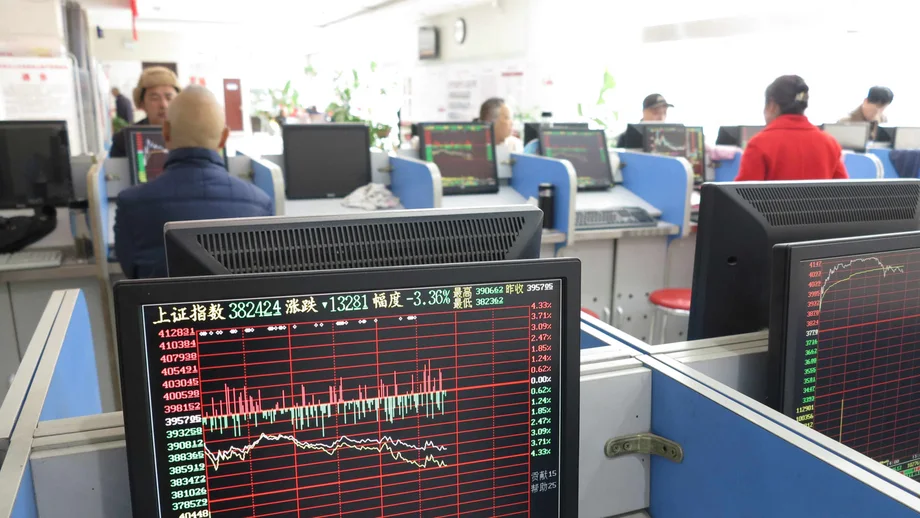
The response was immediate. The Shanghai Composite closed at 3,606.49, up 3.73%, while the Shenzhen Component gained 7.24% and ChiNext jumped 11.61%. A semiconductor index containing 40 companies surged 17.6%, its largest gain in one day on record. The Friday market surge added an estimated 4.1 trillion yuan to the value of Chinese equities, with turnover across Shanghai, Shenzhen and Beijing reaching 2.02 trillion yuan.
Bob Chen, a Shanghai based venture capitalist and economist, said the explicit reference to the national team was a first for a State Council meeting. He described the change in priorities this way:
Stock market performance is now prioritized at the highest level for the Chinese government.
The timing carried its own message. State Council meeting statements usually appear after trading ends. This one arrived around midday, and trading volumes accelerated after the afternoon session began. Full day turnover was 52% above the previous session, more than 5,300 stocks rose and over 400 reached their daily upper price limits.
Five signals, but no new instrument yet
The meeting joined emergency support to a longer reform program. Countercyclical adjustment means using policy to lean against extreme market swings rather than simply following them. The readout set out five connected signals:
- Market stability was linked to company financing, industrial upgrading, household assets and consumer confidence.
- Existing policies would be fully implemented while additional measures were researched and introduced.
- State investors would play a larger stabilizing role, with Central Huijin supplying liquidity.
- Insurance funds, enterprise annuities and social security funds would receive better support to invest for longer periods.
- China would strengthen defenses against imported risks, meaning financial shocks that originate abroad.
Zong Ke, a portfolio manager at a Shanghai based quantitative fund, captured the reaction to the language used by senior officials:
That's very strong language from the top officials.
The announcement itself did not create a new fund, specify a purchasing amount or publish an implementation timetable. Its distinction was between existing measures and incremental policies still being prepared. That leaves investors watching for concrete decisions on funding, purchases and rules rather than treating the readout as a completed rescue package.
Why Central Huijin is central to the plan
Central Huijin is an investment company owned by the state that exercises government shareholder rights in major financial institutions. Its published holdings at the end of 2025 included Industrial and Commercial Bank of China, Agricultural Bank of China, Bank of China, China Construction Bank, China Securities Finance Corporation and China International Capital Corporation. It says it does not interfere in their daily management.
Calling it a quasi stabilization fund means that it is expected to act as a market buffer without the statement establishing a separate fund with a newly disclosed structure. Hong Hao, managing partner of Lotus Asset Management, said the message effectively institutionalized that role. He expected the resulting rally to last longer than brief rebounds produced by earlier stimulus announcements.
The role has developed in stages. During market turmoil in April 2025, Central Huijin first explicitly adopted the quasi stabilization fund description, while the People's Bank of China said it could provide sufficient relending support when necessary. By the end of that year, the market value of exchange traded funds held through the Huijin system had briefly exceeded 1.5 trillion yuan. An exchange traded fund, or ETF, holds a basket of assets and trades on an exchange like a share.
Two targeted monetary tools also support the arrangement: a swap facility for securities, fund and insurance companies, and central bank relending for share repurchases and increased holdings. Ahead of the meeting, 31 institutions sought more than 100 billion yuan through the third swap operation. Since early October, net subscriptions to equity ETFs had approached 800 billion yuan, including about 400 billion yuan for funds tracking broad markets.
Chip shares lead a broad rebound
Technology companies produced the most dramatic moves. The STAR 50 rose about 15%, its largest advance in two years, while the broader STAR Composite gained 14.21%. The CSI Semiconductor index's 17.6% rise exceeded its previous record of nearly 17%, set in late 2024. Indexes tracking artificial intelligence, cloud computing and consumer electronics each gained more than 10%. In Hong Kong, Hua Hong Grace rose more than 21% and SMIC gained over 16%.
The Hang Seng Index finished 1.9% higher and Hang Seng Tech jumped 6%. China's yuan gained 0.1% against the dollar in offshore trading, reversing earlier weakness and reaching its strongest level in three weeks. Wind based accounts put the CSI 300's gain at about 4%, its largest since October 2024; other closing tallies placed the increase between 3.7% and 4.2%.
The rally followed severe pressure. On Thursday, the CSI 300 had fallen to its lowest level since the escalation of the tariff conflict between China and the United States in spring 2025. It remained down 16% for 2026 before Friday and was on course for its worst year since 2022. Weak domestic demand, a prolonged property downturn, modest corporate earnings and geopolitical uncertainty had all weighed on prices.
Semiconductors faced an additional external challenge. During the previous week, the United States introduced a rule further restricting Chinese companies' access to advanced chips for artificial intelligence, including access through data centers overseas. Beijing's support for domestic technology financing therefore reached investors at the same time as pressure to develop local chip capacity was increasing.
Patient money, dividends and buybacks
The State Council named insurance funds, enterprise annuities and social security funds because they can invest across years rather than chase daily price movements. Enterprise annuities are retirement plans sponsored by employers. Their participation could reduce dependence on short term speculative trading, but performance assessments have often encouraged managers to focus on immediate results.
Wu Qing, chairman of the China Securities Regulatory Commission (CSRC), convened regulator officials and the heads of the Shanghai and Shenzhen exchanges later on November 27. The implementation plan called for wider funding sources, more channels and ways to enter the market, and fuller adoption of assessments over longer periods. It also called for reforms to public mutual funds and policies that produce steadier returns for investors with long horizons.
Holdings figures show both growth and remaining room for expansion. Insurance and social security funds held 2.59 trillion yuan of mainland shares in 2020. By the second quarter of 2026, that had more than doubled to 5.44 trillion yuan, while their share of total holdings rose from 4.0% to 5.1%.
Pressure for better shareholder returns is also increasing. Announced A share repurchases totaled 132.4 billion yuan in 2023, 216.6 billion in 2024 and 187.6 billion in 2025. Announcements had already reached 315.2 billion yuan by November 26, 2026, exceeding each of those full year totals, while dividends announced since the start of the year approached 2.4 trillion yuan. On October 19, Wu had put combined dividends and buybacks for the year at 2.1 trillion yuan, 2.7 times the amount raised through initial public offerings and refinancing during the same period.
A rescue paired with tougher market policing
The CSRC's response went beyond purchasing shares. It called for strict control over market entry, continuous supervision of listed companies, stronger enforcement and protection of investors' lawful rights. Financial fraud and share reductions that violate the rules remain central targets. Regulators also plan tighter scrutiny of sales by controlling shareholders and actual controllers.
A new corporate governance campaign would supervise directors and senior executives throughout appointment, performance of duties and departure. Delisting rules would be enforced more strictly, with supervision continuing after removal from an exchange and stronger investor protection during the process. Plans also include a financial fraud intelligence center, outside systems to detect coordinated fraud, investigations of major cases and a combination of criminal liability and civil compensation.
Technology listings will receive more tailored support alongside closer screening. Regulators want financing rules that reflect the long research periods and uncertain revenue patterns of innovative companies, while blocking pseudo technology businesses and companies without genuine performance from inflating their valuations. The State Council also called for faster development of a capital market with several tiers, giving companies at different stages different places to raise money.
Wu additionally directed officials to research a direct financing system suited to technological innovation and to monitor risks across borders, markets and industries. A direct financing system allows businesses to raise money by selling shares or bonds rather than relying principally on bank loans.
The 2024 blueprint behind the latest intervention
The current program builds on a State Council guideline released on April 12, 2024. It was only the third such capital market guideline in two decades, following documents in 2004 and 2014. It sought a market that was secure, regulated, transparent, open, dynamic and resilient, with stricter listing requirements, tougher compulsory delisting standards and better ways for investors to obtain compensation.
That document also demanded action against market manipulation and malicious short selling, closer supervision of very rapid trading and a better environment for insurance and public equity investment. Its timetable proposed a general framework for development within five years, a market with high adaptability, competitiveness and inclusiveness by 2035, and further modernization of governance by the middle of the century.
Wu Qing said at the time that the guideline responded to institutional and regulatory weaknesses exposed by stock volatility since August 2023. He summarized its approach in these words:
The guideline reflected a goal-oriented and problem-oriented approach.
The November meeting applies that blueprint to a new downturn. Dividends, buybacks and long investment horizons address shareholder returns, while listing standards, fraud enforcement and delisting rules concern the quality of the companies using the market.
The policy build-up since April
Several dates explain why the November statement was read as an escalation rather than an isolated announcement:
- April 12, 2024: The State Council issued its third capital market guideline in 20 years.
- April 2025: Central Huijin explicitly adopted its quasi stabilization fund role, accompanied by a promise of central bank relending support when needed.
- October 19, 2026: Wu Qing placed stability first, disclosed the 2.1 trillion yuan dividends and buybacks figure and announced registration approval for the first 18 actively managed ETFs.
- November 2 and 3: Preparations for the third swap operation brought applications from 31 firms seeking more than 100 billion yuan.
- November 6: A State Council meeting first proposed improving the capital market stabilization mechanism.
- November 27: The noon readout explicitly named the national team and triggered the broad rally.
Measures announced during the weekend before the meeting had already relaxed margin lending and reduced trading fees. Margin lending allows investors to borrow for securities purchases. October confidence measures and active buying by state funds had slowed the decline, but had not produced a sustained recovery.
What will determine whether confidence lasts
Tao Chuan, chief economist at Guolian Minsheng Securities, identified three unusual features: publication during trading hours, the elevation of capital markets to an issue affecting the whole economy and the explicit use of national team. He read them as evidence of a standing institutional arrangement rather than a temporary emergency response. Wang Han of Industrial Securities said the policy question had shifted from whether Huijin should act to how it could act more predictably and efficiently.
Sun Binbin, chief economist at Caitong Securities, described the meeting as a continuation and deepening of earlier support. He advised investors to focus on corporate fundamentals and longer investment horizons. Fu Zhifeng, chief investment officer at Shanghai Chengzhou Investment Management, offered a more immediate assessment:
The statement shows that stabilising the capital market remains a priority at the highest levels of government, which should help ease negative sentiment.
Charu Chanana, chief investment strategist at Saxo Bank, separated stronger policy resolve from an improvement in economic and corporate conditions:
I would distinguish between a turning point in policy resolve and a turning point in market fundamentals... A policy-induced bounce needs to evolve into a fundamentally driven recovery before we can confidently call it a durable bottom.
December's Central Economic Work Conference is the next major policy checkpoint identified by economists. Investors will also watch the promised incremental measures, longer assessments for institutional funds and any disclosure of Huijin's operations. External pressures remain part of the calculation, including American restrictions on advanced chips, movements in United States Treasury yields, capital flows across borders and weaker global appetite for risk.
Standards, inspections and workplace safety
The same meeting heard a report on a comprehensive inspection of development focused on quality. Officials were told to correct the problems found, revise policies that no longer fit those requirements, improve incentives and constraints, coordinate measures more effectively and meet the year's goals to a high standard.
On national standards, the State Council called for the abolition of local standards inconsistent with a unified national market. It also sought a stronger supply of high quality standards and earlier planning for emerging and future industries, an attempt to prevent fragmented local rules from obstructing trade and new technologies.
Ministers reviewed and approved a draft regulation on investigating and correcting potential workplace safety hazards. The meeting demanded attention to key industries and firm measures to prevent serious and major accidents. The readout did not publish the regulation's detailed provisions, an effective date or a timetable for its implementation.
Key Points
- Li Qiang chaired the State Council meeting on November 27, 2026, and its readout appeared unusually during trading hours.
- China promised stronger action by state investors and sufficient liquidity through Central Huijin's quasi stabilization fund role.
- The Shanghai Composite rose 3.73%, Shenzhen gained 7.24% and ChiNext jumped 11.61%.
- A 40 stock semiconductor index surged 17.6%, setting a record for a single session.
- Insurance, pension and social security money will receive stronger support to invest over longer periods.
- Announced buybacks reached 315.2 billion yuan by November 26, exceeding each of the previous three full year totals.
- Regulators paired support with campaigns against financial fraud, improper share reductions, weak governance and false technology listings.
- No new purchase amount, funding instrument or implementation timetable was announced; December's economic work conference is the next major checkpoint.
- The meeting also addressed national standards, inspection findings and a draft workplace safety regulation.