A Noon Signal Turns a Quiet Session Into a Rally
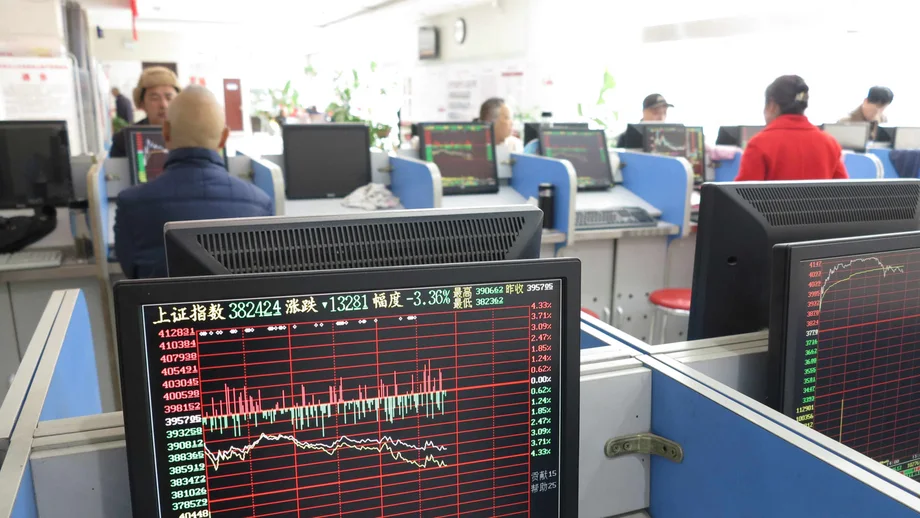
China's stock market delivered a sudden, powerful rally on Friday, November 27, 2026, after the State Council said it would strengthen the machinery that steadies equities. The Shanghai Composite Index closed at 3,606.49, up 3.73 percent, reclaiming the 3,600 level. The Shenzhen Component Index rose 7.24 percent to 10,814.02. The ChiNext Index, which tracks growth companies in Shenzhen, jumped 11.61 percent, and the STAR Composite Index, focused on Shanghai's science and technology board, climbed 14.21 percent.
Contents
- A Noon Signal Turns a Quiet Session Into a Rally
- What the State Council Said, Step by Step
- Why Noon Was Part of the Message
- What the National Team Is and Why It Matters
- Chips Turn Policy Support Into a Price Surge
- How Deep the Selloff Had Become
- The Rally Spread Beyond the Mainland
- Investors Heard a Shift in Policy Status
- What the Measures Mean for Savers and Companies
- Can the Rally Last Past the First Wave?
- Timeline of the Market Day
- Key Points
The catalyst was a State Council executive meeting in Beijing chaired by Premier Li Qiang. Its readout said the capital market is vital to the country's broader economic development and called for stronger countercyclical adjustments, key reforms and better market stabilizing mechanisms. Policymakers said they would implement existing policies and plan new ones, urge listed companies to pay more dividends and buy back shares, give a larger role to state investors, and guide insurance funds, enterprise annuities and social security funds into stocks. The market value of Chinese equities rose by an estimated ¥4.1 trillion, about $620 billion.
Timing gave the message extra force. The readout was released around noon, during trading hours, rather than after the close. By 2 p.m., the Shanghai Composite was up 3.5 percent and back above 3,600, while ChiNext was more than 10 percent higher and the STAR Composite was up 13 percent. At the close, the CSI 300 was about 4.2 percent higher. Turnover across Shanghai, Shenzhen and Beijing reached ¥2.02 trillion, and a volume comparison put trading 52 percent above the previous session, with roughly 5,400 stocks higher.
What the State Council Said, Step by Step
The meeting covered more than a stock market pep talk. Li Qiang's cabinet heard a report on high quality development, studied deeper investment and financing reforms in the capital market, heard a report on national standards and approved a draft regulation on investigating and rectifying potential workplace safety hazards. The market section drew attention because it linked price support to a wider policy program.
Five themes stood out. First, officials described the market as vital to economic development, connecting company financing and industrial upgrading with household assets and consumer confidence. Second, they promised new policies alongside existing ones. Third, they called for greater action by state investors known as the national team and for sufficient liquidity through Central Huijin Investment Ltd. Fourth, they named insurance funds, enterprise annuities and social security funds as money to guide into equities. Fifth, they asked for stronger defenses against imported risks, meaning shocks that enter China from abroad. The readout also urged a capital market with several layers, stricter full chain regulation, serious action against financial fraud and illegal share reductions, and faster development of different markets for companies at different stages.
Why Noon Was Part of the Message
The noon release was unusual, and traders treated the timing as part of the policy signal. Publishing during the lunch break gave buyers and sellers a fresh instruction while prices were still moving. Tian Lihui, dean of the Institute of Financial Development at Nankai University, said the change from the usual post close schedule was meant to offset shifts in investor sentiment and liquidity disruptions during trading hours.
Tian said market stability is becoming a task shared across departments rather than the work of one regulator. He described the stronger role for Central Huijin as a step from a crisis tool toward a lasting part of financial governance, with the potential to reshape valuations and investor structure over time. The phrase national team appeared for the first time in a State Council executive meeting press release, and an official commentary said Central Huijin had plenty of firepower at its disposal.
What the National Team Is and Why It Matters
In Chinese market slang, the national team is a loose group of investors owned or guided by the state. The best known members are Central Huijin Investment and China Securities Finance Corp. Other state investors, including China Reform Holdings and China Chengtong Holdings Group, have already put billions of yuan into exchange traded funds that track major indexes. An exchange traded fund, or ETF, is a basket of shares that trades like a single stock.
Central Huijin is a unit of China Investment Corp, the country's sovereign wealth fund, and holds stakes on behalf of the State Council. When shares fall sharply, these investors can buy stocks or ETFs, adding demand when private buyers pull back. Similar support was used during the selloff set off by tariff measures last year. The difference now is the language: by naming the national team in a cabinet readout, Beijing turned a familiar market habit into an explicit policy promise.
Chips Turn Policy Support Into a Price Surge
Semiconductor shares were the clearest winners. CXMT, Cambricon and SMIC helped lead the STAR index higher. A semiconductor index of 40 stocks gained 17.6 percent, while a broader semiconductor sub index was put at 19 percent; each was described as the largest single session gain on record. The STAR 50 was about 15 percent higher, with one market note listing 15.07 percent and also carrying an inconsistent 5 percent figure.
Chip stocks had been under pressure for two reasons. Washington tightened access to advanced artificial intelligence chips last week, including through overseas data centers, adding pressure on Beijing to build its own semiconductor capacity. Memory chip pricing concerns had also weighed on companies tied to AI infrastructure. Nvidia told partners to pause AI server shipments to Malaysia, Singapore, Thailand and Indonesia, tightening the squeeze on computing capacity outside China. China Mobile and China Telecom were linked to more than ¥55 billion of AI equipment procurement.
The buying reached across the semiconductor supply chain. Shares tied to national semiconductor fund holdings, electronic chemicals, memory chips, silicon wafers, graphics processing units, optical circuit switches, co packaged optics and high bandwidth memory all advanced. More than 60 chip related stocks touched their daily price limit, meaning they rose as much as exchange rules allow in one session. TSMC's October revenue rose 59.7 percent from a year earlier, SMIC's third quarter results beat expectations, and the World Semiconductor Trade Statistics forecast was cited as pointing to rapid chip market growth in 2026. Banks, coal and other dividend stocks lagged as money rotated toward technology.
How Deep the Selloff Had Become
The rally began from a low base. On Thursday, the CSI 300 dropped to its lowest level since the escalation of the U.S.-China tariff conflict in spring 2025. Other readings put mainland indexes near lows last seen 17 months earlier. The CSI 300 was down 12 percent this year before Friday's rebound and 22 percent from its late June peak, while another calculation put it more than 20 percent below its June high.
Technology gauges had suffered even larger declines. The STAR 50 was 40 percent below its June record before Friday, and the STAR 50 and ChiNext had slumped roughly 50 percent since July. Share prices were only part of the downturn. Weak consumer demand, a long property slump, discount wars among companies, pressure on household confidence and dependence on exports had all weighed on sentiment.
The Rally Spread Beyond the Mainland
Hong Kong jumped in the afternoon. The Hang Seng Index closed at 22,688.68, up 467.89 points or 2.11 percent. The Hang Seng Technology Index closed at 3,637.88, up 220.50 points or 6.45 percent, its largest single session rise of the year. Large model companies Zhipu and MiniMax climbed more than 18 percent and 17 percent, and recently listed names such as Zhongke Wenge and Chipmore Micro Equipment gained more than 41 percent and 34 percent.
Southbound capital, meaning investment flowing from mainland China into Hong Kong shares through approved channels, recorded net buying of more than HK$4.5 billion by the close. South Korea's Kospi gained 4.3 percent, Japan's Nikkei 225 rose 2.1 percent and Taiwan's Taiex added 0.4 percent. The Chinese yuan strengthened against the dollar and traded near its firmest level in four years. ETF trading surged: the ChiNext ETF run by E Fund traded ¥22.09 billion, the STAR 50 ETF managed by ChinaAMC traded ¥18.63 billion, and the CSI 300 ETF managed by Huatai PineBridge traded ¥12.37 billion. Government bond futures slipped, while commodity futures rose, with silver up 12.33 percent.
Investors Heard a Shift in Policy Status
Bob Chen, a Shanghai based venture capitalist and economist, said the cabinet had changed the standing of equities in policy terms:
Stock market performance is now prioritized at the highest level for the Chinese government,
Kenny Ng, a strategist at Everbright Securities International in Hong Kong, said investors had been waiting for a reason to believe again:
It's a shot in the arm for markets,
Winnie Wu, head of Asia equity strategy at BofA Global Research in Hong Kong, linked the policy to the strategic importance of artificial intelligence:
There's probably this awareness that AI is strategically, economically and financially very important, and they don't want to see a big fallout in this space.
Charu Chanana, chief investment strategist at Saxo Bank, said officials had sent a strong signal about the selloff:
There is an increasingly clear signal that Chinese authorities are uncomfortable with the extent of the equity market selloff,
Those comments help explain the speed of the move. A market used to policy promises without lasting buying saw a phrase it recognized, a named state investor and a fresh signal during trading hours. That combination gave short sellers and nervous holders a reason to step back.
What the Measures Mean for Savers and Companies
Dividends and buybacks were placed at the center of the policy message. A dividend is cash a company returns to shareholders. A buyback happens when a company uses its own money to purchase its shares, which can support the price and leave fewer shares outstanding. By urging listed companies to do more of both, Beijing is trying to make holding stocks more attractive when confidence is weak.
The plan to guide insurance funds, enterprise annuities and social security funds into equities is about patience. These institutions usually have long horizons, which means they can hold investments through bad months instead of selling quickly. Rules around borrowing to buy shares were also part of the backdrop. Shanghai, Shenzhen and Beijing exchanges said on November 22 that the minimum margin for financing share purchases would fall from 100 percent to 80 percent, effective November 30, 2026. Lower margin means investors can borrow more against the same collateral.
Regulators were also expected to tighten rules on share sales by controlling shareholders, guard against listings by companies that inflate earnings, and scrutinize changes in senior management. The People's Bank of China had provided a swap facility to increase liquidity, and cheap loans for share buybacks were part of the toolkit. A liquidity swap lets institutions exchange assets for cash so they can keep functioning when markets are stressed. The imported risk language pointed to foreign monetary policy shifts, U.S. Treasury yield volatility, flows of money across borders and changes in global appetite for risk.
Can the Rally Last Past the First Wave?
The next question is whether buyers return after the initial surge. No date or size was given for the new measures the State Council said it would plan, and the readout did not say how much the national team would spend. November 30, 2026, is the next specific date, when the lower margin requirement takes effect.
Charu Chanana said a policy bounce has to become a recovery driven by fundamentals before it can be called a lasting bottom. State buying can put a floor under prices, but company profits, household spending, property trends and export demand decide whether companies deserve higher valuations after the first wave of excitement. Semiconductor shares remain especially sensitive because restrictions on advanced chips, memory prices and data center capacity can change investor mood quickly.
Timeline of the Market Day
The sequence of events explains why the session felt so abrupt to investors:
- Thursday: The CSI 300 dropped to its lowest level since spring 2025, when the U.S.-China tariff conflict escalated.
- Friday morning, November 27: Premier Li Qiang chaired the State Council executive meeting in Beijing.
- Around noon: The readout was published during trading hours, with language on national team support, liquidity, dividends, buybacks and long horizon funds.
- 2 p.m.: The Shanghai Composite was up 3.5 percent and above 3,600, while ChiNext was more than 10 percent higher and the STAR Composite was up 13 percent.
- Close: Shanghai ended up 3.73 percent at 3,606.49, Shenzhen rose 7.24 percent to 10,814.02, ChiNext gained 11.61 percent and the STAR Composite climbed 14.21 percent.
- November 30, 2026: The lower margin requirement for financing share purchases is due to take effect.
That timeline shows why the rally was concentrated in the afternoon. The policy news reached traders while orders were still flowing, and technology stocks became the fastest way to express the new expectation of state support.
Key Points
- Chinese shares surged on November 27, 2026, after the State Council pledged stronger market stabilizing measures.
- The Shanghai Composite closed at 3,606.49, up 3.73 percent; Shenzhen rose 7.24 percent; ChiNext gained 11.61 percent; the STAR Composite climbed 14.21 percent.
- Policymakers called for more dividends and buybacks, a larger role for the national team, sufficient liquidity through Central Huijin and more long horizon money in equities.
- Chip and shares linked to AI led the rally as investors weighed U.S. restrictions and China's push for semiconductor self sufficiency.
- Hong Kong and neighboring Asian markets also rose, and mainland turnover reached ¥2.02 trillion.
- The key test is whether policy support turns into a recovery driven by company earnings, consumer demand and stable liquidity after the first bounce.