A late invitation with little time left
Azerbaijan has agreed to let its candidacy be considered for the chairmanship of the Organization for Security and Co-operation in Europe, setting up a contested decision days before foreign ministers meet in Lugano. Foreign Minister Jeyhun Bayramov announced Baku's position on 27 November 2026, four days after 46 civil society organisations urged participating states to reject Azerbaijan.
Contents
- A late invitation with little time left
- Why one objection can block the chairmanship
- What Switzerland's package would actually decide
- Why Armenia's inclusion changes the political meaning
- Why 46 organisations are urging governments to say no
- How Azerbaijani supporters are making the case
- Azerbaijan's complicated institutional history with the OSCE
- The diplomatic sequence leading to Lugano
- What the decision would change
- Key Points
Bayramov spoke in Baku at a joint press conference with Estonian Foreign Minister Margus Tsahkna. He said discussions about the next chair had continued for more than a year without consensus. Switzerland holds the role until 31 December, and the OSCE Ministerial Council is scheduled to meet in the Swiss city of Lugano on 3 and 4 December.
The Azerbaijani foreign minister explained that his government had not actively pursued the chairmanship for itself and had previously been prepared to support any candidate acceptable to all participating states.
I would not like to name specific countries. There are various approaches and proposals. The rather tense atmosphere in the OSCE area makes it difficult to put forward a proposal acceptable to everyone. Azerbaijan's position was that we were ready to support any candidacy agreed upon by consensus. However, consultations on this issue have begun in recent weeks. Our country has also been invited to put forward its candidacy.
His answer amounted to a conditional acceptance. Azerbaijan is willing to serve and considers its inclusion in a broader proposal positively, but Bayramov repeatedly made consensus the condition for proceeding.
Why one objection can block the chairmanship
The OSCE brings together 57 participating states across Europe, Central Asia and North America. Its work covers military security, arms control, economic and environmental questions, elections, media freedom and human rights. Decisions require consensus, so one participating state can prevent a candidate from taking office.
Each year, the country holding the chairmanship supplies the organisation's public diplomatic leadership. Its foreign minister becomes Chairperson in Office, while the chair helps set the agenda, guides the Permanent Council in Vienna and represents the OSCE abroad. The current dispute therefore concerns both prestige and practical control over what the organisation prioritises.
Cyprus and Georgia submitted bids for 2027, but both encountered resistance. Türkiye withheld consent to Cyprus, while the European Union opposed Georgia and backed Cyprus. Cyprus has been described in the consultations as the only formal candidate for 2027, even though several other governments have expressed interest in later roles. Armenia, Austria, Norway and Azerbaijan are among the countries whose names have entered discussions.
The deadlock has extended to basic administrative business, including agreement on the budget. Norway has been floated as a possible consensus option if Türkiye maintains its objection to Cyprus, but no country has secured the necessary agreement.
What Switzerland's package would actually decide
Ignazio Cassis, the Swiss Federal Councillor and foreign minister, proposed settling the chairmanships for 2027, 2028 and 2029 in one decision. Switzerland presented the model at a special meeting of the OSCE Permanent Council in Vienna on 19 November, arguing that it would provide continuity and regional balance. The idea attracted support from a majority of participating states, although disagreement over individual countries remained.
Bayramov said this approach became part of the more intensive consultations held in recent weeks. He described the proposal presented to Azerbaijan and explained his government's response.
One of the new approaches is to put forward a proposal in the form of a single package covering the coming years, rather than a single candidate, in order to achieve consensus. Such a proposal has also been presented to us. We have expressed Azerbaijan's readiness to make a positive contribution to the future of the organization. Our country has also been included in such a package. However, I would not like to comment at this stage on what the outcome will be.
The proposal concerns a sequence of annual chairs, rather than one continuous Azerbaijani term covering all three years. Bayramov did not identify every country in the draft package or say which country would serve in which year. He said consultations were continuing intensively.
Why Armenia's inclusion changes the political meaning
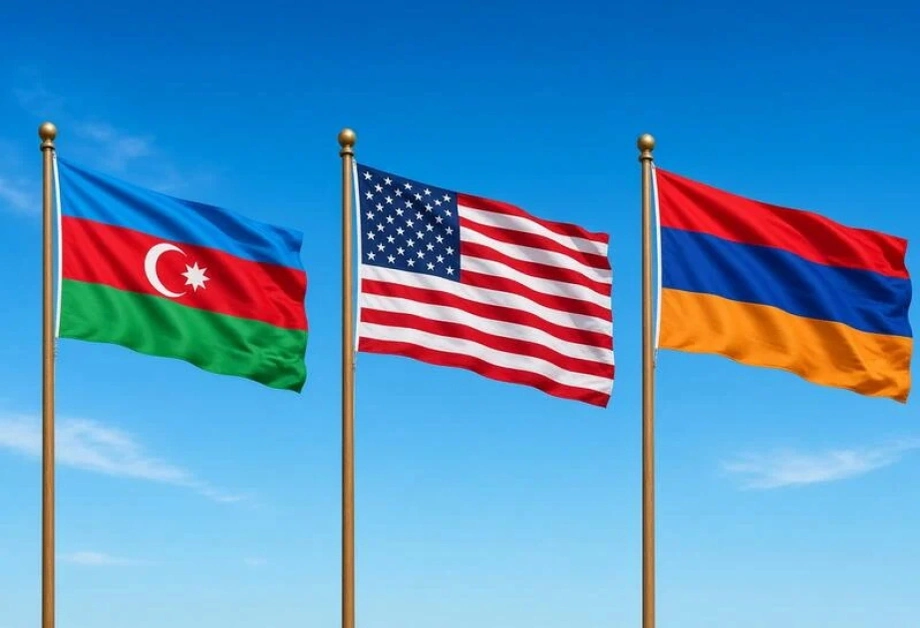
Azerbaijan was approached first under the package idea, according to Bayramov. Armenia's possible inclusion was raised later. That sequence matters because both countries had long been considered unable to accept each other as chair during their years of conflict.
Bayramov presented their possible appearance in the same arrangement as evidence of improved relations after that conflict.
The inclusion of Azerbaijan and Armenia in this package is, in a certain sense, a sign of positive developments. For many years, the two countries were in a state of conflict, and neither Azerbaijan's nor Armenia's candidacy for the OSCE chairmanship was under consideration. It was clear that these countries could not have been acceptable candidates to each other.
Joint inclusion would require a consensus arrangement involving two governments that previously treated each other's candidacy as unacceptable. It would also place the South Caucasus inside a plan intended to make the OSCE's leadership more predictable. No new mediation mandate or bilateral settlement was announced alongside the chairmanship discussions.
Why 46 organisations are urging governments to say no
Opposition became public before Bayramov's Baku briefing. Baku expressed its willingness to chair the organisation at the Permanent Council meeting in Vienna on 19 November. On 23 November, the World Organisation Against Torture issued the civil society appeal, asking participating states to block an Azerbaijani chairmanship. Its published list carries 46 names, although a count circulated on 25 November gave 45.
The signatories include Freedom Now in the United States, Azerbaijan's Human Rights Centre and Independent Lawyers Network, the Belarusian Helsinki Committee and the Viasna Human Rights Centre. Their appeal addresses security and environmental policy as well as human rights.
The Azerbaijani government is not a reliable security, environmental, or human rights partner and is unfit to chair the organisation.
A May 2026 report by the Parliamentary Assembly of the Council of Europe, cited by the appeal, put the number of political prisoners in Azerbaijan at 328. They included 31 journalists, eight human rights defenders and 44 members of opposition and civil society organisations.
The appeal also described arrests affecting independent media. Azerbaijani authorities detained journalists from Abzas Media on smuggling charges in November 2023. The crackdown later extended to Toplum TV, Kanal 13 and Meydan TV, with dozens of journalists and media workers arrested. The signatories also cited Azerbaijan's large number of unimplemented judgments from the European Court of Human Rights.
OSCE media freedom representative Teresa Ribeiro has condemned pressure on Azerbaijani media workers. The OSCE Office for Democratic Institutions and Human Rights and the Venice Commission have repeatedly raised concerns about Azerbaijani laws governing elections, media, political parties and civil society. No official Azerbaijani statement addressing the appeal had appeared by 25 November, and Bayramov did not respond to its detailed allegations in his 27 November remarks.
How Azerbaijani supporters are making the case
Azer Qasimov, Secretary for Public and Political Affairs of the AHD Party, argued that the consultations give priority to Azerbaijan, with Armenia offered inclusion so that it is not left out. He linked Baku's attraction to energy supplies and its potential diplomatic role during tensions between Europe and Russia.
Against the backdrop of tensions between Europe and Russia, Azerbaijan's role is highly significant. First and foremost, energy resources are on the agenda, followed by the possibility of mediating negotiations between the parties.
Qasimov pointed to cooperation between Azerbaijan and the OSCE spanning 30 years, alongside Baku's experience of leading international organisations and hosting international events. He acknowledged that cooperation had not produced a significant substantive result on the Karabakh issue, while arguing that Azerbaijan could demonstrate successful leadership if entrusted with the chair.
The diplomatic calendar around the announcement was busy. Foreign ministers from Germany, Italy, Georgia and Lithuania visited Baku between 17 and 26 November. Tsahkna then appeared alongside Bayramov on 27 November. Bayramov did not identify any of these visits as a guarantee of support for the package.
Azerbaijan's complicated institutional history with the OSCE
Azerbaijan ended its memorandum with the OSCE Project Coordinator in Baku and closed the office in 2015. The OSCE Minsk Process, long associated with mediation between Armenia and Azerbaijan, was terminated by a Ministerial Council decision in September 2025.
The Institute of Armenian Studies at USC Dornsife preserves Minsk Group documents from that earlier diplomatic format. They include a statement dated 26 February 2017 from Moscow, Paris and Washington, a 15 November 2021 statement from Washington, Paris and Moscow, a 4 December 2021 statement in Stockholm and a 7 December 2021 joint statement by the countries leading the Minsk Group.
Those closed arrangements form the backdrop to the present proposal. Azerbaijan is now willing to be considered for the organisation's leadership, while Armenia's presence in the same package is being presented by Bayramov as a sign that relations have moved beyond the period when either country would automatically block the other.
The diplomatic sequence leading to Lugano
The contest has developed through several meetings and deadlines:
- 2015: Azerbaijan ended the memorandum covering the OSCE Project Coordinator in Baku and closed its office.
- September 2025: The Ministerial Council terminated the OSCE Minsk Process.
- 19 November 2026: Switzerland presented its package model in Vienna, and Baku expressed readiness to chair the OSCE.
- 23 November 2026: Forty-six organisations published their appeal against an Azerbaijani chairmanship.
- 27 November 2026: Bayramov confirmed that Azerbaijan had been invited to put forward its candidacy and had responded positively.
- 3 and 4 December 2026: The Ministerial Council is scheduled to meet in Lugano.
- 31 December 2026: Switzerland's current chairmanship ends.
Lugano is the next specified decision point. The outstanding issues include the final membership of any package, the allocation of the three annual chairmanships and whether every participating state will consent.
What the decision would change
A successful package would give the OSCE an agreed leadership sequence through 2029 and reduce the prospect of repeating the same search every year. Failure to reach consensus would send diplomats back to the alternatives with little time remaining before Switzerland's term expires.
For Azerbaijan, taking the chair would place its foreign minister at the centre of OSCE diplomacy and give Baku influence over the agenda. For Armenia and Azerbaijan, inclusion in one accepted package would mark a new form of mutual diplomatic accommodation. For journalists, lawyers and civil society groups cited in the appeal, the central concern is how an Azerbaijani chair would handle media freedom, elections and other human rights questions.
Bayramov has committed Baku to contributing if consensus emerges, not to an unconditional campaign for the post. The final composition of the package remains undisclosed, and no chairmanship has yet been awarded.
Key Points
- Azerbaijan agreed on 27 November 2026 to have its candidacy considered, provided all 57 participating states reach consensus.
- Switzerland proposed selecting the OSCE chairs for 2027, 2028 and 2029 in one package.
- Azerbaijan was approached first, with Armenia's possible inclusion added later.
- Forty-six civil society organisations oppose Baku's bid and cite political imprisonment, media arrests and restrictive legislation.
- The Ministerial Council meets in Lugano on 3 and 4 December, while Switzerland's chairmanship ends on 31 December.