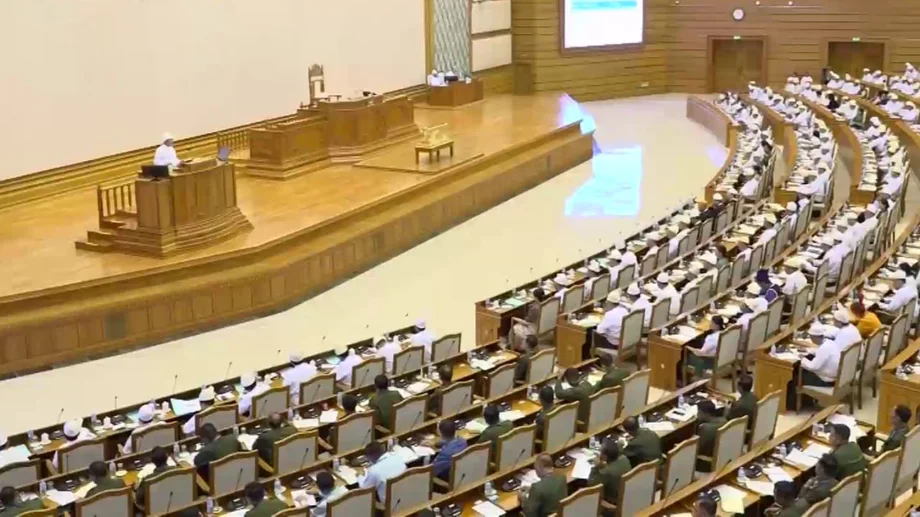
Min Aung Hlaing sets limits on compliance
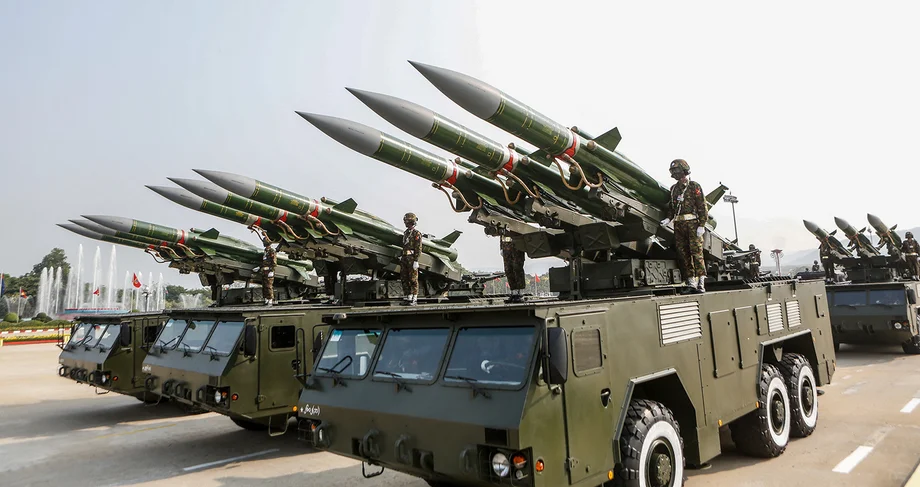
President Min Aung Hlaing has said Myanmar will refuse to carry out parts of the International Court of Justice judgment that found the state responsible for genocide against the Rohingya. Speaking at a cabinet meeting on November 25, he gave no list of the orders he intended to reject. The government newspaper Global New Light of Myanmar published his remarks the next day, his first public response to the verdict.
Contents
- Min Aung Hlaing sets limits on compliance
- What the court found in northern Rakhine
- The orders Myanmar now faces
- How a case from The Gambia reached this verdict
- Why a binding judgment can still be defied
- Britain acts as the Security Council prepares to meet
- ASEAN weighs engagement against a genocide finding
- Returning home requires more than Naypyidaw's consent
- A legal milestone measured by survivors' lives
- Key Points
The former army commander led the military during the 2017 crackdown and later seized power from Aung San Suu Kyi's elected government in February 2021. He was installed as president in 2026 after deeply restricted elections. His conditional response followed the November 19 judgment, which was final, binding and cannot be appealed.
According to the newspaper, Min Aung Hlaing set out his position in these terms:
Myanmar would take the actions appropriate for a responsible country but would not comply with requirements it considered inappropriate.
He called the case a "one-sided accusation" and said the genocide finding had seriously damaged Myanmar's reputation. A government spokesperson had already called the decision unfair and a great disappointment, pointing to six dissents among the 15 judges. Those dissents were not uniform: Judge Xue Hanqin of China was the only member of the court who found Myanmar not guilty on every charge.
What the court found in northern Rakhine
The International Court of Justice, or ICJ, ruled by nine votes to six that Myanmar violated the 1948 Genocide Convention during military operations in northern Rakhine State. The judgment runs to 191 pages. It is the first time in the court's 80-year history that judges have held a state directly responsible for committing genocide.
Reading the decision in The Hague, ICJ President Judge Yuji Iwasawa explained how the majority assessed the evidence:
The court concludes that all the evidence before it, taken together, supports a reasonable inference that Myanmar's security forces acted with genocidal intent.
Paragraph 468 cites Article II (a), (b) and (d) of the convention. In plain language, the court found killing members of the protected group, causing serious bodily or mental harm, and imposing measures intended to prevent births. The majority concluded that the evidence supported an intention to destroy a substantial part of Myanmar's Rohingya population.
The court estimated that about 10,000 Rohingya were violently killed. The commonly cited flight figure is more than 700,000, while the detailed case account gives more than 730,000 arrivals in Bangladesh. Against an estimated community of 1.4 million people before the violence, even the lower figure represents more than half its population. Medical charity Médecins Sans Frontières estimated that between 6,700 and 9,867 people were violently killed in the first month alone, including at least 730 children younger than five. Evidence also documented at least 1,834 victims of rape.
Judges examined atrocities in Min Gyi, Chut Pyin and Maung Nu, alongside village burnings, attacks on fleeing civilians and violence against children. Three Rohingya survivors testified in January 2026, and the court found their accounts credible. The Gambia also submitted 42 signed witness statements gathered by Legal Action Worldwide.
Myanmar argued that its forces were responding to attacks by the Arakan Rohingya Salvation Army, or ARSA. The judges explained why they rejected that defense:
The execution of Rohingya men and boys in some locations, the widespread sexual violence, the targeting of children and babies, the methodical burning of villages, and attacks on fleeing civilians are not consistent with an intent to conduct counterinsurgency operations.
The orders Myanmar now faces
The remedies stretch far beyond a declaration that genocide occurred. A legal analysis of implementation identifies cessation, guarantees against recurrence and reparations in paragraphs 591 to 626 of the judgment. The court's practical instructions include:
- End continuing breaches of the Genocide Convention and adopt legislation giving full effect to its provisions.
- Guarantee that violations will not recur and protect Rohingya people from discrimination and persecution.
- Enable safe, voluntary and dignified returns, reunite separated families and help relatives trace missing people.
- Return or replace lost or damaged property and provide physical and psychological rehabilitation.
- Investigate people reasonably suspected of prohibited acts, then prosecute and punish them where the evidence warrants.
- Compensate victims for harm that cannot be repaired through restitution.
Restitution means restoring what was lost where possible, such as a home or land. Compensation addresses injuries and losses that cannot be repaired in that way. Myanmar must report to the court within two years, by November 2028, describing its restitution measures and proposing an amount and arrangements for compensation. Judges will determine compensation in a later phase. The deadline requires an account of Myanmar's response, rather than completion of every payment by that date.
The court also found that Myanmar had failed to prevent genocide by people acting alongside its security forces, punish those responsible and preserve evidence despite an earlier protective order. Judges did not uphold The Gambia's separate claim that Myanmar had directly and publicly incited private individuals to commit genocide.
How a case from The Gambia reached this verdict
The Gambia filed the case on November 11, 2019, with backing from the 57 member Organisation of Islamic Cooperation. It relied on the principle that Genocide Convention duties are owed collectively. A participating state can therefore ask the court to enforce those duties even when the alleged crimes occurred thousands of miles away.
- In 1982, Myanmar's citizenship law excluded the Rohingya from the 135 officially recognized national races, leaving most without citizenship.
- Earlier mass flights occurred in 1978 and from 1991 to 1992. Violence in 2012 displaced about 140,000 people around Sittwe.
- In August 2017, military operations escalated after ARSA attacks on security positions, followed by mass killings, sexual violence, arson and displacement.
- In November 2019, The Gambia began proceedings. Aung San Suu Kyi subsequently travelled to The Hague to defend Myanmar.
- In January 2020, the ICJ ordered Myanmar to prevent acts covered by Article II and preserve relevant evidence.
- In February 2021, Min Aung Hlaing's coup removed the elected government and helped ignite the civil war that continues today.
- On November 19, 2026, the final judgment was delivered. Min Aung Hlaing responded six days later, with his remarks published on November 26.
Myanmar submitted 12 reports claiming compliance with the provisional order, citing three presidential directives, evidence preservation, efforts against hate speech and an investigative body. The Gambia rejected those claims. The final judgment's finding that evidence had not been preserved gives Myanmar's latest promise of selective compliance an unpromising starting point.
Why a binding judgment can still be defied
The ICJ settles legal disputes between states, but it has no police force or independent mechanism to make a government obey. Article 94 of the UN Charter allows The Gambia to bring Myanmar's failure to comply before the Security Council, which can recommend or decide on measures. China and Russia, both supporters of Min Aung Hlaing's administration, hold vetoes. The United States could also block council action.
The ICJ judgment assigns responsibility to Myanmar as a state. Criminal punishment for commanders requires separate proceedings. The International Criminal Court, or ICC, is a different court in The Hague that handles cases against individuals. Its prosecutors requested an arrest warrant for Min Aung Hlaing in late 2024 over alleged crimes against humanity against the Rohingya. Judges have not publicly announced a decision, and no date has been given. US sanctions on the ICC and many of its judges and staff complicate that separate route.
A case in Argentina offers another avenue under universal jurisdiction, a principle allowing national courts to consider certain grave crimes committed abroad. Inside Myanmar, the ICJ reviewed weak investigations, pardons for convicted soldiers, destroyed evidence and refusals to cooperate with UN investigators. Myanmar added genocide to its Penal Code in 2021, but the provision did not apply to the military. The 2008 Constitution also shields military personnel from prosecution.
Britain acts as the Security Council prepares to meet
Britain formally recognized the genocide on November 23 and imposed sanctions on five senior Myanmar military officers. London also announced plans to restrict aviation fuel supplies and pledged 8 million pounds ($10.5 million) for humanitarian assistance and justice initiatives. It had already expelled Myanmar's defense attaché and summoned its chargé d'affaires.
Fourteen foreign ministers, including those of Australia, Canada, The Gambia and Britain, demanded full compliance. UN human rights chief Volker Türk urged governments to halt transfers of military equipment, jet fuel and goods with both civilian and military uses. Human rights groups have also pressed for sanctions aimed at the military's economic networks and arms supplies.
The Security Council is scheduled to meet privately on December 7 at Britain's request, backed by France. Myanmar's spokesperson has cited a declaration issued by China, Russia and the United States in Shenzhen on November 19, which said the ICC and similar bodies must not abuse their jurisdiction. Washington said it was studying the ICJ decision and warned against politicising the court, while Beijing voiced concern about jurisdiction overreach.
ASEAN weighs engagement against a genocide finding
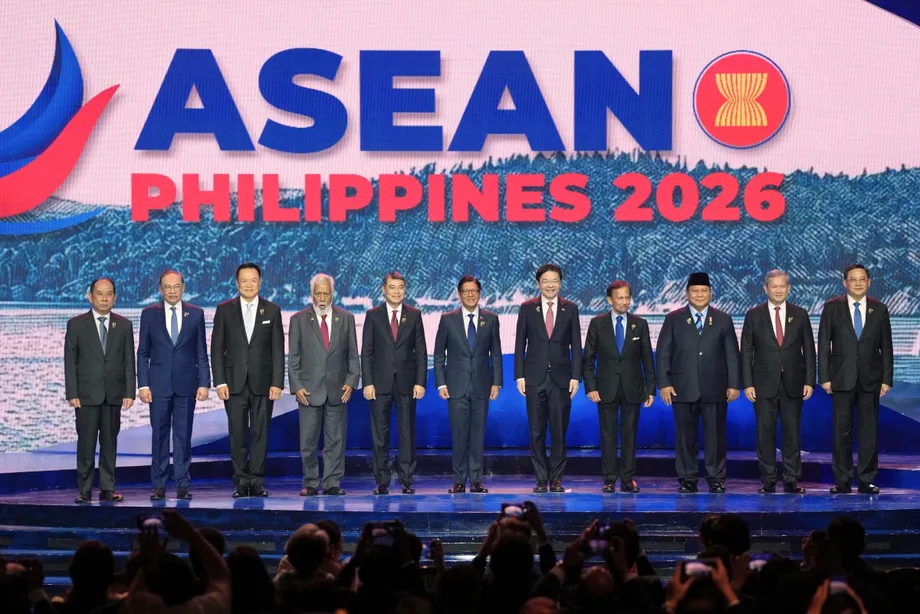
The judgment places an uncomfortable question before ASEAN, whose membership includes Myanmar. A Fulcrum assessment for ASEAN argues that renewed engagement with Naypyidaw now carries a higher political cost. The 49th ASEAN Summit in Manila, held days before the verdict, maintained limits on Myanmar's representation even as some members discussed calibrated engagement with the administration formed after the elections.
Seven ASEAN members, including Singapore, are parties to the Genocide Convention. Indonesia, Thailand, Brunei and Timor-Leste are not. Thailand's foreign minister called the judgment a legal matter between Myanmar and the court and said it would not derail Bangkok's engagement. The Philippines and Malaysia said ICJ decisions must be respected without explicitly demanding that Myanmar comply.
Singapore begins its ASEAN chair year on January 1, 2027. Its foreign ministry said it respects the judgment and reiterated the need for safe, voluntary and dignified repatriation. Prime Minister Lawrence Wong said Singapore would continue work under ASEAN's Five Point Consensus, the bloc's peace plan adopted after the coup, while adding that "engagement must be two-way". Naypyidaw had already indicated that it saw no need for a special envoy under Singapore's chairmanship.
Malaysia's Prime Minister Anwar Ibrahim announced on November 24 that another 6,803 Burmese citizens would be repatriated. The plan provides for 1,500 people to leave on December 6 and 7 aboard three Myanmar navy vessels, with 5,303 travelling later by air at Myanmar's expense. They would join 10,476 people already returned during the year. Kuala Lumpur says the returns are voluntary, while rights organisations say refugees have had little choice. The announcement did not provide their ethnic breakdown.
Returning home requires more than Naypyidaw's consent
The court's return order collides with the battlefield in Rakhine. By 2026, the Arakan Army controlled almost all the region, including locations examined in the genocide case. Its leadership has expressed recognition of Rohingya human and citizenship rights and a willingness to accept returns. Any restitution programme would therefore require cooperation from that armed movement as well as Myanmar's military authorities.
The Arakan Army faces accusations of bombing, looting and burning Muslim neighbourhoods during the capture of Buthidaung in May 2024, and of involvement in drone and mortar killings beside the Naf River on August 5 that year. It denies those allegations and blames the military. The UN human rights office has also accused it of forcibly recruiting boys as young as 12 and imposing forced labour. Myanmar's military, meanwhile, has conscripted Rohingya since 2024 to fight the Arakan Army.
The Steering Council for the Emergence of a Federal Democratic Union, a coalition that includes the National Unity Government, welcomed the judgment and promised to implement it in territory under its control. Created in 2026, the coalition does not include the Arakan Army. A separate statement from 219 civil society organisations welcomed the verdict and called for restored Rohingya citizenship and criminal accountability for military leaders.
Cox's Bazar in Bangladesh now holds around 1.2 million Rohingya. Camps recorded 455 serious security incidents in the first three months of 2026, a 40 percent increase over the previous quarter. Armed groups including ARSA and RSO have been accused of abductions and forced recruitment. Bangladesh does not formally recognize the Rohingya as refugees, leaving many with restricted access to formal education and employment.
On November 20, UN General Assembly President Khalilur Rahman made a visit to Cox's Bazar, addressing a gathering attended by at least 35,000 refugees at Camp 4 in Kutupalong. He urged governments to turn the judgment into action. Before the verdict, Hasina Khatun, a 34-year-old mother who lost her husband and brother in the Inn Din massacre, described her hopes for justice:
We hope it will bring us justice and pave the way for our return home. We want to return to Myanmar with dignity, security, citizenship, and our full rights.
A legal milestone measured by survivors' lives
Philippe Sands, who presented oral arguments against Myanmar, called the decision "a rare moment of justice for survivors, victims and their families" and "a judgment that brings the genocide convention alive". Earlier ICJ cases produced narrower outcomes: in 2007, Serbia was found responsible for failing to prevent the Srebrenica genocide, while the court did not find the required state intention in the Croatia case concluded in 2015.
The Myanmar reasoning will inform arguments in South Africa's separate genocide case against Israel over Gaza, particularly the treatment of genocidal intent, military objectives and counterterrorism defenses. That case will be decided on its own parties and evidence, and Israel rejects the genocide allegation.
Antonia Mulvey, founder and executive director of Legal Action Worldwide, whose organisation represented the survivors' delegation, described success in terms of recognition rather than immediate enforcement:
For years, Rohingya victims have been telling the world about what happened to them. They have finally been heard, and their suffering acknowledged by the world's highest court.
For refugees, the practical tests are now concrete: Myanmar's report by November 2028, credible investigations, restored property, compensation and conditions that permit families to return voluntarily without renewed persecution.
Key Points
- Min Aung Hlaing said Myanmar would reject ICJ requirements it considers inappropriate, without identifying them.
- The ICJ ruled on November 19, by nine votes to six, that Myanmar committed genocide against the Rohingya in 2017.
- The court estimated about 10,000 violent deaths; more than 700,000 people fled to Bangladesh.
- Orders include safe returns, family reunification, property restoration, rehabilitation, prosecutions, guarantees and compensation.
- Myanmar must report on restitution and propose compensation arrangements by November 2028.
- Britain sanctioned five senior officers, and the Security Council is due to meet privately on December 7.
- The ICC arrest warrant request concerning Min Aung Hlaing remains without a publicly announced decision.
- Fighting in Rakhine, divided ASEAN positions and insecurity in Bangladesh's camps continue to obstruct safe returns.