Global Coalition Demands Compliance After Historic Court Verdict
Fourteen foreign ministers from Europe, North America, Oceania, and West Africa issued a joint declaration on Monday demanding that Myanmar obey a binding international judgment holding the Southeast Asian nation responsible for committing genocide against its Rohingya Muslim minority. The coalition includes the foreign ministers of Australia, Belgium, Canada, the Czech Republic, Estonia, Iceland, Latvia, Luxembourg, New Zealand, Portugal, Spain, The Gambia, the United Kingdom, and the Greek Cypriot Administration. Their appeal comes four days after the International Court of Justice (ICJ), the principal judicial organ of the United Nations based in The Hague, delivered its landmark genocide ruling on Thursday, November 19, 2026.
Contents
- Global Coalition Demands Compliance After Historic Court Verdict
- What the World Court Found in Northern Rakhine State
- Binding Orders for Reparations and a Two Year Deadline
- Myanmar Junta Rejects Verdict While Britain Expels Military Attache
- Legal Division Over Genocidal Intent and Duty to Prevent
- Repercussions for South Africa v. Israel and Future Genocide Trials
- Survivors Demand Criminal Trials as Refugee Aid Drops by Half
- Key Points
The diplomatic coalition explained in its written appeal that the verdict from the court in The Hague leaves no legal room for evasion by the authorities in Naypyidaw.
We underscore that the Court's judgment is binding upon Myanmar and call on Myanmar to comply fully with its obligations under international law, including the Court's decision.
The foreign ministers stated that the verdict represents an important step toward accountability and justice for Rohingya victims and survivors who have endured years of appalling violence, displacement, and persecution. They added that the decision sends a clear message that such acts cannot be committed with impunity, and noted that creating conditions for the voluntary, safe, dignified, and sustainable return of Rohingya refugees to Myanmar is essential.
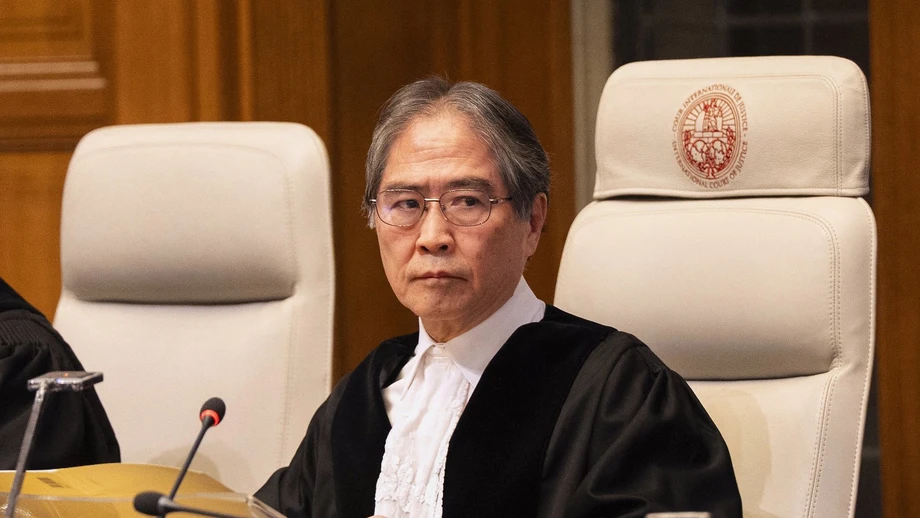
ICJ President Yuji Iwasawa read the decision to a panel of 15 judges on Thursday, marking the first time in the 80 year history of the court that a sovereign state has been held directly responsible for committing genocide under the 1948 Convention on the Prevention and Punishment of the Crime of Genocide. It is also only the fourth time since the Nazi Holocaust that an international tribunal has ruled that the strict legal threshold for genocide was met, following earlier tribunal findings regarding the 1970s Khmer Rouge regime in Cambodia where around 1.7 million people died, the 1994 genocide of Tutsis in Rwanda, and the 1995 Srebrenica massacre of around 8,000 Muslim men and boys in Bosnia.
In its earlier 2007 verdict in Bosnia v. Serbia and Montenegro and a subsequent ruling in Croatia v. Serbia, the ICJ determined that Serbia had violated its treaty obligations by failing to prevent or punish the Srebrenica massacre carried out by Bosnian Serb forces, yet the court stopped short of finding the state of Serbia itself guilty of perpetrating genocide. The formal record of the Rohingya genocide case establishes that Myanmar is the first nation found liable as a direct state perpetrator, concluding seven years of litigation brought in 2019 by the Republic of The Gambia on behalf of the 57 member states of the Organisation of Islamic Cooperation (OIC).
What the World Court Found in Northern Rakhine State
In a 9 to 6 majority decision, the ICJ ruled that Myanmar security forces, primarily the military known locally as the Tatmadaw alongside police and allied ethnic Rakhine civilians, carried out state sponsored genocide during military operations in northern Rakhine State beginning in August 2017. Before the operations began, approximately 815,000 Rohingya lived in northern Rakhine State, a population the judges determined was large enough both in absolute numbers and relative to the country's total Rohingya population to constitute a substantial part of a protected ethnic group under Article II of the Genocide Convention.
ICJ President Yuji Iwasawa summarized the brutality of the 2017 military campaign while reading the court's findings from the bench in The Hague.
The court finds that Myanmar's security forces killed thousands of Rohingya civilians, perpetrated widespread acts of sexual violence as well as acts of extreme violence against children and attacked fleeing Rohingya.
The court determined that the evidence supported United Nations estimates that at least 10,000 Rohingya civilians were killed during the 2017 operations. The violence forced more than 700,000 Rohingya to flee across the border into neighbouring Bangladesh, with specific assessments cited during the proceedings placing the exodus at more than 730,000 or 740,000 people, and military operations overall driving more than one million people from their homes over time. According to a legal analysis by the Council on Foreign Relations, the court confirmed three specific genocidal acts out of the five listed in the 1948 treaty: killing members of the group, causing serious bodily or mental harm, and imposing measures intended to prevent births within the group.
Judges documented mass executions of men and boys, widespread gang and mass rape of women, and the targeted killing of infants and children, which the bench noted was impossible to explain on any basis other than the victims' membership in the Rohingya group. The court also traced how the rights of the Rohingya, who lived in Myanmar for generations, had been progressively eroded since a 1982 citizenship law excluded most of them from full citizenship, and how military sponsored hate speech fueled public hostility against them. Security forces systematically burned and leveled Rohingya homes and farmland while sparing neighboring villages belonging to other ethnic groups. In many razed areas, the state built permanent military bases and infrastructure, resettling residents who were not Rohingya onto the confiscated land.
Because Myanmar barred both the UN fact finding mission and the Independent Investigative Mechanism for Myanmar (IIMM) from entering the country, the ICJ had to evaluate the factual record itself without relying on a prior criminal tribunal as it had for the former Yugoslavia. The judges treated the UN fact finding mission reports with caution because the mission used a lower standard of proof, but still considered them reliable factual sources due to substantial fieldwork in Bangladesh. The court gave considerable weight to statements collected by the IIMM because of its careful methodology, heard directly from unchallenged eyewitnesses, and accepted corroborated accounts documented by the rights group Legal Action Worldwide (LAW).
Binding Orders for Reparations and a Two Year Deadline
The ICJ judgment is final, legally binding, and carries no right of appeal. To remedy the violations, the judges issued a series of orders requiring Myanmar to halt all genocidal acts, enact domestic legislation implementing the Genocide Convention, and investigate, prosecute, and punish the military personnel and individuals who perpetrated the crimes. The court further mandated that Myanmar provide full reparations to Rohingya victims and the broader group.
These restitution measures require Myanmar to allow and facilitate the safe, voluntary, and dignified return of displaced Rohingya to their places of residence, reunify separated families, facilitate the search for disappeared persons, return or replace destroyed or confiscated property, provide physical and psychological rehabilitation, and guarantee legal protection against discrimination and persecution. The court gave Myanmar a strict two year deadline, requiring the state to submit a formal report by November 2028 detailing the restitution measures it has adopted. If full restitution proves materially impossible, Myanmar's report must specify the amount and payment modalities for financial compensation to the victims, an amount the court stated will be determined at a later date.
Eleven countries formally intervened in the case to submit legal interpretations of the Genocide Convention: Belgium, Canada, the Democratic Republic of the Congo, Denmark, France, Germany, the Republic of Ireland, the Maldives, the Netherlands, Slovenia, and the United Kingdom. Major events in the legal battle spanned nine years:
- August 25, 2017: Fighters from the Arakan Rohingya Salvation Army (ARSA) attack security posts and kill 12 security personnel, prompting Myanmar's military to launch sweeping clearance operations across northern Rakhine State.
- November 11, 2019: The Gambia files its genocide lawsuit against Myanmar at the ICJ with diplomatic and financial backing from the 57 member Organisation of Islamic Cooperation.
- December 2019: Myanmar's then civilian leader Aung San Suu Kyi personally appears at The Hague to defend the military and deny allegations of genocide.
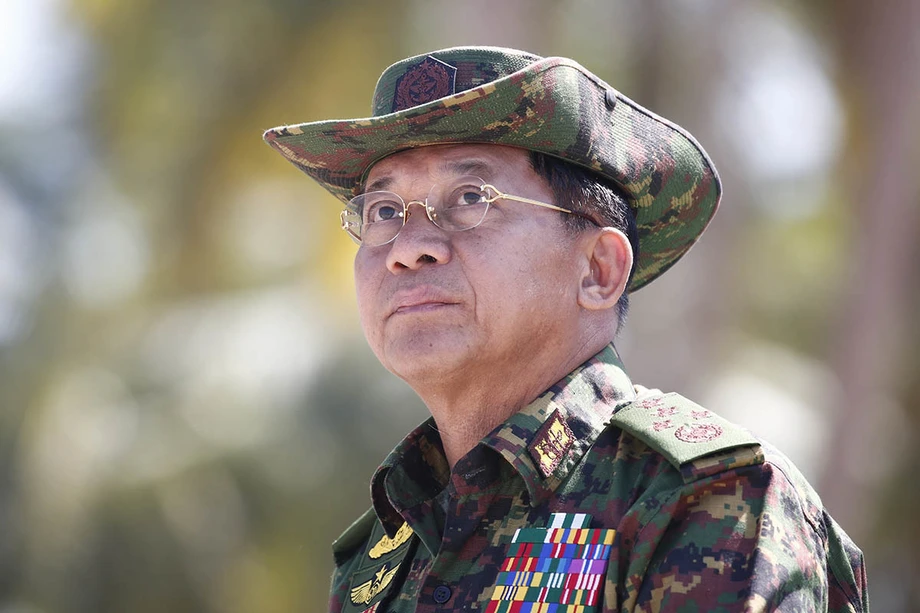
- February 2021: Myanmar's military overthrows the civilian government in a coup; military commander Senior General Min Aung Hlaing, who oversaw the 2017 Rakhine operations, later assumes the presidency.
- November 2024: The prosecutor of the International Criminal Court (ICC) requests an arrest warrant for Min Aung Hlaing for crimes against humanity involving the deportation and persecution of the Rohingya.
- February 2025: An Argentine court issues arrest warrants against 25 individuals connected to the atrocities under the principle of universal jurisdiction.
- January 12 to 29, 2026: The ICJ holds three weeks of merits hearings in The Hague, examining witness testimony and documentary evidence.
- April 2026: Rohingya survivors file a universal jurisdiction criminal case in Indonesia seeking to prosecute Min Aung Hlaing.
- November 19, 2026: The ICJ rules by a 9 to 6 majority that Myanmar committed genocide and orders comprehensive restitution and a compliance report within two years.
Myanmar Junta Rejects Verdict While Britain Expels Military Attache
Myanmar's military government swiftly rejected the World Court's decision on Friday, November 20. Khaing Khaing Soe, a spokesperson for President Min Aung Hlaing, told reporters that the administration needed time to study the ruling but immediately dismissed its legitimacy by pointing to the split vote among the judges. In her response, she also referenced the skeptical positions of U.S. President Donald Trump, Chinese President Xi Jinping, and Russian President Vladimir Putin regarding international judicial institutions.
Khaing Khaing Soe argued that the six dissenting votes undermined the authority of the panel's verdict.
Not all 15 judges agreed. Nine agreed with this decision. Six disagreed. So, this is not a unanimous decision. I would say it is not fair.
In contrast, Myanmar's opposition National Unity Government announced that it respected the court's authority and called for the ruling to be implemented. In West Africa, Gambian Justice Minister Dawda Jallow celebrated the verdict as a major triumph for the Rohingya people and international law, noting that The Gambia had secured almost everything it requested from the bench. He warned that if Naypyidaw refuses to comply voluntarily, the international community can take the binding decision to the UN Security Council.
Dawda Jallow explained how the judgment changes the diplomatic pressure on Myanmar's leadership.
We are very happy that finally we got a positive verdict, and almost all what we ask of, we've got them. Myanmar as a state, for the first time ever, have been found liable for genocide. We're counting on Myanmar's voluntary compliance. But of course, if they don't, the international community now has a binding decision in hand that we can use as a leverage to compel them to comply.
International reactions included immediate diplomatic penalties. British Foreign Secretary Ed Miliband described the ruling as historic, expelled Myanmar's defense and military attache from London, and requested an urgent meeting of the UN Security Council to address the verdict. Türkiye's Foreign Ministry issued a written statement welcoming the decision as a turning point in recognizing systematic persecution and urged immediate implementation, while Ismail Ould Cheikh Ahmed, successor to OIC Secretary-General Hissein Brahim Taha, thanked countries including Türkiye for financing the seven year legal proceedings. Statements calling for full compliance and an end to impunity also came from the European Union, Bangladesh, Norwegian Foreign Minister Espen Barth Eide, and UN High Commissioner for Human Rights Volker Türk, who called on all countries to halt shipments of military equipment and jet fuel to Myanmar and demanded the restoration of Rohingya citizenship.
UN Secretary-General Antonio Guterres welcomed the decision and urged Myanmar to hold perpetrators accountable, stating that the verdict "is a demonstration of international justice & a reaffirmation that impunity for such horrific acts must not stand." Amnesty International Secretary General Agnes Callamard called the judgment "a historic and authoritative recognition of the atrocities committed against the Rohingya and a rare moment of justice for survivors, victims and their families." She noted that Senior General Min Aung Hlaing is now Myanmar's president following engineered elections, and urged governments to refuse to welcome him internationally and to stop all transfers of weapons, surveillance equipment, and military assistance to his regime. Meanwhile, the UN Security Council has never used its power to enforce an ICJ ruling, and action remains complicated by the veto powers of the United States, Russia, and China. Washington has recently shifted toward engaging Myanmar's regime despite a 2022 State Department genocide finding and active sanctions on Min Aung Hlaing, while Russia is fighting its own ICJ genocide case involving Ukraine, and China maintains close ties with Naypyidaw while facing accusations of abuses against its Uyghur minority. Neither the White House nor the U.S. State Department immediately issued an official reaction to the verdict.
Legal Division Over Genocidal Intent and Duty to Prevent
Proving genocide in an international court is far harder than establishing war crimes or crimes against humanity because Article II of the 1948 Genocide Convention requires proof of specific intent (dolus specialis) to destroy a protected national, ethnic, racial, or religious group in whole or in part. Because state leaders rarely leave written orders directing a genocide, the ICJ has historically required that when judges rely on circumstantial evidence, genocidal intent must be "the only reasonable inference" that can be drawn from the pattern of conduct.
During the January 2026 hearings, Myanmar argued that its military campaign was a counterinsurgency operation responding to the August 2017 ARSA raids, or at most an effort to forcibly displace the population without intending to destroy them. The nine judges in the majority rejected both arguments. They pointed out that security forces planted landmines along escape routes and shot fleeing civilians, and concluded that genocidal intent may exist alongside other military goals. The majority inferred specific intent from a holistic mosaic of four factors: the general context of systematic persecution, the selective targeting of Rohingya communities, acts violating the biological and social foundations of the group, and the immense scale and systematic nature of the violence.
Arsalan Suleman, lead counsel for The Gambia, said the panel adhered strictly to established legal doctrine in reaching its conclusion.
The court was very clear that it was applying its existing standard for determining genocide and genocidal intent. It did not depart from any standard.
Melanie O'Brien, former president of the International Association of Genocide Scholars, agreed that the judgment was "a clear rebuke to Myanmar's defence arguments, particularly the argument that Myanmar's intent was merely a counterinsurgency operation," adding that the court "definitively found that all the evidence points to clear genocidal intent." However, the six dissenting judges fiercely criticized the majority's holistic method, arguing in their dissent that "the new method used by the Court leads to a holistic assessment that is, in reality, so indeterminate that it borders on arbitrariness." Dissenting Judge Georg Nolte of Germany wrote that the majority loosened the strict constraints established in prior ICJ cases and argued that at least two alternative inferences incompatible with genocidal intent remained possible. Separately, Judge ad hoc Claus Kress, a German legal scholar appointed by Myanmar, wrote an opinion proposing a collectivist understanding of how to identify a state's genocidal intent as opposed to the intent of an individual person.
The court also broke new legal ground regarding a state's duty to prevent genocide. Under prior ICJ precedent, a genocide had to actually occur before a state could be held legally liable for failing to prevent it. In Thursday's ruling, the majority reversed that rule, declaring that "the obligation to prevent genocide does not allow a State that is in a position to act in the face of a serious risk of genocide to remain idle and gamble that the risk might not ultimately materialize." Judge Nolte warned in his dissent that "from now on, every State must expect to be held responsible, including before this Court, for not acting diligently enough to prevent a genocide which has not occurred," adding that he feared the court had navigated international law into perilous waters.
Repercussions for South Africa v. Israel and Future Genocide Trials
Legal scholars and diplomats immediately recognized that the ICJ's holistic method for inferring genocidal intent will carry major consequences for other pending cases at the World Court, most notably the lawsuit filed by South Africa on December 29, 2023, accusing Israel of committing genocide in Gaza. Following the October 7, 2023 Hamas incursion, Israel's military offensive in Gaza has killed between 74,400 and almost 75,000 Palestinians, according to confirmed death tolls. In a statement on Thursday, the Palestinian Foreign Ministry reported that since October 2023, more than 22,000 Palestinian children have been killed, over 45,000 injured (with more than 11,000 suffering permanent disabilities or deformities), and more than 71,000 children orphaned of one or both parents, while roughly 800,000 children remain displaced as Israeli strikes continue despite an October 2025 ceasefire agreement.
Like Myanmar, Israel rejects allegations of genocide and maintains its military is conducting legitimate operations against an armed group after the ICJ issued provisional measures in January, March, and May 2024. Analyses aired by Israeli public broadcaster KAN and published by The Jerusalem Post warned that the court's willingness in the Myanmar verdict to infer genocidal intent from widespread physical destruction, inflammatory rhetoric, and severe physical and psychological harm could complicate Israel's legal defense. Maria Elena Vignoli, senior international justice counsel at Human Rights Watch, stated that the Myanmar judgment "provides a significant precedent for victims of genocide, and other grave crimes, across the world in their own quest for justice."
Nimer Sultany, a law professor at the University of London's School of Oriental and African Studies, explained how the Myanmar ruling directly affects the Gaza litigation.
The court's application of the law to the facts in Myanmar makes it highly likely it will reach a similar conclusion in the case of Israel, given the scale of its crimes in Gaza.
Survivors Demand Criminal Trials as Refugee Aid Drops by Half
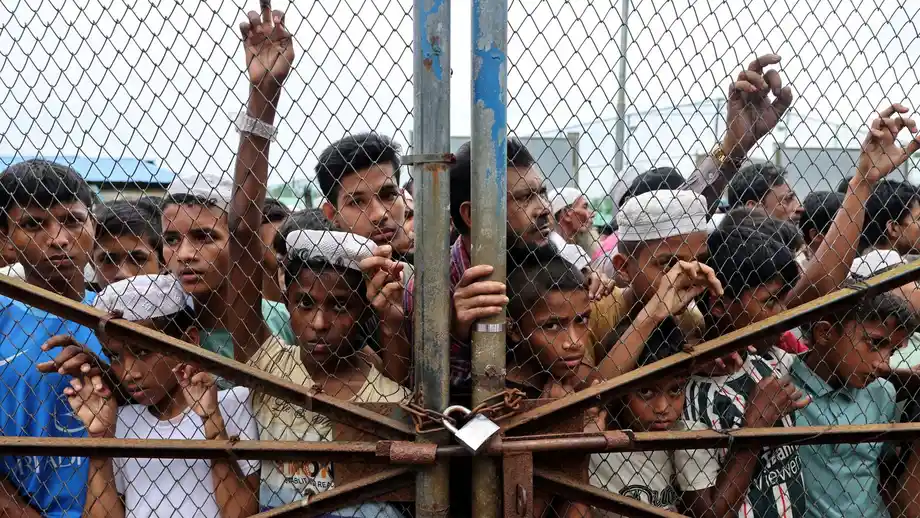
For the approximately 1.2 million Rohingya refugees living in overcrowded bamboo and plastic shelters around Cox's Bazar in Bangladesh, the world's largest refugee settlement, and others displaced across Malaysia, India, Indonesia, and Thailand, the legal victory coincides with a worsening humanitarian crisis. On Friday, November 20, a day after the ruling, UN General Assembly President Khalilur Rahman traveled to Bangladesh for his Kutupalong camp visit, addressing 35,000 refugees to call for international action. Inside the camps, international funding cuts have caused monthly food assistance allocations to drop by 50 percent, falling from $12 per person to $6 per person and driving severe malnutrition among children.
Inside Myanmar, where about 520,000 Rohingya remain, ongoing civil war has trapped civilians between the military regime and the Arakan Army, an ethnic Rakhine militia that now controls much of northern Rakhine State where Rohingya villages once stood. Armed Rohingya groups, including ARSA, have also been implicated in intimidation, killings, and forced recruitment of civilians. Antonia Mulvey, executive director of Legal Action Worldwide, sat next to Rohingya survivors inside the courtroom in The Hague as the verdict was read and described their emotional reaction to the ruling.
I think they can't believe it. They fought so long, so hard. It's both just a lot of emotion, because it also takes them back to the loved ones that are not here, but why they've been fighting for this very day.
Yasmin Ullah, Executive Director of the Rohingya Maiyafuinor Collaborative Network (RMCN) and a survivor who joined The Gambia's delegation in The Hague, emphasized that because the ICJ only adjudicates disputes between states, individual commanders must still be put on trial in criminal courts. She is a lead complainant in the April 2026 universal jurisdiction lawsuit filed in Indonesia targeting Min Aung Hlaing, complementing the ICC arrest warrant request and the Argentine arrest warrants.
Yasmin Ullah stated that state liability must be followed by prosecutions of the military brass and the full restoration of citizenship and property.
For generations, Myanmar denied our identity and our history and our right to belong. We want our rights, we want our homes, and we want our citizenship and our future back. The ICJ establishes state responsibility, but states do not commit crimes by themselves. There are human beings behind those atrocities, and they must face individual criminal accountability. No rank, no title, and no political office should shield him or other perpetrators from accountability.
Recalling a visit to the Bangladesh refugee camps in August, Ullah shared the words of a displaced Rohingya woman who told her, "We're not here to ask for a handout. We would like to go home when it is possible." University of Manitoba law professor and genocide scholar Kjell Anderson noted that while the ICJ verdict will not immediately alter the conflict on the ground, it creates moral clarity for regional states such as Malaysia, Thailand, India, and China that have engaged with Myanmar's junta or returned refugees into danger. Anderson also shared a message from a Rohingya friend living in the Kutupalong camp following Thursday's ruling: "Today is a deeply emotional and historic day for the Rohingya. After everything our people have endured, this moment gives us renewed hope for justice, dignity, and a better future and return to the homeland."
Key Points
- A coalition of 14 nations issued a joint statement on Monday calling on Myanmar to obey the binding November 19, 2026 ICJ judgment holding the state responsible for committing genocide against the Rohingya.
- In a 9 to 6 vote read by President Yuji Iwasawa, the ICJ found Myanmar directly responsible for genocide for the first time in the court's 80 year history, confirming at least 10,000 Rohingya killed and more than 700,000 forced into Bangladesh during the 2017 military operations.
- The court ordered Myanmar to prosecute perpetrators, restore citizenship and property, facilitate safe return, compensate victims, and submit a compliance report within two years by November 2028.
- A spokesperson for Myanmar President Min Aung Hlaing rejected the ruling as unfair and not unanimous, while the United Kingdom expelled Myanmar's defense attache and requested an urgent UN Security Council meeting.
- The court's majority established a holistic test for inferring genocidal intent and ruled that states have a legal duty to act against a serious risk of genocide even before one occurs, setting precedents that legal experts say could affect South Africa's genocide case against Israel.
- More than 1.2 million Rohingya refugees remain in camps in Bangladesh where monthly food rations have been cut in half from $12 to $6 per person, while survivors pursue criminal arrest warrants against Min Aung Hlaing through the ICC, Argentina, and Indonesia.