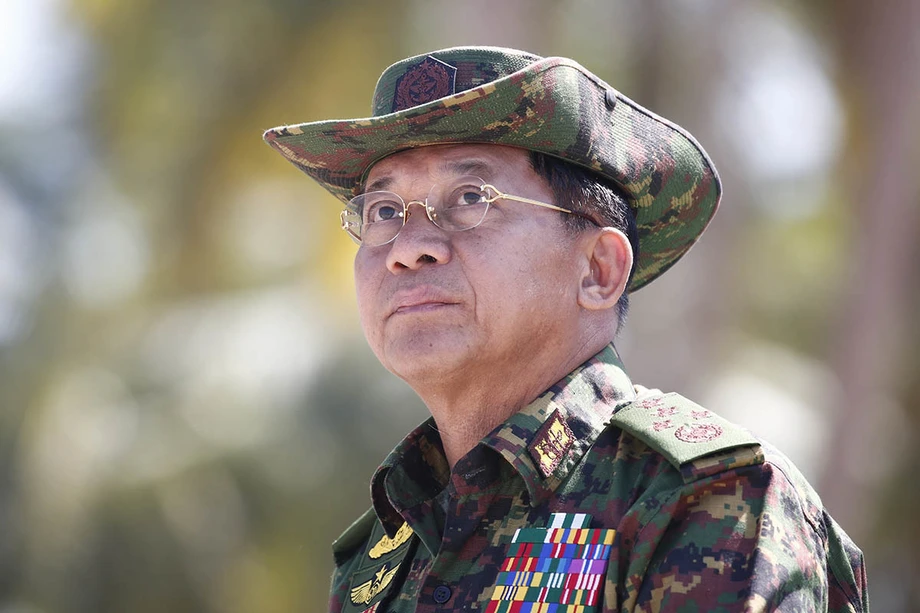
One military leader, several routes to justice
An Argentine judge issued arrest warrants for 25 Myanmar military and civilian officials on 13 February 2025, including military leader Min Aung Hlaing, over alleged atrocities against the Rohingya. At the International Criminal Court, a different process remains pending: prosecutors applied on 27 November 2024 for his arrest over alleged crimes against humanity of deportation and persecution.
Contents
- One military leader, several routes to justice
- What the ICC prosecutor is asking judges to do
- Why Bangladesh gives the ICC a legal opening
- Argentina has issued warrants, but no trial has begun
- How the legal efforts developed
- Where the other five national efforts stand
- Survivor testimony connects the proceedings
- Who would actually make an arrest?
- Diplomatic access and civilian suffering continue
- Key Points
Those two proceedings sit within a wider network of legal efforts across six countries: Argentina, Germany, Indonesia, the Philippines, Turkey and the United Kingdom. Their progress varies sharply. Argentina has issued warrants, British police have opened broad evidence gathering investigations, and efforts in Germany, Indonesia and the Philippines have encountered refusals.
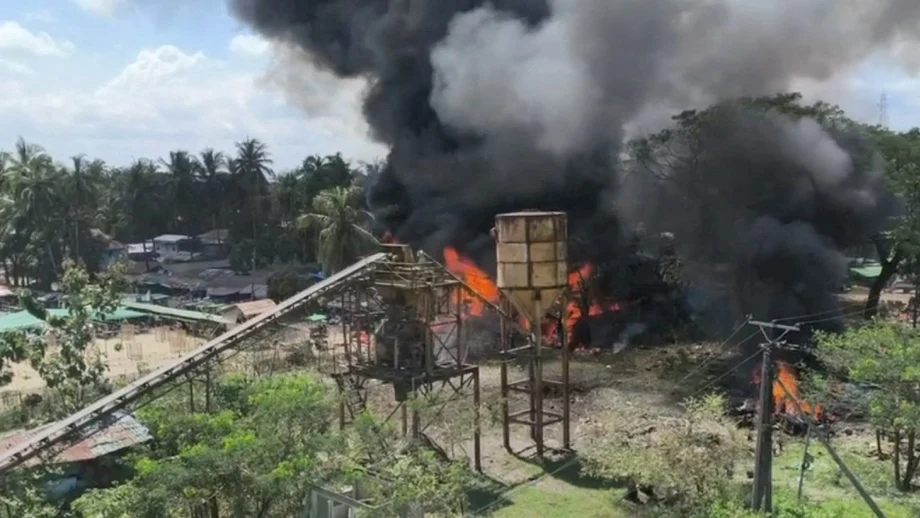
The cases also cover different periods and victims. Some concern the military operations that drove Rohingya from Rakhine State into Bangladesh in 2016 and 2017. Others seek accountability for alleged torture, killings and attacks on communities after the military seized power in February 2021.
For survivors, the central issue is whether evidence collected across borders can eventually bring senior officials before a court. For Min Aung Hlaing, the proceedings create legal pressure alongside efforts to secure political authority at home and maintain relations with neighbouring governments.
The practical picture is therefore more complicated than six countries prosecuting the same case. A complaint asks authorities to act; an investigation gathers evidence; an arrest warrant authorises steps toward detention; and a trial determines criminal responsibility. Myanmar proceedings have reached different points along that sequence.
What the ICC prosecutor is asking judges to do
The ICC's Bangladesh/Myanmar case record lists prosecutor Karim Khan's application as pending before Pre-Trial Chamber I. It concerns alleged crimes against humanity committed in Myanmar and partly in Bangladesh, rather than the full range of alleged military abuses across Myanmar.
The application focuses on events between 25 August and 31 December 2017. Crimes against humanity are serious acts, such as forcible deportation or persecution, committed as part of a widespread or systematic attack on civilians.
Khan, the ICC prosecutor who filed the application, explained his office's conclusion in a statement carried by the United Nations:
My Office has concluded that there are reasonable grounds to believe that Senior General and Acting President Min Aung Hlaing bears criminal responsibility for the crimes against humanity of deportation and persecution of the Rohingya, committed in Myanmar, and in part in Bangladesh.
ICC judges must assess whether the evidence meets the legal threshold for issuing a warrant. No public decision date has been announced. The prosecutor also said that further applications against senior Myanmar officials would follow, without giving a fixed timetable.
Why Bangladesh gives the ICC a legal opening
Myanmar is not a member of the ICC, but Bangladesh is. The court's jurisdiction in this investigation rests on part of the alleged crimes taking place on Bangladeshi territory, particularly the forced crossing of an international border.
In simple terms, prosecutors argue that deportation began with people being driven from their homes in Myanmar and continued when they crossed into Bangladesh. That connection gives the ICC authority to investigate qualifying crimes even though Myanmar has not joined the Rome Statute, the treaty that established the court.
Judges authorised the investigation on 14 November 2019, following a prosecutor's request on 4 July that year. The authorisation covers qualifying crimes committed from 1 June 2010, when the Rome Statute took effect for Bangladesh, and future crimes sufficiently connected to the same situation.
The current arrest request concentrates on the 2017 operations. Other alleged crimes, including recent atrocities in Rakhine State, are being examined through evidence collection efforts with a wider mandate.
Argentina has issued warrants, but no trial has begun
Argentina's case goes further procedurally than the other national efforts described here. According to the Global Justice Center's February 2025 legal update, Judge María Romilda Servini de Cubría granted warrants against 25 people, including Min Aung Hlaing and deputy military commander Soe Win. A later account put the total at 24.
The warrants concern alleged genocide and crimes including aggravated murder, sexual abuse and torture against the Rohingya. Genocide involves certain acts committed with the intent to destroy, in whole or in part, a protected national, ethnic, racial or religious group.
The Burmese Rohingya Organisation UK, known as BROUK, filed its complaint in November 2019. Argentina accepted the case in November 2021. Federal prosecutor Guillermo Marijuán requested the arrest, international capture and questioning of 25 officials on 28 June 2024, and the judge granted that request in February 2025.
Argentina is using universal jurisdiction, a legal principle allowing national authorities to pursue certain grave international crimes committed abroad, even when the victims and suspects are foreign nationals. The Argentine case remains at the investigation stage and has not been sent to trial.
The case also names former civilian leaders Aung San Suu Kyi and Htin Kyaw. BROUK said it sought warrants only for military officials and presented no evidence against those two leaders. The prosecutor added them independently, and the court rejected BROUK's request to reconsider their inclusion in light of Myanmar's political circumstances.
How the legal efforts developed
The chronology shows how survivor complaints, international investigations and national court decisions have developed along different tracks over several years.
- August to December 2017: The period covered by the ICC prosecutor's arrest request, following military operations against the Rohingya in Rakhine State.
- November 2019: BROUK filed its Argentine complaint, and ICC judges authorised the Bangladesh/Myanmar investigation.
- November 2021: Argentina accepted the universal jurisdiction case.
- March 2022: The Myanmar Accountability Project filed a torture complaint in Turkey.
- 2023: Complaints or petitions advanced in Germany, Indonesia and the Philippines, but each encountered a refusal.
- 27 November 2024: Khan applied for an ICC arrest warrant for Min Aung Hlaing.
- 13 February 2025: The Argentine judge issued warrants for 25 officials.
- 10 November 2025: ICC judges adopted a rule generally making arrest applications and related decisions confidential.
The final change affects how much the public may learn about future ICC proceedings. Under regulation 23 ter, applications and related decisions are generally classified as secret or under seal unless judges decide otherwise. Judges can publicly confirm a warrant when doing so could help prevent crimes or improve the chances of arrest.
Where the other five national efforts stand
Germany received a complaint in January 2023 from Fortify Rights and 16 people from Myanmar. It sought an investigation into alleged genocide, war crimes and crimes against humanity, covering both the 2016 and 2017 Rohingya operations and abuses after the coup. The complaint drew on interviews with more than 1,000 survivors.
German federal prosecutors declined to open an investigation in November 2023, partly because no suspects were in Germany. German law permits broad universal jurisdiction, while giving prosecutors discretion over cases without a connection to the country.
Indonesia's Constitutional Court rejected a petition in April 2023 seeking to remove a nationality restriction in the Human Rights Court Law. Petitioners Marzuki Darusman, Muhammad Busyro Muqoddas and the Alliance of Independent Journalists had challenged wording limiting the relevant jurisdiction to crimes committed by an Indonesian citizen.
In the Philippines, five Chin victims and their families filed a complaint in October 2023 against ten military officials, including Min Aung Hlaing. They alleged killings, mutilation, the burning of hundreds of homes, destruction of churches and the use of aid as a weapon in Chin State. They relied chiefly on Republic Act No. 9851, the Philippine law addressing genocide, crimes against humanity and violations of international humanitarian law. The petition was declined, and the plaintiffs planned to appeal.
Turkey's complaint concerns alleged torture at the Yay Kyi Ai military interrogation centre in Yangon's Mingaladon Township. Turkish authorities had yet to rule, according to the February 2025 legal update.
British Metropolitan Police have opened structural investigations covering situations under ICC investigation, including Bangladesh/Myanmar. These investigations collect evidence about a pattern of crimes, rather than starting with a single suspect or incident, and can prepare the ground for later cases.
Survivor testimony connects the proceedings
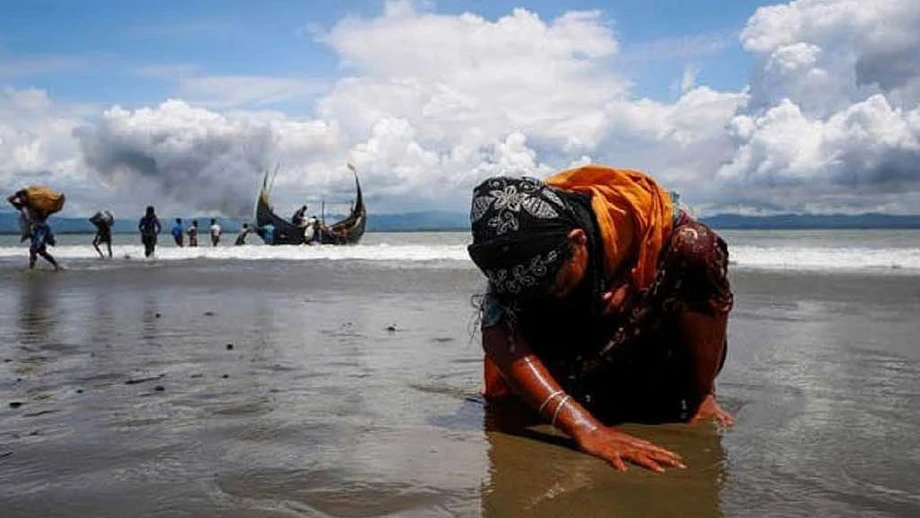
The scale of the alleged 2017 violence is reflected in estimates of deaths, displacement and destruction. A United Nations account describes about 10,000 Rohingya systematically killed and more than 300 villages burned; another widely cited estimate puts deaths at at least 6,700. More than 740,000 people were expelled during the 2017 operation, while the wider Rohingya exodus to Bangladesh exceeded one million.
The UN Independent Investigative Mechanism for Myanmar, known as the IIMM, was established in 2018 to collect and preserve evidence of serious international crimes committed in Myanmar since 2011. Its mandate extends beyond the Rohingya cases to alleged crimes against other communities.
The mechanism's ICC cooperation explanation says it has shared extensive evidence and analysis with prosecutors. Its investigators have also jointly interviewed victims of sexual violence and crimes against children with the ICC.
The IIMM's seventh report, issued in July 2025, described a collection of 28 million information items, with more than 1.2 million shared. Insider testimony, documents, scientific material and visual evidence also form part of the ICC prosecutor's case.
BROUK leader Tun Khin has described bringing Rohingya women through Bangladesh to testify in Argentina. Their testimony shows how survivors living far from the country where proceedings are taking place can contribute directly to an investigation.
Who would actually make an arrest?
The ICC has no police force. It depends on national authorities to execute its warrants, with the IIMM identifying 125 member states as the court's enforcement network. Arrest and surrender therefore require cooperation from governments and their law enforcement agencies.
Argentina can seek Interpol Red Notices based on its judicial orders. A Red Notice asks authorities worldwide to locate and provisionally arrest someone while extradition, surrender or a similar legal process is considered. National authorities make the arrest decisions under the applicable law.
Myanmar's military authorities rejected the ICC's authority after the November 2024 application, citing the country's nonmembership. China also challenged the court's jurisdiction over a country outside the Rome Statute. ICC judges have based their Bangladesh/Myanmar jurisdiction on the cross border element of the alleged crimes.
Myanmar's UN ambassador Kyaw Moe Tun and UN human rights chief Volker Türk have called for the Security Council to refer the wider Myanmar situation to the ICC. That would provide another route for addressing alleged crimes beyond the current Bangladesh connection.
The International Court of Justice operates on a different track. The Gambia's genocide case concerns Myanmar's responsibility as a state under the Genocide Convention, while the ICC and Argentine proceedings concern the criminal responsibility of individuals.
Diplomatic access and civilian suffering continue
The Philippines has maintained ASEAN's exclusion of Myanmar's senior military leaders from summits. Its foreign ministry announced that Myanmar would instead send the director of its ASEAN affairs department to the Manila summit scheduled for 15 to 17 November. A ruling in The Gambia's ICJ case was also expected on 19 November.
ASEAN has barred senior military leaders from its summits since October 2021, citing failure to carry out the Five Point Consensus agreed that April. The plan calls for an immediate end to violence, dialogue among all parties and an ASEAN special envoy.
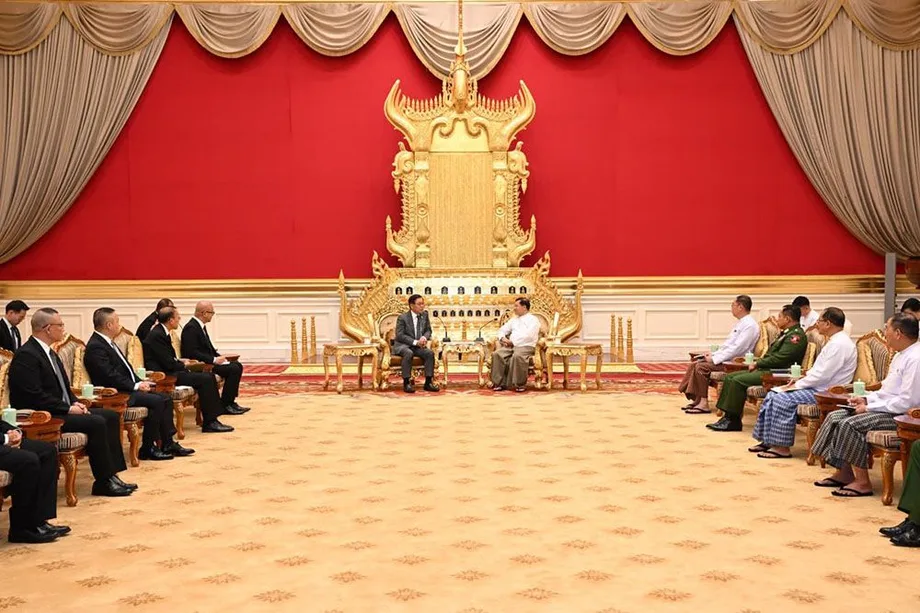
Individual governments have still engaged with Min Aung Hlaing. Malaysia and Thailand defended hosting him as a practical way to address refugees and problems across their borders. That leaves him with some diplomatic access even as the regional bloc restricts his participation at its leaders' table.
The civilian toll gives the legal efforts continuing urgency. UN figures cited alongside the summit decision recorded at least 8,384 civilians killed by government forces since the coup and more than four million people displaced. Human Rights Watch cited more than 32,000 arrests for opposition to military rule and at least 2,300 reported deaths in custody.
For affected families, the different court routes address different parts of that suffering. Argentina's investigation covers alleged crimes against the Rohingya more broadly than the ICC's Bangladesh linked case. The Philippine and Turkish complaints seek accountability for alleged abuses after the coup. Their common practical need is a court with jurisdiction, usable evidence and authorities willing to act.
Key Points
- Argentina issued arrest warrants for 25 Myanmar officials on 13 February 2025, including Min Aung Hlaing.
- The ICC prosecutor's November 2024 arrest application concerns alleged deportation and persecution of Rohingya during 2017.
- Legal efforts across six countries have reached different stages, including investigations, warrants and rejected petitions.
- The Argentine case remains under investigation and has not reached trial.
- The IIMM is sharing evidence with justice bodies, including survivor testimony and analysis.
- Arrests depend on national authorities, while civilians continue to face violence, detention and displacement.