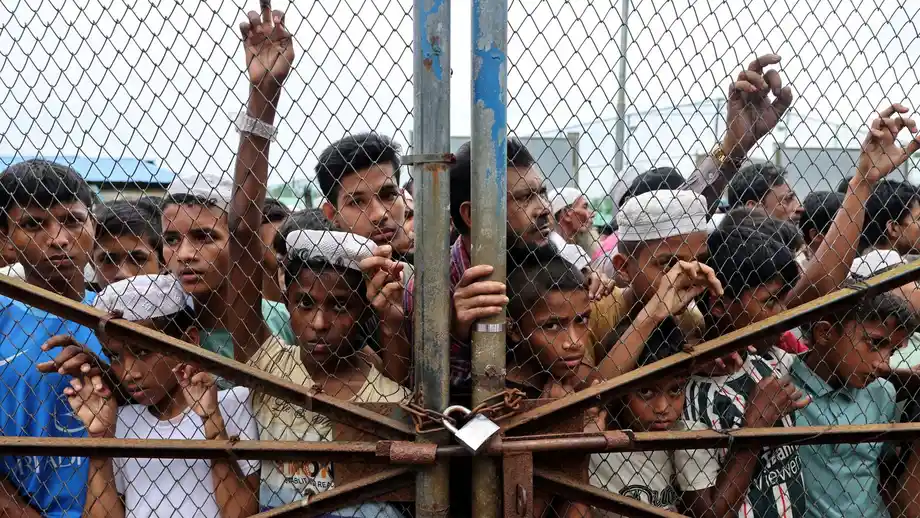
A Historic Ruling at the World Court
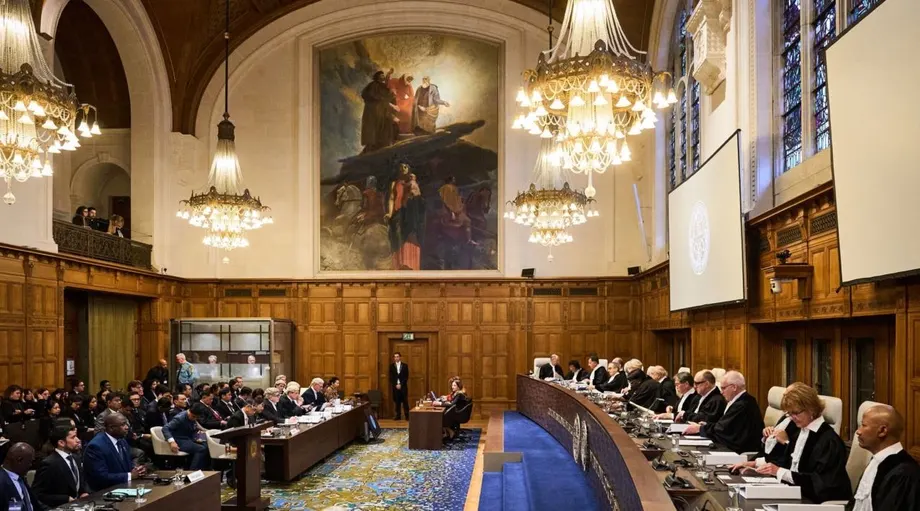
The International Court of Justice delivered a groundbreaking verdict on November 19, 2026, ruling that Myanmar committed genocide against the Rohingya Muslim minority during military operations in 2017. ICJ President Yuji Iwasawa read the decision in the Great Hall of Justice in The Hague, marking the first time in the 80-year history of the United Nations court that judges determined a sovereign state committed genocide. The case, initiated by The Gambia under the 1948 UN Genocide Convention with backing from the 57-member Organisation of Islamic Cooperation, concluded after seven years of legal proceedings. Judges found that Myanmar's security forces carried out mass executions, widespread sexual violence, and extreme violence against children, intending to destroy a substantial part of the Rohingya population. Readers can review our International Court of Justice Finds Myanmar Responsible for Rohingya Genocide in Landmark Ruling for details on the trial proceedings and judicial findings.
Contents
- A Historic Ruling at the World Court
- Survivors Share Accounts of the 2017 Crackdown
- Understanding the Legal Findings and Specific Violations
- Court Orders, Remedies, and Myanmar's Rejection
- Reactions from Global Governments and International Bodies
- Impact on Bangladesh and Regional Hosting Pressures
- Timeline of Key Events
- Comparative Context on Prior ICJ Genocide Cases
- At a Glance
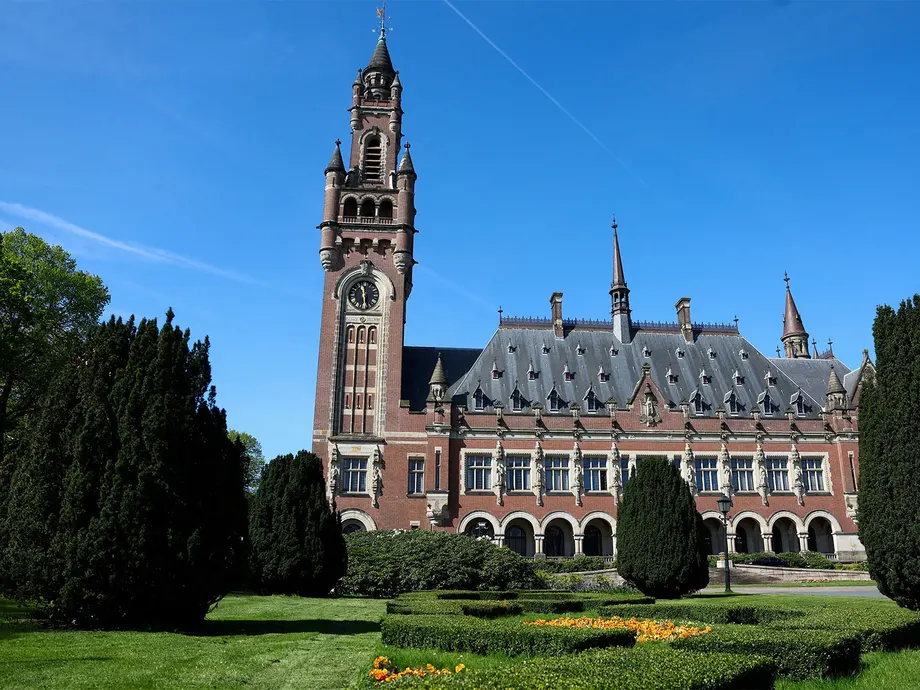
The legal battle began on November 11, 2019, when The Gambia filed its application at the Peace Palace. During hearings in January 2026, the court examined extensive evidence regarding military operations in northern Rakhine State. Eleven states intervened in the proceedings to offer interpretations of the ICJ's genocide ruling concerning international humanitarian law and state obligations. The final verdict was decided by a nine-to-six vote among the 15-judge panel, reflecting deep division on the bench regarding how to infer genocidal intent from circumstantial evidence. Understanding genocidal intent presents a severe evidentiary hurdle in international law because governments rarely document plans to exterminate an ethnic group. Myanmar defended its 2017 military campaign as a legitimate counter-terrorism response to attacks by the Arakan Rohingya Salvation Army, an armed group that had raided border posts. The court rejected this defense, noting that the scale, brutality, and pattern of violence far exceeded what military necessity could justify.
Survivors Share Accounts of the 2017 Crackdown
Momtaz Begum sat quietly in the background of a refugee shelter, recalling how Myanmar forces killed her husband and children before raping her in front of her lone surviving child. Another woman sitting nearby, Dildar Begum, had experienced the exact same violence in their home village of Tula Toli. Both sisters spent months believing each other dead until they discovered that they had both made it to Bangladesh and lived in different parts of the camp. Each woman had only one surviving daughter, and both girls carried similar scars along the back of their heads from the military assault.
Anwara Begum had lived twice previously as a refugee in Bangladesh, first as a child in 1978 and then in the early 1990s as a young mother. When she was forced to return to Myanmar despite ongoing persecution, she swore to herself that she would never become a refugee again. She broke that oath when she saw the river near her village filled with bodies floating from Tula Toli. Her husband first pulled as many bodies from the river as he could to bury them, and then they gathered some belongings and headed west toward the River Naf, the border with Bangladesh. To cross the river, she handed over all the gold she owned, equal to 200 US dollars, to a Bangladeshi boatman.
Elderly residents were also targeted during the military clearance operations. Nur Alam had to be carried on the shoulders of his children on the journey to Bangladesh while his 10-year-old grandson, Mamoon, held his hand. Alam's arrival in Bangladesh marked his fourth time seeking refuge there, having first been expelled from Myanmar during military operations in the 1950s when Bangladesh was not yet an independent country. A UN-backed fact-finding mission concluded that some 10,000 people likely died in the pogroms, with approximately one in five victims being children.
Understanding the Legal Findings and Specific Violations
The 191-page judgment detailed how Myanmar's security forces and other state organs intentionally committed specific acts covered under Article II of the Genocide Convention. These included Article II(a) for killing members of a group, Article II(b) for causing serious bodily or mental harm to members of the group, and Article II(d) for imposing measures intended to prevent births within the group. The court noted that the murder of infants during the clearance operations supported the inference that security forces acted with the intent to prevent births. Judges also examined evidence showing that nearly 400 villages, representing about 40 percent of the nearly 1,000 villages in three townships of northern Rakhine State, were partially or totally destroyed.
The ruling addressed sexual violence and its effects on the community's ability to have children, as well as restrictions on births, including a two-child limit previously imposed on Rohingya families. The court cited a Reuters investigation into the killing of 10 Rohingya Muslims in Inn Din in September 2017, and the subsequent arrest of two Reuters reporters who were held for more than 500 days. The Global Centre for the Responsibility to Protect, an international human rights organisation, published a report emphasizing that the judgment marks the first time a state has been found responsible for genocide, reinforcing the preventive nature of the 1948 treaty. Readers can study the full context in the Global Centre's analysis regarding state obligations to prevent and punish atrocity crimes.
Court Orders, Remedies, and Myanmar's Rejection
The International Court of Justice ordered Myanmar to cease any ongoing violations by enacting legislation giving full effect to its obligations under the Genocide Convention. The court also ordered Myanmar to investigate all persons reasonably suspected of having committed acts contrary to the convention and to prosecute and punish them. Furthermore, Myanmar must provide assurances of non-repetition, adopt measures of restitution including allowing the safe, voluntary, and dignified return of displaced Rohingya to their places of residence, and compensate the Rohingya group for the damage caused. The court decided that the exact amount and modalities of compensation should be determined in a subsequent phase of the proceedings, requiring Myanmar to transmit a report within two years on the restitution measures it has adopted.
Myanmar's foreign ministry released a statement on Friday, November 20, 2026, calling the ruling a great disappointment and asserting that counter-terrorism actions in northern Rakhine State during 2016 and 2018 were not carried out with genocidal intent. Union Minister Ko Ko Hlaing attended the ICJ hearing in The Hague when the judgment was delivered. The state-run New Light of Myanmar newspaper made no mention of the ruling online, and the press bureau of the president's office did not respond to requests for comment. Myanmar argued that refugees would only be able to return when situations permit, noting that its military-backed government had verified 308,797 people living in camps in Bangladesh as former residents of Rakhine as of August 2026.
Reactions from Global Governments and International Bodies
Governments around the world reacted swiftly to the landmark judicial decision. UK Foreign Secretary Ed Miliband condemned the horrific treatment of the Rohingya people and announced that he was summoning Win Zeya Tun, charge d'affaires of the Myanmar embassy in London, while also expelling Myanmar's defense attache. France announced it would seek a meeting of the United Nations Security Council to push for action over Myanmar's refusal to comply with the court's verdict. Under Article 94 of the United Nations Charter, all member states are obligated to comply with ICJ decisions, and Article 94(2) provides that a party may approach the Security Council if another party fails to fulfill its obligations under a judgment.
Diplomatic analysts noted that securing enforcement through the UN Security Council faces significant hurdles. China and Russia, both permanent members of the council with veto powers, maintain close ties with Myanmar's military leadership and could block any proposed enforcement resolution. Richard Horsey, senior Asia adviser at the International Crisis Group, noted that China and Russia would almost certainly veto any Security Council resolution aiming to punish Myanmar. Consequently, pressure will likely come from the UN General Assembly and individual governments rather than the council itself.
Impact on Bangladesh and Regional Hosting Pressures
Bangladesh currently hosts approximately 1.2 million Rohingya refugees in overcrowded camps in Cox's Bazar, bearing substantial economic, environmental, and social costs. The final judgment turns the refugee crisis from a political question into a legal fact, strengthening Bangladesh's diplomatic bargaining position. Indian Ministry of External Affairs spokesperson Randhir Jaiswal stated that India took note of the ruling and reiterated its support for the safe, speedy, and sustainable return of displaced Rohingyas, pointing to humanitarian assistance provided through Operation Insaniyat and the Rakhine State Development Programme.
Bangladesh Foreign Minister Khalilur Rahman, who also serves as President of the United Nations General Assembly, traveled to Cox's Bazar immediately after the judgment to address a massive gathering of refugees at the football field of Camp 4 in Kutupalong. Standing before at least 35,000 Rohingya refugees, he declared that the highest court of the United Nations had spoken their name and recognized them as a distinct ethnic group. Community leaders such as Mohammad Rofik and Sayed Ullah welcomed the verdict as a historic victory that formally acknowledged their suffering and identity, while cautioning that the struggle for justice and safe repatriation remains a long and difficult journey.
Timeline of Key Events
- 1948: The United Nations adopts the Convention on the Prevention and Punishment of the Crime of Genocide.
- August 2017: Myanmar military launches clearance operations in northern Rakhine State, driving over 700,000 Rohingya across the border into Bangladesh.
- November 11, 2019: The Gambia files a genocide case against Myanmar at the International Court of Justice under the Genocide Convention.
- January 2020: The ICJ issues a unanimous provisional measures order instructing Myanmar to prevent genocidal acts.
- February 2021: The Myanmar military ousts the elected government led by Aung San Suu Kyi, triggering a civil war.
- July 2022: The ICJ rules that it has jurisdiction to hear the genocide case brought by The Gambia.
- January 2026: The International Court of Justice closes its merits hearings after examining extensive evidence and survivor testimonies.
- November 19, 2026: The ICJ delivers its final judgment in The Gambia v. Myanmar, finding Myanmar responsible for genocide in a 9-to-6 decision.
- November 20, 2026: UN General Assembly President Khalilur Rahman visits refugee camps in Cox's Bazar to urge international action following the ruling.
Comparative Context on Prior ICJ Genocide Cases
The ruling in The Gambia v. Myanmar is only the third time the International Court of Justice has delivered a substantive judgment on the merits of a genocide case. The two previous cases established strict legal hurdles for proving state responsibility. In Bosnia and Herzegovina v. Serbia and Montenegro, filed in 1993 and decided in 2007, the court ruled that Serbia did not commit genocide itself, but found that it violated the Genocide Convention by failing to prevent the 1995 Srebrenica genocide and failing to punish or transfer perpetrators. In Croatia v. Serbia, filed in 1999 and decided in 2015, the court dismissed both Croatia's main claim and Serbia's counterclaim, finding that neither state proved the specific genocidal intent required under the convention during the Croatian War of Independence. Legal experts noted that the 2026 judgment against Myanmar successfully demonstrated that establishing genocidal intent through a pattern of systematic violence is achievable in international courts.
International law professor Michael Becker observed that the panel took careful steps to show that The Gambia's case passed the established only reasonable inference test for genocidal intent. The ruling also affirms that forced transfer, targeting children, and sexual violence are relevant factors in proving genocide. Readers can look back at our coverage in ICJ Finds Myanmar Committed Genocide Against Rohingya, but Return and Reparations Remain Uncertain for a detailed breakdown of the judicial findings. Meanwhile, legal observers have noted potential implications for other international proceedings, including South Africa's case accusing Israel of genocide in Gaza at the ICJ, though analysts caution that each case involves distinct legal arguments and operational realities.
At a Glance
- The International Court of Justice ruled on November 19, 2026, that Myanmar committed genocide against the Rohingya minority in 2017.
- The decision passed with a 9-to-6 majority among the 15-judge panel presided over by Judge Yuji Iwasawa.
- The court ordered Myanmar to investigate crimes, punish perpetrators, provide reparations, and submit a compliance report within two years.
- More than 1.2 million Rohingya refugees currently reside in congested camps in Bangladesh, awaiting conditions suitable for safe repatriation.
- Myanmar rejected the ruling as a great disappointment, maintaining that its military operations were legitimate counter-terrorism measures.