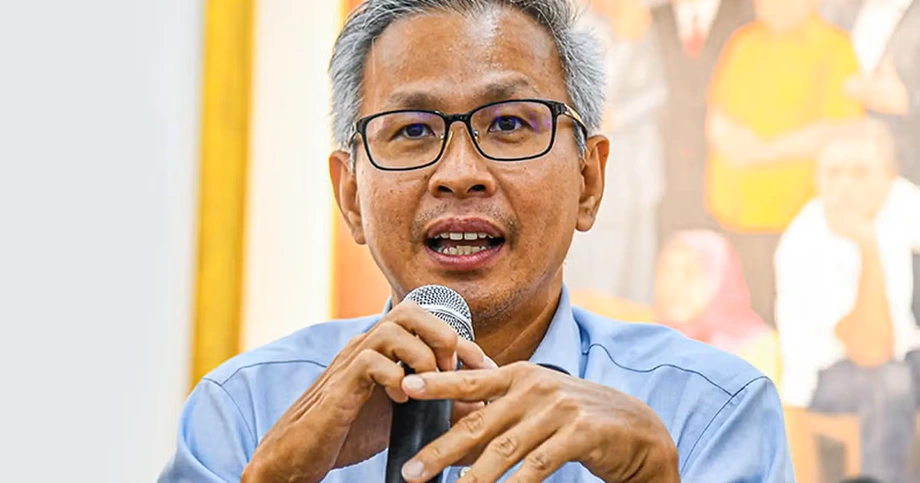
Pua admits writing the post and challenges the police probe
Tony Pua, the former Damansara MP and DAP leader, spent about 45 minutes with police at Bukit Aman on Friday, November 27, 2026, over a Facebook post containing pages from Federal Territories Pardons Board minutes concerning Najib Razak's house arrest. He arrived at the Kuala Lumpur police headquarters at about 9.53am with his lawyer, Haijan Omar, and entered at 10am. Before giving his statement, he smiled at waiting journalists and said he would speak afterwards.
Contents
- Pua admits writing the post and challenges the police probe
- What Pua published and how he explained it
- What did the minutes reveal about the pardon discussion?
- How Najib's sentence led to the Langgak Duta order
- Why the declassification sequence remains disputed
- Which laws are being used in the investigation?
- Umno, PAS and the opposition press different questions
- Saifuddin rejects claims of selective enforcement
- Khoo Poay Tiong faced a separate investigation the same morning
- Key Points
Inspector-General of Police Tan Sri Mohd Khalid Ismail said police had received 55 reports over the post, which Pua published on November 18. After the questioning, Pua acknowledged that he had written and published it himself.
The former lawmaker told journalists that he had made no attempt to deny responsibility for the Facebook account or its contents.
I told them that it was my writing, my Facebook account and I was the one who posted it. I did not deny that.
Pua said he would answer in court if any wrongdoing was established. He also praised the officers for conducting the session professionally and said he had cooperated fully. His principal objection was to the investigation itself: he maintained that the documents had already been declassified and that Home Minister Datuk Seri Saifuddin Nasution Ismail had addressed their status in Parliament.
In Pua's view, that removed the basis for investigating his publication of the pages. He said he had checked their status before posting them and had merely translated and explained information recorded in the minutes.
What Pua published and how he explained it
The November 18 post displayed several pages whose contents Pua said he had translated into English. They concerned discussions about whether Najib should be allowed to serve the remainder of his SRC International prison sentence at his residence rather than in Kajang Prison.
Investigators also asked about Pua's use of the expression "King Kleptocrat". He said it referred to Najib and cited the former prime minister's convictions involving money laundering, criminal breach of trust and abuse of power. Pua insisted that he had not criticised other people named in the documents, but had drawn attention to what the meeting record said.
He directed his criticism at Umno and PAS figures who had objected to the publication, urging them to understand the law and the meaning of declassification. His argument focused on the status of the papers when he disseminated them. His critics increasingly focused on another matter: how he obtained the pages and why his Facebook account appeared to become a public distribution point before other interested parties received them.
What did the minutes reveal about the pardon discussion?
The declassified minutes recorded objections from Attorney-General Tan Sri Mohd Dusuki Mokhtar and Hannah Yeoh, the Minister in the Prime Minister's Department responsible for Federal Territories. According to the record, Mohd Dusuki maintained that Najib should remain in prison until 2028, consistent with his earlier position.
The minutes cited an earlier ruling by High Court judge Alice Loke that house arrest was not provided for under Malaysian law and was foreign to the country's legal system. Mohd Dusuki also warned that implementing the arrangement could affect the government, particularly political stability, the economy, investment and Malaysia's international image.
Hannah told the meeting that she shared the Attorney-General's view and that this was consistent with her position at the previous meeting. Neither she nor Mohd Dusuki commented on the draft Conditional Pardon Order or its proposed conditions because they disagreed with the conditional pardon itself.
Two other participants took a different position. Former Federal Court judge Tan Sri Harmindar Singh Dhaliwal and former Inspector-General of Police Tan Sri Razarudin Husain agreed to the conditions without comment, according to the minutes. The disclosures therefore went beyond the final pardon order, revealing divisions over both house arrest and the conditions attached to it.
How Najib's sentence led to the Langgak Duta order
Najib, 73, was convicted in the SRC International case involving the misappropriation of RM42 million. Several court and Pardons Board decisions explain how the debate reached house arrest in 2026:
- On July 28, 2020, the Kuala Lumpur High Court sentenced Najib to 12 years in prison and a RM210 million fine after finding him guilty on seven charges.
- The Court of Appeal upheld the conviction and sentence in December 2021. The Federal Court dismissed his final appeal on August 23, 2022, and he began serving his sentence at Kajang Prison that day.
- On January 29, 2024, the Pardons Board's 61st meeting reduced the prison term from 12 years to six and the fine from RM210 million to RM50 million. The decision halved the sentence and reduced the fine by RM160 million.
- At the 64th meeting of the Pardons Board for Kuala Lumpur, Labuan and Putrajaya, held at Istana Negara on September 18, Sultan Ibrahim granted a conditional pardon allowing house arrest until August 23, 2028.
- Najib paid the RM50 million fine at the High Court Criminal Registry on November 6, 2026. The registry subsequently issued a release order.
- On November 10, High Court judge Datuk Aslam Zainuddin set aside that release order and ordered Najib to serve the remainder of his sentence under house arrest at his Langgak Duta residence, with immediate effect.
The Malaysian Bar then pursued a judicial review, a legal process asking a court to examine whether an official decision was lawful. The government later said that access to the minutes was needed so the Attorney-General's Chambers could prepare its response to that challenge.
Why the declassification sequence remains disputed
Statements by Saifuddin and Prime Minister Datuk Seri Anwar Ibrahim provide the official chronology, but they did not end arguments over timing, authority and scope.
- On November 12, Saifuddin told the Dewan Rakyat that he would recommend to the Cabinet that the minutes be declassified.
- After the Cabinet meeting on November 13, a government spokesman said the proposal had not been discussed directly and that arrangements were being made in accordance with legal requirements.
- Pua published his selected pages and English explanations on November 18.
- Saifuddin said on November 22 that the minutes had been declassified so the Attorney-General's Chambers could prepare its reply to the Malaysian Bar's judicial review.
- On November 24, Anwar told Parliament that the government was not responsible for leaking the documents. He said the Home Ministry should investigate how they had circulated prematurely, and Saifuddin directed police to use available resources to investigate the possible leak.
- Police announced investigation papers concerning Pua and Kota Melaka MP Khoo Poay Tiong on November 26.
Opposition leader Datuk Seri Hamzah Zainudin said the Malaysian Bar had not received the minutes as of November 25, prompting his question about how Pua had obtained them. PN secretary-general Datuk Seri Takiyuddin Hassan also said an opposition lawyer's search of the Federal Court electronic filing system at 12.57pm on November 24 found no affidavit from the Attorney-General's Chambers relying on the document.
Which laws are being used in the investigation?
Haijan said Pua was being investigated under Section 203A of the Penal Code and Section 233 of the Communications and Multimedia Act 1998. Section 203A concerns the unauthorised disclosure of information obtained through official duties. Section 233 covers improper use of network facilities or network services, a provision frequently relevant to publications transmitted through online platforms.
The statement was recorded by Inspector Firdaus of the Classified Criminal Investigation Unit, known as USJT. The unit sits within the Prosecution and Legal Division, or D5, under the Bukit Aman Criminal Investigation Department. Pua said officers asked whether he knew that the document had been declassified.
The former MP described his answer to that question after leaving the unit.
I confirmed that I had checked and that it had indeed been declassified. As for any other information required, I will provide it in court.
Mohd Khalid also warned the public against speculation that could interfere with the investigations. He cautioned against raising race, religion and royalty issues, commonly called 3R issues in Malaysia, in ways that could disturb public peace. He said stern action would be taken against anyone who deliberately created or spread statements capable of causing public alarm.
Umno, PAS and the opposition press different questions
Umno information chief Datuk Seri Azalina Othman Said called for an official explanation of the declassification's legal basis, purpose and scope. She wanted confirmation of when the decision was made, who authorised it, whether the copies circulating online matched official records and whether the release covered the complete minutes and appendices or only selected portions.
Her statement referred to Section 2C of the Official Secrets Act 1972. That provision allows a minister or responsible public officer to declassify an official document, with the relevant authority extending to officers in charge of ministries, departments or public services. Azalina said transparency concerning Pardons Board records had to comply with the law, while reaffirming Umno's respect for the pardon power under Article 42 of the Federal Constitution.
Umno secretary-general Datuk Dr Asyraf Wajdi Dusuki concentrated on royal consent because the Pardons Board proceedings involved the Yang di-Pertuan Agong. Article 42(1) vests the power to grant pardons, reprieves and respites in the King for the relevant federal jurisdiction.
Asyraf set out the issue his party wanted the government to answer.
The main question that must be answered is whether the declassification and disclosure of the meeting minutes had received the consent of His Majesty the Yang di-Pertuan Agong.
He accused Pua of using royal pardon proceedings as political ammunition and demanded firm action if laws or procedures had been breached. PAS information chief Ustaz Ahmad Fadhli Shaari took another approach, arguing that declassification did not answer how Pua acquired the pages. He urged Pua to publish the full name of the person who supplied them and avoid initials that could create confusion.
Hamzah asked whether the King had been informed before declassification and called for all DAP members in the Cabinet to resign. Takiyuddin said the opposition wanted to know who declassified the material, its real purpose and whether the explanation given in Parliament was accurate. He also stressed that the circulating material included proceedings and conditions imposed on Najib, rather than merely the pardon order.
Saifuddin rejects claims of selective enforcement
Saifuddin said on November 26 that police faced no restrictions in investigating Pua, even though the former MP was associated with a party aligned with the government. He said enforcement responsibilities applied regardless of political affiliation and rejected the idea that government supporters should receive more lenient treatment.
The home minister said he would leave the work to the police and addressed accusations of selective investigation and prosecution.
I leave this to the professionalism of the police force. Regardless of who is involved, we have imposed no restrictions whatsoever.
Saifuddin also urged opposition politicians to be consistent, saying they should not denounce rapid police action against their own figures while remaining silent when government supporters were investigated. His comments placed Pua's questioning within the government's broader response to both the Facebook publication and the premature circulation that Anwar wanted examined.
By Friday afternoon, police had announced no charge, court date or deadline for completing the investigation. Pua's public remarks did not identify who supplied the minutes, and investigators did not say whether he would be called for another statement.
Khoo Poay Tiong faced a separate investigation the same morning
Khoo, the Kota Melaka MP, also attended Bukit Aman over a Facebook post, but police treated his case as a separate investigation paper. His post questioned a Kuala Terengganu City Council directive requiring business premises to close temporarily during Friday prayers. Police received two complaints about Khoo's post, compared with 55 over Pua's publication.
Khoo was seen leaving the headquarters at about 12.30pm after giving his statement. His case is being investigated under Section 298 of the Penal Code, which concerns deliberately wounding religious feelings, and Section 505(b), which addresses statements conducive to public mischief. He also faces investigation under the same Section 233 of the Communications and Multimedia Act cited in Pua's case.
The two morning appointments brought different subjects under the same Bukit Aman investigative unit: one concerned Pardons Board records and a former prime minister's sentence, while the other concerned religious practice and a local business directive. No charges or court dates were announced in either case on Friday.
Key Points
- Tony Pua spent about 45 minutes at Bukit Aman on November 27 and admitted writing and publishing the November 18 Facebook post.
- Police received 55 reports over the post and opened an investigation under Section 203A of the Penal Code and Section 233 of the Communications and Multimedia Act.
- Pua said the minutes had been declassified, that he had checked their status and that he would answer in court if wrongdoing was established.
- The minutes recorded objections by Attorney-General Mohd Dusuki Mokhtar and minister Hannah Yeoh to Najib Razak serving his sentence under house arrest.
- Najib paid his RM50 million fine on November 6, and the High Court ordered house arrest at Langgak Duta on November 10 after setting aside the earlier release order.
- Anwar Ibrahim denied that the government leaked the minutes and requested an investigation into their premature circulation.
- Umno, PAS and opposition leaders raised questions about declassification authority, royal consent, the completeness of the documents and the identity of Pua's supplier.
- Khoo Poay Tiong gave a statement in a separate case involving two complaints about his post on business closures during Friday prayers in Kuala Terengganu.