Myanmar Conscription Corruption Surfaces in Rare Government Admission
Myanmar authorities have taken legal action against nearly 200 individuals involved in corruption and illegal detentions tied to the country's military draft. In a statement published in state media on November 22, the Ministry of Defence announced that enforcement actions had reached 102 offenders in financial extortion cases and 97 people accused of unauthorised forcible conscription, as of the end of October. The announcement marks a rare acknowledgment of official misconduct within the conscription apparatus of a nation gripped by civil war. The conflict began after the military seized power in a 2021 coup, overthrowing the elected government led by Aung San Suu Kyi and sparking nationwide resistance from pro-democracy groups and ethnic armed factions. To replenish depleted troop numbers, the military junta activated the People's Military Service Law in February 2024, mandating at least two years of service for men aged 18 to 35 and women aged 18 to 27. The ensuing draft has driven tens of thousands of young people to flee the country, while those remaining face constant fear of arbitrary detention on the streets.
Contents
How Extortion and Forced Recruitment Schemes Operate
The Ministry of Defence stated that unscrupulous individuals have impersonated officials to detain victims, extract money, and unlawfully enlist them into military service. According to official findings, local administrators have collected monthly fees under the guise of supporting conscripts from their areas, while also accepting bribes to substitute draft evaders with other individuals. Investigations by human rights monitors and news organizations reveal that a network of grassroots brokers, low-level administrative officials, immigration officers, police, and military personnel collaborate to capture and sell young men. Market prices for substitutes range from 10 million kyat to 30 million kyat, roughly equivalent to 2,500 US dollars to 7,500 US dollars, placing the heaviest burden on impoverished families who cannot afford payments. The system mirrors human trafficking operations, where victims are transported across regions and issued new national identity cards to fulfill local recruitment quotas, echoing patterns documented following allegations of recruit trading during earlier draft phases. The Central Committee for Public Military Service Conscription reported that out of 182 financial extortion complaints submitted, authorities completed action on 91 cases, left 56 under investigation, and dismissed 35 as false allegations. Out of 43 forcible conscription complaints, 17 reached completion, 14 remained under investigation, and 12 were deemed false.
Individual accounts illustrate the severe personal toll of these corrupt recruitment practices. A relative of a victim in Yangon recounted how his brother-in-law was grabbed from outside his home by unidentified individuals and later traced to a military training base in Pakokku, located about 500 kilometers north of Yangon. The family attempted to secure his release by paying a bribe of around 2,000 US dollars, though he remained detained. In Mon state, an anonymous lawmaker reported that several young people detained by the army were released only after relatives paid bribes to officers, while other families remained too terrified of military retaliation to speak out. These incidents build on previous cases where individuals were transferred directly from police custody into military service, a practice previously observed during the 30th conscription intake when families collectively raised funds to shield their relatives from deployment.
Fear on the Streets and the Hunt for Conscripts
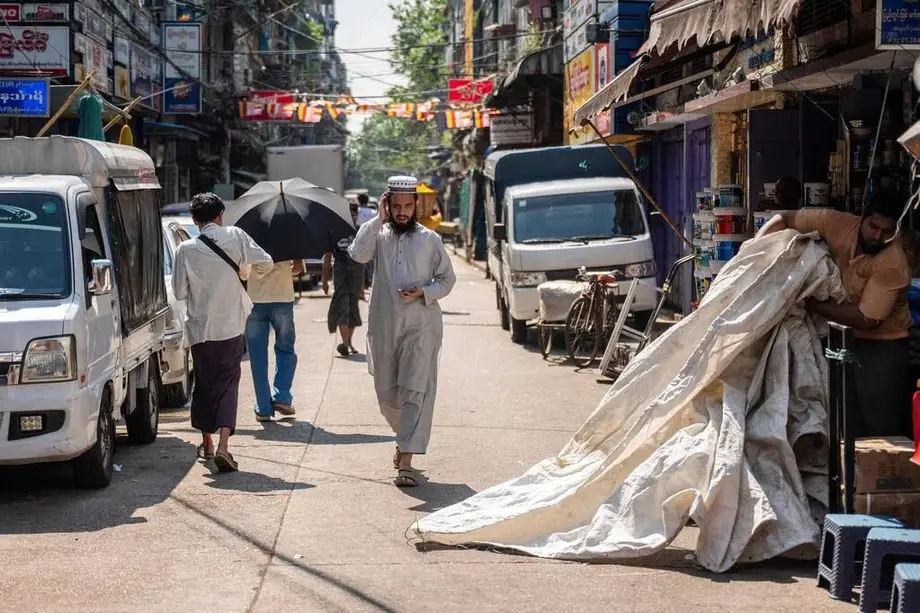
Life for young residents in major urban centers like Yangon and Mandalay has transformed significantly due to the constant threat of abduction. Streets in Yangon grow empty after 8 p.m. as armed individuals and gangs hunt for eligible young men to seize and sell to military recruiters. Many citizens avoid traveling at night or taking unfamiliar transportation routes, fearing arbitrary seizure or nighttime arrests. The Central Committee for Public Military Service Conscription stated that it aims to eradicate nighttime arrests, the forcible conscription of travelers, paid substitution, and unauthorized fund collections. The government has provided hotline numbers in daily newspapers for citizens to report extortion or illegal recruitment. Despite these official grievance mechanisms, the pervasive fear of forced enlistment continues to shape daily routines, forcing workers and students to weigh the necessity of earning a living against the constant risk of being abducted.
Student Deferments and Continuing Uncertainty
Recent rumors regarding the drafting of university students and high school seniors have caused widespread panic among families across Myanmar. Rumors suggested that young men selected in ward lotteries must serve immediately regardless of their student status, prompting the regime to formally deny the claims by citing Article 15(a)(3) of the Conscription Law, which grants temporary educational deferments. Authorities maintained that students possessing proper enrollment documentation are exempt from immediate service. Despite these assurances, anxiety persists because administrative offices in major cities have summoned student registries, separating individuals based on health status and physical conditions. In August, the regime centralized draft management under regional and district authorities, shifting control away from local township offices and triggering fresh lottery rounds in areas like Mandalay. Families remain deeply skeptical of official promises, especially as previous substitution fees were officially abolished in September to enforce strict adherence to lottery numbers.
Broader Conflict Context and Humanitarian Crisis
The conscription push operates against the backdrop of a deteriorating humanitarian emergency across Myanmar. According to the World Report 2026 by Human Rights Watch, the military junta has responded to territorial losses and armed resistance with intensive aerial and artillery bombardments, causing thousands of civilian deaths and displacing at least 3.6 million people. The military's reliance on airstrikes, drone attacks, and cluster munitions has targeted residential areas, schools, religious buildings, and camps for displaced persons. Concurrently, the junta has blocked humanitarian aid deliveries to opposition-held regions, exacerbating acute food insecurity for over 15 million people and severely straining healthcare infrastructure that was already crippled by the 7.7 magnitude earthquake that struck central Myanmar in March. Arbitrary detentions, torture in military interrogation centers, and systematic suppression of dissent have further eroded the rule of law, leaving civilians with virtually no legal protections against abuses committed by state security forces and allied armed groups.
At a Glance
- Myanmar's Ministry of Defence took legal action against 102 individuals for financial extortion and 97 for unauthorized forcible conscription as of October.
- The military activated the People's Military Service Law in February 2024, requiring at least two years of service for men aged 18 to 35 and women aged 18 to 27.
- Substitutes traded through corrupt networks cost between 10 million kyat and 30 million kyat, equivalent to roughly 2,500 US dollars to 7,500 US dollars.
- Urban centers such as Yangon experience severe nighttime curfews and civilian avoidance of public spaces due to fears of abduction and forced military drafting.
- The central conscription committee stated that students with valid documentation are eligible for temporary educational deferments under the law.