A new constitution at the centre of unity talks
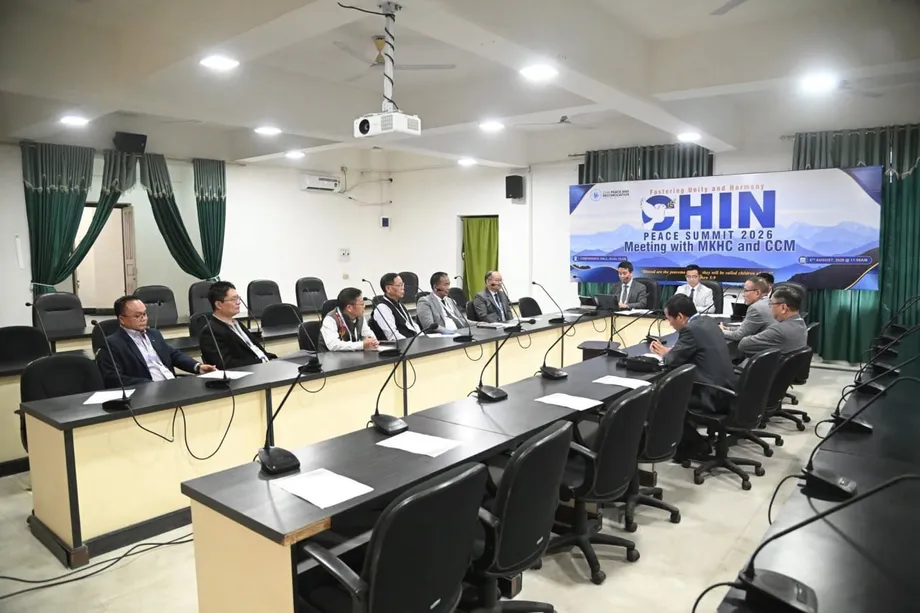
Myanmar's rival Chin resistance factions have agreed to draft a shared constitution after talks in Aizawl, the capital of India's Mizoram State, on October 16 and 17. The decision addresses a central dispute in their struggle against military rule: who should govern Chin State, and how power should be shared.
Contents
- A new constitution at the centre of unity talks
- How the resistance divided
- What the constitutional dispute involves
- Why Aizawl became the meeting place
- From a February pact to October negotiations
- Military cooperation remains a separate task
- Military advances add urgency
- The CNF rejects the military's peace invitation
- What unity would change for civilians
- Key Points
The Chin National Front (CNF) met the Interim Chin National Consultative Council (ICNCC) to advance a reunification agreement signed on February 26, 2025. That agreement envisaged bringing the rival camps together under a governing body called the Chin National Council.
Salai Khua Uk Lian, a member of the CNF executive committee, expressed optimism about the latest negotiations.
"We saw favorable prospects for reunification," he said.
He said the parties had agreed to write a replacement for the constitution already used by the CNF's Chinland Council.
"We agreed to jointly draft a constitution that we will all use. CNF already has the Chinland Council constitution, but we have agreed to write a new one rather than continue using it," he said.
The commitment matters because the existing constitution helped deepen the split. Rival groups challenged its rules on representation and military authority. Writing another together gives both camps a chance to negotiate those questions from the start.
The negotiations come as military forces press attacks in southern Chin State. Political talks are moving forward, while the CNF and the rival Chin Brotherhood still conduct their military operations separately.
How the resistance divided
The ICNCC was established in April 2021, after the military overthrew Myanmar's elected government. Its participants included resistance organisations, civil society representatives and lawmakers elected in 2020, including members of the National League for Democracy.
The CNF, founded in 1988 and the oldest ethnic armed organisation in Chin State, initially belonged to that shared political structure. Disputes later developed over decision making, representation and the creation of a state government.
The CNF's latest account places its withdrawal from the ICNCC in December 2023; a chronology published in January 2024 dates the withdrawal to April 2023, followed by a constitution drafting committee in September and the Chinland Council convention in December.
Groups that rejected the Chinland Council project formed the Chin Brotherhood on December 30, 2023. The alliance remained affiliated with the ICNCC and included organisations representing communities in Tedim, Tonzang, Falam and Mindat.
The dispute became violent. The Chin Brotherhood said two of its members were killed during fighting with the Chin National Army, the CNF's armed wing, in Matupi Township in June before the earlier mediation effort.
International Crisis Group's Chin State briefing describes at least two episodes in which tensions between the rival camps developed into deadly clashes. It says those divisions have also obstructed agreement on government, justice and essential services across the state.
What the constitutional dispute involves
The Chinland Council's original structure allocated 27 representatives to the CNF, 27 to a group of elected lawmakers and 86 to township and regional administration groups. Together, those categories provided 140 places.
The CNF's direct allocation was therefore about 19% of the total, calculated from 27 of 140 places. Opponents argued that its influence extended further through allied organisations. Their objections concerned both the formal allocation of seats and how much control the CNF could exercise through the wider council.
Military authority was another source of disagreement. Organisations including the Chin National Organization, Zomi Federal Union and Chin National Council Mindat opposed provisions identifying the Chin National Army as the armed force representing the Chin people.
A constitution sets the basic rules for government: who can make laws, who carries them out, how courts work and who controls armed forces. In Chin State, those questions affect whether local resistance organisations retain authority or place it under a shared administration.
The previous constitutional project envisaged a parliament, government and Supreme Court. The ICNCC rejected provisions transferring its responsibilities to the new structure. A jointly written constitution would need to settle authority that both camps had claimed.
Why Aizawl became the meeting place
Mizoram's government and the Zo Reunification Organisation (ZORO), a civil society organisation, have helped bring the rivals together. Chin and Mizo communities share cultural and linguistic connections across the India and Myanmar border, making the dispute a concern for people on both sides.
Earlier negotiations produced a preliminary agreement to resolve disputes without violence, respect territory held by each side, recognise shared culture and continue talks organised by ZORO. The parties also planned a peace committee to handle disputes.
L. Ramdinliana Renthlei, ZORO's general secretary, linked the mediation to the loss of lives in fighting between resistance groups. He also said India's central government tacitly supported the effort, describing New Delhi's position in his own account of the talks.
CNF spokesperson Salai Htet Ni said the first round reached no political agreement. Its immediate purpose was to reduce misunderstandings and create conditions for discussing cooperation. ZORO also mediated a separate agreement between the CNF and the Zomi Revolutionary Army on July 27.
The February 26, 2025 agreement went further. Representatives of the Chinland Council, ICNCC and Chin Brotherhood signed a cessation of hostilities agreement in Aizawl with Mizoram Chief Minister Lalduhoma present. A peace advocacy group created by the chief minister, comprising civil society leaders and prominent citizens, helped conclude the negotiations.
From a February pact to October negotiations
Thang Ning Kee, a CNF and Chin National Army vice chairman who participated in the February negotiations, said he hoped the agreement would bring lasting peace and help create a united front for democracy and a federal political system.
Federal government means dividing authority between national and regional institutions. For the Chin factions, the immediate task is to agree on their own institutions while seeking a future Myanmar in which states have meaningful powers.
The February plan called for a constitution drafting committee with two representatives each from the Chinland Council and ICNCC, alongside representatives of Mizoram's peace advocacy group. The October talks renewed the commitment to a shared constitutional framework.
The main steps in the negotiations and the split are:
- April 2021: The ICNCC was formed after the military coup.
- December 2023: The CNF established the Chinland Council; opposing organisations formed the Chin Brotherhood at the end of the month.
- February 26, 2025: The rival camps signed an agreement in Aizawl covering an end to hostilities and political unification.
- October 16 and 17: The CNF and ICNCC held further talks in Aizawl and agreed to draft a shared constitution.
No deadline was announced for completing the new constitution or putting the proposed Chin National Council into operation.
Military cooperation remains a separate task
Salai Khua Uk Lian said the CNF was not currently coordinating military operations with the Chin Brotherhood, although it intended to do so in the future. The factions are therefore negotiating a common political structure while their forces continue to operate through separate arrangements.
For communities caught between armed groups, preventing clashes requires practical communication as well as agreement among political leaders. Crisis Group recommends designated contacts, a hotline, procedures for reporting incidents and direct communication between field commanders.
The organisation also calls for shared objectives on humanitarian assistance, education, health and justice. Those are areas where rival administrations must decide who takes responsibility, how resources are distributed and which rules residents follow.
Social media is another concern identified in the briefing. Emotive posts can spread suspicion and turn local incidents into wider disputes. Crisis Group urges leaders to exercise discipline in their public communications while building ways to resolve problems quickly.
Military advances add urgency
Salai Yaw Man, spokesperson for the Chin People's Army, said on October 20 that resistance forces were fighting on multiple fronts. He traced the expanded military counteroffensive to May 16, covering Kanpetlet, Mindat and Kyindwe in Chin State and Htilin Township in neighbouring Magway Region.
The Chin Brotherhood had captured Mindat, Kyindwe and Kanpetlet in December 2024. Mindat and Kanpetlet are among the places resistance forces continue to hold, together with Matupi and parts of Thantlang and Tedim.
The military announced on October 21 that it had retaken Hlaingdoke village, about 10 kilometres northeast of Kyindwe. It claimed to have recovered the bodies of at least 11 resistance fighters following attacks that began on September 24. The casualty figure was the military's claim; it gave no figure for its own losses.
The latest account also describes earlier military gains against both rival camps: Falam Township was retaken from the Chin Brotherhood on April 25, and Tonzang Township from the CNF on May 20. Military forces also hold parts of Thantlang and Tedim.
Pressure extends beyond Chin State's borders. Htilin lies along the corridor connecting Magway and Chin, putting fighting on routes between the mountainous state and neighbouring areas. The rivals face attacks affecting several fronts while still working out how to cooperate.
The CNF rejects the military's peace invitation
Military leader Min Aung Hlaing invited the CNF to peace talks in an October 15 video message marking the anniversary of the Nationwide Ceasefire Agreement (NCA). The CNF signed that agreement on October 15, 2015, under then president Thein Sein.
After Min Aung Hlaing led the February 2021 coup, the CNF declared the agreement void. Salai Khua Uk Lian said the organisation did not trust the military leader and had no confidence in his administration.
The Aizawl negotiations therefore concern reconciliation between resistance factions that oppose military rule. Their immediate agenda is a common Chin political structure and an end to disputes within the resistance.
The CNF also belongs to the Steering Council for the Emergence of a Federal Democratic Union, a broader resistance coalition formed on March 30. It was one of the coalition's four founding ethnic armed organisations, placing its negotiations over Chin governance alongside efforts to coordinate opposition across Myanmar.
What unity would change for civilians
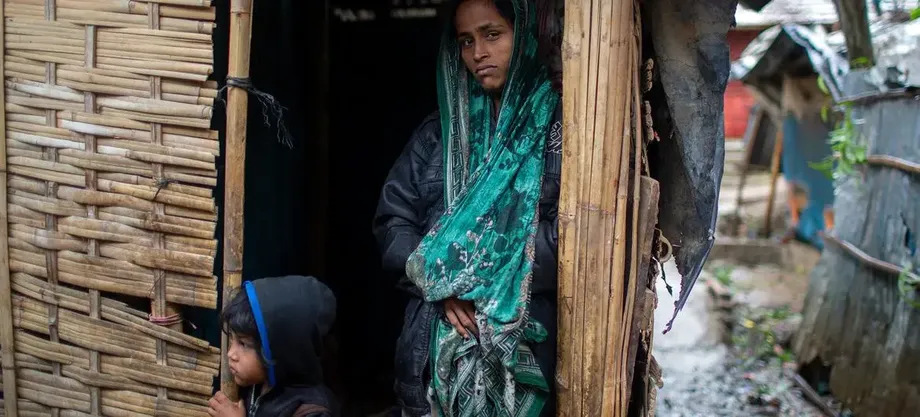
About 160,000 people have been displaced by conflict in Chin State, according to Crisis Group, more than one third of the state's population. Most are displaced within Myanmar; others have crossed into India.
Families need safety, access to markets and functioning services before returning home. Rival armed authorities complicate that work when they disagree over who administers territory, organises aid or provides justice. Ending their clashes would remove another danger facing people already uprooted by war.
Crisis Group calls for donors to increase humanitarian assistance, livelihood support and help for emerging local administrations. It describes Chin State as difficult to reach and neglected within an already limited aid response to Myanmar.
India has a direct stake because of the shared border and the possibility of further displacement. The briefing recommends humanitarian support and expanded arrangements for informal border trade so that more basic goods can reach Chin communities.
Paletwa adds another political and economic complication. The Arakan Army controls the township in southern Chin State and cooperates with the Chin Brotherhood elsewhere. Some Chin leaders fear its territorial ambitions; the Arakan Army says Paletwa is strategically necessary to its struggle for autonomy in Rakhine State.
Paletwa also lies on the route of India's $500 million Kaladan Multi-Modal Transit Transport Project, linking northeastern India with ports on the Bay of Bengal. Agreement between the Chin rivals would leave further negotiations over territory, neighbouring armed organisations and trade routes. For displaced families, the most immediate gains would be fewer internal clashes, more reliable aid and clearer responsibility for everyday services.
Key Points
- The CNF and ICNCC agreed at October 16 and 17 talks in Aizawl to draft a shared constitution.
- The negotiations build on a February 26, 2025 agreement to unite under a Chin National Council.
- Representation and control of armed forces were central disputes behind the resistance split.
- The CNF says it is not yet coordinating military operations with the Chin Brotherhood.
- Military attacks are continuing across southern Chin State and neighbouring Magway Region.
- Crisis Group estimates that about 160,000 people have been displaced and urges stronger aid, trade and communication between the factions.